Introduction — "High Barrier" Is a Misconception
"Coin collecting is a hobby for a select few enthusiasts" or "it's too expensive for beginners to afford." Many hold these misconceptions. However, even with a budget of ¥10,000, you can sufficiently enjoy the entry point of Japanese coin collection.
This article is a practical beginners' guide for those starting from scratch, aimed at those who are interested in coins but do not know where to begin. It explains step-by-step how to choose types, determine purchasing sources, and the basics of storage and appreciation. Before proceeding, it's recommended to first understand the 5 factors that determine the value of a coin, as this will make the following content significantly easier to grasp.
Step 1: Knowing Entry-Level Species — What Can You Buy with a ¥10,000 Budget
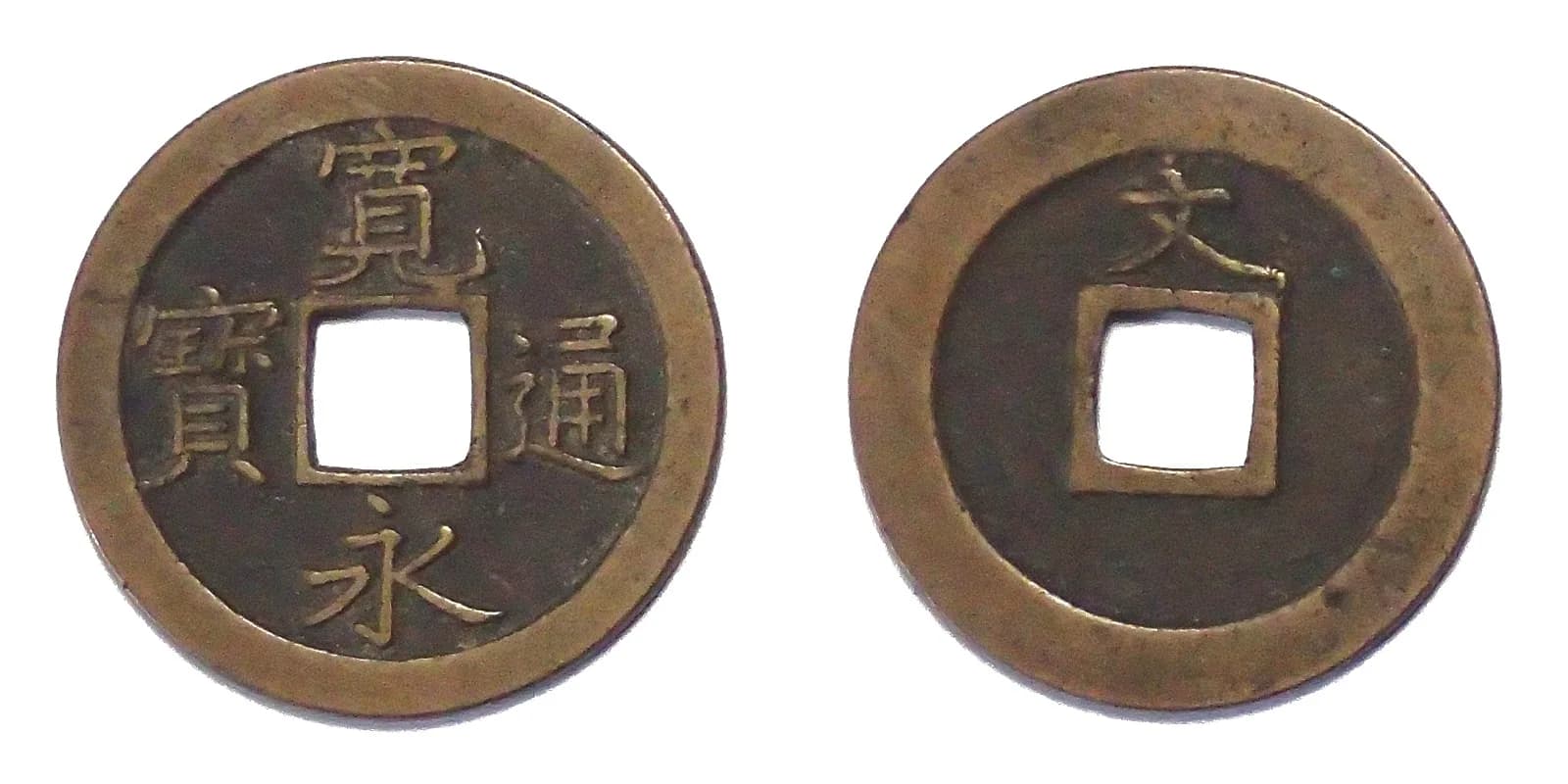
Kan'ei Tsūhō (寛永通宝) — Most Affordable and Educational
As an entry-level species that beginners should first handle, there is consensus within the industry that Kan'ei Tsūhō is a staple. It was the basic currency in circulation nationwide throughout the Edo period and is abundant and easy to obtain (only verified prices are posted).
Kan'ei Tsūhō is suitable for beginners due to its "affordability yet depth." It has several hundred variations, subdivided by minting area, era, and type (such as the reverse inscription, wave coin), so there's no end to collecting them. By initially gathering around 10 to 20 ordinary pieces for observation, you will naturally acquire foundational knowledge common to all coins, such as minting techniques, condition differences, and looking at inscriptions.
Budget allocation guide (¥10,000):
- Kan'ei Tsūhō ordinary pieces 10–15 coins: ¥3,000–¥5,000
- Loupe (10x magnification): ¥1,500–¥2,500
- Coin holders (50 pieces): ¥500–¥1,000
- Remaining budget for one "slightly better piece": ¥2,000–¥4,000
Tenpō Tsūhō (天保通宝) — Make an Impression with "Oval Large Coins"
Tenpō Tsūhō are large oval coins minted from Tenpō 6 (1835). With a diameter of about 49mm and weighing about 20g, their large silhouette makes them stand out in a collection and are useful as "showpieces" for those new to the hobby. Standard pieces can be obtained for around ¥1,500–¥4,000 each, making them slightly more expensive than Kan'ei Tsūhō, but well within budget.
Tenpō Tsūhō coins, which were minted by the shogunate and domains, offer the enjoyment of a "regional collection" when collecting provincial mint coins (domain coins). You should first start with the standard issue minted by the shogunate and compare differences in condition.
Step 2: Choosing a Source — What Are Reliable Acquisition Routes?
Reasons to Use Specialty Dealers
Many beginners buy coins through online flea market apps or auctions, but for those without knowledge, there's a high risk of "being caught with fakes" or "purchasing at far above the true value." The issue of fakes and modified coins is particularly severe, so until you acquire basic knowledge of grading, purchasing through specialty dealers is strongly recommended.
The Trusted Coin Dealers List allows you to research specialists nationwide by region and species. The primary merit of buying from dealers is "quality assurance and accountability." If issues are discovered post-purchase, specialty dealers provide a support window. This safety net is not present in C2C transactions on flea market apps.
Hone Assessment Skills at Live Sales and Coin Shows
The marketplace events and coin shows listed in Event Information provide beginners with invaluable opportunities to "physically handle and compare" items. Multiple dealers gather in one venue, allowing you to view the same species in varying conditions side by side, naturally sharpening your price awareness.
Experienced collectors and dealers often surround these events, and they are often willing to provide detailed answers to inquiries; don't hesitate to ask questions as an "entry-level participant."
Step 3: Basics of Storage and Appreciation
Minimize Handling with Bare Hands
The most basic rule for preserving coins is to "avoid touching with bare hands." Skin oils can stick to the surface, leading to discoloration (rust and grime) over time, ultimately causing degradation in quality. Developing the habit of handling them through white gloves or coin holders from the start is imperative.
Setting Up Proper Storage Conditions
- Humidity: Ideally, keep it at 40–50%. Use dehumidifiers during the rainy season or summer
- Temperature: Maintain a stable indoor temperature around 20–25℃. Direct sunlight is strictly prohibited
- Containers: PVC-free coin holders or albums are recommended. PVC products can leach plastic over time, damaging the coins
Cleaning Is Not Advisable
The urge to polish coins that appear dirty is understandable but strictly forbidden. Polishing removes the surface "patina," drastically lowering the grade. In the collectors' world, "polished items are considered damaged," significantly decreasing their market value. If you are concerned about dirt, consult a professional.
Step 4: Learning How to Assess Value
Understanding the Concept of Grading
The value of coins is determined by "rarity × condition (grade) × demand." No matter how rare a species, if it's in poor condition, its value decreases significantly. Conversely, even ordinary pieces in top-grade condition can be traded at high prices.
Terms indicating condition (grade) are generally standardized within the industry and are divided into "Uncirculated (UNC)," "Almost Uncirculated/Extremely Fine (AU/EF)," "Very Fine (VF)," "Fine or below (F or lower)," among others. Detailed evaluation criteria are explained under basic knowledge of grading, so be sure to check this before purchasing.
Develop a Sense of Market Value — Getting Used to Viewing Data
To decide, "Is this priced according to the market?" continuous observation is crucial. The Market Index allows you to check species-specific price trends, and it's advisable to use it to confirm prices before purchases. By following auction sale price trends, you will understand the "current demand temperature" for each species.
Utilize Photo Appraisal for Preliminary Assessment
If you want to know the value of items in your possession, you can send images via the photo appraisal form and have experts verify them. This service also addresses questions like "Is this authentic?" before purchase, so actively utilize it if you acquire a potentially doubtful item.
Common Beginner Mistakes — Stories of Mistakes by Senior Collectors
The "Bought in Bulk Because It's Cheap" Trap
Cases of purchasing a cheap bulk lot (sets of ○ pieces) without checking quality, with most being of no value and just in fair condition or lower. The rule is "quality over quantity" during your entry period.
The "Polishing Will Make It Shine" Trap
As previously mentioned, polishing drastically reduces value. "Removing rust makes it into a fine item" is a false belief.
The "Believed Only Internet Info" Trap
There are many inaccuracies on personal blogs and social media. Verify value assessments through experts, public documents, and reliable databases.
The First Step for Aspiring Collectors
The first step in starting a Japanese coin collection is to clarify your area of interest. Choose among the five main categories: Ansen, Edo period gold coins, Edo period silver coins, modern gold coins, and commemorative coins, to determine your long-term collection activities. Systematic information like Introductory Guide to Ansen and Detailed Types or Basic Guide to Edo Period Gold Coins and Large Plates may help in determining direction.
Starting Practically on a Budget of ¥10,000
Starting a Japanese coin collection with a budget of ¥10,000 often involves entering through the Ansen category. Comprehensive Guide to Kan’ei Tsūhō and Bunkyū Nagatomo Valuation and Collection Guide for Bunkyū Nagatomo are typical Ansen species available at accessible prices. Specimens of these types in VF class can be bought for around ¥5,000, making them an ideal choice for starting your dialogue with the collection.
Three Pot Holes Beginners Easily Fall Into
Three common pitfalls when beginners start their collections are identified. The first is “hasty purchase of cheap items.” Coins priced clearly below market value are likely fakes or have significant defects. Basic principles of fakes countermeasures as covered in Why High-Priced Coins Require Caution — Reasons and Reliable Ways to Identify Fakes should be kept in mind, while obtaining through trusted routes is fundamental.
The second pitfall is “purchasing without expert knowledge.” Purchasing expensive items before cultivating basic inspection skills increases the risk of obtaining fakes. Before making purchasing decisions, understanding the principles of grading as covered in Grading Standards and How to Read Them is recommended.
The third pitfall is “Undervaluing Authentication Certificates.” Items with authentication certificates have significantly differing market values and authenticity verification confidence from those without such documents. For beginners, slab items from international certification agencies like PCGS and NGC as covered in Japanese Coin Evaluation by PCGS and NGC are among the safest choices.
Direction for Gradual Expansion
As your collection begins to stabilize, you can gradually expand into other categories. Starting with Ansen and moving into Edo period silver coins, Edo period gold coins, modern gold coins, and commemorative coins will increase the collection's scope and depth. Understanding category systems as detailed in Systematic Explanation of Edo Period Silver Coins and Complete Guide to Modern Gold and Silver Coins will clarify expansion directions.
Importance of Long-Term Holding Strategy
Japanese coin collecting is ideally viewed as an investment in cultural property intended for long-term retention. Viewed as an activity of cultural heritage transmission across generations rather than maximizing short-term trading profits reveals the essential significance of collection. Setting up long-term storage infrastructure as detailed in Practical Storage and Humidity Management for Coins underpins such long-term holding strategies.
Long-Term Enjoyment of Collection Activities
Collecting activity is not a one-time acquisition but a nurturing process over time. By carefully acquiring, storing, and observing each coin, the collection grows into something of value over time. Establishing storage infrastructure as outlined in Practical Storage and Humidity Management for Coins is foundational for long-term retention. Through activities like exchanging with fellow collectors, participating in research gatherings, and reading specialty magazines, you accumulate knowledge and networks, supporting the intellectual enjoyment of collection activities.
Expanding Through Experience
In the beginner's phase, the key is to expand the collection gradually without overextending. Spend the first few years with a focus on Ansens, learning from interaction with actual items, and then naturally extend into Edo period silver and gold coins. Introduction to Edo Silver and Value of Ansei Ichibu-Gin and Introduction to Edo Gold with Grading Standard for Bunsei Koban are examples of pivotal items for step-wise expansion.
Advancing Further in Collection Activities
Once collection activities are on track, they can be enriched with research-based enjoyment. This facilitates the transition from mere collection to an area of intellectual inquiry.
Engaging Internationally in Activities
Collector activity in the 21st century transcends national scope.
Conclusion
What to Do in the First Month
- Purchase 10 Kan'ei Tsūhō coins (from specialty dealers or live sales)
- Observe with a loupe and record condition differences
- Read one entry-level article from Coinpedia weekly
- Attend one nearby live sale or coin show
- Send items of concern for photo appraisal
Coin collecting is a hobby that "becomes more enjoyable as knowledge deepens." Even if it's all foreign at first, confronting each coin individually will gradually reveal the craftsmanship of the Edo period and the economic conditions of the time. Don't rush, and quietly start with a budget of ¥10,000.
Path from Introduction to Serious Collector
Starting a Japanese coin collection on a ¥10,000 budget is the launch of a long intellectual journey. As you cherish the excitement of securing your first piece, gradually accumulating knowledge and experience will transform your collection into more than mere aggregation, embodying cultural heritage stewardship. While learning Basic Knowledge of Coin Auctions and Risk Management of Coin Investment, establishing your collection style supports the enjoyment of long-term collector activities.
Recommendations for Aspiring Collectors
Japanese coin collection is an intellectual pursuit continuing throughout one's life. Beginning with ¥10,000 is an opportunity available to anyone. Enjoying with a long-term perspective and gradually nurturing your collection leads to ultimately connecting with cultural heritage transmission. Learning participation methods in the auction market as described in Basic Knowledge of Coin Auctions will aid in establishing your collection style.
The entry opportunity to start with a ¥10,000 budget is open to everyone. Enjoy with a long-term perspective and gradually nurture your collection. Seen as an activity of transmitting cultural property across generations, Japanese coin collection flourishes as a rich intellectual path.
Japanese coin collection is a lifetime intellectual endeavor, rich in tradition and passed down across generations. Advancing steadily step by step, engaging deeply with cultural artifacts over the long term leads to serving as steward of cultural property ultimately. By engaging in multifaceted activities such as information exchange with fellow collectors, collaboration with research institutions, and building relationships with museums, one can position the significance of one's collection activity within a social context.
Use the themes of this article as a starting point, and formulate your own collection plan. Taking the first step is the beginning of a long intellectual journey. Collector activities are valuable traditions passed down through generations, in which participants themselves become part. It is anticipated that new entrants will continue to increase steadily. The realm of coin collection is a community where every participant grows together.
Japanese coin collection is an ongoing intellectual journey. The small step of starting with a ¥10,000 budget marks the beginning of a long journey. New entrants aspiring to become collectors will be the driving force for passing this rich tradition to future generations. The meetings with fellow collectors, the joy of research, the dialogue with cultural properties—all combined enhance the allure of the Japanese coin realm. As new companions continue to join, supporting the preservation of monetary culture becomes the foundation.
Serving as the starting point, this article provides a completed introductory guide on Japanese coins. Designed as a basis for future activities, it's content you can refer to whenever necessary. Embarking on collecting activities is the crucial decision. From the moment you hold a single coin, an enduring intellectual conversation begins. By studying Basic Knowledge of Coin Auctions, Grading Standards and How to Read Them, and Basics of Identifying Coin Fakes, you will build up experience gradually, forming a foundation supporting the enjoyment of long-term collecting activities.
Enjoyment of coin collection, deepening over the years, is characterized by this trait. Small daily observations, knowledge accumulation, research discoveries—all gradually contribute, deepening the overall significance of collector activities.
In an era where the world of Japanese coins is expanding, and new collectors steadily join, the foundation supporting the future of cultural heritage transmission gets strengthened. Your participation contributes to this rich tradition's inheritance. By maintaining long-term activity consciousness, the significance of collector activities continuously deepens.
The significance of collector activities intensifies with time. Progress step by step.
Nurturing collector activities within a long-term viewpoint leads to ultimate success. Dialogue with Japanese coins is an enduring, rich intellectual activity throughout one's life.
Transmission of coin culture to the next generation is the responsibility and joy demanded of 21st-century collectors.