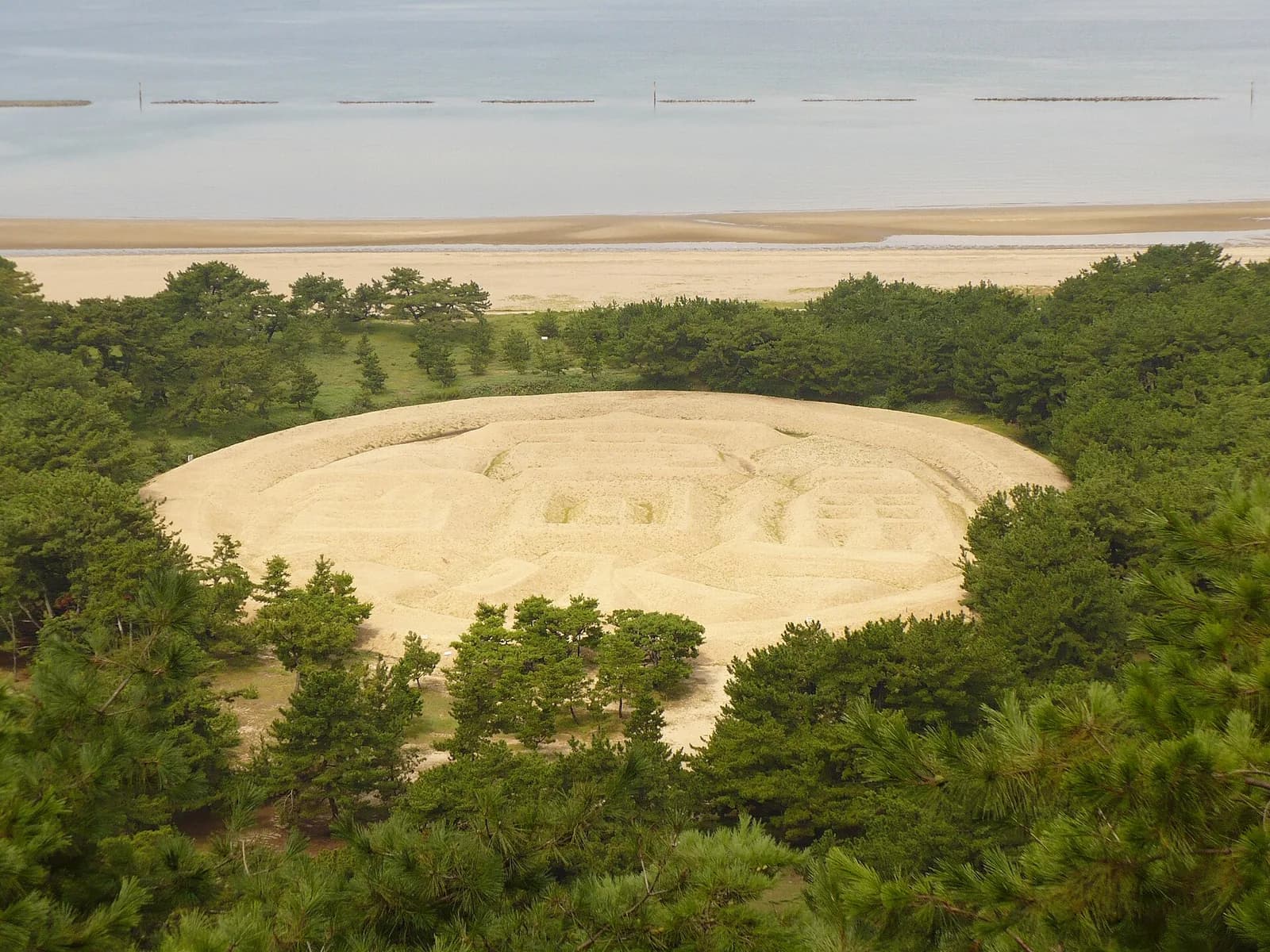
Overview of Kan'ei Tsūhō (寛永通宝): The Core Currency That Sustained Edo
Kan'ei Tsūhō (寛永通宝) is a copper coin whose minting began in Kan'ei 13 (1636) and which circulated as Japan's core currency for approximately 230 years until the early Meiji period. Its longevity made it indispensable to the economic development and social stability of the Edo period. It is a round coin with a square central hole, approximately 24mm in diameter and weighing approximately 3.5g, with the four characters「寛永通宝」cast on either side of the central square hole. Because the coins were cast at minting offices (zenza) throughout the country, a wide variety of types emerged in calligraphic style, material, and even subtle differences in size. This diversity makes Kan'ei Tsūhō an inexhaustible subject of study for today's antique coin collectors. The historical background of Kan'ei Tsūhō is discussed in further detail in Introduction to Hole Coins (Kan'ei Tsūhō and Tenpō Tsūhō).
Ko-Kan'ei and Shin-Kan'ei: The Diversity Nurtured by Two Eras
Kan'ei Tsūhō is broadly classified by its period of production into "Ko-Kan'ei" (old Kan'ei) and "Shin-Kan'ei" (new Kan'ei). Ko-Kan'ei was produced at private minting offices throughout the country from Kan'ei 13 (1636) through the Meireki period (1655–1658). As a result, the variety of calligraphic styles is extremely rich—said to be so diverse that no two coins are alike—and this diversity is one of the great pleasures of collecting. Shin-Kan'ei, on the other hand, began production at minting offices under direct shogunal control from Kanbun 8 (1668) onward. The standardization of specifications and the establishment of mass-production systems promoted consistent quality and distribution throughout the country. Even so, subtle differences between minting sites and changes in calligraphic style over time still exist, making Shin-Kan'ei a rewarding subject for advanced collectors.
The Difference Between Bosen and Tsūyōsen: Rarity That Determines Value
The most important concept in collecting Kan'ei Tsūhō is the distinction between "bosen (母銭)" (seed coins) and "tsūyōsen (通用銭)" (circulation coins). Bosen were crafted with extreme precision to serve as the prototypes from which the molds for circulation coins were made. They are characterized by crisp characters, a beautifully finished coin surface, and a slightly larger size than circulation coins. Tsūyōsen are the practical coins mass-produced from molds made using the bosen. Because bosen exist in only a fraction of the number of tsūyōsen—sometimes as few as one in several hundred—even coins of the same calligraphic style can differ in price by more than 100 times between a bosen and a tsūyōsen. The rarity of bosen is one of the most important factors among the elements that determine the value of antique coins. It can be said that their existence holds artistic and historical value far beyond that of mere currency.
Notable Varieties and Prices: Rare Issues That Animate the Market
Among Kan'ei Tsūhō, there are many varieties that are particularly popular with collectors. Representative examples include "Nisui-ei," "Shimaya-bun," "Kameido-ōyō," and "Seiji-hai-bun," which are identified by their distinctive calligraphic styles and reverse characters. While ordinary Shin-Kan'ei circulation coins trade for around 10 to 50 yen per piece, rare Ko-Kan'ei calligraphic styles can jump to a price range of several thousand to tens of thousands of yen. For bosen-class coins, prices reaching tens of thousands to hundreds of thousands of yen are not uncommon. The rarest trial-strike coins and extremely early issues can trade at prices exceeding 1,000,000 yen. Market trends for these varieties can be followed by checking price movements on the market chart. Rare issues attract attention not only as collectibles but also as investment targets.
Appraisal Points for "Reading" Calligraphic Styles: The Profound World of Characters
In appraising Kan'ei Tsūhō, the ability to accurately "read" calligraphic styles is indispensable. Particularly in Ko-Kan'ei, notable differences in calligraphic style are seen depending on the minting site and period. Key appraisal points include: the shape of the hōgai (roof radical) at the top of the character「寛」and the balance of「廿」within it; the angle and flick of the nisui portion of the character「永」; the sweep and dot placement of the shinnyū of the character「通」; and the number of strokes in the shellfish portion of the character「宝」and its overall proportions. By distinguishing these subtle differences, it becomes possible to identify the minting site of a Ko-Kan'ei coin.
Reverse Characters and Identifying the Minting Location: Information Inscribed on the Reverse
Many Shin-Kan'ei coins have specific characters or symbols cast on the reverse (back) side, which serve as important clues to the coin's minting location and period. For example,「背文(ぶん)」indicates minting at the Edo Kameido zenza,「背千(せん)」indicates the Sendai Ishinomaki zenza, and「背佐(さ)」indicates the Sado zenza. Many other reverse characters also exist, such as「背一」,「背元」, and「背盛」. Coins with nothing cast on the reverse—known as "mumon (無文)"—tend in many cases to have been minted at Edo-affiliated zenza such as Kameido. The presence or absence of reverse characters and their type is the first step in classifying Kan'ei Tsūhō varieties; confirming this alone allows one to narrow down the approximate place of origin and period. For more detailed classification, please also refer to the explanation at Types and Market Values of Kan'ei Tsūhō.
Evaluating Blue-Green Patina and Condition: Distinguishing Aged Color from Deterioration
The blue-green patina (rokushō; green rust) often seen on Kan'ei Tsūhō is a stable oxide film that protects the copper surface and does not necessarily diminish value. On the contrary, a uniform, beautiful, and stable green patina may be positively evaluated as "furoshoku" (古色; aged color) and regarded as something that speaks to the coin's history. On the other hand, locally raised, powdery "active rust" indicates ongoing corrosion and, if left untreated, can cause characters to dissolve or the coin surface to be damaged. When such active rust is discovered, prompt action is necessary. A sound approach is to avoid self-diagnosis and instead consult a trusted specialist. Proper storage and maintenance of antique coins is explained in detail at Proper Storage Methods for Antique Coins.
How to Start Collecting: A Guide to Taking the First Step
When starting to collect Kan'ei Tsūhō, it is recommended to first study the basic classifications and characteristics through specialist books—such as "Shin Kan'ei Tsūhō Zukai"—before acquiring coins. Once you have gained knowledge, it is important to visit auction sites and sales events held by reputable antique coin dealers, building experience by handling many actual coins. A fun way to begin is to acquire a large quantity of inexpensive Shin-Kan'ei circulation coins and start by "sorting" through them to find various calligraphic style and reverse-character varieties. Through this sorting process, your eye will gradually improve, and eventually you will come to enjoy the thrill of discovering unusual varieties that have not yet been fully evaluated. Reliable sources for acquiring coins are introduced in detail at Guide to Sources and Methods for Acquiring Antique Coins.
The Economic-Historical Significance of Kan'ei Tsūhō: The Foundation of the Edo Economy
The commencement of Kan'ei Tsūhō minting was a landmark event in which Japan's monetary economy, which had until then depended on Chinese coins (imported coins), transitioned toward self-sufficiency. The spread of this nationally unified currency powerfully promoted the development of a commodity economy and contributed greatly to the formation of a national market centered on Osaka, which was called the "nation's kitchen" during the Edo period. A stable supply lasting more than 230 years deeply embedded a monetary economy even at the level of common people, greatly transforming the social structure from barter to currency-based transactions. Kan'ei Tsūhō was not merely a currency; it was truly the foundation upon which Edo-period society and economy were built. Its influence extended to other monetary systems as well, such as those discussed in Introduction to Edo Gold Coins (Koban and Ōban).
Auction Trends and Acquisition Sources: The State of Market Transactions
Kan'ei Tsūhō is regularly offered at Japan's largest specialist antique coin auctions (such as Tanaka Kosen and Ogawa Shōji), and is actively traded across a wide price range, from bulk lots of circulation coins to single rare bosen. On online platforms, large numbers are also listed on Yahoo! Auctions, but incorrect variety descriptions and exaggerated condition claims are common, so caution is required when purchasing. As highly reliable purchasing sources, antique coin dealers who are members of the Japan Numismatic Dealers Association are the most trustworthy. They possess specialist knowledge and provide appraised items. Details on how to use auctions and points to be aware of can be learned at Introduction to and How to Use Antique Coin Auctions. The latest hammer price records can be confirmed at Search Past Auction Hammer Price Records.
Price Range Guide (Fine, Very Fine, Extremely Fine): Concrete Market Values
The price of Kan'ei Tsūhō varies greatly depending on type and condition. Shin-Kan'ei circulation coins in fine grade are around 10 to 50 yen per piece, and bulk lots can be acquired even more cheaply. Rare Ko-Kan'ei calligraphic styles—such as "Mito-sen"—jump to 1,000 to 5,000 yen in fine grade and 5,000 to 20,000 yen in very fine grade. "Bun-sen (背文銭)" circulation coins are in an entry-level price range, at approximately 500 yen in fine grade and 2,000 yen in very fine grade. Bosen range from 30,000 yen to over 1,000,000 yen depending on the rarity of the calligraphic style and minting site, as well as condition. Extremely fine examples of particularly rare varieties such as "Nisui-ei" and "Shimaya-bun" have been known to reach several million yen. To understand fluctuations in market prices, How to Read the Antique Coin Market Cycle is useful.
The First Coin a Beginner Should Buy: A Smart Way to Start a Collection
As an introduction to Kan'ei Tsūhō, it is strongly recommended that the first coin purchased be a "Shin-Kan'ei bun-sen (背文銭) in very fine grade." At a reasonable price of around 1,000 to 3,000 yen, the「文」mark on the reverse can be clearly confirmed, making it an ideal teaching material for learning to observe calligraphic styles and understand the meaning of reverse characters. A good condition coin also allows one to appreciate the beauty of the coin surface and the precision of the characters. Bulk lots (approximately 100 coins for around 1,500 yen) are also a standard entry point, allowing one to intuitively grasp the subtle differences in calligraphic styles through the sorting process. However, it is strictly inadvisable to purchase bosen or extremely rare varieties before acquiring sufficient knowledge. Early mistakes tend to become expensive lessons, so it is important to first build a solid foundation. Please also refer to The Difference Between Investing and Collecting: Ways of Thinking regarding approaches to collecting and investing.
Common Mistakes and Points of Caution: Lessons for Wise Collecting
The two mistakes that beginners in Kan'ei Tsūhō collecting are most likely to make are "overpaying for cleaned coins" and "misidentifying varieties." Cleaned coins have been unnaturally polished with acid or abrasives, and their original aged color has been lost. They are characterized by an unnatural surface luster or dulled character outlines. Such processed coins have greatly diminished value. Misidentification of varieties often involves mistaking a common calligraphic style for a rare one; thorough comparison with classification guides is the only countermeasure. In particular,「母銭」(bosen) descriptions in online auctions are very often incorrect, and caution is required. Always verify the minimum conditions for bosen—weight and size exceeding the standard, and the precision of the characters—and if in doubt, one should have them appraised by a specialist dealer. Casual participation in auctions without sufficient knowledge carries unexpected risks. See The Complete Guide to Identifying Fakes and Processed Items for details.
How to Distinguish from Similar Coins: Accurate Identification Is Essential
Coins easily confused with Kan'ei Tsūhō include imported Chinese and Korean coins (such as Eiraku Tsūhō (永楽通宝) and Chōsen Tsūhō (朝鮮通宝)) and reproductions manufactured in modern times. The basic first step in distinguishing Kan'ei Tsūhō from imported coins is to confirm that all four characters「寛永通宝」are present. The overall arrangement of the characters and the calligraphic style also differ greatly between coin types. For example, referring to the explanation of Eiraku Tsūhō makes the differences clear. Modern reproductions are in many cases lighter than the specified weight (approximately 3.5g)—around 2 to 3g—and characterized by an unnaturally smooth casting surface. By combining accurate weight measurement with a precision scale and observation of the casting surface using a loupe, the majority of similar coins can be eliminated. Sufficient caution is required regarding sophisticated modern replicas.