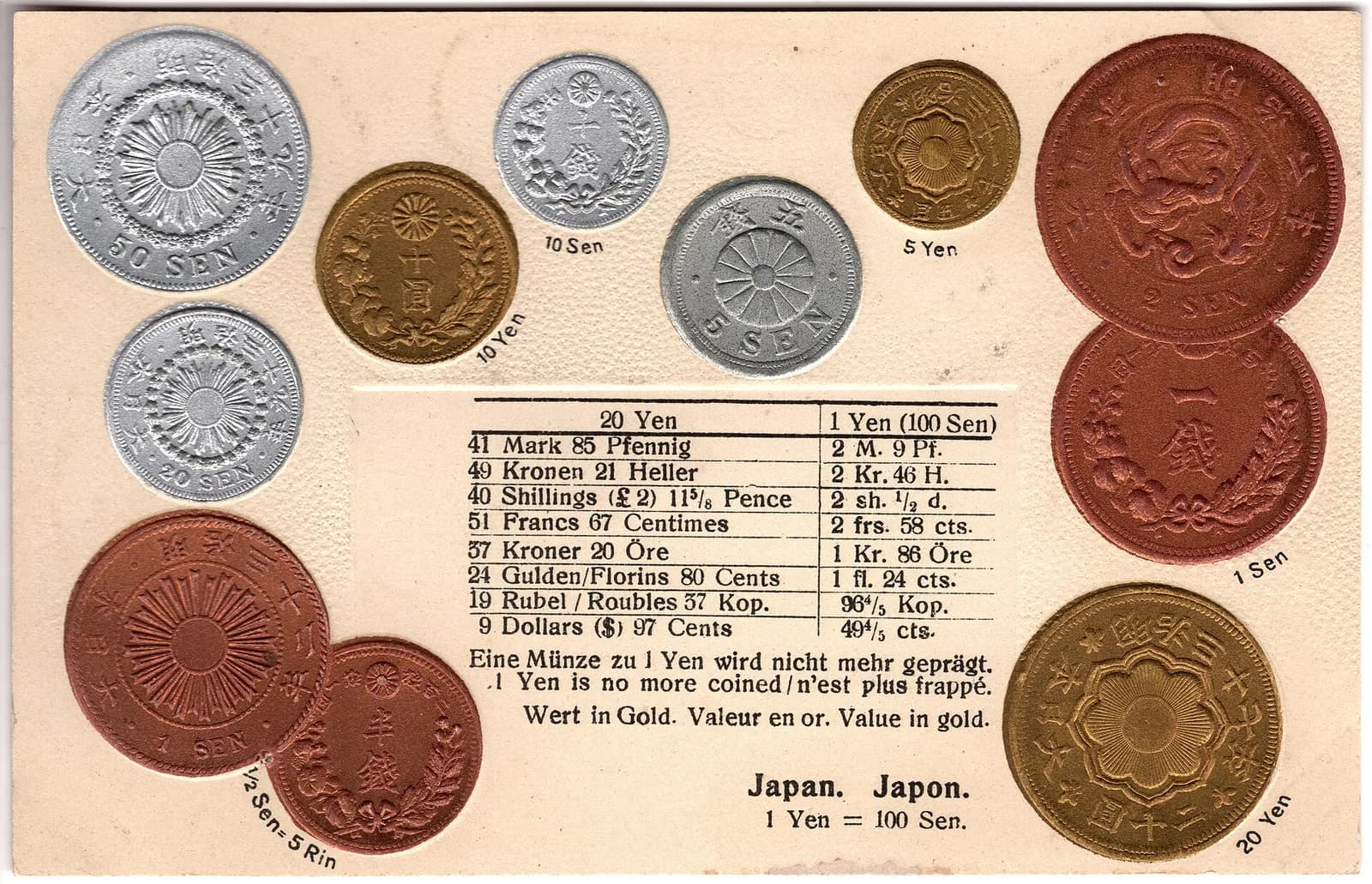
How International Grading Transforms the Value of Japanese Coins
In recent years, the Japanese antique coin market has seen a rapid increase in the prominence of professional grading services from international institutions like PCGS (Professional Coin Grading Service) and NGC (Numismatic Guaranty Company). While domestic evaluations once dominated, internationally graded coins are now routinely featured in high-value transactions. This shift extends beyond mere certification, profoundly influencing how the "value" of antique coins is perceived and how "market prices" are formed. Ittendou delves into the significance of international grading for the Japanese coin market and how it is reflected in value and pricing.
Background and Market Trends: Growing Focus on International Grading
The Japanese antique coin market has undergone significant transformation, largely due to the influx of international collectors and investors. Wealthy individuals, particularly from Asia, have shown increased interest in rare Japanese coins, demanding universally accepted, objective evaluation standards. This is where the grading services of PCGS and NGC, renowned for their long-standing reputation and reliability, become indispensable. These organizations rigorously assess coin conditions and encapsulate them in specialized slab cases, providing permanent authentication and grade assurance. For instance, popular modern silver coins such as the Dragon 5 Sen and 10 Sen silver coins from the Meiji era, when graded highly (e.g., MS65 or above) by PCGS or NGC, often fetch auction prices several to over ten times higher than uncertified or domestically graded counterparts. This clearly demonstrates how international grading enhances a coin's "liquidity," enabling transactions across a broader global market.
Furthermore, in recent years, high-value Edo period gold coins, such as Man'en Koban and Tenpo Koban, are increasingly being traded with international grading as a prerequisite. This trend stems from the need for robust authenticity and condition guarantees for such expensive items. The reliability of internationally graded coins boosts their appeal as investment assets, consequently elevating overall market prices. As seen in Ittendou's Market Price Charts, prices for internationally graded coins show a distinct upward trend in specific grade ranges.
Why International Grading Influences Coin Value
International grading significantly impacts coin value due to its objectivity and reliability. A coin's value is determined by its rarity, historical background, and, most importantly, its "preservation condition." However, evaluating preservation condition can be challenging without expert knowledge and is often subjective. International grading organizations have standardized this evaluation, providing a universally accepted benchmark that brings transparency to the coin market.
Beginner's Guide: The True Value Beyond Appearance
An antique coin's value isn't solely based on it being "old" or "rare." One of the most critical factors is its "preservation condition," or grade. Even for coins of the same type, subtle differences in wear or damage can drastically alter their value. For example, even for a common Edo period coin like the Kan'ei Tsūhō, there's a significant price difference between an Extra Fine and an Uncirculated specimen. PCGS and NGC grading expresses this condition using specific numerical and symbolic designations like "MS60," "AU58," or "VF20." MS stands for "Mint State" (Uncirculated), AU for "About Uncirculated," and VF for "Very Fine," with higher numbers indicating better condition. This objective evaluation makes it easier for even beginners to understand a coin's true value. Two coins that appear almost identical can have prices that vary by several, or even dozens, of times if their graded conditions differ. This is because grading experts identify subtle condition variations that are nearly imperceptible to the untrained eye.
Intermediate Guide: Supply, Demand, and Grade-Specific Market Trends
The market price of internationally graded coins fluctuates not just with rarity but significantly with the supply and demand balance within specific grade ranges. For instance, among the popular modern gold and silver coins from Meiji to Showa, the Rising Sun Dragon 20 Sen silver coin is relatively common in circulation. However, for specimens graded MS65 or higher, the supply dramatically tightens. Collectors constantly seek the best possible condition, creating high demand for high-grade coins that outstrips supply. This imbalance fuels price surges for specific grade ranges. Conversely, semi-high grade coins like MS63 or MS64, while not experiencing the explosive price increases of their higher-grade counterparts, maintain stable demand and generally robust market prices. Ittendou's Category Heatmap allows you to observe price fluctuations within specific grade ranges, which is highly effective for grasping market trends. By deciphering these grade-specific supply and demand dynamics, market participants can make informed investment decisions.
Advanced Guide: Market Players and the Logic of Capital Flow
The market for internationally graded Japanese coins is shaped by diverse participants. Alongside traditional collectors, wealthy individuals seeking asset preservation and portfolio diversification, and even institutional investors, have entered the scene. Their capital tends to concentrate on highly rare, high-grade items that combine historical and artistic value, such as Meiji-era large gold coins like the Former 20 Yen Gold Coin in MS64 or higher. These coins achieve high prices at auctions worldwide, continually pushing up market values. The logic behind their pricing involves an inherent "intrinsic value" backed by rarity and historical context, supplemented by the "objective condition guarantee" from third-party institutions like PCGS and NGC. This creates "high liquidity" and "international credibility." This credibility forms the foundation for collectors and investors worldwide to trade with confidence, leading to increased capital inflow. Especially for high-value items prone to counterfeiting, as discussed in the Complete Guide to Counterfeit Detection, international grading itself provides significant assurance for investment decisions. These sophisticated players often view coins not merely for speculative gain but as a long-term asset, appreciating their cultural heritage value.
Interpreting Market Charts for Fair Pricing of Graded Coins
When purchasing internationally graded coins, understanding how to read market charts is crucial. The first thing to look for is the "median price." This represents the average price range derived from past transactions, helping you grasp the coin's fundamental value. However, the coin market can sometimes experience "thin trading" periods with low transaction volumes. Highs or lows recorded during such periods might reflect temporary supply-demand imbalances or strong individual collector preferences, making it risky to interpret them as fair prices. It's essential to identify price fluctuations accompanied by significant transaction volume (turnover). Median prices and price ranges established during periods of high turnover are generally more reliable as they reflect broader market consensus. Furthermore, comparing charts across specific grade ranges (e.g., MS63, MS64, MS65) can reveal which grades have stable demand or are currently garnering particular attention.
Common Mistakes for Beginners in Graded Coin Transactions
While internationally graded coins offer high reliability, beginners can still fall into common pitfalls. The most typical mistake is over-reliance on the "graded means safe" assumption, overlooking other critical factors. For instance, even with PCGS or NGC certification, the slab (holder) might be damaged, or the coin might have shifted inside. There have also been cases of cleverly counterfeited slabs containing fake coins, as highlighted in our Guide to Identifying Fakes and Altered Coins. Before purchasing, always take the time to inspect the slab's condition, ensure the coin matches the label inside the slab, and, most importantly, verify the certification number against the grading agency's official database. Another common error is to buy low-grade certified coins, thinking "it's graded, so it has value." While VF or F grade coins do come with certification, their rarity and demand are typically lower than high-grade counterparts, making significant price appreciation less likely. Beginners should first understand the Grading Standards and How to Read Them to grasp the market value of each grade.
Ittendou's Conclusion: Smart Investment Criteria for Graded Coins
Internationally graded Japanese coins have brought two significant advantages to the market: reliability and liquidity. Ittendou recommends the following investment criteria:
Firstly, beginners should start with grades that have active trading and high liquidity. Specifically, the MS63 to MS64 grade range offers relatively stable demand without the high-volatility risks of top-grade coins. This price range allows you to build a collection steadily while learning market dynamics. We particularly recommend popular series in this grade range, such as Meiji-era Dragon Gold Coins or Rising Sun Dragon Silver Coins.
Secondly, when targeting high-grade coins (MS65 and above), it's crucial to pay even closer attention to market trends. We often observe disproportionately large price gaps between MS64 and MS65 in the current market. This is driven by some collectors' strong desire for "top grade," but such price differences may not always reflect actual demand. Therefore, when investing in MS65 and higher-grade coins, it's vital to carefully analyze past auction records and comparable market prices to ensure no excessive premium is being paid. Understanding the Basics of Coin Auctions and closely monitoring auction trends is essential.
Ittendou provides access to past auction histories and market charts, allowing you to track the current state of antique coins. Leverage the benefits of international grading to wisely assess the value of your antique coins.