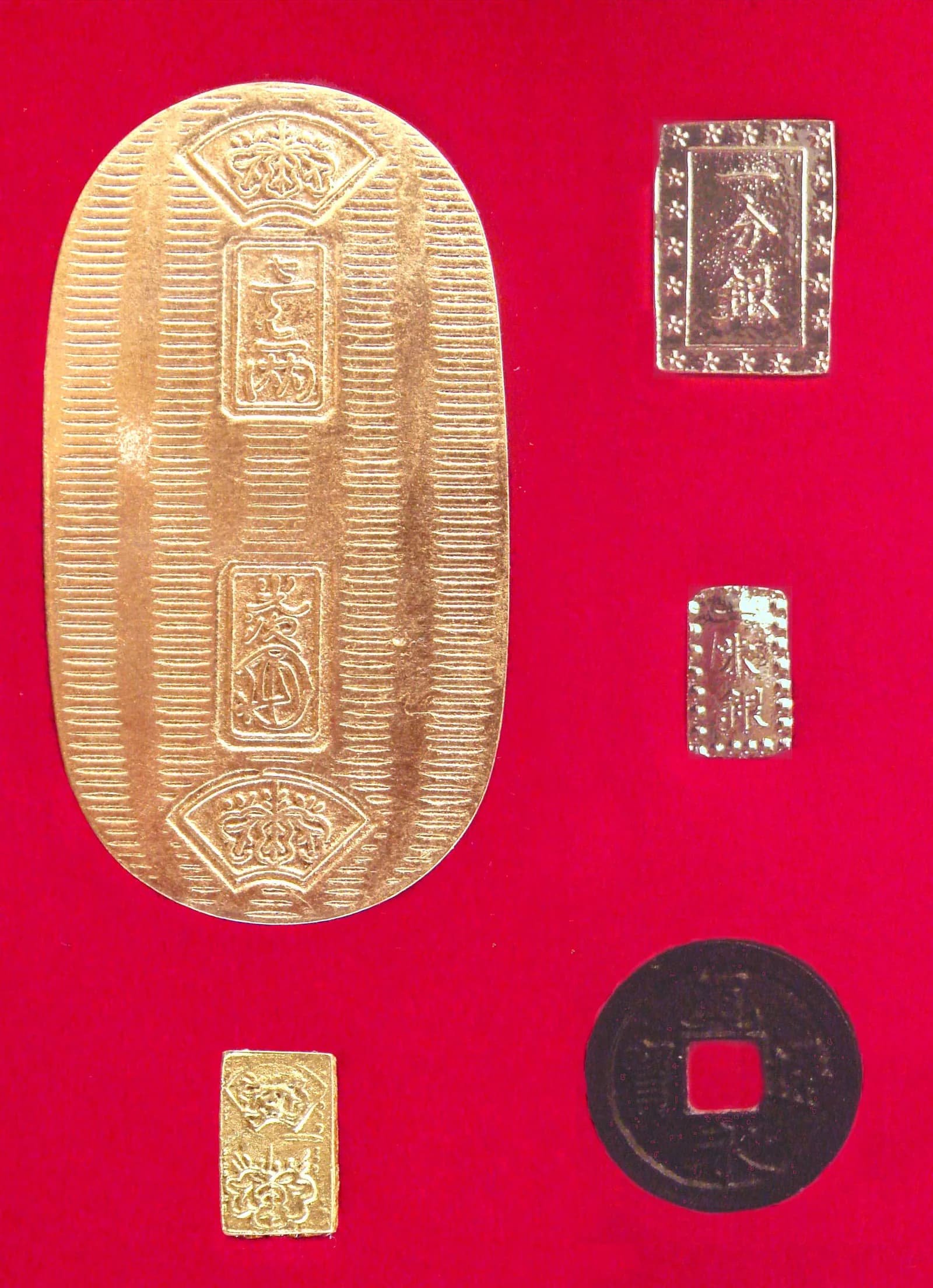
At the end of the Edo period, the "Ansei Isshugin" was a small silver coin that swept through a turbulent era with the opening of Japan. Why is this coin captivating the hearts of antique coin collectors today? We delve into its allure and smart investment strategies.
What is Ansei Isshugin? The Appeal of Starting an Edo Silver Coin Collection with Ease
The Ansei Isshugin was issued during the Ansei era (1854–1860) in the late Edo period. During this time, Japan was pressured to open its doors, and international trade began. The historical weight behind this period is one of the major reasons modern collectors are drawn to the Ansei Isshugin.
In the recent antique coin market, interest in Edo silver coins, including Ansei Isshugin, has been rising. Especially with an accessible price range for starting a collection while offering historical value and diverse variations, it attracts new collectors. This is backed by a movement to reevaluate Edo period coins, as explained in the Comprehensive Guide on Edo Silver Coins (Chōgin, Mameita Gin). With digital information becoming more accessible, knowledge that was previously only available to specialists now reaches general collectors, enhancing market liquidity.
Understanding the Value of Ansei Isshugin from Multiple Angles
[For Beginners] Basics of Value Determination
The value of Ansei Isshugin can greatly differ even among those that appear the same. The primary factors determining its value are "condition (grade)", "rarity", and "variety (variation)". Condition refers to the degree of wear, scratches, dirt, and rust on a coin. For instance, coins that retain their original luster and appear hardly circulated fetch a higher price than those that are worn out from circulation. A higher "grade", objectively evaluated by grading companies, significantly enhances its value. For more on grading standards, refer to Coin Grading Standards and Interpretations. With the same Ansei Isshugin, minor differences in embossing or characteristics from different production times also attract collectors.
[For Intermediate Collectors] Supply, Demand, and Market Trends
The market price of Ansei Isshugin is heavily influenced by supply, demand balance, and recent market trends. Looking at recent auction data, high-grade Ansei Isshugin (MS64 and above) continues to have steady demand despite limited supply. For example, over the past year, the price of Ansei Isshugin graded as PCGS MS65 has risen by approximately 15%, reflecting the expansion of the collector base and increased interest in antique coins as assets. Conversely, average and low-grade coins show relatively small price fluctuations. Understanding the basics of Coin Auction Knowledge is crucial to analyzing supply and demand balance and tracking auction price trends, which is key for making wise investment decisions. In addition to overall market trends, understanding supply-demand imbalances within specific grade bands can lead to smart investment decisions.
[For Advanced Collectors] Participant Dynamics and Logic in the Market
The formation of Ansei Isshugin prices is influenced by the intentions and fund flows of diverse market participants. Major buyers include Japanese history enthusiasts and antique coin collectors, and more recently, overseas investors and affluent individuals have made their mark. They focus not only on its value as Japan’s cultural heritage but also on its rarity and stability as a tangible asset. The long-term yen depreciation has promoted the purchase of Japanese antique coins from overseas, and the presence of foreign buyers greatly affects the auction of expensive Ansei Isshugin. The fund flow is driven by individuals collecting as an extension of their hobby and affluent individuals integrating antique coins into their portfolios. They are attracted to niche markets with high expertise, different from traditional investment targets like stocks and real estate. The logic behind pricing involves not only the silver content or historical significance but also the "story" and "scarcity value" of the coin. In the case of Ansei Isshugin, the historical background of the tumultuous Bakumatsu period adds a premium to its price. Understanding market participant dynamics requires analyzing not only price movements on Market Price Charts but also the attributes and bidding trends of major auction house participants.
Interpreting the Market Chart of Ansei Isshugin
In coin investment, understanding market charts is crucial. When viewing the chart for Ansei Isshugin, the first focus should be on the "median". The median, which shows the middle point of trading prices in a specific period, is less affected by outliers than the average, allowing a closer grasp of the actual price range. Next, distinguishing between "thin trading" and "actual demand" is vital. Thin trading, where low trading volumes lead to significant price fluctuations, may result in the temporary lifting of prices or sudden drops in just a few trades. Such fluctuations are temporary and not based on actual demand; hence, one should avoid jumping in rashly. As concrete criteria, comparing monthly trading volumes over the past few months with price ranges for each grade and confirming whether price changes accompany trading volumes are essential. In particular, if trading volumes increase in a specific grade band and the median also rises, it indicates robust demand for that grade.
Pitfalls Beginners May Fall into When Collecting Ansei Isshugin
There are several common mistakes beginners make when starting to collect Ansei Isshugin. The most common is purchasing "counterfeits or modified pieces". Especially in internet auctions, there are skillful counterfeits or pieces with intentionally altered conditions to fake value that are hard to discern from photos alone. These are very difficult to distinguish without expert knowledge and can lead to substantial losses. For methods of spotting counterfeits, consult How to Spot Counterfeits and Modified Pieces before purchasing.
Another mistake is overvaluing coins that have not received proper "grading". Even if a coin appears in good condition, it lacks objective expert evaluation if ungraded, leading to unreliable market value and possibly disappointing resale prices. Errors in storage method are also common. Coins stored in unsuitable environments may suffer oxidation, rust, and scratches, considerably decreasing their value. Avoid storing coins bare, stacking them on other coins, or leaving them in humid places. Using special coin holders and humidity control cases in stable temperature and humidity conditions is key. Lastly, insufficient information gathering leading to "overpaying" is frequently observed. Purchasing at high prices without adequately researching the market is a pitfall. Taking time to consult various information sources and expert opinions before making purchasing decisions is essential.
ITTENDO's Investment Analysis: Smart Choices for Ansei Isshugin
When considering investing in Ansei Isshugin, ITTENDO recommends focusing on coins graded MS63 to MS64. This grade range is highly evaluated by grading institutions like PCGS and NGC, and provides an excellent balance of historical value and preservation conditions. Compared to ultra-high-grade items of MS65 and above, they are still reasonably priced, with significant potential for future price appreciation. Recently, prices for MS65 and above Ansei Isshugin have been rising sharply, creating a wide price gap with MS64. This price gap enhances the relative appeal of MS64, making it an attractive choice for mid- to long-term collection strategies.
For beginner collectors, starting with MS63, which has high trading volumes, is wise to gain market sense. Choosing graded coins is crucial to avoid counterfeit risks and understand objective value. Even Ansei Isshugin with rare inscriptions or variations may hold high value in grades in the early 60s, so referring to specialized books or ITTENDO's database is recommended. ITTENDO allows tracking of current coin trends based on past auction history and market charts.
The Historical Position of Ansei Isshugin
The Ansei Isshugin is a silver coin first issued in 1854 (Ansei Year 1), symbolizing economic policy during the opening and modernization period in the late Edo era. The shogunate faced currency system disruptions from starting trade with Western powers and issued a series of new denominations through the Ansei currency reform. The Ansei Isshugin is a key coin among these, representing the end of the Edo silver coin era, as detailed in the Comprehensive Guide on Edo Silver Coins.
"Easy to Start" – Its Position as an Introduction to Edo Silver Coins
One of Ansei Isshugin's appeals is its relatively accessible price range among Edo period coins. This makes it one of the optimal starting denominations for an Edo silver coin collection. Learning alongside Detailed Guide on Keichō Chōgin, a top-grade coin, reveals the positioning of Ansei Isshugin within the broader history of Edo silver coins.
Four Perspectives on Value Assessment
There are four perspectives in assessing the value of Ansei Isshugin. The first is the identification of script and types, the second is condition (grade), the third is the precision of bullion composition, and the fourth is the presence of accompanying documents. The market value varies for the same Ansei Isshugin depending on the combination of these four perspectives.
For script and types, Ansei Isshugin has multiple varieties, each receiving independent evaluation. For condition, the grading system covered in Coin Grading Standards and Interpretations is applied. For bullion composition, there are individual differences due to the limits of contemporary minting technology. For accompanying documents, authentic grading institution certificates and trade history support the coin's value.
Counterfeit Risk and Measures
Ansei Isshugin, with its relatively large circulation, also faces the presence of forgeries from later times. Applying the general principles covered in Basic Principles for Identifying Counterfeit Coins to Ansei Isshugin, silver content inspection, weight, and dimension measurement, and type verification serve as effective countermeasures. Utilizing international grading institutions as explained in Evaluation of Japanese Antique Coins by PCGS and NGC is especially effective for beginners.
Market Trends and Transactional Markets
From a viewpoint of market analysis covered in Proper Interpretation of Coin Market Charts, the trading frequency of Ansei Isshugin is at a level of multiple times monthly, demonstrating a high liquidity denomination. The observed price range is tens of thousands of yen in VF class, around ¥100,000 in EF class, and hundreds of thousands of yen in AU class and above.
Building an Edo Silver Coin Collection
Starting an Edo silver coin collection with Ansei Isshugin allows a natural structure to expand from an accessible price range to higher-value denominations gradually. As you gain grading experience with Ansei Isshugin, you can progressively move on to coins like Bunsei Ni Zyu Gin, Tenpō Chōgin, Genroku Chōgin, and Keichō Chōgin, deepening your systematic understanding of Edo silver coin history. Using Comprehensive Guide on Edo Silver Coin Systems as a starting point and combining it with detailed guides on each denomination supports the intellectual pleasure of collecting activities.
Summary
Ansei Isshugin is an Edo silver coin with historical value conveying the end of the turbulent Bakumatsu period, appealing due to its relatively accessible price range. Its value varies greatly depending on condition, rarity, and market supply-demand. Beginners can start collecting wisely by understanding value-determining factors, reading market charts, and recognizing common mistakes. In auction records, grades MS63 to MS64 have high trading volumes, making it easy to track price differences with sequential grades. The world of antique coins is deep, drawing collectors in more as they learn more. ITTENDO will continue to enhance the transparency of the antique coin market and support collectors' activities.
Introductory Value of Ansei Isshugin
Ansei Isshugin is an ideal entry coin for an Edo silver coin collection, combining ease with educational value. Collectors can step into the wider world of Edo silver coin history starting with Ansei Isshugin. By combining auction market participation methods covered in Basic Knowledge of Coin Auctions and the three axes of risk management explained in Risk Management in Coin Investment, long-term collection activities can be maintained.
Economic Policy of the Ansei Era and the Isshugin
The Ansei period marked a significant turning point in Japanese history, with the opening up and modernization occurring simultaneously. When collectors take Ansei Isshugin in hand, they experience it not merely as an object of collection but as physical evidence of the economic history of Bakumatsu Japan. By learning alongside the Comprehensive Guide on Edo Silver Coin Systems, a multi-layered understanding of the Ansei Isshugin as a representative of the final stages of the Edo silver coin era emerges. The intellectual joy of collecting activities deepens in such multi-layered contexts.
For new participants attempting to start an Edo silver coin collection, Ansei Isshugin is the optimal first choice. Collectors develop their discerning eye, grasp market sense, and find reliable channels, establishing these foundations through their involvement with Ansei Isshugin, expanding subsequent Edo silver coin collection activities significantly. A long-term perspective in cultivating collection activities supports the ultimate preservation and inheritance of value.
The journey of collecting Edo silver coins starting with Ansei Isshugin is the beginning of a long-lasting intellectual delight. Knowing one denomination deeply becomes the gateway to understanding multiple denominations, ultimately leading to comprehension of the entire history of Edo silver coins.
Coin collecting is an intergenerational activity, where knowledge and culture are passed on to future generations through coins like Ansei Isshugin, giving collector activities their ultimate significance. Viewing collection growth from a long-term perspective supports ultimate value preservation and inheritance.
Continuing the collection of Ansei Isshugin deepens a collector's systematic understanding of the Edo silver coin history and helps establish their unique collection philosophy. This is a journey of long-term intellectual activity, deepening the enjoyment throughout life.
Cherish and nurture your encounters with Ansei Isshugin.
Continue to deepen your dialogue with Ansei Isshugin continuously.