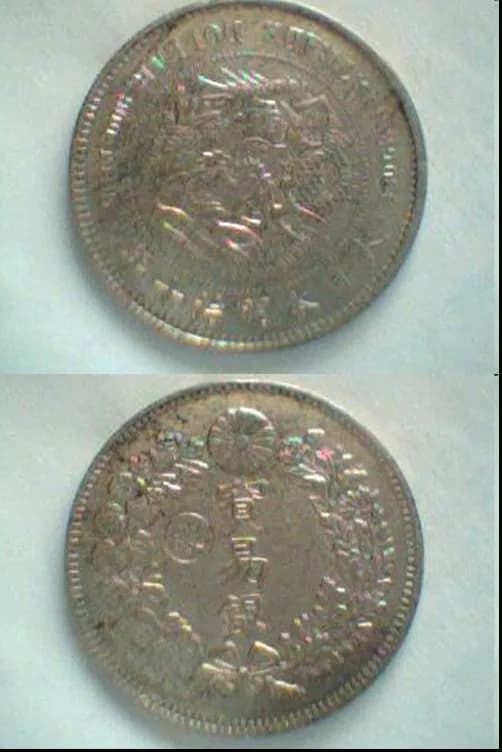
Image: Modern Japanese coinage / photographed by Samuel Ho / Wikimedia Commons / CC BY-SA 3.0(source)
Tenshō Tsūhō — Exploring the History of Hole Coins
The hole coin attempted to be minted by Toyotomi Hideyoshi during his unification of Japan. Did the Tenshō Tsūhō actually exist? The mystery of monetary policy in the Sengoku period.
Subject coin: 天正通宝
Overview
The Tenshō Tsūhō, associated with the years 1587-1600, is an indispensable piece in the narrative of Japan's monetary history. It was a hole coin that Toyotomi Hideyoshi attempted to mint during his unification process. This article explores the Tenshō Tsūhō as a hole coin, from its historical background, minting technology, circulation, and its influence on later generations, following historical facts as a story. Understanding the historical context carried by this coin, which cannot be seen just from market numbers, surely changes how we perceive its value. The history of Japanese currency began with the Wadōkaichin minted in the Nara period, passed through the diverse gold and silver coins of the Edo period, and transitioned to modern coins in the Meiji era. For those who want to cover the basics, also check out Types and Identification of Hole Coins and Details of Kan'ei Tsūhō.
Specifications
- Denomination
- —
- Minting period
- 1587-1600
- Metal composition
- —
- Weight
- —
- Dimensions
- —
- Mintage
- 不詳(諸説あり)
- Mint supervisor
- 不詳
- Market price
- 状態により変動(落札履歴を参照)
The Era of Tenshō Tsūhō — Background of Minting
Image: Modern Japanese coinage / Coindesmonnaies / Wikimedia Commons / CC BY-SA 4.0(source)
The advent of Tenshō Tsūhō was deeply intertwined with the political and economic situations of its time. Hole coins were minted to address the financial and distribution challenges faced by rulers, born out of the societal needs of the period. Starting from the background of why these coins were necessary in such a historical context is essential to understanding the coin's historical position as purportedly issued during the Tenshō era (1573-1592). Records from the early Edo period mention this, but the minting amount is considered to be very limited, a fact crucial to comprehending its historical place. Check Auction Prices for Old Coins for more depth. Considering the prices and systems of the minting era, even coins of the same name can have vastly different implications depending on their issuance period. Existing pieces wear and oxidize over time, so items that have retained the state of their minting period grow rarer with time. The market valuation intertwines scarcity, preservation condition, and collector popularity, which together determine the price; no single factor can explain it alone.
How Tenshō Tsūhō Was Made — Material and Technology
Image: Modern Japanese coinage / Coindesmonnaies / Wikimedia Commons / CC BY-SA 4.0(source)
An indelible part of discussing the value of Tenshō Tsūhō is its minting material and craftsmanship. Hole coins starkly retain the handiwork of artisans at the time in metal composition and finish technology, directly affecting their modern evaluation. By carefully tracing the selection of materials and the production process, the technological accumulation packed into each coin becomes visible. Regarded as part of Toyotomi Hideyoshi's currency reform efforts during his unification period, this understanding is critical to grasping the coin's historical position. Refer to Market Charts for Price Trends for deeper insight. Existing specimens wear and oxidize over time, so items maintaining their condition from the minting period increase in rarity over time. The market value is determined by the intertwining of scarcity, preservation condition, and collector popularity; no single factor alone explains the price. Grasping basic features like inscription styles, metal color tones, dimensions, and weight are the first steps in discerning authenticity and lineage. Learning historical backgrounds helps sense cultural richness exclusive to the currency that numbers and figures do not measure. As one continues collecting, interconnected understanding of period backgrounds and minting circumstances for each type grows into multifaceted knowledge.
Tenshō Tsūhō and Daily Life — Circulation and Economy
Image: Modern Japanese coinage / Coindesmonnaies / Wikimedia Commons / CC BY-SA 4.0(source)
Once issued, the Tenshō Tsūhō changed hands among people and was used in daily life. How hole coins circulated in towns and impacted prices and transactions is central to understanding monetary history. Through the economic movements and lay reactions of the time, this coin's role becomes apparent. It is crucial to note that there are very few existing examples, leaving much unknown with numerous theories, to fully understand its historical position. For more depth, refer to Coin Grading Standards. The market valuation intertwines scarcity, preservation condition, and collector popularity, which together determine the price; no single factor can explain it alone. Grasping basic features like inscription styles, metal color tones, dimensions, and weight are the first steps in discerning authenticity and lineage. Learning historical backgrounds helps sense cultural richness exclusive to the currency that numbers and figures do not measure. As one continues collecting, interconnected understanding of period backgrounds and minting circumstances for each type grows into multifaceted knowledge. A single old coin reflects the era's economic policies and people's lives, with changing value perspectives as more background is understood.
Legacy of Tenshō Tsūhō — Impact on Later Generations
Image: Modern Japanese coinage / Coindesmonnaies / Wikimedia Commons / CC BY-SA 4.0(source)
Even after the era ended, Tenshō Tsūhō left its mark on subsequent coins and the history of collecting. The positioning of hole coins in the context of re-minting, abolition, and succession, and their evaluation in modern times, is looked back upon. Reflecting on what past coins mean in today's market enhances valuative discernment. The possibility of intention to parallel circulation with Ōban (天正大判) remains a critical part of understanding its historical positioning. Refer to Price Watch with Vault for Coins of Interest for further understanding. Grasping basic features like inscription styles, metal color tones, dimensions, and weight are the first steps in discerning authenticity and lineage. Learning historical backgrounds helps sense cultural richness exclusive to the currency that numbers and figures do not measure. As one continues collecting, interconnected understanding of period backgrounds and minting circumstances for each type grows into multifaceted knowledge. A single old coin reflects the era's economic policies and people's lives, with changing value perspectives as more background is understood. Taking into account the prices and systems of the minting era, coins sharing the same name can have significantly different meanings based on their issuance period.
Value & Rarity
The market value of Tenshō Tsūhō is determined by three factors: scarcity, preservation state (grade), and collector popularity. Even within the same category of hole coins, differences in minting periods, inscription styles, or near-unused conditions can lead to price differences up to several folds. Brands with limited existing quantities appear less frequently on the market, with well-preserved specimens growing rarer as years pass. When analyzing market trends, it's prudent to verify transact prices across multiple cases rather than relying on offered prices. Latest price movements can be tracked using Price Watch with Vault for Coins of Interest. The market assessment appreciates the intertwining of scarcity, preservation state, and collector popularity; no single factor can explain prices alone. Recognizing basic features like inscription styles, metal color tones, dimensions, and weight helps ascertain authenticity and lineage.
Conclusion
The Tenshō Tsūhō was born out of the needs of the 1587-1600 period, played its role in people's lives, and left a footprint on subsequent generations. Knowing the history behind a piece of currency fosters a discerning eye that cannot be achieved by mere market numbers. For those interested in hole coins, it is advisable to gradually develop individual judgment axes by patiently comparing multiple transaction data.
Related Stories
Naga-nen Taihō — Tracing the History of Ancient Coinage
The 7th coin of the Kōchō jūni-sen, issued in Shōwa 15 (848) during the reign of Emperor Ninmyō. From this time, the gap between the actual and nominal value of coins became serious.
Coin StoryFuhonsen — Solving the Mystery of the Oldest Coin from the Asuka Period
Japan's oldest circulating currency unearthed in Nara, Asuka
Coin StoryFuhon-sen — Tracing the History of Ancient Coins
In 1999, excavations in Asuka unearthed 'Japanese coins older than Wadōkaichin'. Why was Fuhon-sen made and why was it forgotten?
Related Encyclopedia Entries
Introduction to Holed Coins
Conclusion: Holed coins offer an accessible entry point to numismatics, providing intellectual investment opportunities where knowledge and experience uncover rarity and value.
EncyclopediaThe World of Kanei Tsuho
Conclusion: Kanei Tsuho, the cornerstone currency of the Edo economy, offers profound value for both collection and investment by discerning its mother coins and rare variant calligraphies.
EncyclopediaTenpo Tsuho
Conclusion: Tenpo Tsuho is a large, highly collectible and diverse Anasen, suitable for both investment and collection due to its varieties of Honza-sen and Mitsuchu-sen.
Dealers
Dealers Handling This Category
A reference when considering a sale or appraisal. All are dealers and auction houses with a proven track record.
Japan Coin Auction (JCA)
Tokyo
Holds regular auctions with reliable hammer price data, making it a useful resource for tracking market values. Caters to a wide range of collectors from beginners to advanced buyers.
Osaka Numismatic Auction
Osaka
A Kansai-based coin auction house with particular strength in regional and hole coins.
Ginza Coins
Ginza, Chuo-ku, Tokyo
One of Japan's most established numismatic dealers. The scale and variety of their regular auctions is among the largest in the country. Their catalogs are considered a benchmark for market pricing.