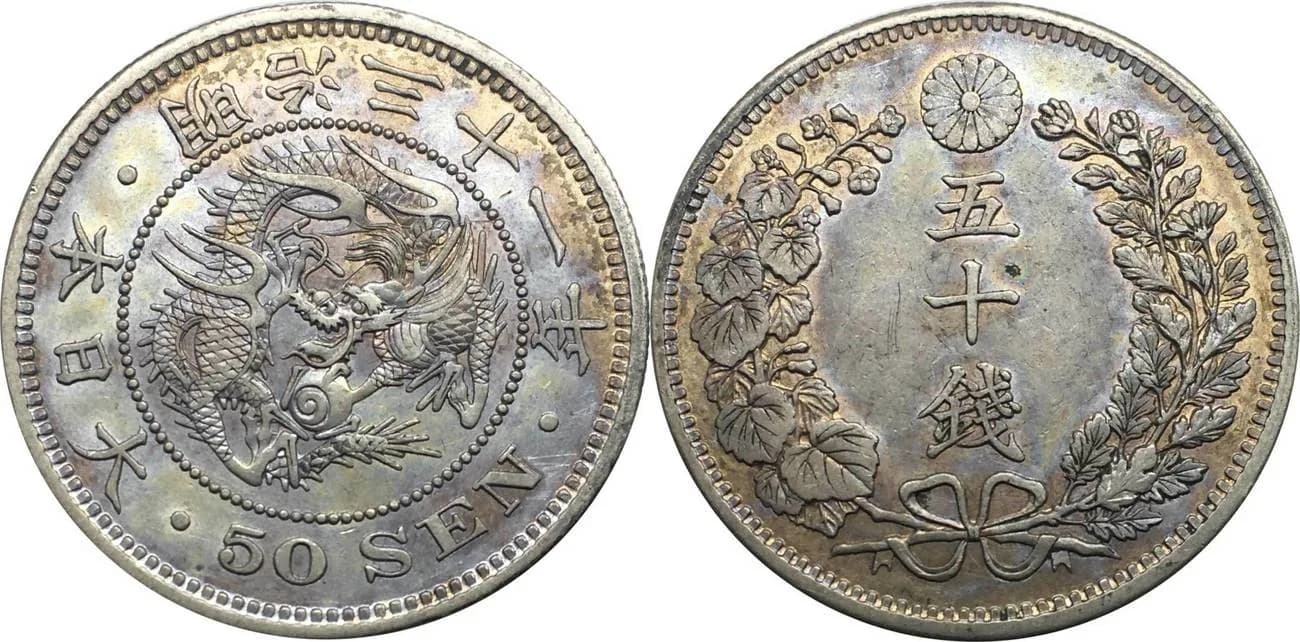
Image: Modern Japanese coinage / The government of the Empire of Japan. / Wikimedia Commons / Public domain(source)
Fuhon-sen — Tracing the History of Ancient Coins
In 1999, excavations in Asuka unearthed 'Japanese coins older than Wadōkaichin'. Why was Fuhon-sen made and why was it forgotten?
Subject coin: 富本銭
Overview
Fuhon-sen is an indispensable piece for discussing the Japanese monetary history between 683-708. In 1999, excavations in Asuka unearthed 'Japanese coins older than Wadōkaichin'. Why Fuhon-sen was made and why it was forgotten is explored in this article, tracing the coin through historical facts from its birth context, minting techniques, circulation realities, to its legacy. Understanding the historical context this coin carries will greatly change the perception of its value beyond mere market figures. Japanese coin history begins with the Nara period's Wadōkaichin, continues through the diverse gold and silver coins of the Edo period, and moves into modern currency in the Meiji period. For those who want to start from the basics, please also refer to Overview and Charm of Ancient Coins and Detailed Explanation of Wadōkaichin.
Specifications
- Denomination
- —
- Minting period
- 683-708
- Metal composition
- —
- Weight
- —
- Dimensions
- —
- Mintage
- 不詳(諸説あり)
- Mint supervisor
- 不詳
- Market price
- 状態により変動(落札履歴を参照)
The Era of Fuhon-sen — Background of Minting
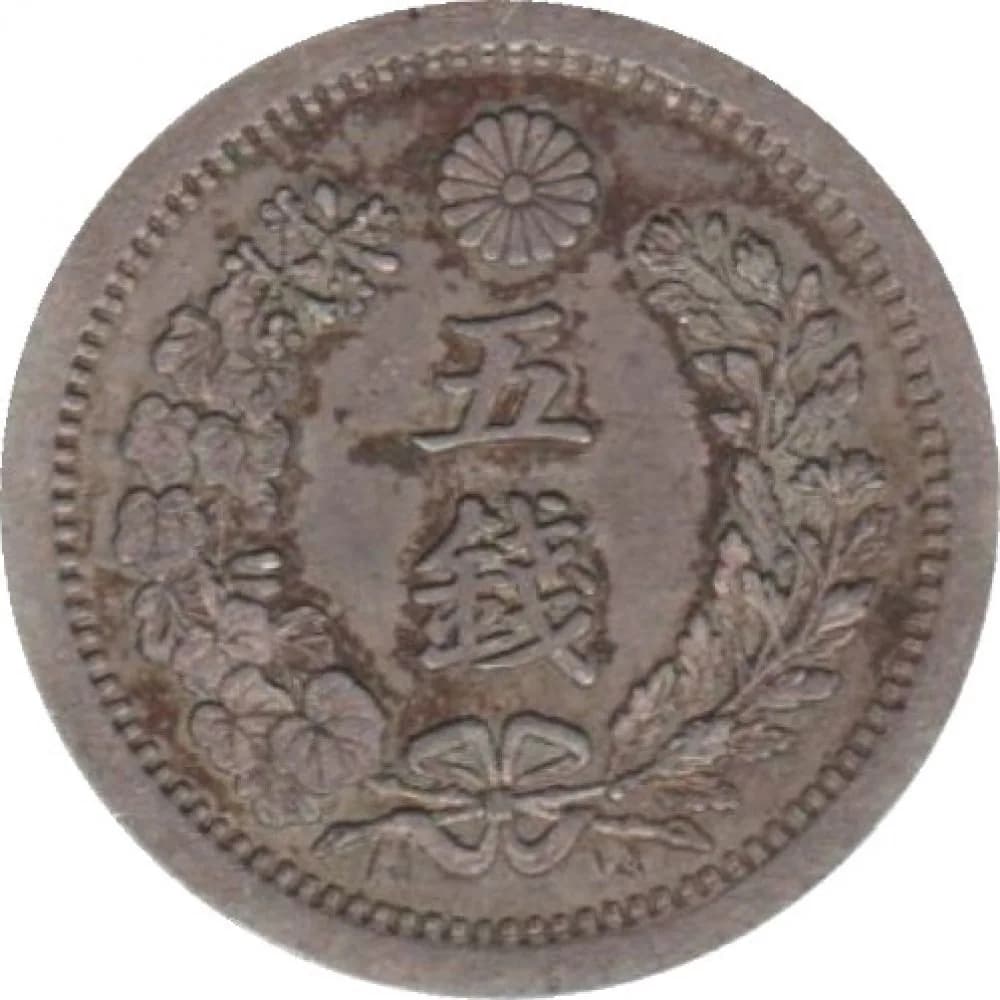
Image: Modern Japanese coinage / Coindesmonnaies / Wikimedia Commons / CC BY-SA 4.0(source)
The backdrop against which Fuhon-sen emerged is deeply tied to the political and economic circumstances of its time. Ancient coins were minted as a response to the financial and distribution challenges faced by rulers and were born out of the needs of the society at the time. Let's begin by examining the starting point of why this coin was necessary under the circumstances of its time. The fact that it is estimated to be a coin from around the 12th year of Emperor Tenmu (683) is crucial to understanding its historical positioning. Continued debate over its status as a 'candidate for Japan's oldest coin' older than Wadōkaichin (708) is essential to understanding its historical positioning. Additionally, refer to Check Auction Prices for Ancient Coins for deeper understanding. When considering the economic conditions and systems of the minting time, it becomes clear that the significance of a coin with the same name can greatly differ depending on its issuance period. Existing specimens wear and oxidize over time, making those in mint condition increasingly rare over the years. Market valuation is determined by the intertwining of rarity, preservation state, and collector interest; price cannot be explained by any single factor alone.
How Fuhon-sen Was Made — Materials and Techniques
Image: Modern Japanese coinage / Coindesmonnaies / Wikimedia Commons / CC BY-SA 4.0(source)
The materials and methods of minting are essential in discussing the value of Fuhon-sen. Ancient coins strongly reflect the craftsmanship of artisans of the time through the alloy mix and finishing techniques, which directly affect their contemporary evaluation. By meticulously tracing the material choices and the making process, one can see the accumulation of techniques embodied in each piece. The fact of large discoveries at the Asukaike site (Nara Prefecture) in 1999 is crucial for understanding its historical positioning. For further understanding, refer to Verify Price Trends on Market Charts. Existing specimens wear and oxidize over time, so those preserved in mint condition become increasingly rare. Market valuation is determined by the intertwining of rarity, preservation state, and collector interest; price cannot be explained by any single factor alone. Recognizing basics such as character script, alloy color, dimensions, and weight is the first step in discerning authenticity and lineage. Understanding the historical background enables one to feel the unique cultural depth of a coin that can't be measured by market numbers alone. Continuing collection leads to an interconnected growth of knowledge about the historical background and mint conditions by denomination.
Fuhon-sen and People's Lives — Circulation and Economy
Image: Modern Japanese coinage / Coindesmonnaies / Wikimedia Commons / CC BY-SA 4.0(source)
After issuance, Fuhon-sen passed from hand to hand and was used in daily life. How ancient coins circulated in the market and impacted prices and transactions is central to understanding currency history. By examining the economic movements and public reactions of the time, the role played by this coin is interpreted. The fact of the 'Fuhon' two characters and star and arabesque patterns is vital for understanding its historical position. Refer to Standards of Ancient Coin Grading for deeper understanding. Market valuation is determined by the intertwining of rarity, preservation state, and collector interest; price cannot be explained by any single factor alone. Recognizing basics such as character script, alloy color, dimensions, and weight is the first step in discerning authenticity and lineage. Understanding the historical background enables one to feel the unique cultural depth of a coin that can't be measured by market numbers alone. Continuing collection leads to an interconnected growth of knowledge about the historical background and mint conditions by denomination. A single ancient coin is a document reflecting the economic policies and lives of people at the time, and knowing the background changes the perception of its value.
Legacy of Fuhon-sen — Impact on Posterity
Image: Modern Japanese coinage / Coindesmonnaies / Wikimedia Commons / CC BY-SA 4.0(source)
Even after its time, Fuhon-sen left its mark on successor currencies and collecting history. Reviewing how ancient coins were perceived in the cycles of re-minting, abolition, and succession, and how they are evaluated today, enhances the precision of value judgment. The possibility of being made for rituals or magical purposes rather than circulation (though there are various theories) is key to understanding its historical status. For further understanding, refer to Monitor Prices of Interested Coins with Vault. Recognizing basics such as character script, alloy color, dimensions, and weight is the first step in discerning authenticity and lineage. Understanding the historical background enables one to feel the unique cultural depth of a coin that can't be measured by market numbers alone. Continuing collection leads to an interconnected growth of knowledge about the historical background and mint conditions by denomination. A single ancient coin is a document reflecting the economic policies and lives of people at the time, and knowing the background changes the perception of its value. Considering prices and systems of the minting era, it's evident that coins with the same name hold different significances depending on their issuance terms.
Value & Rarity
The market value of Fuhon-sen is determined by rarity, preservation state (grade), and collector interest. Even among ancient coins, price can vary from a few times to several dozen times depending on minting era, script differences, and whether it is close to an unused state. Fewer brands in existence mean fewer opportunities to appear on the market, and those in good condition become more rare as years go by. When analyzing the market, it is prudent to confirm realized auction prices from multiple instances rather than listed prices. The latest trends can be verified with Monitor Prices of Interested Coins with Vault. Market valuation is intertwined through rarity, preservation state, and collector interest, and price cannot be explained by any single factor. Recognizing basics such as character script, alloy color, dimensions, and weight is the first step in discerning authenticity and lineage.
Conclusion
Fuhon-sen was born out of the needs during 683-708, played a role in people's lives, and left a legacy for posterity. Understanding the history behind a coin fosters a keen discernment that can't be gained from market numbers alone. For those interested in ancient coins, it's recommended to gradually develop one's criteria by carefully comparing multiple trade data without haste.
Related Stories
Fujushanpō — The End of Kōchōsen
The Story of the Fifth Kōchōsen Issued by Emperor Saga: Its Rise and Fall
Coin StoryKan'ei Tsuho Tetsusen — The Unorthodox Currency Born from Copper Shortage
A Historical Scene Where Edo-period Minting Techniques and Economic Struggles Intersected
Coin StoryKan'ei Tsūhō — "Japan's Longest-Lived Coin" in Circulation for 230 Years
The history of the hole coin that continued to be used from the unification of Edo coinage in Kan'ei 13 (1636) to Meiji
Dealers
Dealers Handling This Category
A reference when considering a sale or appraisal. All are dealers and auction houses with a proven track record.
Japan Coin Auction (JCA)
Tokyo
Holds regular auctions with reliable hammer price data, making it a useful resource for tracking market values. Caters to a wide range of collectors from beginners to advanced buyers.
Ginza Coins
Ginza, Chuo-ku, Tokyo
One of Japan's most established numismatic dealers. The scale and variety of their regular auctions is among the largest in the country. Their catalogs are considered a benchmark for market pricing.