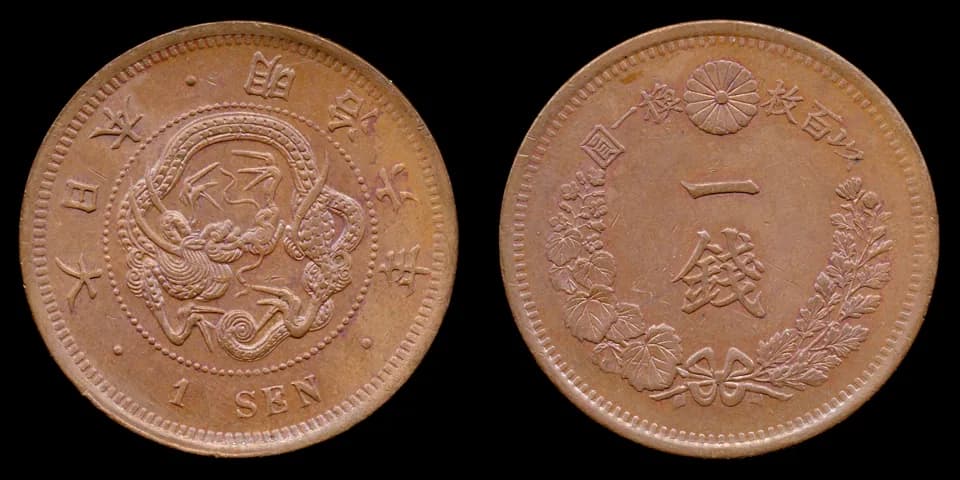
Image: Modern Japanese coinage / As6673 / Wikimedia Commons / CC BY-SA 3.0(source)
Meiji Dragon 2 Sen Copper Coin — Tracing the History of Modern Currency
The large copper coin of Meiji. A tale of a short-lived large copper coin abolished in just over a decade — reflecting the 'value perception of copper' in the early modern era, weighing over 14g.
Subject coin: 明治竜2銭銅貨
Overview
The Meiji Dragon 2 Sen copper coin is an essential piece when discussing the history of Japanese currency from 1873 to 1887. As a large copper coin of the Meiji era, its weight of over 14g reflects the 'value perception of copper' in the early modern period — a short-lived large copper coin abolished in just over a decade. Here, we trace the story of the Meiji Dragon 2 Sen copper coin as a modern currency, from its historical background at the time of its creation, its minting technology, its actual distribution, to its impact on future generations. Understanding the historical context this coin carries, unseen through mere market numbers, will significantly alter its perceived value. The history of Japanese currency began with Wadōkaichin minted in the Nara period, passed through various gold and silver coins in the Edo period, and was succeeded by modern currency in the Meiji period. For those who want to grasp the basics, please also refer to Overview of Modern Currency Value and Identification and Overview of Meiji Period Currency.
Specifications
- Denomination
- —
- Minting period
- 1873-1887
- Metal composition
- —
- Weight
- —
- Dimensions
- —
- Mintage
- 不詳(諸説あり)
- Mint supervisor
- 不詳
- Market price
- 状態により変動(落札履歴を参照)
The Era of the Meiji Dragon 2 Sen Copper Coin — Minting Background
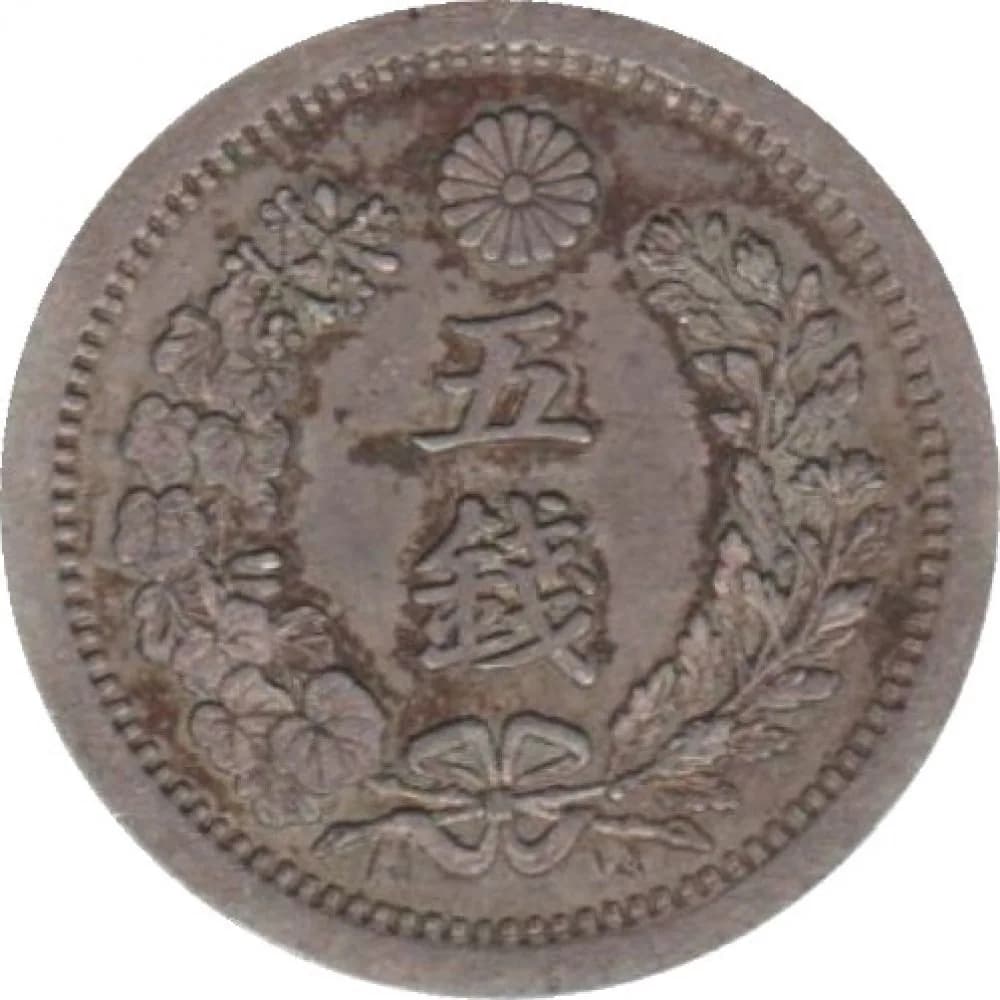
Image: Modern Japanese coinage / Coindesmonnaies / Wikimedia Commons / CC BY-SA 4.0(source)
The background of the Meiji Dragon 2 Sen copper coin involves the political and economic circumstances of the time. Modern currency was minted in response to the fiscal and distribution challenges faced by rulers and was born out of the social needs of the time. First, let's examine the starting point of why this currency was necessary and under what circumstances it emerged. The minting facts from Meiji 6 (1873) to Meiji 20 (1887) are essential in understanding the historical positioning of this currency. Being part of the modern copper coin series along with 1 Sen, half Sen, and 1 Rin is indispensable for understanding its historical significance. Refer to Check Auction Winning Prices for Old Coins for further insights. Considering the prices and systems of the minting era, it is clear that the significance of a currency with the same name can vary greatly depending on the issuance period. Existing specimens become more rare as time passes due to wear and oxidation, and those that maintain their original minting condition become increasingly rare. Market evaluation is determined by the interplay of rarity, preservation condition, and collection popularity, and cannot be explained by just one of these factors.
How the Meiji Dragon 2 Sen Copper Coin Was Made — Materials and Technology
Image: Modern Japanese coinage / Coindesmonnaies / Wikimedia Commons / CC BY-SA 4.0(source)
Discussing the value of the Meiji Dragon 2 Sen copper coin is incomplete without addressing the materials and methods of its minting. Modern coins intensely reflect the craftsmanship of the workers of the time in the metal alloy and finishing technology, which directly connects to contemporary evaluation. By carefully tracing the selection of materials and manufacturing process, one can see the accumulation of technology embedded in a single piece. The fact of its 14.26g weight and being made of copper (large size) is crucial for understanding its historical position. Refer to Price Movement with Market Charts for further insights. Existing specimens become more rare as time passes due to wear and oxidation, and those maintaining their original minting condition become increasingly scarce. Market evaluation is determined by rarity, preservation condition, and collection popularity, and cannot be explained by just one factor. Recognizing the font of the inscription, the color tone of the metal, and basic points such as dimensions and weight is the first step in discerning authenticity and lineage. By learning the historical background, the cultural depth unique to this currency, not measurable by mere market numbers, can be appreciated. As one continues collecting, the historical contexts and minting circumstances of each denomination interconnect, and the knowledge develops three-dimensionally.
Meiji Dragon 2 Sen Copper Coin and People's Lives — Distribution and Economy
Image: Modern Japanese coinage / Coindesmonnaies / Wikimedia Commons / CC BY-SA 4.0(source)
Once issued, the Meiji Dragon 2 Sen copper coin actually passed from hand to hand among people and was used in daily life. Understanding how modern coins circulated in the market and affected prices and transactions is central to understanding currency history. Through the economic movements of the time and the reactions of the common people, we interpret the role this currency played. The fact: obverse side: dragon pattern / reverse side: '2 SEN' and chrysanthemum crest is indispensable for understanding its historical positioning. Refer to Coin Grading Standards for further insights. Market evaluation is determined by rarity, preservation condition, and collection popularity, and cannot be explained by just one factor. Recognizing the font of the inscription, the color tone of the metal, and basic points such as dimensions and weight is the first step in discerning authenticity and lineage. By learning the historical background, the cultural depth unique to this currency, which cannot be measured by mere market numbers, can be appreciated. As one continues collecting, the historical contexts and minting circumstances of each denomination interconnect, and the knowledge develops three-dimensionally. A single old coin serves as a document reflecting the economic policies and the lives of people of its era — understanding the background alters the perceived value.
What the Meiji Dragon 2 Sen Copper Coin Left Behind — Influence on Future Generations
Image: Modern Japanese coinage / Coindesmonnaies / Wikimedia Commons / CC BY-SA 4.0(source)
The Meiji Dragon 2 Sen copper coin left an influence on successive currencies and the history of collection even after its era ended. Within the processes of re-minting, abolition, and succession of modern coins, we reflect on how they were positioned and evaluated in modern times. Considering what a coin from the past represents in today's market enhances the accuracy of value judgments. The fact: large copper coins used for everyday low-value transactions is indispensable to understanding its historical positioning. Refer to Price Monitoring of Coins in Vault for further insights. Recognizing the font of the inscription, the color tone of the metal, and basic points such as dimensions and weight is the first step in discerning authenticity and lineage. By learning the historical background, the unique cultural depth of this currency becomes perceptible beyond mere market numbers. As one continues collecting, the historical contexts and minting circumstances of each denomination interconnect, and the knowledge develops three-dimensionally. A single old coin serves as a document reflecting the economic policies and the lives of people of its era — understanding the background alters the perceived value. When considering the prices and systems of the minting era, it is clear that the significance of even coins with the same name can vary greatly depending on their issuance periods.
Value & Rarity
The market value of the Meiji Dragon 2 Sen copper coin is determined by the three factors of rarity, preservation condition (grade), and collection popularity. Even among the same modern currency, the price can vary several to several dozen times depending on differences in minting periods, inscriptions, and whether they are close to an unused state. The fewer remaining coins of a denomination, the fewer opportunities there are for them to appear on the market, and well-preserved specimens increase in rarity over time. When reading the market, it is prudent to confirm the actual confirmed transaction prices rather than listed prices through multiple cases. Latest price movements can be seen with Price Monitoring for Coins in Vault. Market evaluation is determined by the interplay of rarity, preservation condition, and collection popularity, and cannot be explained by just one factor. Recognizing the font of the inscription, the color tone of the metal, and basic points such as dimensions and weight is the first step in discerning authenticity and lineage.
Conclusion
The Meiji Dragon 2 Sen copper coin was born out of the necessity of the era from 1873 to 1887, fulfilled a role in people's lives, and left a trace for future generations. Knowing the history behind a single piece of currency fosters a discerning eye beyond mere market numbers. For those interested in modern currency, it is recommended to take time comparing multiple trading data while gradually developing your own criteria for judgment.
Related Stories
60th Anniversary of Local Autonomy Law 500 Yen Bicolor – 10-Year Journey Across 47 Prefectures
Commemorative Coin Series Born from the Law of 1947
Coin StoryHōō 100-Yen Silver Coin — Wings of Recovery, and the End of the Silver Coin Era
The Brilliance of the High-Growth Period and the Short Life of a Silver 100-Yen Coin Buffeted by Soaring Silver Prices
Coin StoryCommemorative Coins for the Crown Prince's Wedding — Tracing the History of Commemorative Currency
In 1993, commemorative coins of a 50,000 yen gold coin and a 10,000 yen silver coin were issued for the Crown Prince's (current Emperor) marriage, attracting 1,000,000 applications for the 'Congratulations Currency'
Dealers
Dealers Handling This Category
A reference when considering a sale or appraisal. All are dealers and auction houses with a proven track record.
Ginza Coins
Ginza, Chuo-ku, Tokyo
One of Japan's most established numismatic dealers. The scale and variety of their regular auctions is among the largest in the country. Their catalogs are considered a benchmark for market pricing.
Taisei Coins
Tokyo
A dealer with an international network. Offers advanced services such as consignment to overseas auctions and NGC/PCGS grading submission. Recommended for high-value or internationally recognized coins.
Tokyo Coin Club
Tokyo
A membership-based coin dealer known for carefully selected, quality inventory.