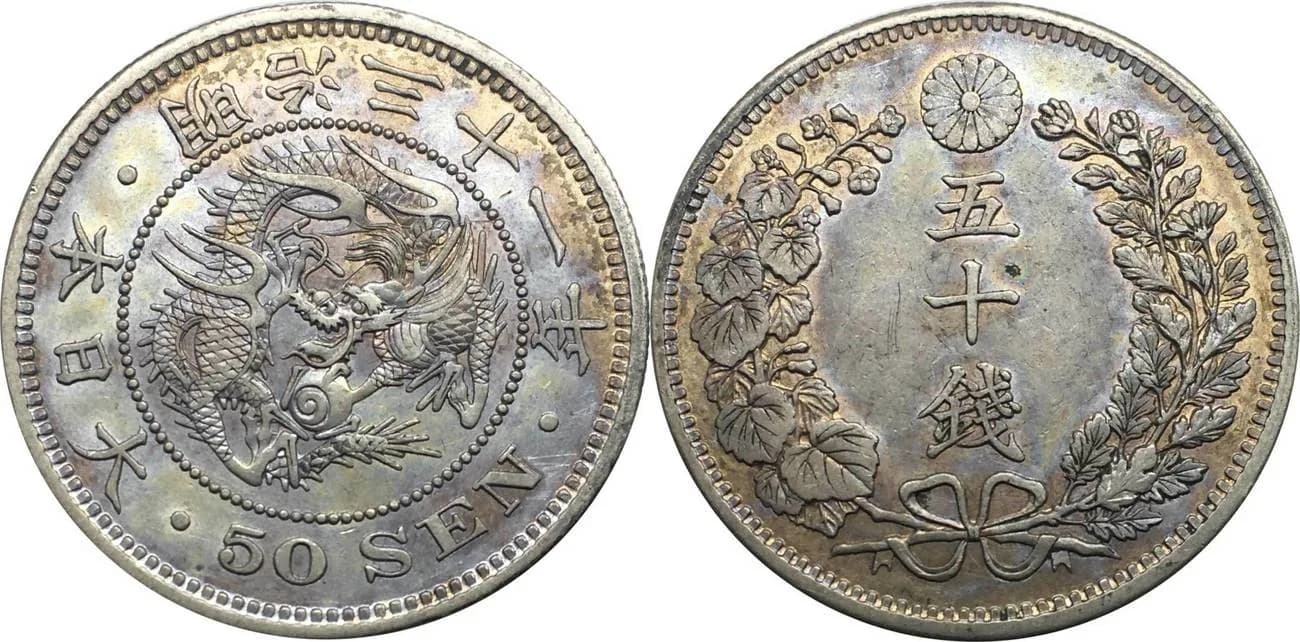
Image: Modern Japanese coinage / The government of the Empire of Japan. / Wikimedia Commons / Public domain(source)
Naga-nen Taihō — Tracing the History of Ancient Coinage
The 7th coin of the Kōchō jūni-sen, issued in Shōwa 15 (848) during the reign of Emperor Ninmyō. From this time, the gap between the actual and nominal value of coins became serious.
Subject coin: 長年大宝
Overview
Naga-nen Taihō is an indispensable piece for discussing the monetary history of Japan around 848-859. Issued in Shōwa 15 (848) during the reign of Emperor Ninmyō, it is the 7th coin of the Kōchō jūni-sen. At this time, the gap between the actual and nominal value of coins became serious. This article traces the Naga-nen Taihō as an ancient currency, from its historical background, minting technology, and circulation, to its impact on future generations. By understanding the historical context this coin bears beyond mere market numbers, one's perception of its value should greatly change. The history of Japanese currency evolved from the Wadō Kaichin minted in the Nara period, through the diverse gold and silver coins of the Edo period, to the modern currency of the Meiji era. Those who wish to grasp the basics may also refer to Overview and Appeal of Ancient Coins and Detailed Explanation of Wadō Kaichin.
Specifications
- Denomination
- —
- Minting period
- 848-859
- Metal composition
- —
- Weight
- —
- Dimensions
- —
- Mintage
- 不詳(諸説あり)
- Mint supervisor
- 不詳
- Market price
- 状態により変動(落札履歴を参照)
The Era When Naga-nen Taihō Was Born — Background of Minting
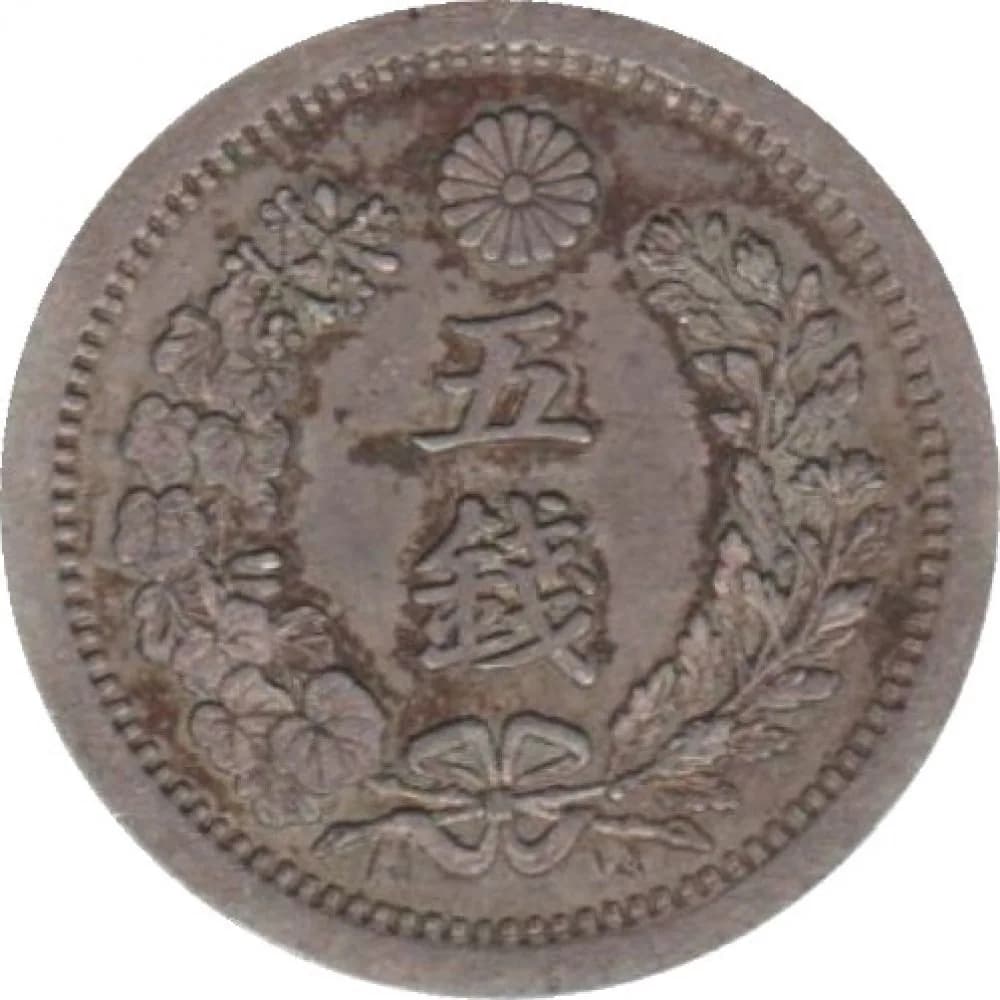
Image: Modern Japanese coinage / Coindesmonnaies / Wikimedia Commons / CC BY-SA 4.0(source)
The background for the emergence of Naga-nen Taihō is deeply tied with the political and economic circumstances of its time. Ancient coins were minted to address fiscal and distributional challenges faced by rulers, emerging from the necessities of the society then. Firstly, let's examine the starting point of what kind of era conditions led to the need for this coin. The fact that it was issued in Shōwa 15 (848) during Emperor Ninmyō's period is crucial for understanding this coin's historical positioning. Circulation to the provinces remained almost limited to the capital surroundings, which is indispensable for understanding this coin's historical placement. Checking auction-winning prices at Old Coin Auctions will deepen your understanding. Considering prices and systems of the minting era, it is evident that coins with the same name can bear significantly different meanings depending on the issuing period. As existing specimens wear and oxidize over time, those maintaining their condition from when minted become increasingly rare as time goes by. Market evaluations are decided by the intertwining axes of rarity, preservation condition, and collection popularity, none of which alone can explain the price.
How Was Naga-nen Taihō Made? — Material and Technology
Image: Modern Japanese coinage / Coindesmonnaies / Wikimedia Commons / CC BY-SA 4.0(source)
To discuss the value of Naga-nen Taihō, the material and manufacturing process cannot be overlooked. Ancient coins reflect the craftsmanship of workers in metal composition and finishing techniques, which is directly connected to modern evaluations. By carefully following the choice of materials and making process, the technological accumulation embodied in a single piece becomes visible. The fact that it is the 7th coin of the Kōchō jūni-sen is crucial for understanding the historical positioning of this coin. Checking price trends in the market chart at Market Index will deepen your understanding further. Existing specimens wear and oxidize over time, so items that preserve their condition from the time of minting become rarer as time passes. Market evaluations are determined by the interplay of rarity, preservation state, and collecting popularity, and no single factor alone can explain the price. Understanding the basic points of interest such as the script style, hue of the metal, dimensions, and weight is the first step in discerning authenticity and lineage. Learning about the historical background allows one to feel the cultural depth unique to the coin, beyond just market numbers. As collection continues, the historical context and minting circumstances of each denomination interlink, gradually shaping a three-dimensional knowledge base.
Naga-nen Taihō and People’s Lives — Circulation and Economy
Image: Modern Japanese coinage / Coindesmonnaies / Wikimedia Commons / CC BY-SA 4.0(source)
Naga-nen Taihō, after issuance, actually exchanged hands among people and was used in daily life. Understanding how ancient coins circulated in the market and what impact they had on prices and transactions is pivotal to understanding monetary history. Deciphering the role this coin played through the economic movements and public reactions of the time is essential. The fact that 'Naga-nen' is a name attached to the coin, not an era name, is vital to understanding the coin's historical positioning. Consulting Old Coin Grading Standards will deepen your understanding further. Market evaluations are determined by the interplay of rarity, preservation condition, and collecting popularity, no single factor can alone explain the price. Knowing the basics like script style, hue of the metal, dimensions, and weight is the first step in discerning authenticity and lineage. Learning about the historical context allows appreciation of the cultural depth unique to the coin, beyond mere market numbers. As collection continues, historical context and minting circumstances for each denomination interlink, forming an increasingly comprehensive knowledge base. A single ancient coin serves as a document reflecting the economic policy and lifestyle of the era, changing one’s perception of value the more the background is understood.
What Naga-nen Taihō Left Behind — Impact on Later Generations
Image: Modern Japanese coinage / Coindesmonnaies / Wikimedia Commons / CC BY-SA 4.0(source)
Naga-nen Taihō, even after its era ended, left an influence on succeeding coins and the history of collecting. Reflecting on how ancient coins were positioned in refashioning, abolition, and succession, and how they are evaluated today, enhances the accuracy of value judgement. The fact that attempts to artificially maintain demand through the 'Chikusen Jōi Re' reached their limit is crucial for understanding this coin's historical positioning. Observing coins of interest with price monitoring in Vault at Vault will deepen understanding further. Understanding the basics such as script style, hue of the metal, dimensions, and weight is the first step in discerning authenticity and lineage. Learning about the historical context allows appreciation of the cultural depth unique to the coin, beyond mere market numbers. As collection continues, historical context and minting circumstances for each denomination interlink, forming an increasingly comprehensive knowledge base. A single ancient coin serves as a document reflecting the economic policy and lifestyle of the era, changing one’s perception of value the more the background is understood. Considering the price and systems at the time of minting shows that even coins with the same name can drastically differ in meaning by issuing period.
Value & Rarity
The market value of Naga-nen Taihō is determined by three factors: rarity, condition (grade), and collection popularity. Even among ancient coins, prices can vary several to tens of times depending on minting period, script style, and near-unused condition. Brands with limited existing numbers appear less frequently in the market, and better-preserved items become rarer over time. In reading the market trend, it is prudent to confirm actual winning bid prices across multiple cases rather than merely relying on list prices. The latest price movements can be observed at Vault. Market evaluations are determined by the intertwining axes of rarity, preservation state, and collection popularity, none of which alone can explain the price. Knowing fundamentals like the script style, metal color, dimensions, and weight helps in discerning authenticity and lineage.
Conclusion
Naga-nen Taihō arose from necessities of the era around 848-859, played its role in people’s lives, and left an imprint into future generations. Understanding the history behind a single coin fosters a keen discernment not obtained through market numbers alone. For those interested in ancient coins, it is advisable to gradually develop your judgment criteria while comparing various transaction data without haste.
Related Stories
Fuhonsen — Solving the Mystery of the Oldest Coin from the Asuka Period
Japan's oldest circulating currency unearthed in Nara, Asuka
Coin StoryFuhon-sen — Tracing the History of Ancient Coins
In 1999, excavations in Asuka unearthed 'Japanese coins older than Wadōkaichin'. Why was Fuhon-sen made and why was it forgotten?
Coin StoryFujushanpō — The End of Kōchōsen
The Story of the Fifth Kōchōsen Issued by Emperor Saga: Its Rise and Fall
Dealers
Dealers Handling This Category
A reference when considering a sale or appraisal. All are dealers and auction houses with a proven track record.
Japan Coin Auction (JCA)
Tokyo
Holds regular auctions with reliable hammer price data, making it a useful resource for tracking market values. Caters to a wide range of collectors from beginners to advanced buyers.
Ginza Coins
Ginza, Chuo-ku, Tokyo
One of Japan's most established numismatic dealers. The scale and variety of their regular auctions is among the largest in the country. Their catalogs are considered a benchmark for market pricing.