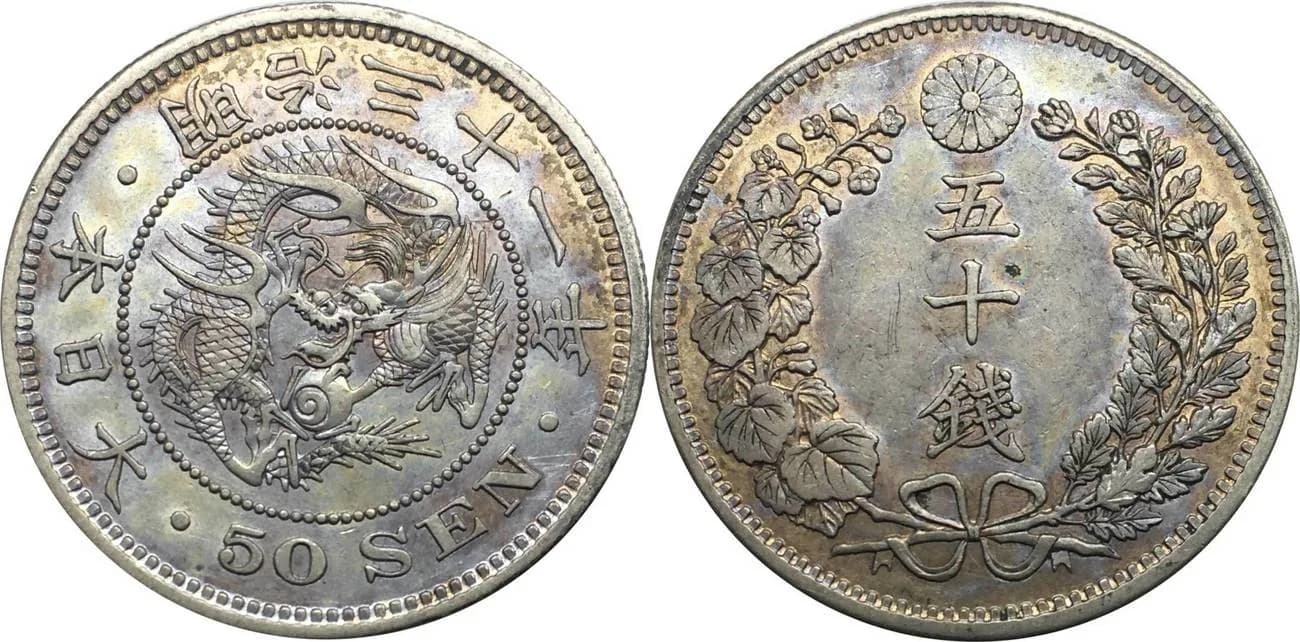
Image: Modern Japanese coinage / The government of the Empire of Japan. / Wikimedia Commons / Public domain(source)
Fuhonsen — Solving the Mystery of the Oldest Coin from the Asuka Period
Japan's oldest circulating currency unearthed in Nara, Asuka
Subject coin: 富本銭の発見
Overview
In the history of Japanese currency, Fuhonsen has long been shrouded in mystery. Discovered in 1999 at the Asukaike site in Nara Prefecture, this coin is believed to have been minted about 25 years earlier than the previously considered oldest coin, Wadōkaichin (和同開珎). Thought to have been created around the 12th year of Emperor Tenmu (683), it was initially believed to have served as an amulet, but the excavation suggested its use as circulating currency. This discovery significantly rewrites Japan's ancient economic history, and debates on 'Japan's oldest circulating currency' continue today. Fuhonsen is particularly noteworthy among the Overview and Appeal of Ancient Coins.
Specifications
- Denomination
- 不明(諸説あり)
- Minting period
- 683年頃〜708年
- Metal composition
- 銅製(諸説あり)
- Weight
- 不詳(諸説あり)
- Dimensions
- 直径約24mm
- Mintage
- 不詳(諸説あり)
- Mint supervisor
- 不詳
- Market price
- 数十万円〜数百万円(状態による)
The Era of Emperor Tenmu — Political and Economic Background
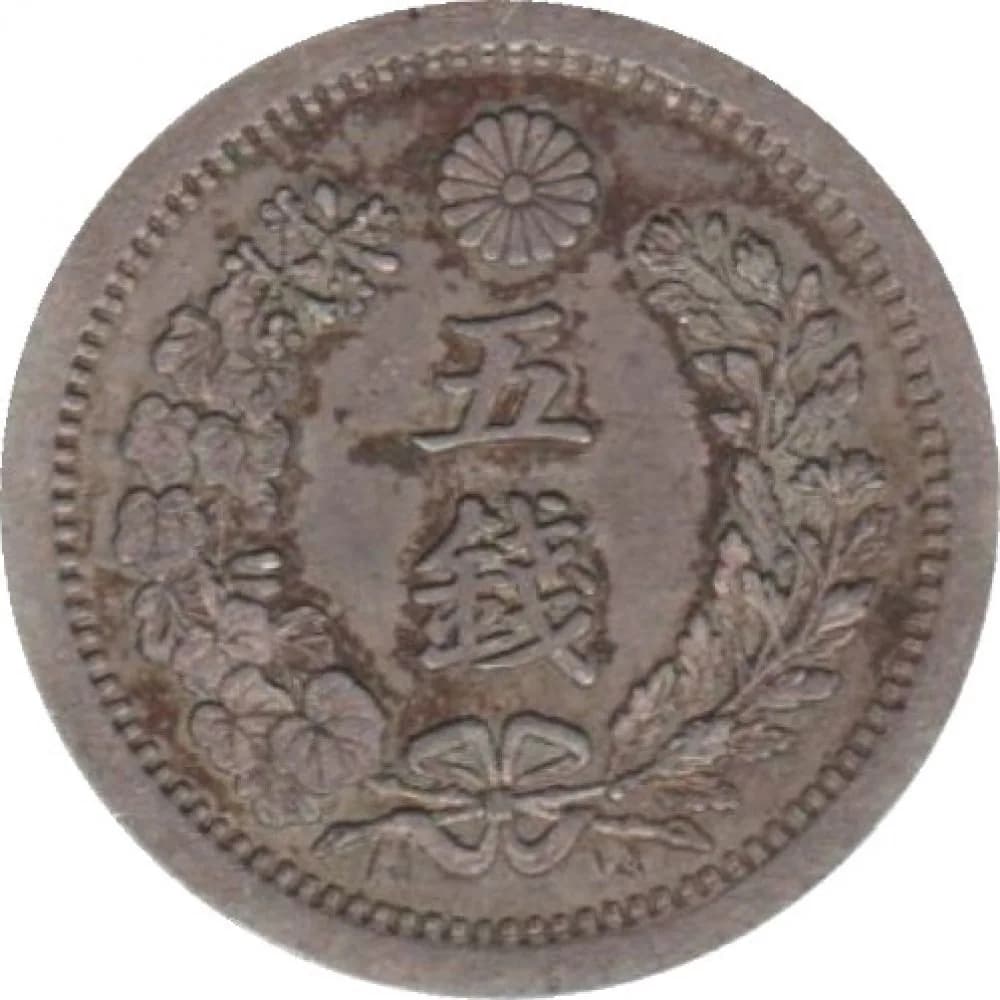
Image: Modern Japanese coinage / Coindesmonnaies / Wikimedia Commons / CC BY-SA 4.0(source)
The era of Emperor Tenmu, during which Fuhonsen is believed to have been minted, was a period when Japan began laying the foundations of a unified state. Emperor Tenmu ascended to the throne after the Jinshin War in 672 and governed from the Asuka Kiyomihara Palace. During this time, Japan was attempting various reforms to centralize power, and the introduction of a monetary system was considered part of these efforts.
In the 12th year of Emperor Tenmu (683), amidst active international trade and the demand for economic development, Fuhonsen was purportedly minted. Although a monetary system had already been introduced from Tang China, Japan aimed to emulate it. However, there are no concrete records of how Fuhonsen came to be minted, and it remains speculative. Some theories suggest it served as an amulet for state peace and prosperity. Thus, Fuhonsen possibly carried more than just monetary significance, potentially having political and religious meanings.
Additionally, during this time, Japan was striving to establish the Ritsuryō system to strengthen the power of the Yamato Court. The minting of Fuhonsen is positioned as part of the national development strategy. Furthermore, Fuhonsen may not have been intended for circulation but for having amuletic meanings, possibly influencing later coin issuance. These backgrounds highlight the historical value inherent in Fuhonsen.
The Minting Process of Fuhonsen — Technology and People
Image: Modern Japanese coinage / Coindesmonnaies / Wikimedia Commons / CC BY-SA 4.0(source)
Much of the individuals and technology involved in the production of Fuhonsen remain shrouded in mystery. However, some clues allow us to infer the manufacturing process to some extent. It is believed that Fuhonsen was primarily made of copper. This was based on technology transmitted from China and the Korean Peninsula, which coincided with the development of domestic copper mines in Japan.
Numerous casting molds and tools believed to have been used in production have been unearthed from the Asukaike site. These artifacts suggest that craftsmen of the time possessed advanced skills. The molds were intricately crafted, with characters and patterns on Fuhonsen clearly engraved, requiring high technical prowess for production.
Furthermore, the Asuka period was a time when Buddhism was spreading, and many crafts influenced by Buddhism were being produced. Fuhonsen might also have incorporated Buddhist designs, hinting at its role not only as currency but also carrying religious significance as an amulet.
Moreover, it is believed that the government's involvement in the minting of Fuhonsen was significant. The national centralized policies pursued under Emperor Tenmu likely involved the state leading the minting of currency. This indicates that both the skills of the technologists and the national policy deeply influenced the production of Fuhonsen.
Circulation of Fuhonsen and the Reaction of the Common People
Image: Modern Japanese coinage / Coindesmonnaies / Wikimedia Commons / CC BY-SA 4.0(source)
The fact that Fuhonsen was used as circulating currency was clarified by the mass excavation at the Asukaike site in Asuka Village, Nara Prefecture, in 1999. Previously, Fuhonsen was primarily thought of as an amulet, but excavation conditions revealed its circulation.
During the Asuka period, Japan had not yet fully transitioned into a monetary economy, but the circulation of Fuhonsen may have pioneered this shift. The common people of the time primarily engaged in barter-based life, with limited currency use. However, the circulation of Fuhonsen likely ushered a gradual increase in transactions not relying on barter.
The circulation of Fuhonsen is thought to have been mainly centered in the Asuka region, in line with its being the political and cultural hub of the time. The reaction from the common people was mixed; some resisted the use of currency, but gradually, its convenience was recognized and accepted.
Moreover, the introduction of Fuhonsen also impacted regional economies. With currency circulation, the value of goods became clearer, invigorating trade. This allowed regional specialties to be distributed to central areas, promoting regional economic development. Fuhonsen was not just an amulet but a force of societal transformation in its time.
The Influence of Fuhonsen on the Later Periods — Comparison with Wadōkaichin
Image: Modern Japanese coinage / Coindesmonnaies / Wikimedia Commons / CC BY-SA 4.0(source)
The discovery of Fuhonsen marked a significant turning point in the history of Japanese currency. It is believed to have been minted about 25 years earlier than Wadōkaichin (和同開珎), issued in 708, suggesting its potential as Japan's oldest circulating currency.
Wadōkaichin is considered the first official state-issued currency, marking the genuine start of Japan's currency system. As a precursor, Fuhonsen potentially helped solidify the concept of currency in Japan. Comparisons between Fuhonsen and Wadōkaichin have become a critical research theme in understanding the development of Japan's currency system.
The existence of Fuhonsen is claimed to have influenced later coin issuing. Particularly, the possible amuletic roles of Fuhonsen in addition to being a currency invite thought on the social and religious roles of currency. When Wadōkaichin was issued, the experience with Fuhonsen was likely utilized, leading to a more sophisticated monetary system.
Even today, Fuhonsen holds a vital place in understanding Japanese currency history. Its manufacturing technology, circulation patterns, and socio-economic impacts provide keys to understanding Japan's socio-economic scene of the time. Research on Fuhonsen continues, and with it, its value and impact will be further clarified.
Value & Rarity
The market value and rarity of Fuhonsen are notably high. Since its discovery in 1999, it has drawn attention among collectors due to its historical significance. As it holds the possibility of being Japan's oldest circulating currency, Fuhonsen is sometimes traded at high prices in the market. Depending on its condition, prices can range from several hundred thousand yen to several million yen.
Additionally, the rarity of Fuhonsen is also attributed to its excavation circumstances. As it is confirmed to have been found at the Asukaike site, its authenticity is highly valued. In contrast, items with unknown provenance or poor condition can decrease in market value.
Factors that further enhance Fuhonsen's value include its historical background and manufacturing technology. These are detailed in the Overview and Appeal of Ancient Coins, highlighting its value when considering the political and technical contexts of the time. For collectors, Fuhonsen holds significance beyond just an ancient coin, making its collection equivalent to holding a piece of history.
Related Guide: Check Auction Prices for Old Coins
Conclusion
The discovery of Fuhonsen in 1999 marked an important turning point in the history of Japanese currency. Its existence hints at the potential of being Japan's oldest circulating currency and serves as a key to understanding the economic and political background of the Asuka period. Research on Fuhonsen not only uncovers the history of currency but also brings to light the social structure and cultural transitions of the era.
The rarity and market value of Fuhonsen are attractive factors for collectors, representing historical significance equating to holding history in one's hand. Continued research on Fuhonsen is expected to further reveal its value. For those interested in Japan's ancient currency, Fuhonsen remains an indispensable subject.
Related Stories
Fuhon-sen — Tracing the History of Ancient Coins
In 1999, excavations in Asuka unearthed 'Japanese coins older than Wadōkaichin'. Why was Fuhon-sen made and why was it forgotten?
Coin StoryFujushanpō — The End of Kōchōsen
The Story of the Fifth Kōchōsen Issued by Emperor Saga: Its Rise and Fall
Coin StoryGenna Tsuho — Tracing the History of Holed Coins
Predecessor of the Kan'ei Tsuho. Why was the shogunate's second coin issued in Genna 3 (1617) replaced by the Kan'ei Tsuho in just 17 years?
Dealers
Dealers Handling This Category
A reference when considering a sale or appraisal. All are dealers and auction houses with a proven track record.
Japan Coin Auction (JCA)
Tokyo
Holds regular auctions with reliable hammer price data, making it a useful resource for tracking market values. Caters to a wide range of collectors from beginners to advanced buyers.
Ginza Coins
Ginza, Chuo-ku, Tokyo
One of Japan's most established numismatic dealers. The scale and variety of their regular auctions is among the largest in the country. Their catalogs are considered a benchmark for market pricing.