What if the antique coin you believed was genuine turned out to be a sophisticated fake?
The higher the value of the coin, the greater that risk becomes.
So how can you tell the real thing from a counterfeit?
The Shadow Lurking in High-Value Antique Coins: How to Spot Fakes and the Truth About the Market
Antique coin collecting is an attractive hobby and investment that allows you to touch the romance of history and can, at times, contribute to asset building. Yet the glittering world of coin collecting is always shadowed by the threat of "fakes." In particular, in recent years, as the antique coin market has flourished, there has been a marked tendency for the more valuable the coin, the more sophisticated the counterfeits that circulate. The spread of internet-based transactions has increased opportunities to acquire antique coins easily, but it has simultaneously raised the risk of counterfeit goods entering circulation.
Behind this lies the surge in antique coin prices. Highly rare Edo-period koban and Meiji-era gold coins can change hands for anywhere from several hundred thousand yen to several million yen, and in some cases even tens of millions of yen. Because such high-value items offer counterfeiters large profits, they are easy targets. Counterfeiting techniques grow more sophisticated every year, and it is said that fakes exist at a level even experts find difficult to distinguish. In this column, we delve into the background behind the proliferation of fakes, and explain the perspectives that allow collectors at every level to identify the genuine article, as well as the smart collecting methods recommended by ITTENDO.
Why Do More Fakes Appear the Higher the Value of the Coin? Market Background and Trends
In recent years, the antique coin market has been more buoyant than ever before, driven by an influx of surplus funds stemming from global monetary easing and by easier access to information through digitization. Among wealthy individuals in particular, antique coins as tangible assets have attracted attention as a hedge against inflation and for portfolio diversification. This market enthusiasm pushes up prices for rare antique coins while simultaneously creating attractive targets for counterfeiters.
The proliferation of internet auction sites and flea-market apps has made person-to-person antique coin transactions very easy. However, this has also increased the risk of individuals without specialist knowledge purchasing coins of unknown authenticity at high prices. For example, Meiji-era gold coins such as those described in Modern Gold and Silver Coins (Meiji–Shōwa) Overview are popular for their beautiful designs and historical value, and they command particularly high prices. As a result, cases of counterfeits of these gold coins finding their way into the market are unceasing. Counterfeits often bear an appearance closely resembling the genuine article and are crafted with great care down to the finest details, making careless judgement dangerous. Understanding the overall market trend—where demand is concentrated on high-value items while counterfeits cleverly circulate on the other side—is the first step toward smart collecting.
A Multi-Faceted Approach to Spotting Fakes: From Beginners to Advanced Collectors
Spotting the authenticity of antique coins requires knowledge and experience appropriate to one's level. Here we delve into the tendencies of fakes and methods for identifying them from the perspectives of beginners, intermediate collectors, and advanced collectors respectively.
[For Beginners] The Factors That Determine Value and the Temptation of Fakes
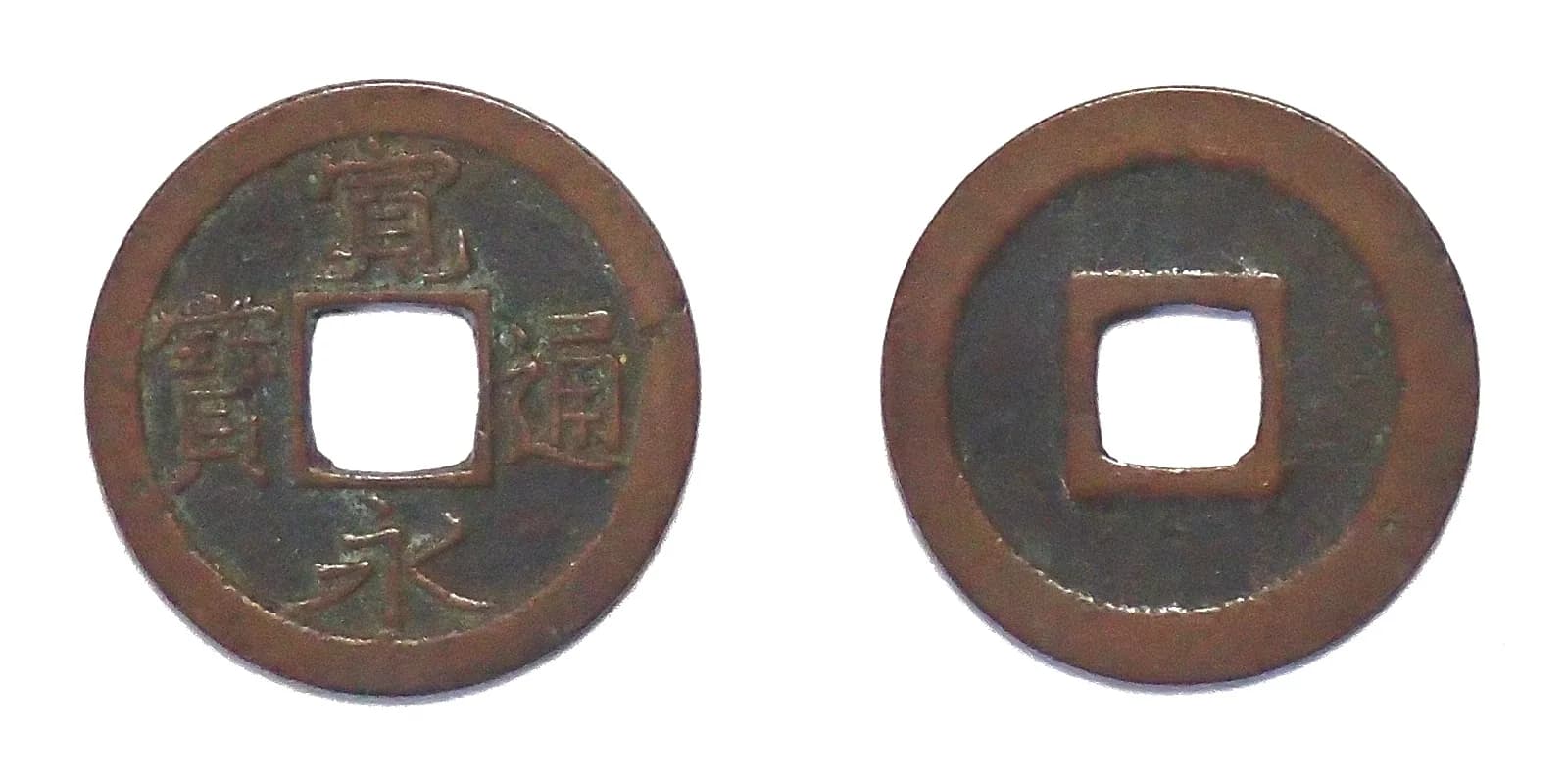
The value of an antique coin is determined primarily by three factors: "rarity," "condition (grade)," and "historical background." Even if coins look the same at first glance, their value can vary greatly depending on the year of issue, where they were minted, and subtle differences in design. For example, as described in Hole Coins (Kan'ei Tsūhō (寛永通宝) and Tenpō Tsūhō (天保通宝)) Detailed Overview, even a single Edo-period Kan'ei Tsūhō (寛永通宝) can differ entirely in rarity and market value depending on when it was cast and differences in the characters engraved on the reverse (back inscription). Those with particularly rare back inscriptions trade at prices incomparable to common examples. Counterfeiters target antique coins where such value differences are large, manufacturing fakes from cheap materials and trying to sell them as high-priced genuine items. A common mistake among beginners is failing to notice these fine distinctions and judging by appearance alone. Because fakes often partially imitate the features of genuine coins, spotting them without knowledge is extremely difficult. The first priority is to accurately understand the basic characteristics specific to each type of antique coin and the points that affect value.
[For Intermediate Collectors] Supply-Demand Balance and Counterfeiting Targets
The supply-demand balance in the antique coin market has a significant influence on price formation. Growth in the collector population and rising interest in antique coins as assets push up demand for particular categories of coins, driving up prices. In particular, high-grade coins (such as MS65 and above) tend to be prone to price surges due to their limited supply and resulting rarity. Counterfeiters target precisely these "high-grade items" when creating fakes. They study the characteristics of genuine high-grade pieces in detail and attempt to reproduce everything from the surface luster to the minute traces left during minting. For example, if you understand the grading criteria of specialist institutions as explained in How to Understand Antique Coin Grading Standards, this gives you clues for spotting the unnatural edge treatment, scratches that should not be present, or unnatural polishing marks often found on counterfeits. By grasping the volume of coins of the same grade circulating in the market and the demand relative to that supply, it is also possible to detect the risk of counterfeits being sold at unnaturally priced levels. As concrete data, comparing the number of Meiji gold coins of a particular year in circulation at MS65 and above with past auction hammer prices makes it possible to identify abnormal values that deviate from the market.
[For Advanced Collectors] Flow of Funds and the Logic of Counterfeit Distribution
Advanced participants in the antique coin market have a deep understanding of the market's structure: "Who is buying?" and "Where is money flowing from?" Various motivations—purchases by wealthy individuals for asset preservation, entry by overseas investors, or short-term buying and selling by speculators—influence price formation. High-value antique coins are generally traded through major auction houses and trustworthy dealers, but counterfeits find their way into the market through sophisticated channels. International counterfeiting networks exist, and cases of cross-border distribution via online platforms and social media are by no means rare. In particular, gold and silver coins issued from the latter half of the 1800s through the early twentieth century enjoy high international popularity and attract collectors from around the world, meaning counterfeits circulate across a wide area. The logic by which prices are assigned is influenced not only by straightforward rarity, but also by the historical significance and aesthetic value the coin holds, and even by its "narrative" in the marketplace. Counterfeits imitate this narrative, sometimes being sold with an elaborately constructed backstory designed to make them seem "authentically genuine." Analyzing the behavior of market participants and paying close attention to unusual transaction patterns and specific vendors constitutes an advanced-level strategy for avoiding counterfeits. The ability to gather data from trustworthy sources and the insight to see through to the other side of the market are essential. Please also refer to Basics of Antique Coin Auctions for further details.
What Market Charts Reveal: The Influence of Fakes and the True Value of Genuine Coins
Antique coin market charts do not merely show price movements; they also provide clues for reading the health of the market and the influence of fakes. Make use of ITTENDO's Check Price Trends with Market Charts and pay attention to the following points.
First and foremost, check the "median value." If a particular antique coin is being traded at an abnormally high or low price, this suggests either a temporary distortion caused by thin trading or the possibility that a counterfeit has found its way in. For example, if a coin of the same grade is listed at a price that deviates greatly from the median of past transaction records, you must carefully verify its authenticity.
Next, it is vital to assess "the volume of trading." Cases where a sudden high price appears in a category with extremely low trading volume (thin market) warrant caution. It cannot be ruled out that this may be deliberate price manipulation or an intentional bid-up designed to make a counterfeit appear genuine. Transactions driven by genuine demand tend to show sustained trading volume and stable price movements.
Also pay attention to price differences across different grade bands. Because counterfeits often imitate high-grade items, unnatural oversupply or sharp price swings may appear in specific grade bands. This can cause the price gap with genuine high-grade items to narrow unnaturally, or conversely to widen too much. By comparing multiple data points and time periods against overall market trends and individual transactions, you can sharpen the precision with which you eliminate the influence of fakes and judge the value of genuine coins.
Practical Advice for Smart Antique Coin Collecting: Avoiding Beginner Mistakes
Those just starting out in antique coin collecting are prone to falling into the trap of buying fakes. Here we explain specific examples of failures and how to avoid them.
The most common mistake is "rashly pursuing high-value items without authentication certificates." Particularly on personal selling sites on the internet, items may be sold with attractive photographs and enticing descriptions, but unless a grading institution's guarantee is attached, authenticity is the buyer's own responsibility. There are also many cases of people being lured by the phrase "bargain find" and jumping at a high-value item priced far below market value. In the world of antique coins, a "bargain find" far removed from market price should be considered highly likely to be a fake. Judging purely from images without holding the physical item is also dangerous. Details of workmanship and differences in texture that are difficult to see in images can be important clues for identifying fakes.
"Not understanding the difference between fakes and altered pieces" is also a cause of failure. As noted in How to Identify Fakes and Altered Pieces, an altered piece is one in which a genuine antique coin has had work done to it after the fact; while strictly different from a fake, its value is greatly diminished. Examples include cleaned coins or those to which markings have been intentionally added afterward. These distort the coin's original form and significantly reduce its value as a collector's item. It is wise for beginners to start by thoroughly reading the Complete Guide to Fake Detection and choosing items accompanied by certificates from trustworthy grading institutions. Avoid casual person-to-person transactions and consider purchasing through dealers with specialist knowledge or major auction houses.
ITTENDO Editor-in-Chief's Proposals for the Future of Safe Antique Coin Collecting
Encountering fakes is an unavoidable risk in antique coin collecting, but with appropriate knowledge and careful judgement, that risk can be substantially reduced. As Editor-in-Chief of ITTENDO, I propose specific criteria for enjoying safe and fulfilling antique coin collecting.
First, beginners should select only antique coins accompanied by authentication certificates from trustworthy grading institutions (such as NGC or PCGS). Particularly for high-value items, an authentication certificate is the coin's "passport"—the sole means of guaranteeing authenticity and grade. For high-value items without a certificate, authenticity and condition cannot be verified after the fact. Next, for coin types in the mid-price range where trading volume is high and authenticity is easier to determine, comparative data is easier to gather. For example, we recommend starting with types that circulate widely in the market, such as those described in Edo Gold Coins (Koban and Ōban (小判・大判)) Detailed Overview and Edo Silver Coins (Chōgin and Mameitagin (丁銀・豆板銀)) Detailed Overview, and gradually accumulating knowledge and experience. This allows you to develop an eye for distinguishing the genuine article while keeping risk in check.
This makes it possible to avoid the risk of counterfeits and make wise purchasing decisions. At ITTENDO, we make it possible to track antique coins "as they are now" based on past auction records and market charts.
Antique coin collecting is a profound world where reverence for history and the pursuit of beauty are fused together. Without fear of the shadow of fakes, let us join with ITTENDO to cultivate the eye to discern genuine value and build a safe and enriching collecting life.
The Structure of Counterfeit Risk in the High-Value Antique Coin Market
The risk of fakes in high-value antique coins has structurally increased with the advancement of modern precision machining technology. The combination of 3D scanning, precision casting, and high-accuracy finishing means that replica pieces that are difficult to distinguish by appearance alone are increasingly entering the market. Structural risk management is necessary, combining the general principles of anti-counterfeiting measures covered in The Higher the Value, the More Caution Required — Why Fakes Circulate and Reliable Methods for Identification.
The Relationship Between Market Fluctuations and Counterfeit Distribution
When the market is in an upswing, there is a tendency for counterfeit distribution to become more active as well. This is a matter of economic rationality: the higher the market price of genuine items, the greater the economic incentive for counterfeiting. Viewed from the perspective of market analysis covered in How to Read Antique Coin Market Charts Correctly, a phase of sharp price increases requires heightened vigilance against fakes.
Four Perspectives for Value Judgement
There are four perspectives for judging the value of high-value antique coins. The first is clarity of provenance: items that have passed through trustworthy channels carry substantially lower counterfeit risk. The second is whether grading has been performed: slabbed pieces from international grading institutions as covered in PCGS and NGC Grading Evaluations for Japanese Antique Coins function as third-party guarantees. The third is the result of bullion analysis: non-destructive testing such as X-ray fluorescence analysis physically verifies fineness. The fourth is expert appraisal: the judgement of an appraiser with many years of experience, combined with data-based analysis, delivers high reliability.
Practical Guidelines for Spotting Fakes
There are multiple practical guidelines for spotting fakes. Using the general principles covered in Basics of How to Identify Antique Coin Fakes as a foundation, you also need to understand characteristics specific to each coin type. It is recommended to study the concrete identification methods for each coin type, such as the authenticity assessment points for Keichō Koban (慶長小判) covered in Authenticity Appraisal Points for Keichō Koban, and the authenticity assessment for hole coins covered in Value Assessment of Tenpō Tsūhō (天保通宝).
Choosing Trustworthy Channels
Choosing trustworthy channels is indispensable for acquiring high-value antique coins. Auction houses as covered in Basics of Antique Coin Auctions and specialist dealers with long-established track records have transaction structures premised on third-party authentication. Acquiring high-value antique coins through channels of low reliability, such as person-to-person transactions or flea-market apps, carries substantially elevated counterfeit risk and is not recommended for beginners.
Long-Term Risk Management
Managing counterfeit risk requires not merely caution at the moment of a one-off acquisition, but a long-term perspective that runs throughout all collecting activities. Continuously following factors such as overall market trends, information on new counterfeiting patterns, and securing trustworthy channels supports long-term risk management. While remaining mindful of the three axes of risk management covered in Risk Management for Antique Coin Investment, it is recommended to establish your own countermeasures.
Summary — Structural Countermeasures Against Fakes
A structural approach combining knowledge, experience, and channel selection is effective as a countermeasure against fakes in high-value antique coins. By steadily accumulating multifaceted countermeasures—exchanging information with fellow collectors, utilizing specialist publications and study groups, and making use of international grading institutions—counterfeit risk can be brought down to a manageable level. Alongside the physical storage covered in Practical Guidance on Antique Coin Storage and Humidity Management, anti-counterfeiting measures are also an important foundation of collecting activities.
The ability to spot fakes is something that is gradually honed through years of accumulated experience and knowledge. Because it cannot be acquired overnight, in the early stages of collecting activity it is recommended to prioritize acquisition through trustworthy channels and gradually develop your own appraisal eye.
Counterfeit risk in the antique coin market is a theme that continues to evolve. Through the collaboration of collectors, specialist dealers, grading institutions, and researchers, countermeasures against new counterfeiting patterns also continue to develop. Long-term information sharing and the accumulation of knowledge form the foundation supporting the credibility of the market as a whole. The ability to judge the authenticity of a single antique coin is something gradually honed over the course of a collector's long career, and the process itself is an element that sustains the intellectual enjoyment of antique coin collecting.
The healthy development of the high-value antique coin market is a long-term endeavor sustained by the collaboration of collectors, specialist dealers, grading institutions, and researchers. It is expected that new knowledge and countermeasures will continue to be shared going forward.