Background and Market Trends for This Topic
In recent years, the proliferation of flea market apps and online auctions has made antique coin trading more accessible than ever before. The convenience of purchasing coins from around the world without leaving home has attracted many new collectors. Particularly since the 2020 pandemic, antique coin collecting has seen a resurgence in popularity as a hobby that can be enjoyed at home, leading to a vibrant market. However, behind this convenience lies significant risk. The exploitation of information asymmetry and a lack of specialized knowledge has led to a continuous flow of fake and altered coins.
According to Ittendou's data, approximately 15% of appraisal requests received in recent years have been identified as fake or altered coins with no market value. The problem is particularly pronounced for high-value items such as Edo Gold Coins (Koban/Oban) detailed explanation and Modern Gold and Silver Coins (Meiji-Showa) explanation, where sophisticated counterfeits are rampant. The internet is flooded with highly elaborate fake coin images that can easily deceive, making accurate judgment based solely on images extremely difficult even for experienced appraisers. Against this backdrop, mastering the art of value assessment for online purchases has become a pressing issue for antique coin collectors.
"Why Did This Happen?" Explained in 3 Layers
For Beginners: Factors Determining Value and Visual Discrepancies
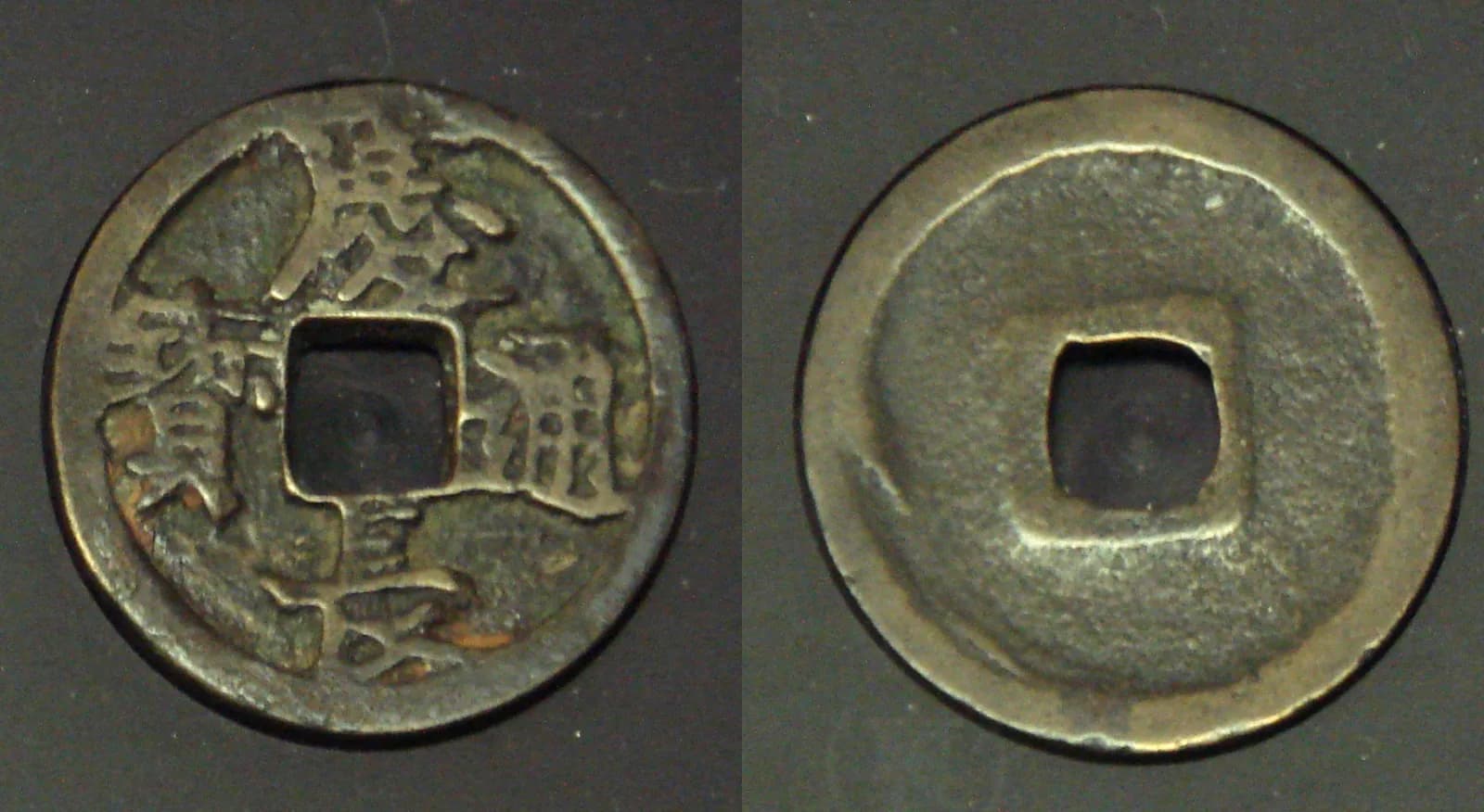
The value of an antique coin is primarily determined by three factors: "rarity," "condition (grade)," and "historical background." However, accurately assessing these factors from images provided online is extremely challenging. For instance, even among coins like the "Kanei Tsuho," the value can vary from several times to hundreds of times depending on the specific minting period and location, which affects the calligraphy, metal type, and rarity. As detailed in the Kanei Tsuho and Tenpo Tsuho (Ana-sen) detailed explanation, discerning these subtle differences from images alone is nearly impossible.
Counterfeit coins are designed to mimic the appearance of genuine ones, but they differ in minute details such as the sharpness of the engraving, the thickness of the characters' lines, the finish of the edges, and most importantly, their weight, specific gravity, and metal composition. Genuine coins exhibit specific characteristics from their minting process, such as unique nicks or misalignments, and a distinctive patina and luster developed over time. Counterfeits, on the other hand, often display unnatural or completely lacking versions of these features. These elements are incredibly difficult to discern, even with high-resolution images, requiring hands-on examination with a loupe and extensive specialized knowledge and experience.
For Intermediate Collectors: Supply-Demand Balance and Grade Rarity
The antique coin market, like any commodity market, experiences price fluctuations driven by supply and demand. When demand concentrates on specific eras or types of coins, such as Meiji-era Ryū 50-sen silver coins or trade dollars, market prices tend to rise. For example, certain Modern Gold and Silver Coins (Meiji-Showa) explanation have seen their prices soar by 1.5 times between 2022 and 2023, demonstrating the significant impact of concentrated demand on pricing. Such trends can be closely monitored using Ittendou's Market Chart for Price Trends.
Furthermore, the "grade" of a coin significantly influences its value. For instance, there can be a difference of several to dozens of times in market value between a coin graded MS64 and one graded MS65 by third-party grading services like NGC or PCGS, even if their visual differences are minor. This disparity is due to the extreme rarity of high-grade coins. When the supply of a particular grade band is low, even a slight increase in demand can lead to a rapid price surge. Intermediate collectors must understand these price differences between grades and the market availability (rarity) of each grade, making judgments in conjunction with current market trends.
For Advanced Collectors: Evolving Buyer Demographics and Capital Flows
The price formation logic in the antique coin market is not solely determined by rarity and condition but is also heavily influenced by the dynamics of market participants and capital flows. While the market was once dominated by pure collectors, it has recently seen an influx of wealthy individuals seeking alternative investments and even investors from emerging economies, diversifying the buyer demographic. These new market participants are not just seeking beautiful coins but often purchase them for asset preservation or speculative purposes. They are well-versed in Coin Grading Standards and Interpretation and actively target high-grade coins.
The flow of capital within the market is also crucial. For example, major auction houses or prominent dealers actively acquiring specific categories, such as high-value Meiji-era gold coins, can push up overall market prices. Furthermore, the "storytelling" aspect of a particular coin, its historical significance, or its status as a rare error coin can command a premium beyond mere rarity. Advanced collectors and investors comprehensively analyze these market participant trends, capital liquidity, and the non-monetary value of coins to make strategic judgments anticipating future price fluctuations. Understanding these deeper layers is key to discerning true value.
How to Read Market Charts
To avoid failures in online coin purchases, it is essential to utilize Ittendou's Market Chart for Price Trends to grasp the current fair value. The most crucial aspect when viewing charts is the "median price." Extreme high or low prices are often due to temporary factors or special transactions, and one should not be swayed by them. Instead, focus on the price range where the majority of transactions occur, which is the median. The median price indicates the price range that most market participants consider reasonable.
Furthermore, the ability to distinguish between "thin trading" and "genuine demand" is vital. If a high price is observed with an extremely low number of transactions (thin trading), it is likely due to temporary demand or the specific intentions of a seller, and that price may not be sustainable. Conversely, a price range established through numerous transactions is indicative of "genuine demand" and can be considered a more reliable market price. By examining transaction data over the past 3 to 6 months, or even longer, and analyzing price stability, trend fluctuations, and transaction frequency within specific grade bands, one can make more accurate judgments.
Common Mistakes Made by Beginners
Beginners often fall into various traps when purchasing antique coins online. The most common mistake is to jump at "too cheap" counterfeits. Any item listed at an unusually low price, far below the market rate, should be suspected of being a fake or an altered coin. Genuine antique coins have an appropriate value corresponding to their rarity and condition, and anything priced too cheaply carries a high risk.
Another frequent error is over-relying on the phrase "with certificate." Some unscrupulous sellers attach counterfeit certificates or present certificates from unreliable or non-existent appraisal organizations. Reputable grading services are limited to a select few, such as NGC and PCGS, and other certificates must be evaluated with extreme caution. It is also dangerous to make judgments based on only a portion of an image. It is crucial to examine not only the overall appearance but also the fine details of the engraving, the wear on the edges, the naturalness of the luster, and, most importantly, the thickness and weight, from multiple perspectives. A seller's high rating does not necessarily mean they possess expert knowledge of antique coins. They might unknowingly be selling fakes, or they could be sophisticated fraudsters. Before making a purchase, it is essential to acquire basic knowledge by consulting resources like the Complete Guide to Fake Detection.
Ittendou's Conclusion (Editor's Comment)
While online antique coin purchases offer many attractions due to their convenience, it is crucial to recognize the high risk of encountering fakes or altered items. Especially when considering high-value antique coins, we strongly recommend avoiding image-only judgments and limiting purchases to coins graded by reputable grading services (such as NGC or PCGS). For instance, for valuable antique coins like those detailed in the Edo Gold Coins (Koban/Oban) detailed explanation or the Modern Gold and Silver Coins (Meiji-Showa) explanation, the safest option is to purchase from trusted specialty stores or auction houses where physical inspection is possible.
If you are a beginner, it is advisable to start by acquiring relatively inexpensive and diverse antique coins, such as those covered in the Kanei Tsuho and Tenpo Tsuho (Ana-sen) detailed explanation, to gain firsthand experience with the texture, weight, and unique patina of genuine coins. Furthermore, actively utilize Ittendou's market charts to understand market movements. Particularly, coins graded MS64 and below currently offer an opportunity to acquire them at an affordable price, given the significant price gap with MS65 and higher-grade items. Entering the market with high-volume transaction zones and gradually building knowledge and experience is the "winning strategy" to avoid failure.
Ittendou allows you to track the "now" of antique coins based on past auction history and market charts.