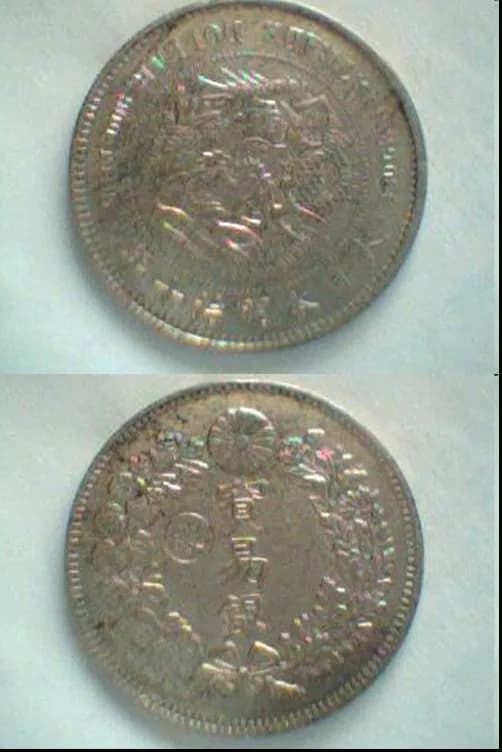
Image: Modern Japanese coinage / photographed by Samuel Ho / Wikimedia Commons / CC BY-SA 3.0(source)
The Proliferation of Private Minted Coins and the Shogunate's Crackdown — Shadows and Lights of the Edo Period
The Actuality of Private Minted Coins that Shook the Mid to Late Edo Period Economy and the Shogunate's Response
Subject coin: 私鋳銭の横行と幕府の取締り
Overview
During the mid to late Edo period, Japan's currency system faced a significant trial. Copper coins like the Kan'ei Tsūhō (寛永通宝), minted at government-sanctioned mints, were indispensable in the lives of the common people, but from the latter half of the 18th century, inferior private minted coins flooded the market. These private minted coins often had a high content of lead or zinc rather than copper, making them lighter, and their color differed, making them hard for the common people to distinguish. As part of the Kansei Reforms, the shogunate intensified crackdowns on these private coins, but complete eradication was not achieved. Behind this was the involvement of affluent merchants and village heads from regions like Kyushu and Chūgoku, who were part of the production of these coins, contributing to local economies. During the mid to late Edo period, large-scale crackdowns were conducted in Osaka and Edo, but the existence of private minted coins remained a long-standing issue in Japan's monetary history, undermining the shogunate's authority.
Specifications
- Denomination
- 不明(諸説あり)
- Minting period
- 1780年〜1860年
- Metal composition
- 鉛・亜鉛を多く含む粗悪銭
- Weight
- 不詳(諸説あり)
- Dimensions
- 不詳(諸説あり)
- Mintage
- 不詳(諸説あり)
- Mint supervisor
- 不詳
- Market price
- 数万円〜百万円(状態による)
Chapter 1: The Background of Private Minted Coins — Between Shogunate Policy and Economy
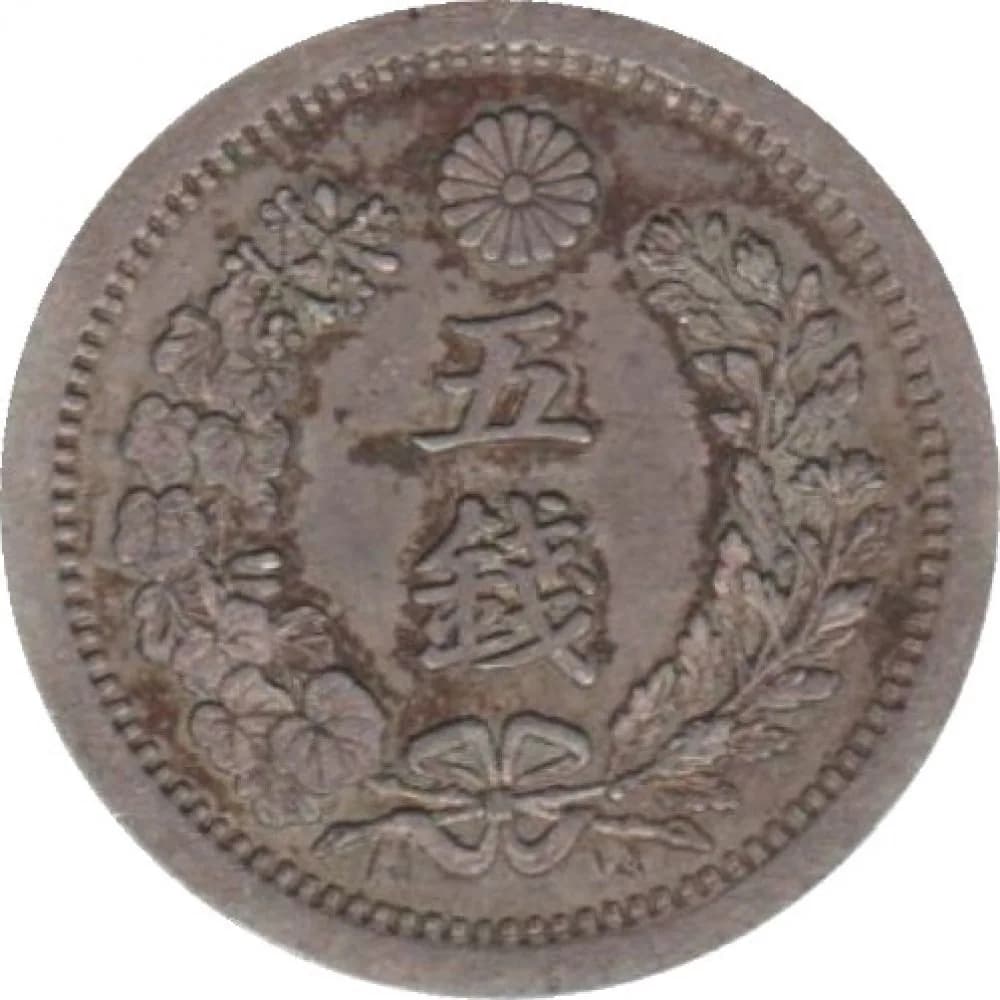
Image: Modern Japanese coinage / Coindesmonnaies / Wikimedia Commons / CC BY-SA 4.0(source)
In the latter half of the 18th century, Japan's economy was undergoing significant changes. The minting of copper coins by government-sanctioned mints, which started in the early Edo period, gradually faced new challenges. Edo period copper coins, particularly the Kan'ei Tsūhō, were indispensable in the daily lives of the common people. However, during the Kansei Reforms starting in 1787, aiming for economic stabilization, the shogunate strengthened crackdowns on private minted coins. This reform was led by Senior Councilor Matsudaira Sadanobu, who aimed for financial reconstruction and stabilization of coin markets, yet the surge of private minted coins expanded as if countering his efforts. Private minted coins are counterfeit coins minted without the shogunate's permission, and they were of poor quality. Due to a high content of lead and zinc, they were lighter and differed in color from regular copper coins. The background of the proliferation of private minted coins includes the involvement of local economies in regions like Kyushu and Chūgoku, located near copper mines. In these regions, local affluent merchants and village heads participated in the production of these coins, functioning as part of regional economic activities. However, such actions undermined the shogunate's authority and caused widespread unrest in society.
Chapter 2: Minting of Private Coins — Sites of Illicit Production and the People Involved
Image: Modern Japanese coinage / Coindesmonnaies / Wikimedia Commons / CC BY-SA 4.0(source)
The minting of private coins was a secretive, organized activity. Particularly in Kyushu and Chūgoku regions, local affluent merchants and village heads became central figures, utilizing different minting technologies specific to each locale. They possessed equipment similar to official mints and employed skilled workers. Many private minted coins were made of inferior materials with a high content of lead or zinc, thereby reducing minting costs. Regular copper coins circulated at 50 coins each, whereas private minted coins were produced at a cost of about 20 to 30 coins, achieving a high profit margin. Specific minting locations recorded include Hizen Province (present-day Saga Prefecture) and Bizen Province (present-day Okayama Prefecture). In these areas, routes to procure copper from nearby mines were also well established, making material procurement relatively easy. The traditional method of pouring melted metal into molds was used for minting, and in some cases, more elaborate molds were employed to make them appear closer to authentic coins visually. As a result, private minted coins that circulated widely in the market were indistinguishable from genuine coins to the common eye, thus expanding their distribution. Although the shogunate's crackdowns were rigorous, illicit production sites constantly moved, employing strategies and ingenuity to evade detection. Thus, the minting of private coins was a major industry involving many individuals and impacting local economies.
Chapter 3: Distribution and Social Impact — Market Confusion and Voices of the Common People
Image: Modern Japanese coinage / Coindesmonnaies / Wikimedia Commons / CC BY-SA 4.0(source)
The distribution of private minted coins had significant social impact. As these coins, indistinguishable from legitimate ones, spread, the value of the coins became unstable, causing volatile price fluctuations. For example, the price of one koku of rice could surge from 1 ryo to 1.5 ryo, severely affecting the lives of the common people. Rumors on how to discern private minted coins spread in the market, with methods like 'distinguishing by sound' and 'discerning by color' being attempted, but none proved definitive. As private minted coins circulated, merchants increasingly refused payments, adversely affecting credit transactions. Particularly in commercial cities like Osaka and Edo, the reliability of coins was the cornerstone of commercial transactions, and with trust wavering, economic activity stagnated. Among common people, there were resigned voices saying, 'It is bad luck to be caught with private minted coins,' indicating the severe impact on daily life. Responding to this situation, the shogunate conducted large-scale crackdowns in Osaka and Edo from 1841 as part of the Tenpō Reforms. Producers and distributors of captured private minted coins faced severe punishments, including death or exile for ringleaders. However, the circulation of private minted coins did not cease completely, continuing to cast a shadow over the lives of the common people. This increased distrust in shogunate monetary policy and is considered a catalyst for promoting economic independence in regional areas.
Chapter 4: The Impact and Aftermath of Private Minted Coins — Policy Revisions and the Evolution of the Monetary System
Image: Modern Japanese coinage / Coindesmonnaies / Wikimedia Commons / CC BY-SA 4.0(source)
The proliferation of private minted coins had a long-term impact on Japan's monetary system. The monetary policies in the late Edo period were reviewed with the issue of private minted coins in mind. The shogunate attempted to issue new coins, such as the Tenpō Tsūhō, to restore trust in currency and manage circulation. This resulted in an increased variety of coins, bringing a more complex monetary environment to the populace. In response to the issue of private minted coins, the shogunate proceeded to review the operation of mints and minting methods, imposing a stricter management system. However, this did not lead to a complete solution, and fundamental reforms of the monetary system became necessary. Entering the Meiji era, the monetary system was greatly transformed, establishing the modern monetary system. This was influenced by the impact of private minted coins, and the necessity for a reliable monetary system was strongly recognized. The history of private minted coins serves as a lesson on the critical importance of monetary reliability for social stability, and its influence cannot be overlooked even in modern monetary systems. Understanding such historical backgrounds provides an opportunity to reaffirm the significance of monetary value and trust in the present day.
Value & Rarity
Private minted coins, due to their manufacturing methods and distribution background, hold historical value while their rarity is appreciated among collectors. Many were made of inferior materials, resulting in few surviving specimens, and the high circulation of imitations makes authentication challenging. In the market, well-preserved private minted coins can trade from tens of thousands to a million yen, making them a valuable part of a collector's collection. Especially those with regional characteristics are highly popular among collectors. These coins reflect the social conditions and technological capabilities of the time, holding significant historical value. Learning to distinguish fakes and altered items increases the enjoyment of collecting and deepens the understanding of history.
Related Guide: [Details of Kan'ei Tsūhō]
Conclusion
The history of private minted coins is an example of the complex interactions between economy and society during the Edo period. In this era, the presence of private minted coins undermined the shogunate's authority while it attempted to manage the currency system. The minting and distribution of private coins influenced regional economies and the lives of common people, raising issues regarding the reliability of currency. Through this historical case, we can reaffirm how crucial the reliability of currency is to social stability. Even today, the value and reliability of currency form the foundation of the economy, and there are many lessons to learn from history. The story of private minted coins plays an important role in conveying such lessons to the present.
Related Stories
Bunkyū Eihō — Tracing the History of Ansen
The last Ansen of the late Edo period. The 4-mon coin minted in Bunkyū 3 began circulating just shy of two years before the Meiji Restoration.
Coin StoryChikusen Jowi no Rei — An Ancient Japanese Attempt to Spread Currency
Wadō 4 (711): An Unprecedented System to Promote Currency Use
Coin StoryNaga-nen Taihō — Tracing the History of Ancient Coinage
The 7th coin of the Kōchō jūni-sen, issued in Shōwa 15 (848) during the reign of Emperor Ninmyō. From this time, the gap between the actual and nominal value of coins became serious.
Dealers
Dealers Handling This Category
A reference when considering a sale or appraisal. All are dealers and auction houses with a proven track record.
Japan Coin Auction (JCA)
Tokyo
Holds regular auctions with reliable hammer price data, making it a useful resource for tracking market values. Caters to a wide range of collectors from beginners to advanced buyers.
Osaka Numismatic Auction
Osaka
A Kansai-based coin auction house with particular strength in regional and hole coins.
Ginza Coins
Ginza, Chuo-ku, Tokyo
One of Japan's most established numismatic dealers. The scale and variety of their regular auctions is among the largest in the country. Their catalogs are considered a benchmark for market pricing.