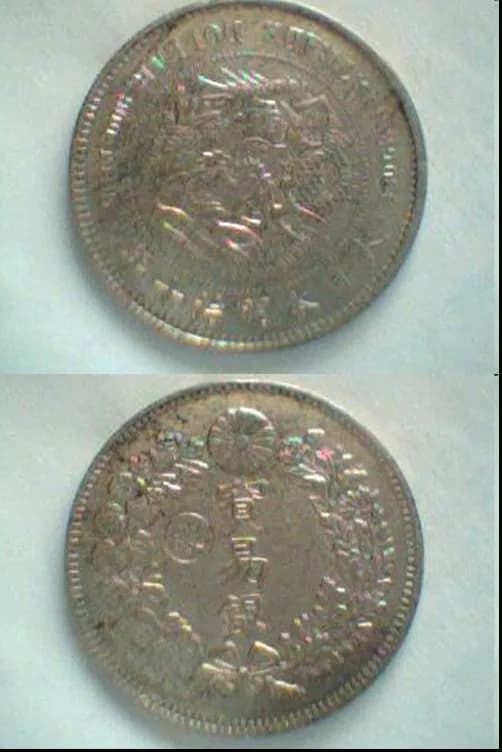
Image: Modern Japanese coinage / photographed by Samuel Ho / Wikimedia Commons / CC BY-SA 3.0(source)
Bunkyū Eihō — Tracing the History of Ansen
The last Ansen of the late Edo period. The 4-mon coin minted in Bunkyū 3 began circulating just shy of two years before the Meiji Restoration.
Subject coin: 文久永宝
Overview
Bunkyū Eihō is an essential piece when discussing the numismatic history of Japan between 1863-1868. It was the last Ansen of the late Edo period. The 4-mon coin that was minted in Bunkyū 3 began circulating just shy of two years before the Meiji Restoration. In this article, we trace the Bunkyū Eihō as an Ansen from its historical backdrop to minting techniques, its actual circulation, and its impact on posterity, all based on historical facts. Understanding the historical context carried by this coin can significantly change how we perceive its value, beyond mere market figures. The history of Japanese currency traces back to the Wado Kaichin minted in the Nara period, going through various gold and silver coins of the Edo period, and transitioning into the modern currency of the Meiji era. For those who want to grasp the basics, also explore Types and Identification of Ansen and Details of Kan'ei Tsūhō.
Specifications
- Denomination
- —
- Minting period
- 1863-1868
- Metal composition
- —
- Weight
- —
- Dimensions
- —
- Mintage
- 不詳(諸説あり)
- Mint supervisor
- 不詳
- Market price
- 状態により変動(落札履歴を参照)
The Era of Bunkyū Eihō — Background of Minting
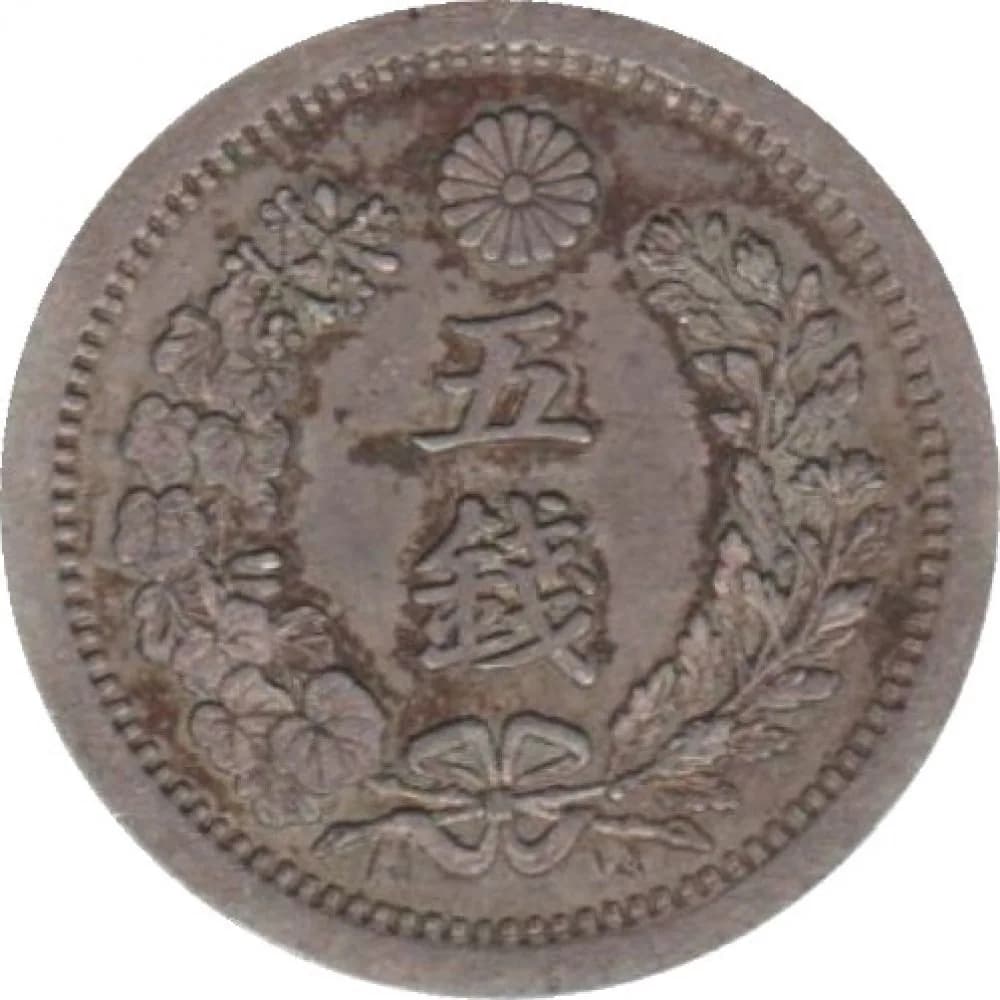
Image: Modern Japanese coinage / Coindesmonnaies / Wikimedia Commons / CC BY-SA 4.0(source)
The background of Bunkyū Eihō's emergence is deeply connected to the political and economic circumstances of its time. Ansen were minted in response to the financial or distribution challenges faced by rulers and arose from societal needs of the time. We begin by considering under what conditions and why this currency was needed. The fact that minting began in Bunkyū 3 (1863) is crucial for understanding this currency's historical placement. The fact that it was abolished in the new currency system after the Meiji Restoration (1871) is also crucial for understanding its historical placement. Referencing check auction prices for old coins can further deepen understanding. Considering the prices and systems of the minted era, it becomes clear that the significance of a currency greatly changes depending on the issuance period. Existing pieces wear and oxidize with the years, so those retaining the state of minting increase in rarity over time. Market evaluation is determined by the intertwining of rarity, preservation condition, and collecting popularity, and cannot be explained by any single factor.
How Bunkyū Eihō was Made — Material and Technology
Image: Modern Japanese coinage / Coindesmonnaies / Wikimedia Commons / CC BY-SA 4.0(source)
In discussing the value of Bunkyū Eihō, its material and manufacturing technique are indispensable. Ansen significantly reflect the craftsmanship of the workers of the time in terms of metal composition and finishing skills, which directly relates to modern evaluation. By tracing the selection of materials and the creation process carefully, one can see the accumulation of technology embedded in each coin. The fact that it is the last large Ansen series with a denomination of 4-mon (yonmon-sen) is crucial for understanding its historical placement. Referencing check price trends with market charts can further deepen understanding. Existing pieces wear and oxidize with the years, so those retaining the state of minting increase in rarity over time. Market evaluation is determined by the intertwining of rarity, preservation condition, and collecting popularity, and cannot be explained by any single factor. Mastering basic points such as character style, metal color, dimensions, and weight is the first step in discerning authenticity and lineage. By learning the historical background, one can appreciate the cultural depth unique to a currency that cannot be measured by mere market numbers. As one continues to collect, the historical backgrounds and minting circumstances of each brand get connected like dominoes, and knowledge develops three-dimensionally.
Bunkyū Eihō and People's Lives — Circulation and Economy
Image: Modern Japanese coinage / Coindesmonnaies / Wikimedia Commons / CC BY-SA 4.0(source)
After issuance, Bunkyū Eihō physically passed from hand to hand and was utilized in daily life. Understanding how Ansen circulated in society and what impact they had on prices and transactions is essential for grasping numismatic history. We decipher the role played by this currency through the economic movements and public reactions of the time. The fact that it is made of copper with a diameter of about 32mm is crucial for understanding its historical placement. Referencing grading standards for old coins can further deepen understanding. Market evaluation is determined by the intertwining of rarity, preservation condition, and collecting popularity, and cannot be explained by any single factor. Mastering basic points such as character style, metal color, dimensions, and weight is the first step in discerning authenticity and lineage. By learning the historical background, one can appreciate the cultural depth unique to a currency that cannot be measured by mere market numbers. As one continues to collect, the historical backgrounds and minting circumstances of each brand get connected like dominoes, and knowledge develops three-dimensionally. A single old coin is a resource reflecting the economic policies and people's lives of its time, and the more one knows the background, the more the perception of its value changes.
Legacy of Bunkyū Eihō — Impact on Posterity
Image: Modern Japanese coinage / Coindesmonnaies / Wikimedia Commons / CC BY-SA 4.0(source)
Bunkyū Eihō left its mark not only in its era but also influenced succeeding currency and collecting history. We retrospect how Ansen were positioned amid re-minting, abolition, and inheritance, and how they are evaluated in modern times. Considering what meaning a piece from the past holds in today's market enhances the precision of value judgment. The fact that many mimetic (replica) coins were produced by various domains is crucial for understanding its historical placement. Referencing price monitoring of interesting coins with Vault can further deepen understanding. Mastering basic points such as character style, metal color, dimensions, and weight is the first step in discerning authenticity and lineage. By learning the historical background, one can appreciate the cultural depth unique to a currency that cannot be measured by mere market numbers. As one continues to collect, the historical backgrounds and minting circumstances of each brand get connected like dominoes, and knowledge develops three-dimensionally. A single old coin is a resource reflecting the economic policies and people's lives of its time, and the more one knows the background, the more the perception of its value changes. Considering prices and systems of the minted era shows that even coins with the same name can have significantly different meanings depending on the issuance time.
Value & Rarity
The market value of Bunkyū Eihō is determined by rarity, preservation condition (grade), and collecting popularity. Even among the same Ansen, differences in minting period, character style, and near-mint condition can result in prices varying by several to ten times. Brands with limited existing quantities seldom appear on the market, and well-preserved pieces become increasingly rare over time. When evaluating trends, it is prudent to verify actual settled auction prices through multiple cases rather than listed prices. The latest value movements can be checked with Vault for monitoring interesting coins. Market evaluation is determined by the intertwining of rarity, preservation condition, and collecting popularity, and cannot be explained by any single factor. Mastering basic points such as character style, metal color, dimensions, and weight is the first step in discerning authenticity and lineage.
Conclusion
Bunkyū Eihō was born out of the needs of its time, played a role in people's lives, and left its mark on posterity. Understanding the history behind a single currency nurtures a discerning eye that cannot be derived from market numbers alone. Those interested in Ansen are recommended to gradually develop their judgment criteria by patiently comparing multiple transaction data.
Related Stories
Chikusen Jowi no Rei — An Ancient Japanese Attempt to Spread Currency
Wadō 4 (711): An Unprecedented System to Promote Currency Use
Coin StoryNaga-nen Taihō — Tracing the History of Ancient Coinage
The 7th coin of the Kōchō jūni-sen, issued in Shōwa 15 (848) during the reign of Emperor Ninmyō. From this time, the gap between the actual and nominal value of coins became serious.
Coin StoryFuhonsen — Solving the Mystery of the Oldest Coin from the Asuka Period
Japan's oldest circulating currency unearthed in Nara, Asuka
Related Encyclopedia Entries
Introduction to Holed Coins
Conclusion: Holed coins offer an accessible entry point to numismatics, providing intellectual investment opportunities where knowledge and experience uncover rarity and value.
EncyclopediaThe World of Kanei Tsuho
Conclusion: Kanei Tsuho, the cornerstone currency of the Edo economy, offers profound value for both collection and investment by discerning its mother coins and rare variant calligraphies.
EncyclopediaTenpo Tsuho
Conclusion: Tenpo Tsuho is a large, highly collectible and diverse Anasen, suitable for both investment and collection due to its varieties of Honza-sen and Mitsuchu-sen.
Dealers
Dealers Handling This Category
A reference when considering a sale or appraisal. All are dealers and auction houses with a proven track record.
Japan Coin Auction (JCA)
Tokyo
Holds regular auctions with reliable hammer price data, making it a useful resource for tracking market values. Caters to a wide range of collectors from beginners to advanced buyers.
Osaka Numismatic Auction
Osaka
A Kansai-based coin auction house with particular strength in regional and hole coins.
Ginza Coins
Ginza, Chuo-ku, Tokyo
One of Japan's most established numismatic dealers. The scale and variety of their regular auctions is among the largest in the country. Their catalogs are considered a benchmark for market pricing.