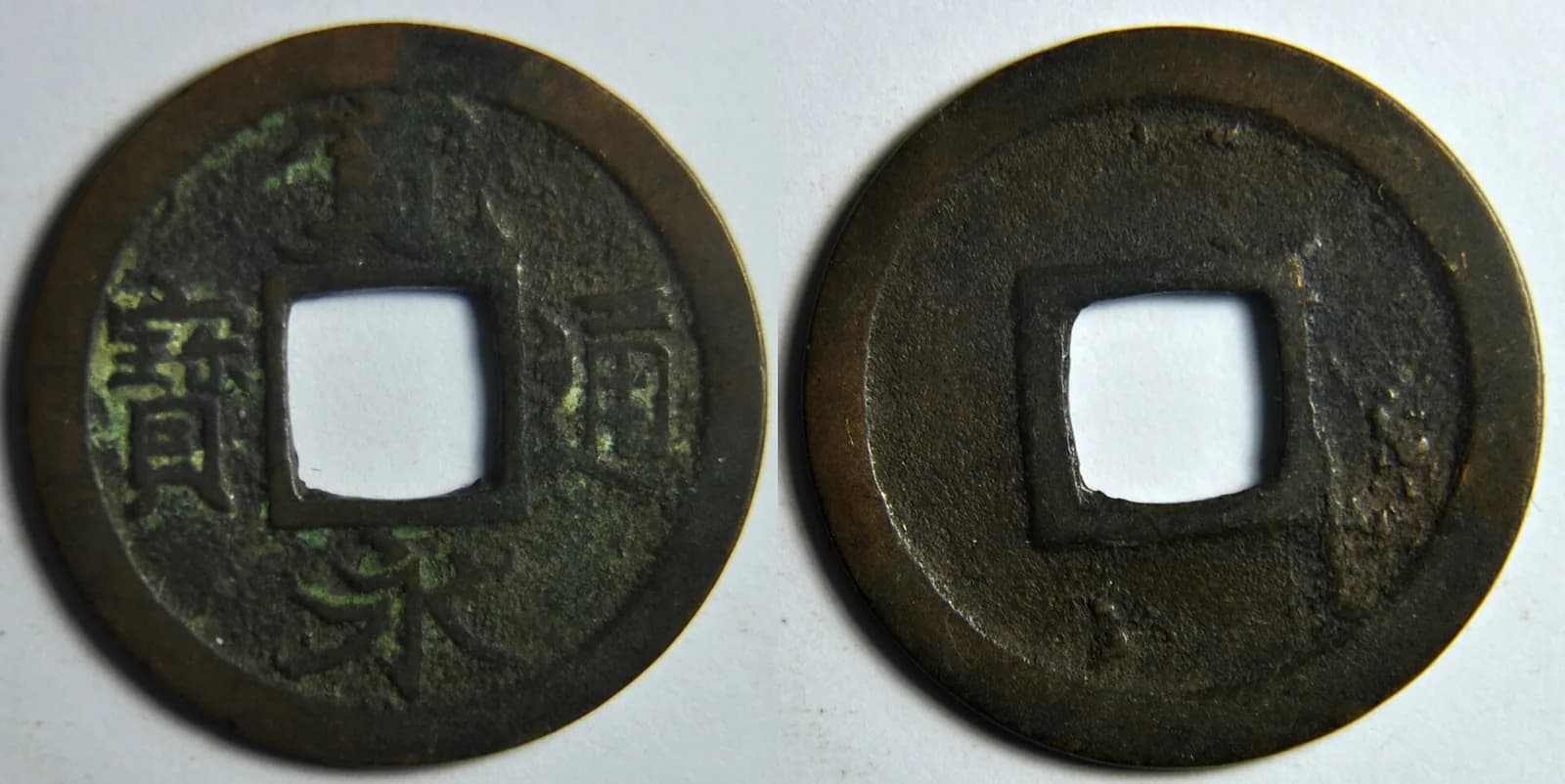
Image: Japanese holed coins (square-holed cash coins) / Jean-Michel Moullec from Vern sur Seiche (35, Bretagne), France / Wikimedia Commons / CC BY 2.0(source)
Showa Pottery Coins (Prototype) – Tracing the History of Wartime Currency
In 1945, Japan, completely depleted of metals, attempted to create currency from "pottery." Pottery 5-sen and 1-sen coins — war altered currency to this extent
Subject coin: 昭和陶器貨幣(試作品)
Overview
The Showa Pottery Coins (prototype) are an indispensable element in discussing Japanese monetary history related to 1945. In that year, Japan, completely depleted of metals, attempted to create currency from "pottery." Pottery 5-sen and 1-sen coins — war altered currency to this extent. This article retraces the story of the Showa Pottery Coins (prototype) as wartime currency, from the background of their creation, the casting technology, and real circulation, to their impact on future generations, based on historical facts. By understanding the historical context of these coins beyond just market values, your perception of their value will significantly change. The history of Japanese currency began with the casting of Wadokaichin during the Nara period, proceeded through the diverse gold and silver coins of the Edo period, and was passed down to modern currency in the Meiji era. For those who wish to grasp the basics, please also see Modern Currency Values and How to Distinguish Them or Currency Transitions from Meiji to Showa.
Specifications
- Denomination
- —
- Minting period
- 1945
- Metal composition
- —
- Weight
- —
- Dimensions
- —
- Mintage
- 不詳(諸説あり)
- Mint supervisor
- 不詳
- Market price
- 状態により変動(落札履歴を参照)
The Era that Gave Birth to Showa Pottery Coins (Prototype) - Background of Casting
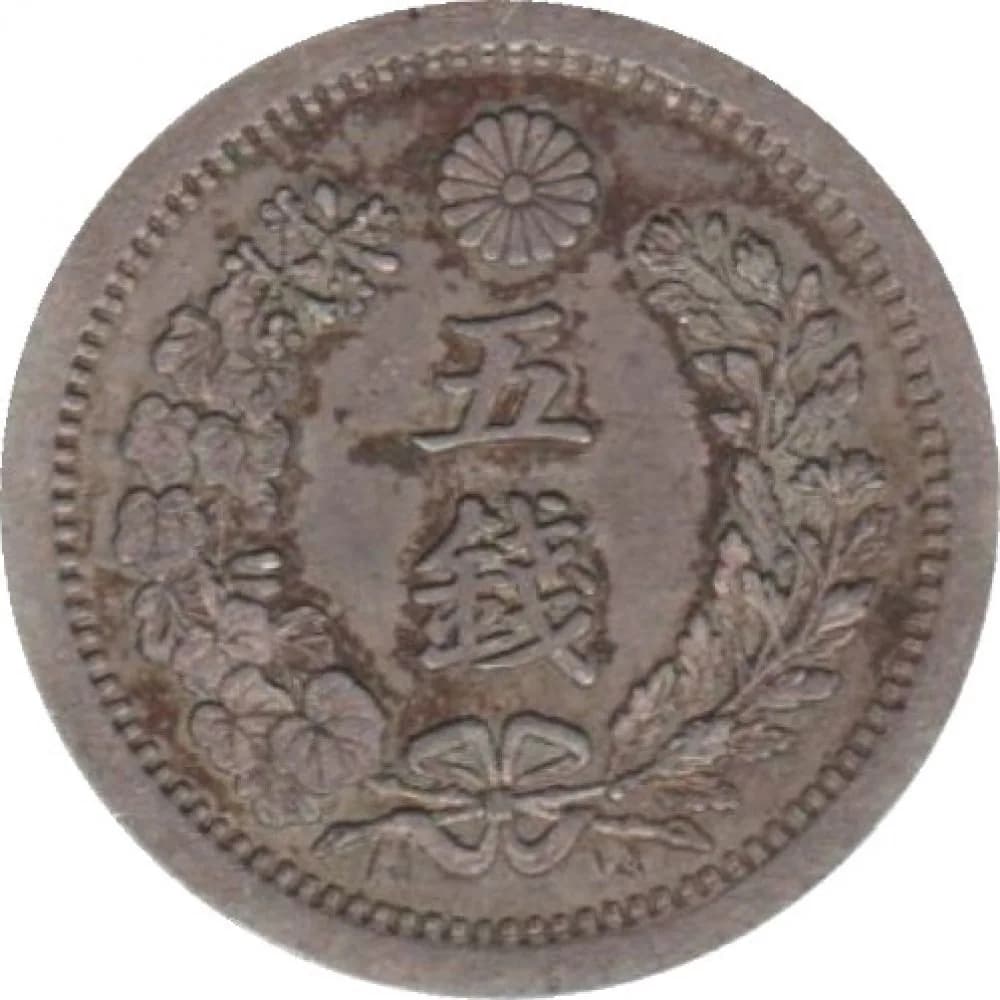
Image: Modern Japanese coinage / Coindesmonnaies / Wikimedia Commons / CC BY-SA 4.0(source)
The background to the emergence of the Showa Pottery Coins (prototype) is deeply linked to the political and economic circumstances of the time. Wartime currency was minted in response to the financial and distribution challenges faced by policymakers and was born out of the needs of the society at that time. We begin by examining the starting point of why this currency was needed under the circumstances of that era. The fact that prototypes were created and partly distributed in Showa 20 (1945) is essential in understanding the historical positioning of this currency. The fact that due to the end of the war in August 1945, mass production and full-scale distribution did not materialize is crucial in understanding the historical positioning of this currency. Referencing Checking Winning Prices at Old Coin Auctions deepens the understanding further. Considering the prices and systems of the time when they were minted, it is clear that coins with the same name can have significantly different connotations depending on the period of their issue. Existing specimens become more scarce over time due to wear and oxidation, making items that retain their original state more rare as time progresses. Market valuation is determined by the interplay of scarcity, preservation state, and collectible interest, and price cannot be explained by any one factor alone.
How Were Showa Pottery Coins (Prototype) Made? — Material and Technology
Image: Modern Japanese coinage / Coindesmonnaies / Wikimedia Commons / CC BY-SA 4.0(source)
The material and method of casting are indispensable in discussing the value of Showa Pottery Coins (prototype). Wartime currency bears the strong influence of craftsmen's handiwork in the alloy composition and finishing techniques, which are directly connected to modern evaluations. By carefully tracing the selection of materials and the crafting process, the accumulation of technology embedded in each coin becomes apparent. The fact that ceramic (porcelain) 5-sen and 1-sen coins were a last resort involving no metal whatsoever is crucial in understanding the historical positioning of this currency. Referencing Price Trends in Market Charts deepens the understanding further. Existing specimens become more scarce over time due to wear and oxidation, making items that retain their original state more rare as time progresses. Market valuation is determined by the interplay of scarcity, preservation state, and collectible interest, and price cannot be explained by any one factor alone. Understanding the basics such as the font of inscriptions, alloy color, dimensions, and weight is the first step to judging authenticity and lineage. Learning the historical background allows one to feel the cultural depth unique to that currency which cannot be measured by market figures alone.
Showa Pottery Coins (Prototype) and People's Lives — Circulation and Economy
Image: Modern Japanese coinage / Coindesmonnaies / Wikimedia Commons / CC BY-SA 4.0(source)
Once issued, Showa Pottery Coins (prototype) did pass from hand to hand and were used in everyday life. Understanding how wartime currency was circulated in the market and how it affected prices and transactions is central to the history of currency. By analyzing the economic movements and the common people's responses at the time, we decipher the role these coins played. The fact that this currency responded to complete metal depletion in the latter part of the war as a 'last resort' is crucial in understanding its historical positioning. Referencing Standards for Grading Old Coins deepens the understanding further. Market valuation is determined by the interplay of scarcity, preservation state, and collectible interest, and price cannot be explained by any one factor alone. Understanding the basics such as the font of inscriptions, alloy color, dimensions, and weight is the first step to judging authenticity and lineage. Learning the historical background allows one to feel the cultural depth unique to that currency which cannot be measured by market figures alone. As you continue collecting, the historical background of each brand and casting circumstances connect like dominoes, enabling a comprehensive accumulation of knowledge. Each old coin is a document reflecting the economic policies and lives of the people of its time, and the more you understand the background, the more your perception of value changes.
What Showa Pottery Coins (Prototype) Left Behind — Impact on Future Generations
Image: Modern Japanese coinage / Coindesmonnaies / Wikimedia Commons / CC BY-SA 4.0(source)
Even after their era ended, Showa Pottery Coins (prototype) left a mark on successor currencies and the history of collectibility. We reflect on how wartime currency was positioned within reforms, abolition, and succession, and how it is evaluated in modern times. Considering what meaning a past coin holds in today's market enhances precision in value judgment. The fact that the majority were prototypes with very few actually distributed — making extant pottery coins precious — is crucial in understanding this currency's historical positioning. Referencing Monitor Prices of Coins of Interest on Vault deepens understanding further. Understanding the basics such as the font of inscriptions, alloy color, dimensions, and weight is the first step to judging authenticity and lineage. Learning the historical background allows one to feel the cultural depth unique to that currency which cannot be measured by market figures alone. As you continue collecting, the historical background of each brand and casting circumstances connect like dominoes, enabling a comprehensive accumulation of knowledge. Each old coin is a document reflecting the economic policies and lives of the people of its time, and the more you understand the background, the more your perception of value changes. Considering the prices and systems of the time when they were minted, it is clear that coins with the same name can have significantly different connotations depending on the period of their issue.
Value & Rarity
The market value of Showa Pottery Coins (prototype) is determined by three factors: rarity, preservation state (grade), and collectible interest. Even among wartime currencies, prices can vary from several times to several tens of times based on differences in minting periods or inscribed fonts, or whether they are in near-unused condition. Brands with a limited number of surviving pieces appear in the market less frequently, and well-preserved specimens become increasingly rare each year. When reading the market, it is prudent to confirm actual completed auction prices over multiple instances rather than relying solely on listed prices. The latest price trends can be checked using Monitor Prices of Coins of Interest on Vault. Market valuation is determined by the interplay of scarcity, preservation state, and collectible interest, and price cannot be explained by any one factor alone. Understanding the basics such as the font of inscriptions, alloy color, dimensions, and weight is the first step to judging authenticity and lineage.
Conclusion
Showa Pottery Coins (prototype) were born out of the necessities of the year 1945, played a role in the lives of people, and left a legacy for future generations. Knowing the history behind a single coin helps cultivate a discerning eye that cannot be gained from market figures alone. For those interested in wartime currency, it is recommended to gradually develop personal criteria by patiently comparing data from multiple transactions.
Related Stories
Wartime Tin 10 Sen Coin — Japan's Dismal Outlook Etched in Tin of 1944
In an era when copper and nickel became weapons, the tin 10 sen coin narrates the last throes of wartime economy
Coin StoryWartime Zinc Coins (Prototypes and Plans) — Tracing the History of Wartime Currency
In the late Pacific War, Japan had even carried out trials for zinc coins, the worst material deterioration in history—deemed 'the last resort' after ceramics.
Coin StoryWartime Tin 5-Sen Coin — A Lightweight Coin Born of Late-War Privation
1944: The Realities of Wartime Inscribed on a 1-Gram Coin
Dealers
Dealers Handling This Category
A reference when considering a sale or appraisal. All are dealers and auction houses with a proven track record.
Japan Coin Auction (JCA)
Tokyo
Holds regular auctions with reliable hammer price data, making it a useful resource for tracking market values. Caters to a wide range of collectors from beginners to advanced buyers.
Ginza Coins
Ginza, Chuo-ku, Tokyo
One of Japan's most established numismatic dealers. The scale and variety of their regular auctions is among the largest in the country. Their catalogs are considered a benchmark for market pricing.