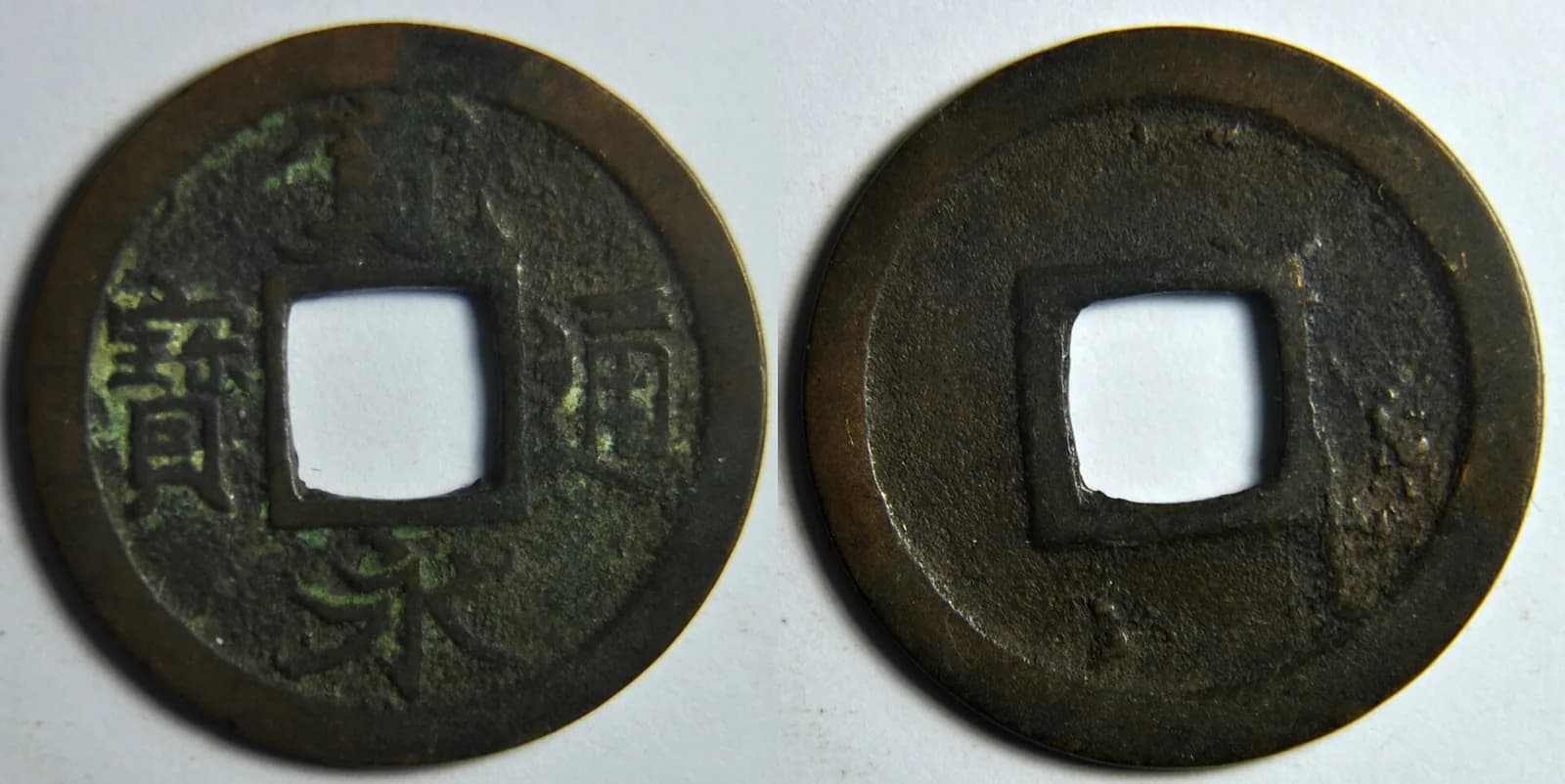
Image: Japanese holed coins (square-holed cash coins) / Jean-Michel Moullec from Vern sur Seiche (35, Bretagne), France / Wikimedia Commons / CC BY 2.0(source)
Wartime Zinc Coins (Prototypes and Plans) — Tracing the History of Wartime Currency
In the late Pacific War, Japan had even carried out trials for zinc coins, the worst material deterioration in history—deemed 'the last resort' after ceramics.
Subject coin: 戦時亜鉛貨(試作・計画)
Overview
Wartime Zinc Coins (Prototypes and Plans) are indispensable for understanding Japan's monetary history surrounding 1944-1945. Towards the end of the Pacific War, Japan had conducted trials for zinc coins. This piece explores wartime coins from their historical background, minting technology, actual circulation, and their impact on future generations. By understanding the historical context these coins shoulder, one can see their value differ drastically when not just looking at figures. Japan's monetary history began with Wadōkaichin minted in the Nara period, transitioning through the diverse gold and silver coins of the Edo period to modern coins in the Meiji era. For those interested in the basics, see Value and Identification of Modern Coins and Coin Transition from Meiji to Shōwa.
Specifications
- Denomination
- —
- Minting period
- 1944-1945
- Metal composition
- —
- Weight
- —
- Dimensions
- —
- Mintage
- 不詳(諸説あり)
- Mint supervisor
- 不詳
- Market price
- 状態により変動(落札履歴を参照)
The Era Wartime Zinc Coins (Prototypes and Plans) Were Born — The Background of Minting
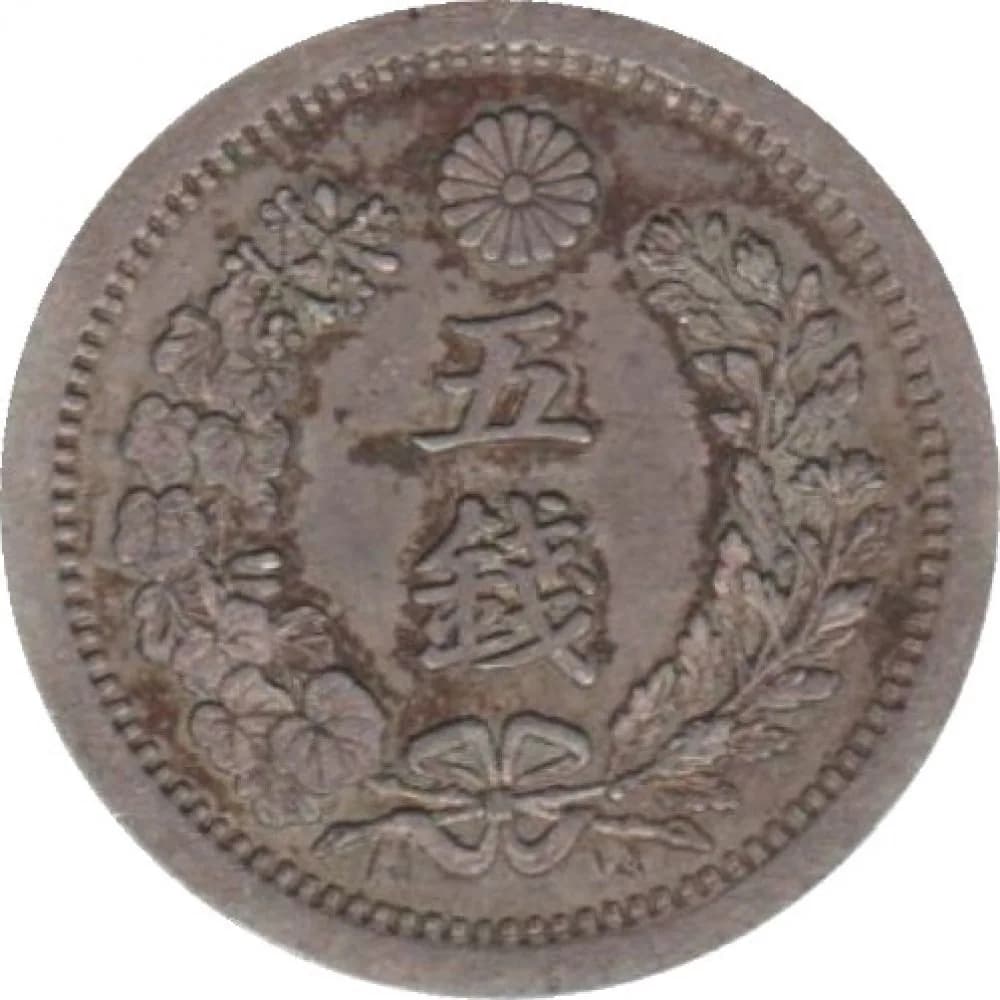
Image: Modern Japanese coinage / Coindesmonnaies / Wikimedia Commons / CC BY-SA 4.0(source)
The background of the emergence of wartime zinc coins (prototypes and plans) is deeply connected with the political and economic circumstances of the era. Wartime coins were minted to address the financial and circulation challenges faced by the rulers, born out of the societal needs of the time. First, we look at the starting point: under what circumstances and why these coins were needed. The existence of zinc coin prototypes and plans at the end of the Pacific War is an indispensable fact for understanding the historical positioning of these coins. The fact that a few prototypes are preserved in places like the National Museum stands testament to their historical significance. Checking Coin Auction Winning Prices deepens understanding. Considering the prices and systems of the era when they were minted, coins of the same name can have vastly different meanings depending on their issuance period. As existing specimens wear and oxidize over time, items retaining their mint condition become rarer as time passes. Market evaluations are determined by a combination of rarity, preservation state, and collector popularity, and cannot be explained by just one of these factors.
How Wartime Zinc Coins (Prototypes and Plans) Were Made — Materials and Techniques
Image: Modern Japanese coinage / Coindesmonnaies / Wikimedia Commons / CC BY-SA 4.0(source)
Discussing the value of wartime zinc coins (prototypes and plans) is incomplete without mentioning their minting materials and manufacturing techniques. Wartime coins showcased the craftsmanship and metal compositions of the workers at the time, directly affecting modern evaluations. By following the material choices and manufacturing processes closely, the accumulation of technology in each coin becomes evident. The fact that ceramic 5-sen coins (1945 prototypes) served as evidence of severe material shortages is vital for understanding these coins' historical context. Checking Price Trend Charts further deepens understanding. Existing specimens' rarity increases as their mint state remains preserved over time. Market evaluations are determined by a combination of rarity, preservation state, and collector popularity, and cannot be explained by just one of these factors. Grasping basic highlights like the script, metal color, dimensions, and weight is the first step in discerning authenticity and lineage. Learning about the historical context allows one to feel the cultural depth unique to these coins, beyond numerical figures.
Wartime Zinc Coins (Prototypes and Plans) and Everyday Life — Circulation and Economy
Image: Modern Japanese coinage / Coindesmonnaies / Wikimedia Commons / CC BY-SA 4.0(source)
Wartime zinc coins (prototypes and plans) were used in the lives of people after they were issued, passing from hand to hand. Understanding how wartime coins circulated in the market and influenced prices and transactions is central to understanding monetary history. Through the economic movements of the time and the reactions of ordinary people, we interpret the role these coins played. The fact that both aluminum and tin materials were prioritized for military use, leaving general coinage materials depleted, is essential for understanding these coins' historical positioning. Referring to Coin Grading Standards deepens understanding. Market evaluations are determined by a combination of rarity, preservation state, and collector popularity, and cannot be explained by just one of these factors. Grasping basic highlights like the script, metal color, dimensions, and weight is the first step in discerning authenticity and lineage. Understanding historical context allows for an appreciation of the cultural depth unique to these coins, beyond numerical figures. As one continues collecting, the historical background and minting circumstances of each brand become interconnected, fostering a three-dimensional understanding.
Wartime Zinc Coins (Prototypes and Plans) and Their Legacy — Impact on Future Generations
Image: Modern Japanese coinage / Coindesmonnaies / Wikimedia Commons / CC BY-SA 4.0(source)
Even after their era ended, wartime zinc coins (prototypes and plans) influenced subsequent coins and the history of collecting. Reflecting on how wartime coins were positioned through reminting, abolition, and succession, and how they are evaluated today enhances our understanding. Consideration of what past coins mean in today's market sharpens value judgments. The fact that the manufacturing plan ended as an illusion with the war's end (August 1945) is vital for understanding these coins' historical placement. Referring to Price Monitoring for Interested Coins in Vault deepens understanding. Grasping basic highlights like the script, metal color, dimensions, and weight is the first step in discerning authenticity and lineage. Learning historical context allows one to feel the unique cultural depth these coins possess beyond numerical figures. Continuing collection aids in forming a multifaceted knowledge base, where backgrounds and minting circumstances of each brand intertwine. A single vintage coin serves as a record of that era's economic policy and people’s lives, changing the perceived value as understanding of its background deepens.
Value & Rarity
The market value of wartime zinc coins (prototypes and plans) is determined by rarity, preservation state (grade), and collector popularity. Even the same wartime coins can have prices vary several-fold or more, depending on minting period, script differences, and whether they are close to unused condition. Brands with limited existing numbers rarely appear on the market, increasing rarity for well-preserved specimens over time. For reading trends, it's prudent to verify actual realized auction prices across multiple cases, rather than simply seeing quoted prices. The latest market movements can be confirmed at Price Monitoring for Interested Coins in Vault. Market evaluations are determined by a combination of rarity, preservation state, and collector popularity, requiring all three for full explanation. Grasping basic highlights like the script, metal color, dimensions, and weight aids in the initial step of discerning authenticity and lineage.
Conclusion
Wartime zinc coins (prototypes and plans) emerged out of necessity during 1944-1945, served a role in people's lives, and left footsteps for future generations. Knowing the history behind a single coin nurtures a discernment that numbers alone cannot provide. For those interested in wartime coins, it's recommended to patiently cultivate personal judgment criteria by comparing multiple transaction data.
Related Stories
Wartime Tin 10 Sen Coin — Japan's Dismal Outlook Etched in Tin of 1944
In an era when copper and nickel became weapons, the tin 10 sen coin narrates the last throes of wartime economy
Coin Story60th Anniversary of Local Autonomy Law 500 Yen Bicolor – 10-Year Journey Across 47 Prefectures
Commemorative Coin Series Born from the Law of 1947
Coin StoryWartime Tin 5-Sen Coin — A Lightweight Coin Born of Late-War Privation
1944: The Realities of Wartime Inscribed on a 1-Gram Coin
Dealers
Dealers Handling This Category
A reference when considering a sale or appraisal. All are dealers and auction houses with a proven track record.
Japan Coin Auction (JCA)
Tokyo
Holds regular auctions with reliable hammer price data, making it a useful resource for tracking market values. Caters to a wide range of collectors from beginners to advanced buyers.
Ginza Coins
Ginza, Chuo-ku, Tokyo
One of Japan's most established numismatic dealers. The scale and variety of their regular auctions is among the largest in the country. Their catalogs are considered a benchmark for market pricing.