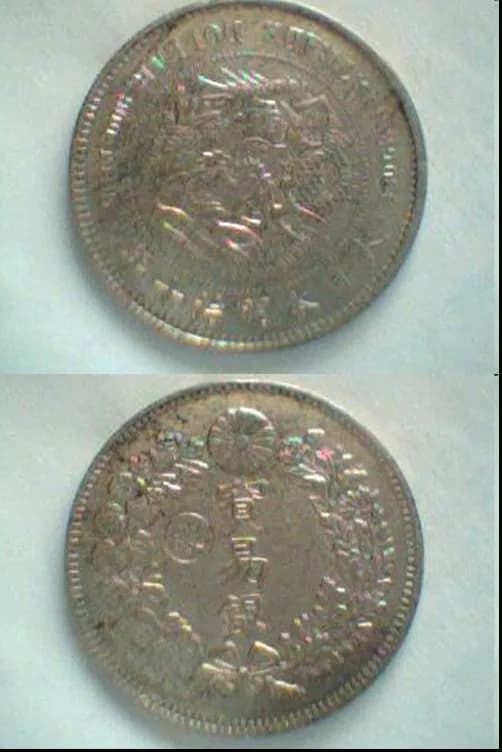
Image: Modern Japanese coinage / photographed by Samuel Ho / Wikimedia Commons / CC BY-SA 3.0(source)
Nagasaki Minted Kan'ei Tsūhō — The Coin Born in the Port Town of Japanese Isolation
Traces of Dutch Trade Engraved in Nagasaki, a Trade Hub during the Isolation Period
Subject coin: 長崎鋳寛永通宝
Overview
The Nagasaki Minted Kan'ei Tsūhō is a coin that carved a unique history in Nagasaki under Japan's isolation policy during the Edo period. During this time, Japan enforced a policy of isolation, limiting trade to the Dutch and Chinese. Nagasaki played a crucial role as a trade gateway, and coins were minted at a mint managed by the Nagasaki Magistrate's Office. While Kan'ei Tsūhō was widely circulated nationwide, the Nagasaki Minted coins are distinguished by their calligraphy, coin diameter, and copper quality. Some of the copper used was brought through trade with the Dutch and Chinese. According to Types and Identification of Japanese Coins, these coins were part of Japan's domestic currency circulation, particularly known for circulating alongside imported coins. Due to this historical background, the Nagasaki Minted Kan'ei Tsūhō had a significant influence on future generations as a coin that strongly reflected the impact of international trade at the time.
Specifications
- Denomination
- 1文
- Minting period
- 1659年〜1860年
- Metal composition
- 銅
- Weight
- 約3.7g
- Dimensions
- 直径約24mm
- Mintage
- 不詳(諸説あり)
- Mint supervisor
- 長崎奉行所管轄
- Market price
- 1,000円〜10,000円(状態による)
Chapter 1: Nagasaki — The Trade Hub under Isolation
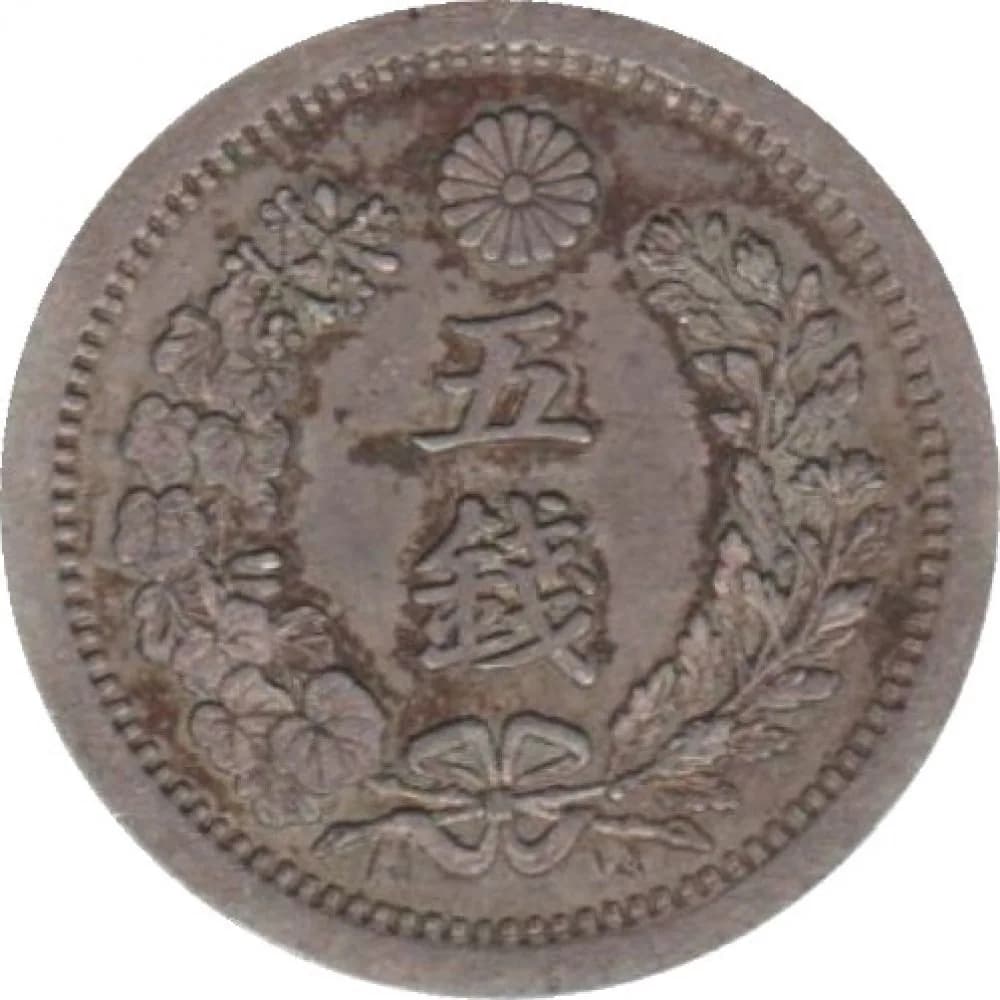
Image: Modern Japanese coinage / Coindesmonnaies / Wikimedia Commons / CC BY-SA 4.0(source)
In the early Edo period, Japan enforced a policy of isolation under the Tokugawa shogunate. During this era, Nagasaki served a unique role as the only official gateway connecting Japan to the outside world. In 1659, the shogunate began minting Kan'ei Tsūhō in Nagasaki, which held significant meaning as part of international trade rather than a mere currency issuance. The Nagasaki Minted Kan'ei Tsūhō produced at the mint under the jurisdiction of the Nagasaki Magistrate's Office used copper obtained through trade with the Dutch and Chinese, leading to unique material and quality characteristics, as later research revealed. Trade in Nagasaki was a major enterprise supporting the Japanese economy at the time, and the issuance of the Nagasaki Minted Kan'ei Tsūhō was its symbolic achievement. Many merchants and artisans gathered in Nagasaki, engaging in vibrant economic activities. The Nagasaki Magistrate's Office strictly controlled the quality of the coins from 1659 to 1860, meeting domestic and international demands. This coin was not only money but also a testament to Nagasaki's trade, and its importance has been passed down to the present.
Chapter 2: Minting Process — Under the Supervision of the Nagasaki Magistrate's Office
Image: Modern Japanese coinage / Coindesmonnaies / Wikimedia Commons / CC BY-SA 4.0(source)
The minting at the mint under the jurisdiction of the Nagasaki Magistrate's Office underwent a very strict process. The minting of Kan'ei Tsūhō, which began in 1659, attracted particular attention in Nagasaki. The Magistrate's Office used a specific calligraphy style to make it easier to distinguish the Nagasaki Minted coins from other Kan'ei Tsūhō, supposedly utilizing the expertise of contemporary calligraphers and minting technicians, although specific names are not recorded (various theories exist). Part of the copper used in minting was obtained from Dutch trade, with meticulous quality control. The minting site was located in central Nagasaki, surrounded by numerous workers and merchants, bustling with activity. Minting required advanced techniques, especially regarding the mixture ratio of copper and temperature control. This led to the Nagasaki Minted coins being rated as having superior copper quality compared to those minted in other regions. The Nagasaki Magistrate's Office supervised the entire minting process, building trust as a coin circulated nationwide. This Nagasaki Minted coin served not only as currency but also as evidence of high technological ability at the time, passed down to later generations.
Chapter 3: Distribution and Impact — The Path of the Coin
Image: Modern Japanese coinage / Coindesmonnaies / Wikimedia Commons / CC BY-SA 4.0(source)
The Nagasaki Minted Kan'ei Tsūhō, from its inception, was widely circulated and influenced all of Japan. Especially in the mid-Edo period, as trade through Nagasaki became more active, these coins gained increasing importance. The Nagasaki Minted coins, circulating alongside imported coins, permeated the everyday lives of common people. According to historical records of prices at the time, the Nagasaki Minted Kan'ei Tsūhō was used in daily transactions, such as purchasing rice at approximately 20 mon per shō. The value of this coin transcended that of a mere currency, symbolizing Nagasaki's trade achievements. During distribution, the regional and unique characteristics of the Nagasaki Minted coins were evaluated, sometimes being traded at high values among some merchants and collectors. Especially in the late Edo period, they were sometimes re-minted in various locations to supplement monetary shortages, impacting national economic activities. As with Types and Identification of Edo Gold Coins, understanding different types of Kan'ei Tsūhō became an essential clue to grasping the economic situation of the time.
Chapter 4: Influence on Later Generations — Beyond Time
Image: Modern Japanese coinage / Coindesmonnaies / Wikimedia Commons / CC BY-SA 4.0(source)
The Nagasaki Minted Kan'ei Tsūhō was continuously used in various forms until the end of the Edo period. Even after minting ceased in 1860, these coins continued to circulate throughout Japan and became popular as historical collectibles with significant value. In the era of modernization, the design and material of the Nagasaki Minted coins inspired improvements in domestic currency manufacturing technology. Particularly in modern markets such as Basic Knowledge of Ancient Coin Auctions, these coins are traded at high prices due to their rarity and historical background. For contemporary coin collectors and history researchers, the Nagasaki Minted coins remain crucial materials for understanding the economy and international trade of the Edo period. Additionally, they tell the story of how Japan interacted with and was influenced by the external world. With such a historical backdrop, the Nagasaki Minted Kan'ei Tsūhō holds more than mere monetary value, continuing to convey its significance across time.
Value & Rarity
The current market value of the Nagasaki Minted Kan'ei Tsūhō varies widely depending on its preservation state and historical background. This coin is a precious heritage from Japan's isolation era, and those with clear features such as calligraphy, coin diameter, and copper quality are particularly attractive to collectors. In the market, well-preserved pieces are traded for about 1,000 to 10,000 yen, with some rare specimens auctioned at even higher prices. Especially in Overview and Appeal of Ancient Coins, coins with historical backgrounds like the Nagasaki Minted ones receive high evaluations. These coins can serve as more than mere collection items, being important resources for deepening historical understanding. Thus, the Nagasaki Minted Kan'ei Tsūhō will continue to be cherished by many for insights into how past Japan engaged in international trade and its effects on the domestic economy.
Conclusion
The Nagasaki Minted Kan'ei Tsūhō is a significant coin symbolizing Japan's international exchange and economic development during the Edo era. Born out of the unique geographical context of Nagasaki and minted using copper obtained through trade with the Dutch and Chinese, this coin was more than just currency. It demonstrated the technological prowess and the fruits of international trade at the time, and its existence is deeply ingrained in Japan's history. Even today, it remains valuable to collectors and history researchers, and the story of the Nagasaki Minted coins teaches us how past Japan interacted with the world. With such a historical background, the Nagasaki Minted Kan'ei Tsūhō will continue to convey its significance to many people.
Related Stories
Fuhonsen — Solving the Mystery of the Oldest Coin from the Asuka Period
Japan's oldest circulating currency unearthed in Nara, Asuka
Coin StoryFuhon-sen — Tracing the History of Ancient Coins
In 1999, excavations in Asuka unearthed 'Japanese coins older than Wadōkaichin'. Why was Fuhon-sen made and why was it forgotten?
Coin StoryFujushanpō — The End of Kōchōsen
The Story of the Fifth Kōchōsen Issued by Emperor Saga: Its Rise and Fall
Dealers
Dealers Handling This Category
A reference when considering a sale or appraisal. All are dealers and auction houses with a proven track record.
Japan Coin Auction (JCA)
Tokyo
Holds regular auctions with reliable hammer price data, making it a useful resource for tracking market values. Caters to a wide range of collectors from beginners to advanced buyers.
Osaka Numismatic Auction
Osaka
A Kansai-based coin auction house with particular strength in regional and hole coins.
Ginza Coins
Ginza, Chuo-ku, Tokyo
One of Japan's most established numismatic dealers. The scale and variety of their regular auctions is among the largest in the country. Their catalogs are considered a benchmark for market pricing.