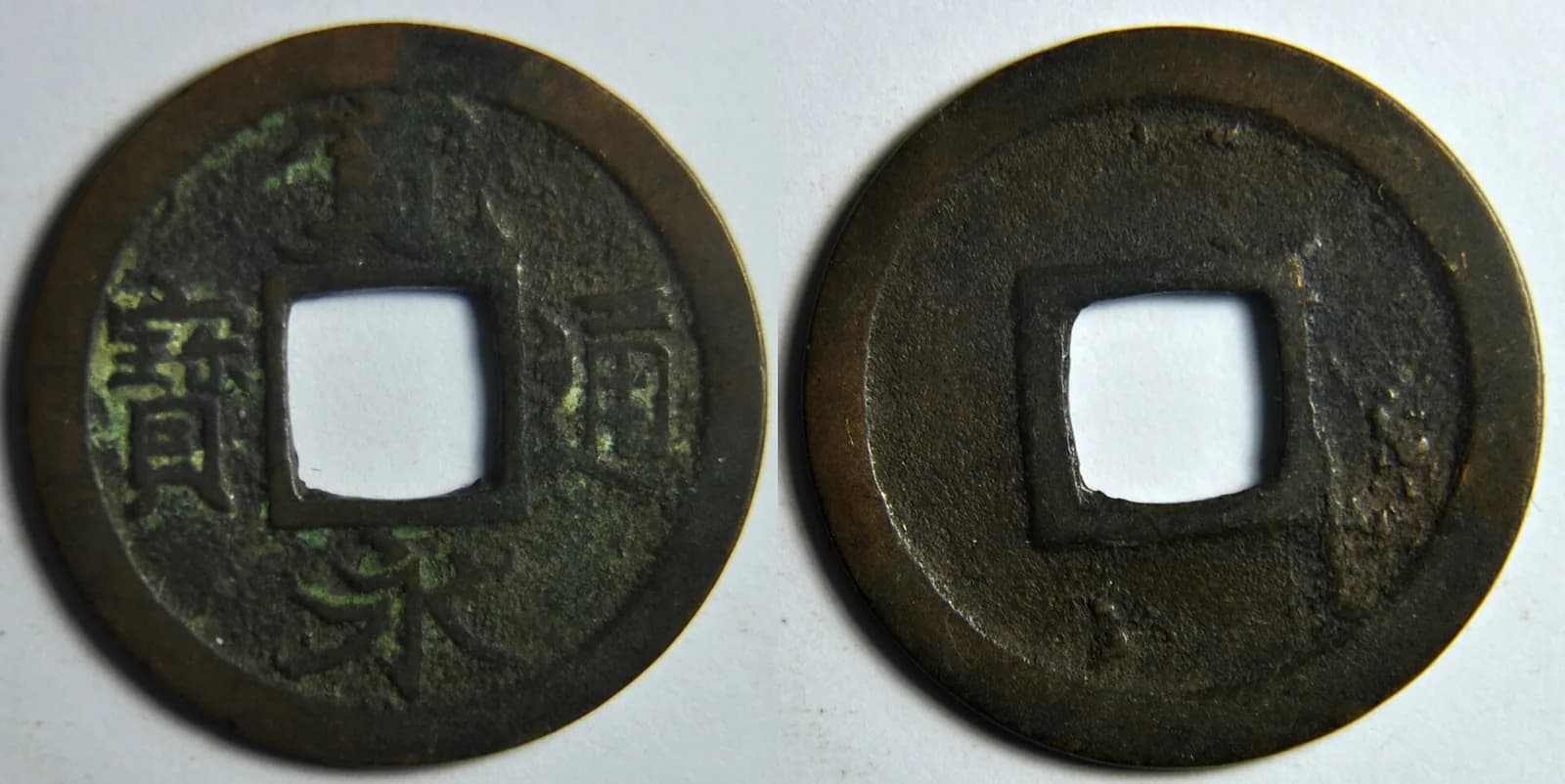
Image: Japanese holed coins (square-holed cash coins) / Jean-Michel Moullec from Vern sur Seiche (35, Bretagne), France / Wikimedia Commons / CC BY 2.0(source)
The Story of the Shōwa Aluminum 5 Sen Coin — A Small Coin Born from Wartime Material Transition
The History of the Aluminum Coin Created by the Turmoil and Economic Conditions Before the Outbreak of War Between Japan and the United States
Subject coin: 昭和アルミ5銭貨
Overview
In 1940, during war-time Japan, a new type of coin was introduced, the Shōwa Aluminum 5 Sen Coin. This coin emerged amid the tense situation prior to the outbreak of war between Japan and the United States, with the objective of securing resources necessary for war efforts by switching materials from copper to aluminum. Typically, coins are engraved with history and culture, but the Shōwa Aluminum 5 Sen Coin symbolizes the urgency and resource shortages of its time. With a diameter of 19mm and a weight of 1.0g, this small coin, adorned with a design of five paulownia crests, vividly narrates the changes in Japan's economy and society at the time. Its historical value continues to be evaluated through Modern Coin Value and Identification and Identification of Counterfeits and Modified Coins.
Specifications
- Denomination
- 5銭
- Minting period
- 昭和15年〜昭和19年(1940-1944年)
- Metal composition
- アルミニウム
- Weight
- 1.0g
- Dimensions
- 直径19mm
- Mintage
- 不詳(諸説あり)
- Mint supervisor
- 不詳
- Market price
- 数百円〜数千円(状態による)
Historical Background — Coin Reform of 1940
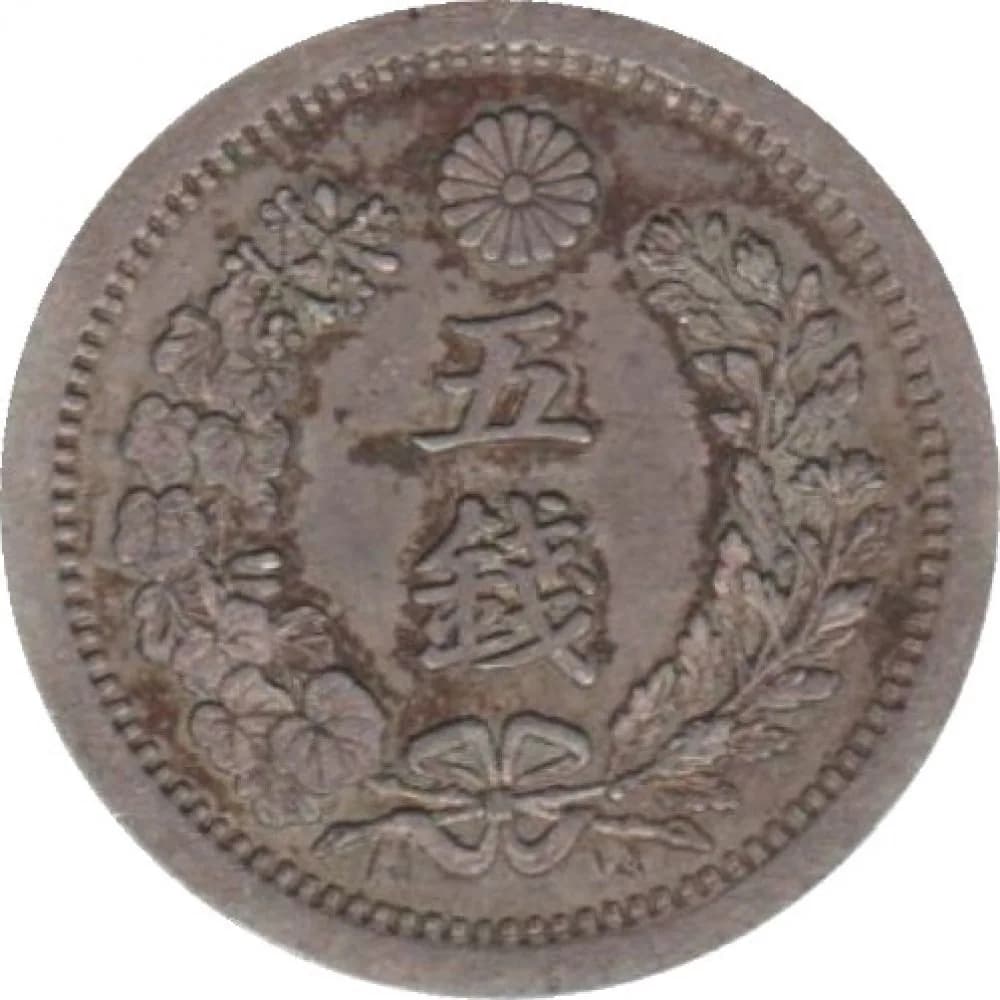
Image: Modern Japanese coinage / Coindesmonnaies / Wikimedia Commons / CC BY-SA 4.0(source)
The year 1940 marked an escalation in Japan’s wartime regime. During this period, Japan was still engaged in a prolonged conflict with China, and tensions with the United States were rising. Domestically, there was a call for resource conservation, and copper and iron were prioritized for military industries. In light of this, the Japanese government decided to review the materials used for coinage. Continuing to mint copper coins had become increasingly difficult, leading to the selection of aluminum as the material. Aluminum was lightweight and relatively easy to obtain in Japan at that time, which led to its adoption for the 5 Sen coin. The coin had a diameter of 19mm and weighed only 1.0g, making it exceptionally small and lightweight. This decision was significantly influenced by then Finance Minister Kaya Okinori, who was involved in adjusting domestic resource allocation while devising strategies to sustain the wartime economy. Compared to Types and Identification of Edo Gold Coins, such a material transition was a noteworthy event in Japan’s monetary history.
Minting Process — Utilization of Aluminum
Image: Modern Japanese coinage / Coindesmonnaies / Wikimedia Commons / CC BY-SA 4.0(source)
The minting of the Shōwa Aluminum 5 Sen Coin took place at the Tokyo Mint Bureau. At the time, the mint was occupied with producing coins using new materials. Aluminum was relatively easy to process and, due to its light weight, convenient for transportation. However, given the technological constraints of the era, the lack of strength in aluminum raised concerns about the durability of the coins. Despite this, the necessity of conserving resources for Japan's war efforts rendered the use of aluminum unavoidable. The mint workers faced challenges in minting with a material different from standard copper coins, yet they managed mass production in a short time frame. Japanese engineers devised methods to leverage the properties of aluminum, while maintaining the minimum quality standards necessary for the coins. The technical challenges during this period are said to have laid the foundation for later industrial technology in Japan. The coin featured a design of five paulownia crests on the reverse, simplistic yet conveying a strong visual message. This design symbolized the unity and perseverance the Japanese government sought to project to its citizens during difficult times. When compared to Overview and Appeal of Ancient Coins, it becomes apparent how material transitions closely relate to the historical context.
Actual Circulation — Impact on the Economy and Public Reaction
Image: Modern Japanese coinage / Coindesmonnaies / Wikimedia Commons / CC BY-SA 4.0(source)
In 1940, when the Shōwa Aluminum 5 Sen Coin began circulating, Japan's economy was undergoing significant changes as it shifted to a wartime regime. Rising prices and supply shortages were shifting the importance of cash in daily life. The aluminum-made 5 Sen coin played a crucial role in everyday small transactions, but its lightness and material change surprised many in the public. For people accustomed to the long-used copper coins, the aluminum coins seemed novel, yet brought a sense of unease. Newspaper articles from the time reported on the public's confusion regarding this new currency, with comments on its lightness leading to it being less noticeable in wallets and more prone to being lost. Economically, changing the material to aluminum allowed the government to conserve resources and redirect them towards more critical wartime goods. However, life for ordinary people grew increasingly harsh, as shopping required meticulous calculations, adding new burdens to daily life. In the market, some stores even refused to accept the aluminum 5 Sen coins, challenging the reliability of the currency itself. Compared to Details of Edo Silver Coins, such circulation challenges were characteristic of the era.
Impact on Posterity — Abolishment of the Shōwa Aluminum 5 Sen Coin and its Aftermath
Image: Modern Japanese coinage / Coindesmonnaies / Wikimedia Commons / CC BY-SA 4.0(source)
In 1944, as the war situation worsened, the Shōwa Aluminum 5 Sen Coin fulfilled its role. With the intensification of the war, further resource conservation was required, and the material of coins needed reevaluation once more. Aluminum had become even more in demand for military equipment, leaving no room for its use in coinage. Thus, the Shōwa Aluminum 5 Sen Coin was abolished, and its successors necessitated even lighter and cheaper materials. After the war, Japan’s coinage system was reorganized, and the aluminum 5 Sen coin faded into history. However, the techniques and material knowledge cultivated during the war significantly contributed to Japan’s post-war economic revival. The attempt at material conversion by this coin can be considered to have played a part in Japan’s technological innovation and economic growth. Even today, the Shōwa Aluminum 5 Sen Coin maintains a certain popularity among collectors, drawing attention to its historical background and manufacturing techniques. Based on the Standards for Grading Old Coins, its condition is evaluated, adding to its appeal.
Value & Rarity
The Shōwa Aluminum 5 Sen Coin is valued among collectors due to its historical background. As evidence of the material transition during wartime, its rarity has increased. Well-preserved examples can trade for several thousand yen, but they generally sell for a few hundred yen. The exact number minted is unknown, leaving the total quantity in circulation unclear, though it is believed to be relatively plentiful for a wartime coin. Given the properties of aluminum, well-preserved specimens are few, and those exhibiting minimal wear or oxidation have increased rarity. For collectors, the coin is a highly attractive item symbolizing Japan’s economic conditions and social changes during wartime. Through Basics of Coin Auctions, its value may continue to fluctuate.
Conclusion
The Shōwa Aluminum 5 Sen Coin is chronicled in history as one of the coins symbolizing Japan’s wartime economy. The material transition was a desperate measure in the face of resource shortages due to war. However, this endeavor contributed to later technological innovation in Japan and assisted in economic recovery. Even today, collectors interested in its historical significance continue to reevaluate its worth. Through this coin, one can glimpse the challenges faced by wartime Japan and the ingenuity employed to overcome them. The Shōwa Aluminum 5 Sen Coin, more than just a currency, remains a precious heritage narrating history, with its value set to rise further.
Related Stories
Wartime 10-sen Aluminum Coin — A Witness in Metal Reflecting Tumultuous Times
From 1940 to 1943, metal went to the battlefield. Aluminum 10 sen in the hands of the public
Coin StoryWartime Tin 10 Sen Coin — Japan's Dismal Outlook Etched in Tin of 1944
In an era when copper and nickel became weapons, the tin 10 sen coin narrates the last throes of wartime economy
Coin StoryWartime 1 Sen Aluminum Coin (Late Period) — Testimony from Times of War
The Trajectory and Significance of Coins Minted During 1941-1942 Wartime
Dealers
Dealers Handling This Category
A reference when considering a sale or appraisal. All are dealers and auction houses with a proven track record.
Japan Coin Auction (JCA)
Tokyo
Holds regular auctions with reliable hammer price data, making it a useful resource for tracking market values. Caters to a wide range of collectors from beginners to advanced buyers.
Ginza Coins
Ginza, Chuo-ku, Tokyo
One of Japan's most established numismatic dealers. The scale and variety of their regular auctions is among the largest in the country. Their catalogs are considered a benchmark for market pricing.