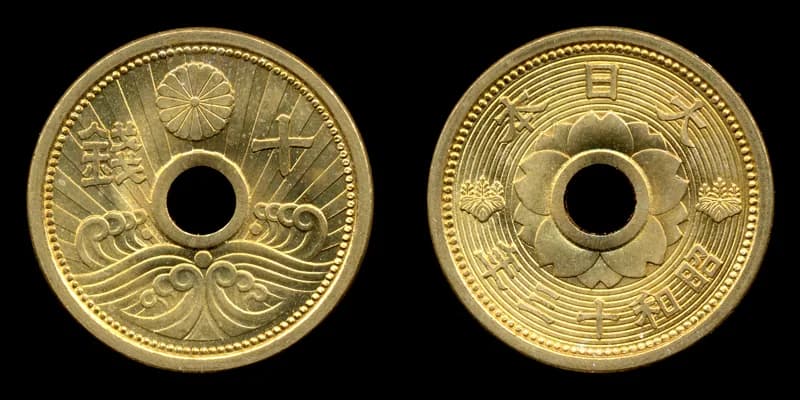
Image: Modern Japanese coinage / As6673 / Wikimedia Commons / CC BY-SA 3.0(source)
Man'en Koban — Japan's Smallest Koban Born of Desperation at the End of the Edo Period
A Remarkable Lightweight Gold Coin Born from the Impact of the Sakuradamon Incident
Subject coin: 万延小判
Overview
The Man'en Koban is the smallest koban in Japanese history, created amidst the chaotic political situation at the end of the Edo period. The background to its issuance involves the policies influenced by Ii Naosuke, who was assassinated in the Sakuradamon Incident. In 1860, the shogunate made a bold decision to drastically reduce the gold content and set the weight at 3.3 grams, about 1/5 of the Keichō Koban, to prevent gold outflow. This was due to the distortion in the gold-silver ratio in trade with Western countries, where the value of gold in Japan was undervalued compared to the international market. This monetary reform had a significant impact on the economy at the time and symbolized the shogunate's predicament. Minting continued until Keio 3 (1867) and circulated for about seven years, but was abolished following the Meiji Restoration, leading to the introduction of a new currency system.
Specifications
- Denomination
- 1両
- Minting period
- 万延元年〜慶応3年(1860-1867年)
- Metal composition
- 金56.77% / 銀43.23%
- Weight
- 3.3g
- Dimensions
- 縦約39mm × 横約23mm
- Mintage
- 不詳(諸説あり)
- Mint supervisor
- 後藤家(金座)/ 不詳
- Market price
- 50万円〜300万円(状態による)
Turmoil in the Late Edo Period — Desperate Measures to Prevent Gold Outflow
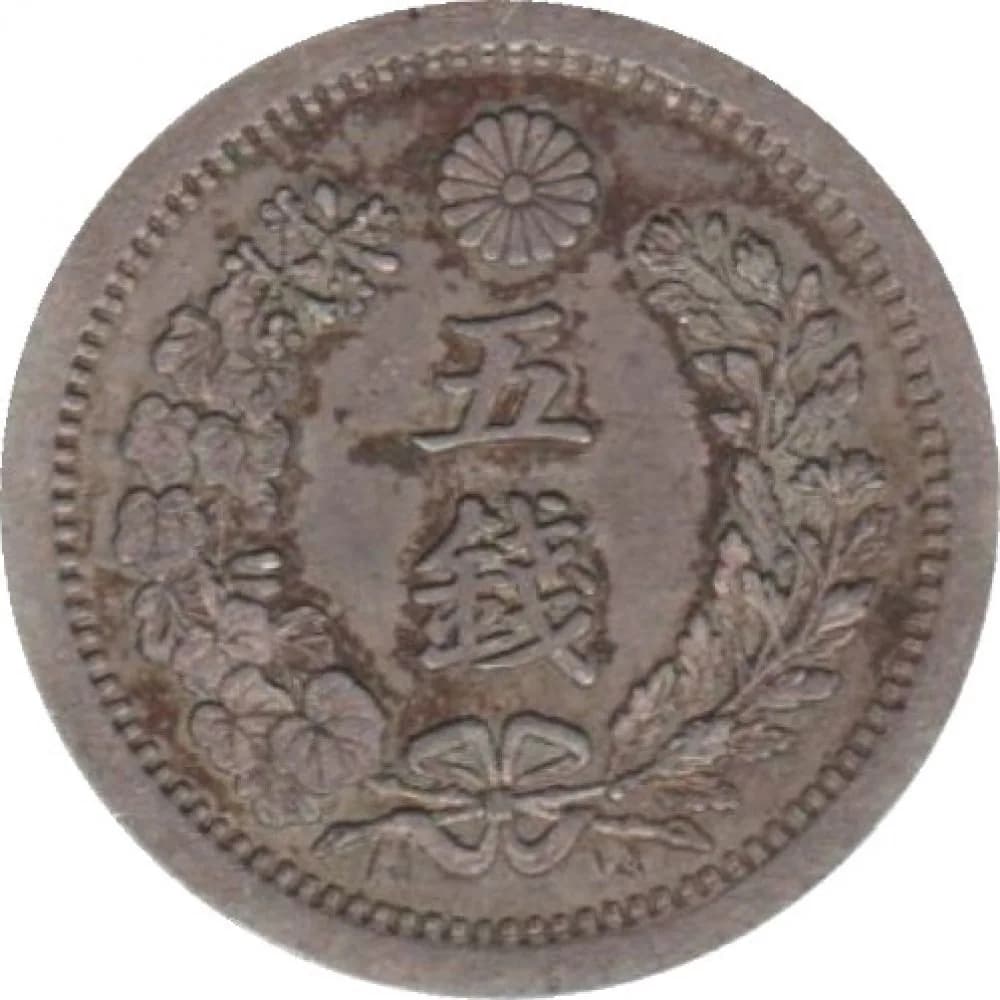
Image: Modern Japanese coinage / Coindesmonnaies / Wikimedia Commons / CC BY-SA 4.0(source)
On March 3, 1860, the assassination of Ii Naosuke at Sakuradamon in Edo greatly shook Japan's political situation. This event significantly undermined the authority of the shogunate and had a major impact on both domestic and international economies. Particularly, the imbalance in the gold-silver ratio in trade with Western countries was a problem, with gold being valued at one ryo to five ryo of silver in Japan, whereas it traded at a ratio of 1:15 internationally. Consequently, foreign merchants profited by buying gold on the Japanese market, exchanging it for silver, and taking it abroad. To counter this massive outflow of gold, the shogunate decided to issue a new koban with reduced gold content — the Man'en Koban. On April 10, Man'en 1 (1860), goldsmiths at the government's mint under strict supervision began the minting process. The weight of the new koban was only 3.3 grams, a mere 1/5 of that of the Keichō Koban. This remarkable lightening symbolized the shogunate's predicament and vividly depicted the confusion in the Japanese economy at the time. By lowering the gold's purity to 56.77%, the intention was to keep gold's value low and prevent outflow. Through this policy, the shogunate sought to control the outflow of gold and stabilize the domestic economy. However, this sudden policy change caused confusion among the public, and the impact on the economy was significant. Merchants harbored uncertainties about the value of the new koban, leading to disruptions in trade. The minting of the Man'en Koban continued for about seven years until Keio 3 (1867), showing a glimpse of the shogunate’s trial and error.
The Secrets of Minting — Techniques and Involved Parties
Image: Modern Japanese coinage / Coindesmonnaies / Wikimedia Commons / CC BY-SA 4.0(source)
The minting of the Man'en Koban was part of the shogunate's economic policy at the time. The minting of gold coins was handled by the Goto family, who managed minting operations during the Edo period. Entrusted with overseeing the mint, the Goto family was responsible for both the technology and quality control of the gold coins. Minting the Man'en Koban required techniques different from regular gold coins. The gold purity was set at 56.77%, with the remainder being 43.23% silver. The reason for reducing the gold content was to curb outflow, but such a gold-silver mix presented a new challenge for minting technicians. The minting facility was set up at the Edo mint, where skilled craftsmen worked tirelessly day and night. Through their hands, small 3.3g gold coins were produced one after another and released to the market based on the shogunate's policy. During this minting process, strict inspections were conducted to maintain quality, ensuring high-quality koban that honored the Goto family’s reputation. The Man'en Koban symbolizes a pivotal point in Japan’s monetary history, realized only through the techniques and efforts of the craftsmen involved.
Distribution and Economic Impact — Public Reaction
Image: Modern Japanese coinage / Coindesmonnaies / Wikimedia Commons / CC BY-SA 4.0(source)
When the Man'en Koban began to circulate in the market, many were surprised by its lightweight and low gold content. Particularly, Edo merchants were skeptical of this new gold coin. Compared to the conventional Keichō Koban details, its value declined significantly, greatly impacting price stability. As the value of gold fell and inflation progressed, the prices of everyday items rose. For instance, the costs of rice and fish skyrocketed, burdening the lives of ordinary people. In the market, there was debate among merchants about how to handle the new koban. With gold purity being low, it was hard to determine its actual value, leading to confusion in transactions. Additionally, the distortion in the domestic gold-silver ratio caught the attention of foreign merchants, who still attempted to export Japanese gold. Amidst such economic turmoil, the Man'en Koban struggled to gain public support, contrary to the shogunate's expectations. Nevertheless, it came to be studied by many historians later on as a symbol of the monetary system shift during the late Edo period.
Legacy for Future Generations — Recoinage and Abolition
Image: Modern Japanese coinage / Coindesmonnaies / Wikimedia Commons / CC BY-SA 4.0(source)
The Man'en Koban, as a gold coin symbolizing the chaos during the end of the Edo period, had a significant impact on Japan's subsequent currency system. Although minting ended in 1867, Keio 3, Japan's monetary system underwent major changes with the Meiji Restoration. As part of modernizing efforts, the Meiji government reformed the currency system. This reform introduced the value and recognition of modern currency, and new gold coins were issued. The abolition of the Man'en Koban was a step towards breaking away from the old shogunate's economic policies and aiming for a currency system aligned with international standards. The recoinage of new gold coins was designed with international market transactions in mind, with strict control over gold content and quality. As a result, Japan's economy gradually stabilized and became capable of handling international trade. The experience of the Man'en Koban, while able to curb gold outflows temporarily by reducing gold content, ultimately led to economic chaos in the long term. This experience taught later Japanese monetary policy the importance of careful planning and execution.
Value & Rarity
The Man'en Koban is highly valued today due to its rarity. Particularly those in good condition can fetch high prices at auctions. Market prices range from 500,000 yen to 3,000,000 yen, largely depending on their preservation state and historical background. According to basic knowledge of coin auctions, the Man'en Koban is unique compared to other Edo period gold coins due to its light weight and low gold content. Hence, it holds high collection value for collectors and history enthusiasts, especially those interested in the economic conditions and currency system transitions of the late Edo period. It is important for traders to be aware of the knowledge of identifying fakes and forgeries as counterfeits can circulate in the market. Due to its historical background and rarity, the Man'en Koban is expected to maintain high value in the future.
Conclusion
The Man'en Koban is a unique entity born amidst the political and economic turmoil at the end of the Edo period. Through this koban, we can learn about the economic issues the shogunate faced at the time and the impact of drastic policy changes. Even today, it holds high value due to its rarity, combining both historical and collectible value as an alluring gold coin. Studying the Man'en Koban provides crucial insights into Japan's monetary history and economic policy changes. Moving forward, it is important to leverage the historical lessons brought by this koban to achieve better economic policies.
Related Stories
Ansei Chōgin — The Final Edo Era Silver Bullion Coin amidst the Turbulence of the Bakumatsu
A Short-lived yet Historical Silver Bullion Created Amidst the Turmoil of Opening Japan
Coin StoryAnsei Nibus Gin — A Silver Coin Born Amidst Port Opening and Fiscal Crisis
The Role of Subsidiary Silver Coins Issued in the Turbulent Closing Years of the Edo Period
Coin StoryBunkyū Eiho and the End of the Gold Coin System — Tracing the History of Edo Gold Coins
Bunkyū 2 (1862) marks the final currency reform of the shogunate, with a gold coin series issued alongside the Bunkyū Eiho (copper coins) as a symbol of late shogunate monetary chaos
Dealers
Dealers Handling This Category
A reference when considering a sale or appraisal. All are dealers and auction houses with a proven track record.
Ginza Coins
Ginza, Chuo-ku, Tokyo
One of Japan's most established numismatic dealers. The scale and variety of their regular auctions is among the largest in the country. Their catalogs are considered a benchmark for market pricing.
Japan Coin Auction (JCA)
Tokyo
Holds regular auctions with reliable hammer price data, making it a useful resource for tracking market values. Caters to a wide range of collectors from beginners to advanced buyers.
Taisei Coins
Tokyo
A dealer with an international network. Offers advanced services such as consignment to overseas auctions and NGC/PCGS grading submission. Recommended for high-value or internationally recognized coins.