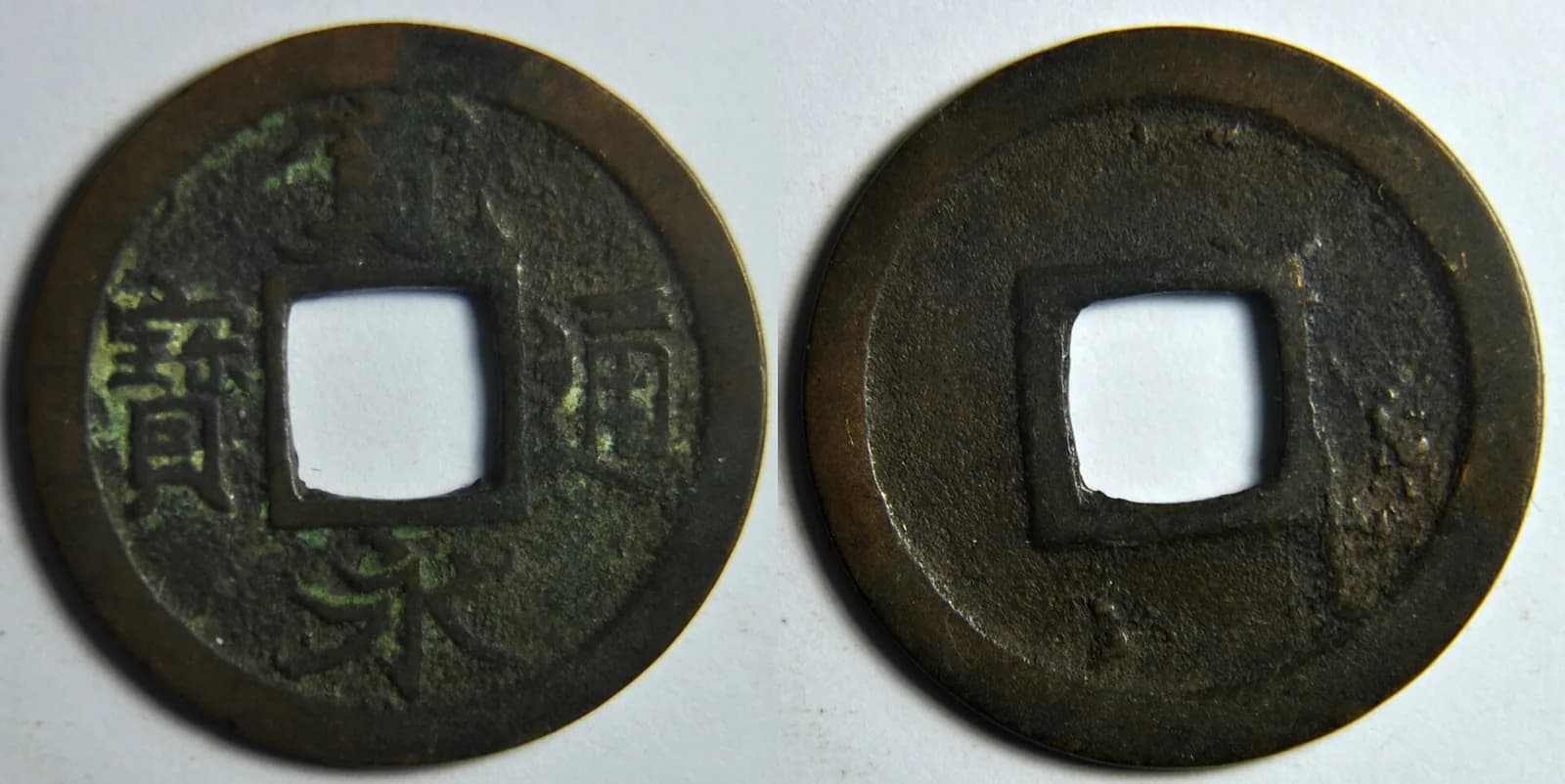
Image: Japanese holed coins (square-holed cash coins) / Jean-Michel Moullec from Vern sur Seiche (35, Bretagne), France / Wikimedia Commons / CC BY 2.0(source)
Wartime 10-sen Aluminum Coin — A Witness in Metal Reflecting Tumultuous Times
From 1940 to 1943, metal went to the battlefield. Aluminum 10 sen in the hands of the public
Subject coin: 戦時10銭アルミ貨
Overview
On the eve of the Pacific War, a significant change occurred in Japanese currency. In 1940 (Shōwa 15), the 10-sen coins, previously made of cupronickel and bronze, suddenly transformed into aluminum. The birth of this lightweight metal currency symbolized not mere material change but a turning point when Japan moved towards a national mobilization system, beginning to concentrate all resources for war efforts. The prolongation of the Second Sino-Japanese War and the preparation for the impending Pacific War made saving strategic materials like silver and copper an urgent issue. Amidst this backdrop, aluminum emerged as a new option. From 1940 to 1943, approximately 1,240,000,000 wartime 10-sen aluminum coins were minted, circulating daily in the wallets of the general populace. Their surfaces featured the Rising Sun of Japan and the paulownia crest used by the Imperial family, powerful symbols meant to inspire the spirit of the Japanese people during wartime. These coins reflect the turbulent history of the Shōwa period, with their light touch encapsulating the hardships of the people and the fate of the nation at that time. This story aims to deeply explore the journey of the wartime 10-sen aluminum coin and unravel its historical significance. For more on the value and identification of modern coins, see Modern Coin Values and Identification. To delve deeper into the world of old coins, refer to Basics of Antique Coin Auctions.
Specifications
- Denomination
- 10銭
- Minting period
- 昭和15年〜昭和18年(1940年-1943年)
- Metal composition
- アルミニウム
- Weight
- 0.9g
- Dimensions
- 直径22mm
- Mintage
- 昭和15年: 約2億4,000万枚、昭和16年: 約2億5,000万枚、昭和17年: 約4億5,000万枚、昭和18年: 約3億枚(合計約12億4,000万枚)
- Mint supervisor
- 大蔵省造幣局
- Market price
- 数百円〜数千円(未使用品や特定の年号、状態による)
Chapter 1: The Approaching War and Currency Transformation — The 'Metal Conservation' Directive of 1940
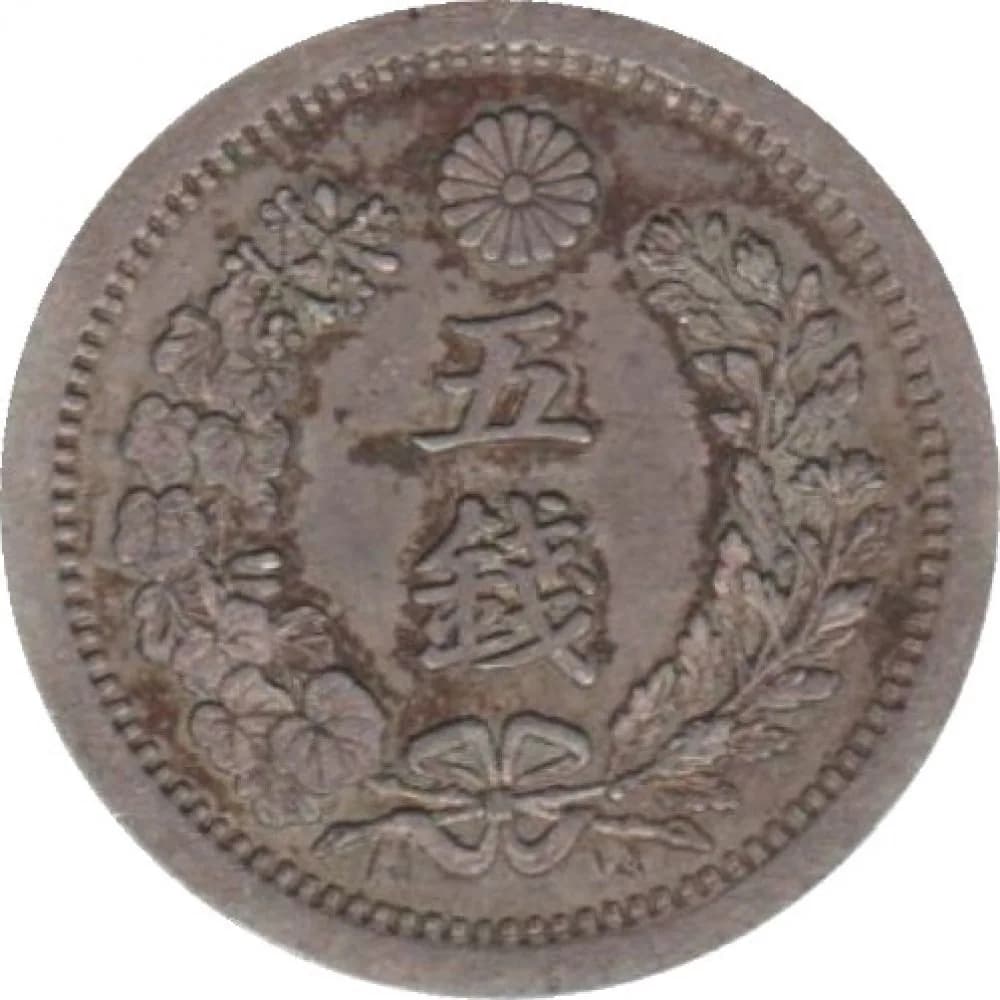
Image: Modern Japanese coinage / Coindesmonnaies / Wikimedia Commons / CC BY-SA 4.0(source)
In the late 1930s, Japan faced increasing international isolation and the prolonged Second Sino-Japanese War led to a steady depletion of national strength. The war, which began in 1937, had become mired in a stalemate, inflating military spending to over half of the national budget. With the outbreak of World War II in 1939, international tensions further intensified. Japan had to strengthen its national mobilization system to prepare for the forthcoming large-scale conflict. During this period, securing strategic resources, particularly metals essential to the arms industry, became a top national priority. Rare metals like copper, nickel, and silver were heavily consumed in the production of munitions, artillery shells, aircraft, and ships, causing their stockpiles to dwindle daily. The Ministry of Finance implemented various measures to minimize civilian metal consumption and redirected it for military use, one being the review of coin materials. In 1939, the 'Gold Coin Retrieval Order' was issued to secure national gold reserves, mandating the forced recovery of gold coins owned by the public. On March 27, 1940, the 'Amendment to the Currency Act' was announced, deciding to switch the 10-sen coins from cupronickel (copper 75%, nickel 25%) to aluminum from April 1, Shōwa 15 (1940). This decision stemmed from the critical importance of nickel in military applications, necessitating its complete removal from coin use. The Konoe Fumimaro Cabinet sought ways to minimize the impact on civilian life while maximizing resource diversion for military purposes. Aluminum, with its increasing domestic production capacity at the time, was deemed less strategic compared to copper and nickel. This amendment led to the production of the new aluminum 10-sen coins, signaling an era of unprecedented circumstances like the upcoming Pacific War, as witnesses of the time. For more information on Edo period gold coins, see Types and Identification of Edo Gold Coins.
Chapter 2: Birth of a Light Metal — The Challenge of the Ministry of Finance Mint Bureau
Image: Modern Japanese coinage / Coindesmonnaies / Wikimedia Commons / CC BY-SA 4.0(source)
The selection of aluminum as the new material was due to its lightness and good workability. However, maintaining its durability as a coin and compatibility with the existing monetary system posed new challenges for the Ministry of Finance Mint Bureau. At the Mint Bureau in Kita-ku, Osaka, technicians tirelessly researched the production of the new 10-sen aluminum coin. Compared to traditional cupronickel or bronze coins, aluminum was very soft and prone to wear, requiring the use of an aluminum alloy with small amounts of copper and magnesium to increase strength. Despite these efforts, the severe wartime resource shortages likely made it challenging to maintain quality. In terms of design, the coin featured the 'Rising Sun' on the obverse and the 'Paulownia Crest' on the reverse. The Rising Sun symbol, long used as a symbol of Japan, expressed the power of sunrise and aimed to boost the morale of the wartime population. The paulownia crest was considered a noble emblem second only to the chrysanthemum and indicated a connection to the Imperial Family. These designs were fitting for wartime currency, evoking national prestige and patriotism. In 1940, approximately 240 million coins were minted, 250 million in the following year, 450 million in 1942 when the Pacific War commenced, and about 300 million in 1943, with production increasing annually. The dedicated efforts of Mint Bureau craftsmen supported this massive production under strict resource control and challenging labor conditions, fulfilling the crucial mission of national currency supply. Resulting from Japan's wartime technical prowess amid constraints, the 10-sen aluminum coin stands as a historical testament. For more on Hōsen (holed coins), refer to Types and Identification of Holed Coins.
Chapter 3: Wartime Economy in the People's Wallets — Circulation Amid Material Shortages
Image: Modern Japanese coinage / Coindesmonnaies / Wikimedia Commons / CC BY-SA 4.0(source)
The wartime 10-sen aluminum coin, introduced in 1940, quickly circulated throughout Japan, deeply embedding itself into the daily lives of ordinary people. The Japanese economy of the time, influenced by the prolonged Second Sino-Japanese War and escalating international tensions, began to show signs of inflation. Prices gradually increased, making it notably difficult to acquire essential goods and foodstuffs. The government issued the 'Price Control Order' in 1939 to curb prices, but in practice, black markets flourished, widening the gap between official and actual market prices. The aluminum coin, while easy to handle due to its lightness, initially sparked doubts among some who wondered if such a lightweight item could truly be currency. However, as other metal coins began to vanish over time, aluminum coins became indispensable. Following the outbreak of the Pacific War on December 8, 1941, the national mobilization system was further reinforced, with nationwide campaigns for metal contributions from households, religious sites, and everywhere else for 'the country's sake.' This included currency metals. In everyday wallets, the 10-sen aluminum coin was frequently used for small purchases: a pack of cigarettes (about 10 sen at the time), a matchbox (about 2 sen), a bus ride (starting fare of 5 sen), and for purchasing rationed goods like rice and sugar. However, as resource scarcity worsened, the value of currency itself relatively declined. For instance, the official price of rice was about 3 yen per 10 kg in 1940, but it often traded for several times that amount on the black market. During this period, people lived with resource shortages and the anxiety of an endlessly uncertain war. The aluminum coin passed from hand to hand, its light jingle supporting modest purchases amid the harsh realities of wartime life. To correctly assess the value of old coins, it helps to know How to Identify Counterfeits and Altered Coins.
Chapter 4: War's End and the Transition of Coins — Aluminum Coins as Historical Memory
Image: Modern Japanese coinage / Coindesmonnaies / Wikimedia Commons / CC BY-SA 4.0(source)
By 1943, the tide of the Pacific War had increasingly turned unfavorably for Japan. Defeats such as the Battle of Guadalcanal and the catastrophic blows from the Battle of Midway exacerbated metal shortages, prompting another review of coin materials. Even aluminum began to be prioritized as a strategic resource for aircraft production. Consequently, from 1943 onwards, the material for the 10-sen coin was changed to tin. By 1944, due to the extreme shortage of metal resources, ceramic 10-sen coins (tōka) unprecedentedly appeared. These material changes vividly illustrate Japan's dire wartime situation. The wartime 10-sen aluminum coin completed its role in a short span of just four years, passing the baton to more readily available and inexpensive materials. Post-war, Japan's economy endured massive chaos, with rampant inflation. In February 1946, the government implemented deposit freezes and new currency exchanges, halting the circulation of old coins. The wartime 10-sen aluminum coin officially concluded its role during this currency exchange, becoming buried in history. However, its historical significance remains undiminished. Today, the wartime 10-sen aluminum coin is cherished by many collectors as a precious historical document symbolizing Japan's turbulent Shōwa history. Its light touch and designs of the Rising Sun and paulownia silently narrate the hardships faced by the nation's people and the weighty destiny borne by the state. Compared to its successors like tin or ceramic coins, the aluminum coin was among the last to maintain the bare minimum of metallic dignity. This coin is not merely a means of payment but a bearer of the memories of people who lived through the maelstrom of war, serving as a witness to history. For the coin grading criteria, see Grading Criteria for Old Coins for more details.
Value & Rarity
The wartime 10-sen aluminum coins were minted in vast numbers, approximately 1,240,000,000 in total from 1940 to 1943. As a result, their overall rarity is not particularly high, making them one of the more accessible old coins to acquire. The current market price varies significantly depending on condition, with general circulation examples often trading for a few hundred yen. However, certain years or conditions of these coins hold higher value. Coins from years with fewer mintages, manufacturing errors, and particularly those in 'uncirculated' condition carry higher demand among collectors and can trade for several thousand yen, occasionally exceeding 10,000 yen. The 1940 issue, being relatively early production, tends to be more valued when found in good condition. Important points in determining market value include:
1. Year: Minting numbers and surviving quantities per year affect value.
2. Condition: Less worn coins with clear designs and remaining luster (especially uncirculated ones) are highly valued. Rust, discoloration, scratches, or holes significantly lower value.
3. Error Coins: Coins with unintended minting errors (e.g., misalignments, material defects) are rarer and can command higher prices. The antique coin market involves trade via flea market apps, online auctions, and specialized dealers. When considering a purchase, comparing multiple sources and buying from trusted sellers is crucial. Awareness of counterfeits and altered coins is vital, as they exist in the market. Reviewing historical price charts helps understand past trends and accurately assess current value. For more, see Check Price Trends with Market Charts.
Conclusion
The wartime 10-sen aluminum coin, with its light touch, paradoxically symbolizes one of the most burdensome periods in Japanese history. Issued between 1940 and 1943, these coins circulated among the wallets of ordinary people, supporting daily life amid the national mobilization system, metal contributions, and the unprecedented events of the Pacific War. They were not merely payment tools but bearers of the harsh reality of resource depletion, the nation's struggles, and the memories of those who lived through such times. Holding this aluminum coin, one feels not just a piece of metal but the breath of people from a turbulent era. The stories these small coins tell quietly convey to us the value of peace and the lessons of history. In doing so, they speak softly of resilience and hope to today's generation.
Related Stories
Wartime Tin 10 Sen Coin — Japan's Dismal Outlook Etched in Tin of 1944
In an era when copper and nickel became weapons, the tin 10 sen coin narrates the last throes of wartime economy
Coin StoryShowa Pottery Coins (Prototype) – Tracing the History of Wartime Currency
In 1945, Japan, completely depleted of metals, attempted to create currency from "pottery." Pottery 5-sen and 1-sen coins — war altered currency to this extent
Coin StoryWartime Zinc Coins (Prototypes and Plans) — Tracing the History of Wartime Currency
In the late Pacific War, Japan had even carried out trials for zinc coins, the worst material deterioration in history—deemed 'the last resort' after ceramics.
Dealers
Dealers Handling This Category
A reference when considering a sale or appraisal. All are dealers and auction houses with a proven track record.
Japan Coin Auction (JCA)
Tokyo
Holds regular auctions with reliable hammer price data, making it a useful resource for tracking market values. Caters to a wide range of collectors from beginners to advanced buyers.
Ginza Coins
Ginza, Chuo-ku, Tokyo
One of Japan's most established numismatic dealers. The scale and variety of their regular auctions is among the largest in the country. Their catalogs are considered a benchmark for market pricing.