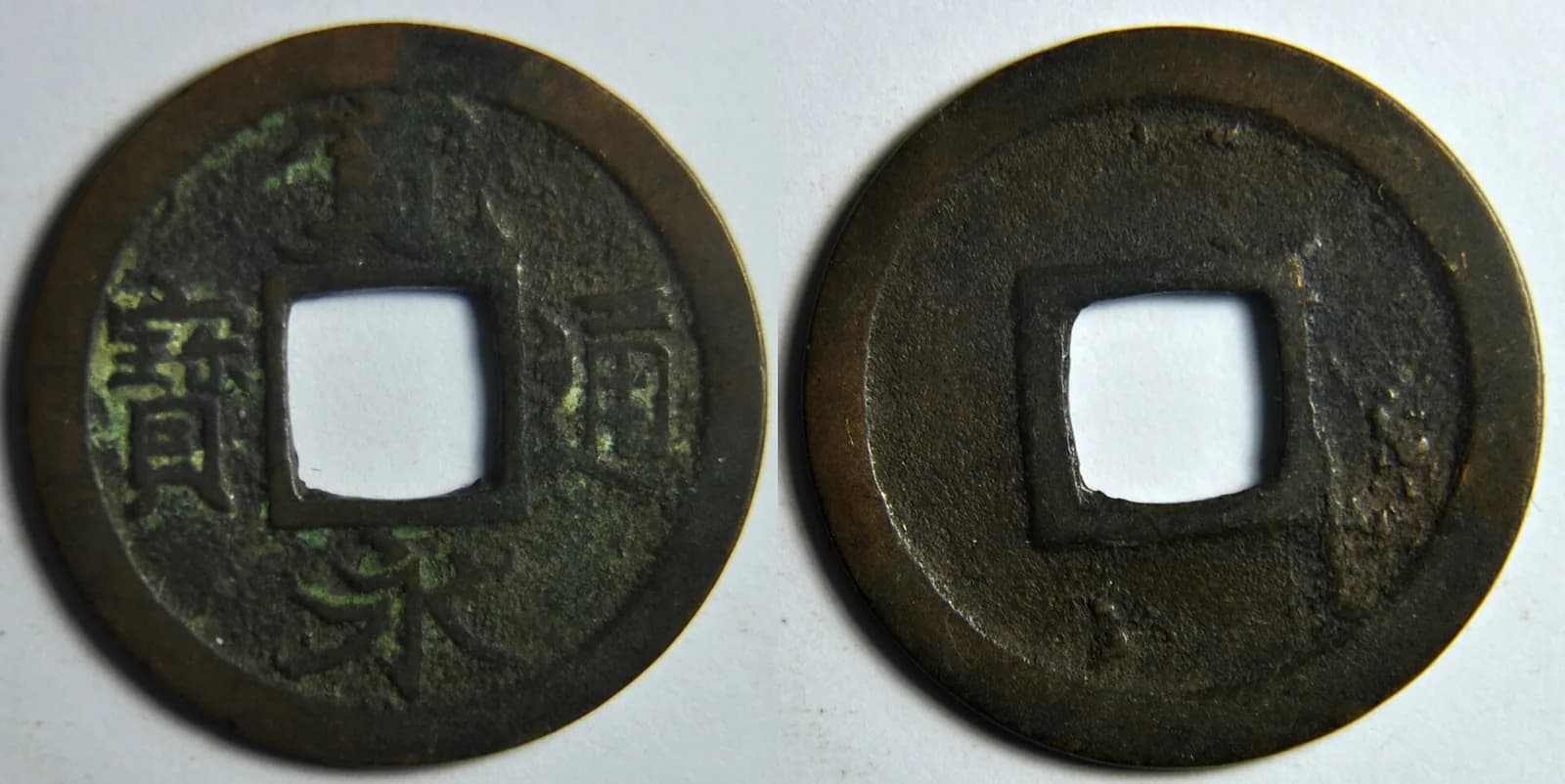
Image: Japanese holed coins (square-holed cash coins) / Jean-Michel Moullec from Vern sur Seiche (35, Bretagne), France / Wikimedia Commons / CC BY 2.0(source)
Wartime 1 Sen Aluminum Coin (Late Period) — Testimony from Times of War
The Trajectory and Significance of Coins Minted During 1941-1942 Wartime
Subject coin: 戦時1銭アルミ貨(後期)
Overview
In 1941, the world was embroiled in war. Japan was no exception, and with the onset of the Pacific War, its economic structure underwent major changes. It was during this period that the "Wartime 1 Sen Aluminum Coin (Late Period)" was minted. In December 1941, following the attack on Pearl Harbor, in the midst of a resource-strapped wartime system, the government switched the coin material to the cheaper and lighter aluminum. This 1 sen coin was used in everyday small transactions and passed through the hands of many Japanese people. The selection of materials and production numbers influenced by the war have various interpretations and are the focus of attention by researchers and collectors post-war. This wartime currency serves as a testament to history beyond just currency and holds research value comparable to the ancient coins overview and appeal.
Specifications
- Denomination
- 1銭
- Minting period
- 昭和16年〜昭和17年(1941-1942年)
- Metal composition
- アルミニウム
- Weight
- 0.8g
- Dimensions
- 直径17.5mm
- Mintage
- 不詳(諸説あり)
- Mint supervisor
- 不詳
- Market price
- 5,000円〜20,000円(状態による)
Chapter 1: Shadow of War — Motive for Minting and Political Background
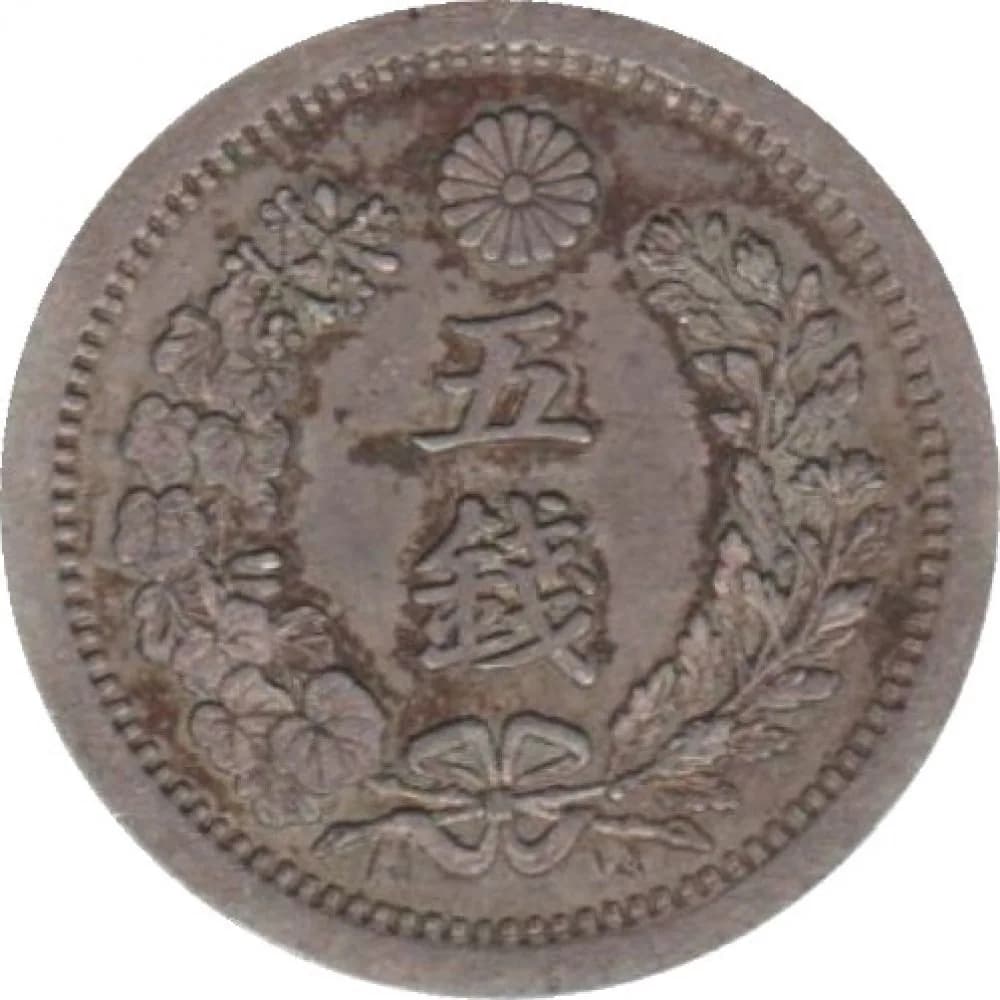
Image: Modern Japanese coinage / Coindesmonnaies / Wikimedia Commons / CC BY-SA 4.0(source)
In 1941, the world was in the chaos of World War II. At this time, Japan was pressing on with war to strengthen its influence in the Asia-Pacific region. December 8 marked the start of the Pacific War with the attack on Pearl Harbor, and transition to a wartime system progressed rapidly. Prime Minister Hideki Tojo believed in the necessity of mobilizing the nation's resources to pursue war, greatly impacting economic policy. The resource shortage during wartime was severe, especially metals like copper and nickel were prioritized for military goods. Thus, aluminum was chosen as the coin material. Aluminum was lightweight, easy to process, and convenient for transport — a reluctant yet necessary choice to secure the resources essential for war efforts. The 1 sen aluminum coin was born amid this backdrop and used in daily transactions. During wartime Japan, the Price Control Order was enforced, with government interventions to curb price spikes, achieving economic control. The small denomination of the 1 sen coin played an important role in daily minor payments, though its value gradually declined due to inflation. By 1942, this coin too was affected by economic turmoil. Thus, the wartime 1 sen aluminum coin was more than mere currency; it was a mirror reflecting Japan's political and economic situation at the time.
Chapter 2: Minting Process and Material Selection — Challenges for Engineers
Image: Modern Japanese coinage / Coindesmonnaies / Wikimedia Commons / CC BY-SA 4.0(source)
The minting of the wartime 1 sen aluminum coin was a significant challenge for Japanese engineers of the time. The minting was primarily carried out at the Osaka Mint Bureau, established in 1871 with a long history as the center of Japan's coin minting. During this period, the supply of aluminum was prioritized for military use, making it difficult to secure aluminum for coinage. Technicians had to make the most of limited resources. Regarding aluminum purity, subtle differences arose due to wartime supply conditions. Typically, aluminum purity is about 98%, yet during the wartime 1 sen coin's production, it is known that the purity varied over time. These differences affect the coin's value among collectors. The 1 sen aluminum coin also had the year stamped, another distinction point for collectors. The minting process involved preparing aluminum sheets and pressing them out with a press machine. Though the machine employed the latest technology of the time, parts supply was sometimes disrupted by the war's impacts. Nevertheless, through ingenuity, engineers successfully produced high-quality coins. Produced between 1941 and 1942, the 1 sen aluminum coin was small, lightweight, and suitable for everyday use. However, its lightness and size also made it prone to being lost. Thus, the production of the 1 sen aluminum coin is the result of overcoming many difficulties, a crystallization of engineers' efforts and ingenuity of the time.
Chapter 3: Circulation and People's Lives — Economic Impact
Image: Modern Japanese coinage / Coindesmonnaies / Wikimedia Commons / CC BY-SA 4.0(source)
The wartime 1 sen aluminum coin circulated across Japan between 1941 and 1942. It was used in various daily situations, deeply ingrained in the lives of ordinary people. Particularly in wartime Japan, the scarcity of goods became critical, with prices trending upward. The government enforced the Price Control Order to curb price rises, but it couldn't fully suppress the effects of inflation. The 1 sen aluminum coin served as the smallest denomination currency in day-to-day transactions and was particularly valued for small payments like shopping at local markets or purchasing daily necessities. However, amidst economic disarray, the coin's value gradually diminished. Amid the ongoing war, resource shortages greatly impacted civilians' lives. Food and daily necessities faced rationing, with long queues becoming common as people sought limited supplies. Amid these circumstances, the 1 sen aluminum coin played an essential role in supporting small-scale transactions, although its worth eroded due to inflation. By 1942, the number of goods purchasable with a single 1 sen coin was limited, and people increasingly needed larger denomination coins. Thus, the 1 sen aluminum coin symbolized the wartime economic conditions and was an important currency supporting the daily lives of the people. However, as the war dragged on, its role gradually changed.
Chapter 4: Transition to Tin and Beyond — Steps Toward Post-War Recovery
Image: Modern Japanese coinage / Coindesmonnaies / Wikimedia Commons / CC BY-SA 4.0(source)
In 1943, with worsening war conditions, Japan faced further resource shortages. This year, the government decided to change the 1 sen coin material from aluminum to tin. This shift to tin came as securing resources became increasingly difficult due to the war's impact. Tin offered a more stable supply compared to aluminum and was easier to process. Tin 1 sen coins were minted from 1943 to 1945, leading into the post-war turmoil. This transition was not merely a material change but symbolized a shift in Japan's economic policy. Post-war, Japan underwent currency reform aimed at economic recovery, building a new monetary system. During this process, the wartime-used 1 sen coins gradually disappeared as new currency was introduced. The wartime 1 sen aluminum coin remained in circulation among the populace for a while post-war, but as the economy stabilized, its role ended. This coin remains crucial historical evidence for discussing Japan's wartime economic situation and currency evolution. Today, wartime 1 sen aluminum coins are popular among collectors; those in good condition or with distinct year stamps fetch high prices. Thus, the wartime 1 sen aluminum coin holds historical significance beyond mere currency, key to understanding wartime Japan's economy and politics.
Value & Rarity
The wartime 1 sen aluminum coins minted particularly from Shōwa 16 (1941) to Shōwa 17 (1942) draw attention among collectors. These coins symbolize the chaos and fluctuations of the wartime Japanese economy, carrying significant historical value. In the market, their price greatly varies based on condition and year stamp. Coins near uncirculated condition or with clear year stamps can trade at high prices. Generally, transactions ranging from 5,000 yen to 20,000 yen are common, but rare variants or coins with unique traits may be priced higher. Due to the transition to tin in the post-war period, production of aluminum coins ended, gradually increasing their rarity. This intensifies competition in antique coin auctions. However, scrutinizing authenticity is crucial, utilizing guides on distinguishing fake and altered coins is crucial. These coins remain an attractive collection target for collectors, symbolizing wartime Japan's economic heritage.
Conclusion
The wartime 1 sen aluminum coin carries value beyond mere currency as a witness to history. Reflecting Japan's politics, economy, and daily life from 1941 to 1942, this coin narrates a nation's transformation influenced by war. It played a crucial role supporting civilian life amid wartime resource scarcity and economic controls. However, with post-war currency reforms, its role concluded. Today, historical significance and rarity lead to high valuation among collectors. The wartime 1 sen aluminum coin conveys lessons from the past to the future, sharing a story that speaks volumes to us.
Related Stories
Wartime 10-sen Aluminum Coin — A Witness in Metal Reflecting Tumultuous Times
From 1940 to 1943, metal went to the battlefield. Aluminum 10 sen in the hands of the public
Coin StoryWartime Tin 10 Sen Coin — Japan's Dismal Outlook Etched in Tin of 1944
In an era when copper and nickel became weapons, the tin 10 sen coin narrates the last throes of wartime economy
Coin StoryWartime 50 Sen Brass Coin — Tracing the History of Wartime Currency
The 50 sen brass coin issued from Shōwa 13 (1938). A sign of changing coin materials driven by military expansion following the opening of the Second Sino-Japanese War
Dealers
Dealers Handling This Category
A reference when considering a sale or appraisal. All are dealers and auction houses with a proven track record.
Japan Coin Auction (JCA)
Tokyo
Holds regular auctions with reliable hammer price data, making it a useful resource for tracking market values. Caters to a wide range of collectors from beginners to advanced buyers.
Ginza Coins
Ginza, Chuo-ku, Tokyo
One of Japan's most established numismatic dealers. The scale and variety of their regular auctions is among the largest in the country. Their catalogs are considered a benchmark for market pricing.