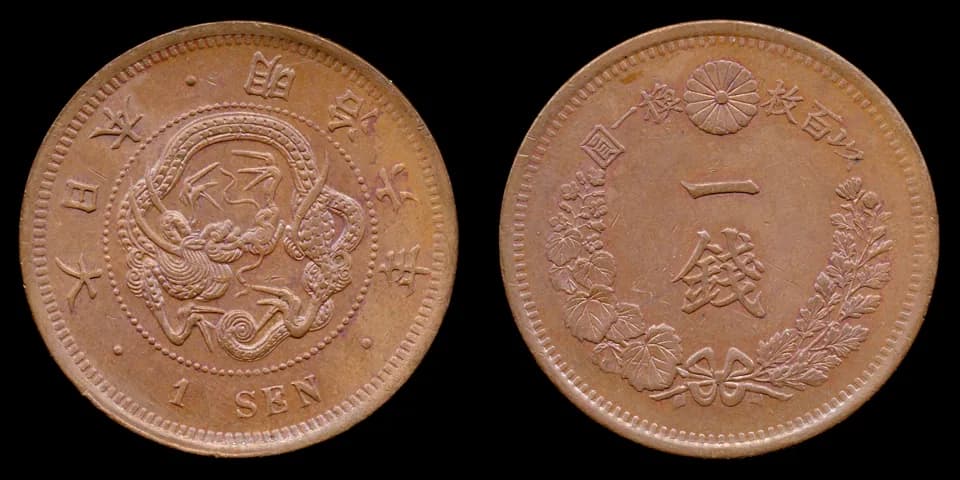
Image: Modern Japanese coinage / As6673 / Wikimedia Commons / CC BY-SA 3.0(source)
Hōō 100-Yen Silver Coin — Wings of Recovery, and the End of the Silver Coin Era
The Brilliance of the High-Growth Period and the Short Life of a Silver 100-Yen Coin Buffeted by Soaring Silver Prices
Subject coin: 鳳凰100円銀貨
Overview
In the midst of postwar Japan's miraculous recovery and rapid economic growth, a single phoenix descended. The Hōō 100-Yen Silver Coin (鳳凰100円銀貨), which appeared in Showa 32 (1957), was a beautiful coin symbolizing the nation's revival from devastation and its hopes for the future. With impressive specifications of 60% silver purity and a weight of 4.8 g, its finely crafted phoenix design became a source of national pride — a crystallization of Japan's traditional beauty and technical prowess. Yet the era of this brilliant silver coin was to close in less than ten years, brought down by unforeseen economic circumstances. The worldwide surge in silver prices triggered a reversal in which the commodity value of the silver itself exceeded the coin's face value, causing serious disruption to the coin's circulation. The story of the Hōō 100-Yen Silver Coin extends beyond mere monetary history. It is a mirror of its age — intimately bound up with Japan's economic history through the turbulent Showa era and with the daily lives of the Japanese people. By tracing its arc from birth to end, we come to understand both the light and shadow of the high-growth period and the economic challenges that shook the very foundations of the monetary system.
Specifications
- Denomination
- 100円
- Minting period
- 昭和32年〜昭和41年(1957-1966年)
- Metal composition
- 銀60% / 銅30% / 亜鉛10%
- Weight
- 4.8g
- Dimensions
- 直径22.6mm
- Mintage
- 約1億3,990万枚(昭和32年〜39年合計)
- Mint supervisor
- 不詳(造幣局)
- Market price
- 1,000円〜数万円(状態、年号による)
Chapter 1: Symbol of Recovery — The Birth of the Silver 100-Yen Coin in Showa 32
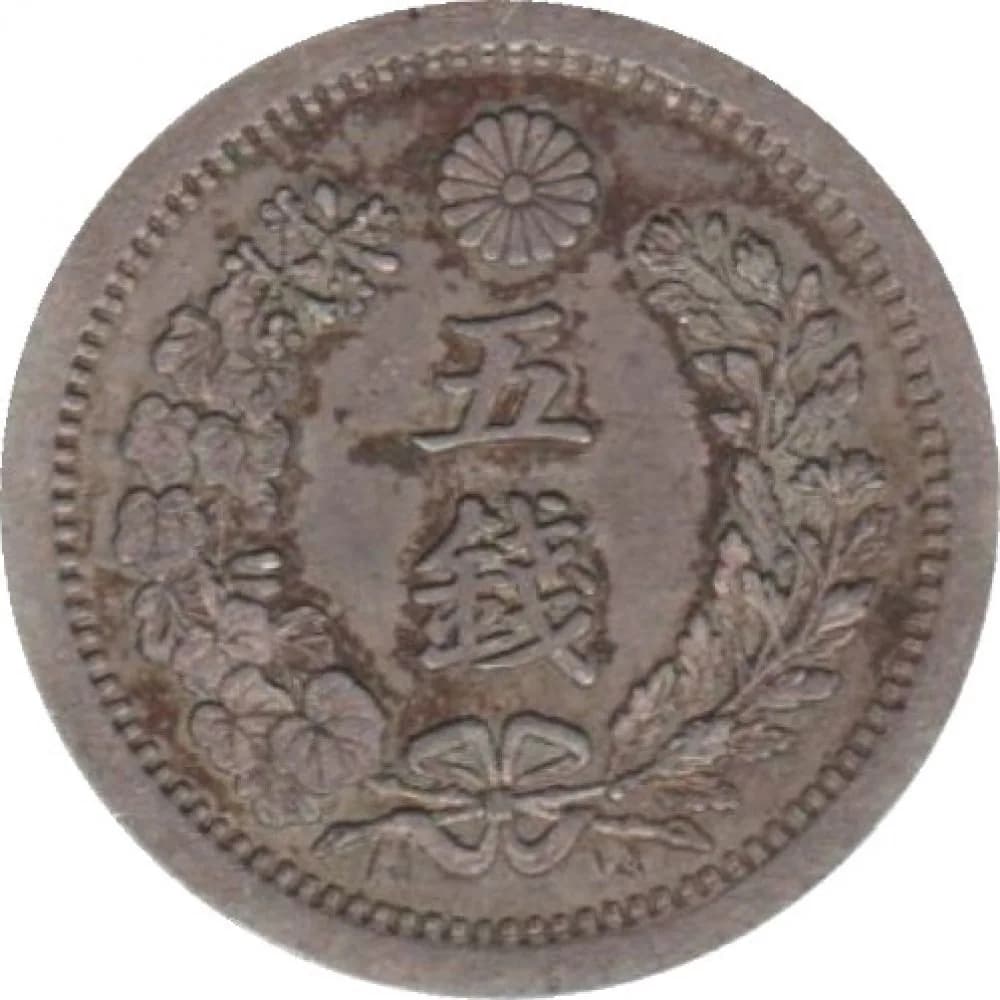
Image: Modern Japanese coinage / Coindesmonnaies / Wikimedia Commons / CC BY-SA 4.0(source)
In Showa 32 (1957), Japan was recovering from postwar devastation and showing the first vigorous shoots of economic growth. Just as the 1955 Economic White Paper had declared 'the postwar period is over,' the people were filled with anticipation for the future. It was in this era of hope that a new face appeared in Japan's monetary system: the Hōō 100-Yen Silver Coin.
At the time, Japan was expanding its economy through rapid industrialization and export growth, yet concerns about inflation lingered. The 100-yen banknotes (Series B and Series C) that had been in circulation since the postwar period carried a relatively high face value, and there was a growing demand for a shift to a weightier and more trustworthy material that would serve as a symbolic currency reflecting the stability of the national economy.
The Ministry of Finance (then called Ōkurashō) aimed to enhance public confidence in the currency and to promote economic stability by adopting silver as the coin's material. Silver had long been used throughout the world as the material for high-denomination coins, and its brilliance and scarcity were considered the ideal choice for expressing the nation's prestige.
The issuance of this new silver 100-yen coin was advanced under the Kishi Nobusuke Cabinet of the time. The Kishi Cabinet listed economic self-reliance and the improvement of Japan's standing in international society as important policy goals, and the introduction of a robust coinage was part of that effort. Based on the 'Act on the Unit of Currency and the Issuance of Coins, etc.' enacted on February 1 of Showa 32, minting of the Hōō 100-Yen Silver Coin began at the Osaka Mint on April 11 of the same year.
This silver coin boasted impressive specifications: a diameter of 22.6 mm, a weight of 4.8 g, and a silver purity of 60%. It thus came to take over from the existing 100-yen banknote and assumed the role of a high-denomination coin. When people held it and felt the weight and brilliance of the silver, they must have experienced the reality of Japan's recovery and economic growth. It was more than a mere coin — it was etched deeply in people's hearts as a symbol of Japan soaring into a new era after overcoming the hardships of the postwar years.
Chapter 2: A Crystallization of Beauty and Technology — The Wishes Embodied in the Phoenix and Paulownia
Image: Modern Japanese coinage / Coindesmonnaies / Wikimedia Commons / CC BY-SA 4.0(source)
The appeal of the Hōō 100-Yen Silver Coin lay not only in the intrinsic value of its material but also in its supremely refined design. The obverse bore the sacred bird 'hōō' (鳳凰, phoenix) soaring through the heavens, while the reverse featured the 'kiri' (桐, paulownia) crest — symbol of the Japanese government — along with the denomination '100'. This design expressed Japan's traditional aesthetic sensibility and the dignity of the state, and it was widely embraced by the public.
The phoenix has long been regarded in the East as a symbol of auspiciousness (zuishō), believed to bring peace and prosperity. For a Japan that had overcome postwar turmoil and was building a new era, the phoenix was the ideal motif in which to invest the wish for revival and development. Its form, full of dynamism, can be said to have symbolized Japan's own flight toward a future filled with hope.
This beautiful design was created by the skilled craftsmen of the Osaka Mint. The Mint of that era was called upon to possess a high capability for fusing traditional engraving techniques with the latest press technology. The skill required to express, in the limited space of a 22.6 mm diameter, each feather of the phoenix and the fine veins of the paulownia leaves — delicately yet powerfully — was truly the pinnacle of artisanal craft.
Care was also taken with the alloy composition. The high-quality silver alloy of 60% purity was harder than pure silver and superior in durability, making it practical enough to withstand everyday circulation. The remaining 40% consisted of 30% copper and 10% zinc, which allowed the coin to combine the beautiful lustre characteristic of silver with ease of processing during minting. This alloy ratio was the fruit of meticulous research and trial and error aimed at reconciling the coin's functionality with its aesthetic quality.
In the manufacturing process as well, the latest coin presses of the time were introduced, enabling the large-scale and uniform production of silver coins. Each coin was inspected under rigorous quality control before being sent out to the market. Through these efforts, the Hōō 100-Yen Silver Coin became not only a symbol of postwar Japan's recovery but also proof of the high level of Japan's coin-manufacturing technology. Its brilliance passed through many hands and played an important role in supporting Japan's economy.
Chapter 3: Light and Shadow of the High-Growth Era — Soaring Silver Prices and a Crisis for the Coinage
Image: Modern Japanese coinage / Coindesmonnaies / Wikimedia Commons / CC BY-SA 4.0(source)
The Hōō 100-Yen Silver Coin played an important role in supporting Japan's economic activity during the period of rapid economic growth from the late 1930s (Showa 30s) through the early 1940s (Showa 40s). Shops overflowed with new goods, vending machines spread, and the 100-yen coin penetrated deeply into daily life — from everyday shopping to the use of public transportation. In particular, the Tokyo Olympics held in Showa 39 (1964) brought great prosperity to the Japanese economy, and the silver coin too passed through many hands amid the excitement of that international event.
Behind that brilliant light, however, a serious shadow was creeping in to shake the monetary system. Due to rising global demand for silver and shortfalls in supply, silver prices began to surge rapidly as the 1960s got underway. In the United States in particular, the revision of the Coinage Act in 1965 and the subsequent halt in silver coin production had a major impact on the international silver market. The silver price on the London market, which had been around one US dollar per troy ounce in the early 1960s, rose to the two-dollar range by the mid-1960s and continued to climb.
This surge in silver prices hit Japan directly. The Hōō 100-Yen Silver Coin contained 60% silver, and the phenomenon of 'bullionization' — in which the commodity value of the material exceeded the face value — began to become a reality. Specifically, situations arose in which the bullion value of the silver contained in a single coin exceeded 100 yen, and people began hoarding silver coins or, in some cases, melting them down and selling them as silver bullion.
As a result, the 100-yen silver coins disappeared rapidly from the market and their circulation volume dropped sharply. Despite a total mintage of approximately 139,900,000 coins through Showa 39, opportunities to see silver coins in everyday life decreased and inconvenience began to affect citizens' lives. The Ministry of Finance and the Bank of Japan could not overlook this situation and were pressed to implement fundamental measures to maintain the stability of the monetary system. This monetary crisis was one facet of Japan's anguish — reaping the benefits of rapid economic growth while at the same time receiving a baptism in global economics through the volatility of resource prices. Consumer prices were trending upward during this period: for example, while the starting monthly salary for university graduates was approximately 13,000 yen in Showa 32, it had reached approximately 22,000 yen by Showa 40, illustrating how the dynamism of the economy was also affecting monetary value.
Chapter 4: The End of the Silver Coin Era — Passing the Baton to Cupronickel and a Historical Assessment
Image: Modern Japanese coinage / Coindesmonnaies / Wikimedia Commons / CC BY-SA 4.0(source)
Faced with the crisis of dwindling circulation caused by rising silver prices, the Japanese government was pressed to respond swiftly. The then-Minister of Finance, Fukuda Takeo, decided to change the material of the 100-yen coin in order to ensure the currency's credibility and stable circulation. Then, on September 21 of Showa 41 (1966), the Hōō 100-Yen Silver Coin completed its role and the baton was passed to a new 100-yen coin made of cupronickel.
The new 100-yen coin was made of cupronickel, an alloy of 75% copper and 25% nickel. This material was far less expensive than silver, and there was almost no concern that its bullion value would exceed its face value. The design was also renewed: the obverse featured 'sakura-bana' (桜花, cherry blossoms) — a symbol of Japan — while the reverse bore the numerals '100' and the text 'NIPPON'. This cherry blossom 100-yen cupronickel coin had a diameter of 21 mm and a weight of 4.8 g; while slightly smaller in diameter than the phoenix silver coin, its weight was kept the same.
This recoinage marked an important turning point in Japanese monetary history. It signaled the end of the era of high-denomination coins made of silver and heralded the arrival of an age in which non-precious-metal coins, superior in practicality and economy, would become the mainstream. The Hōō 100-Yen Silver Coin was issued over a span of only eight years, from Showa 32 through Showa 39, though its period of circulation continued until Showa 41. After the switch to the cupronickel coin, however, the silver coins were rapidly withdrawn from the market or passed into the hands of collectors.
Because of its short life, the Hōō 100-Yen Silver Coin holds a special presence among today's collectors. In particular, the Showa 39 issue — the final year of production — is considered to have higher scarcity than other dates due to its comparatively smaller mintage. This silver coin is valued not merely as a collectible but as a precious historical document that tells the story of Japan's postwar economic history, and especially the light and shadow of the high-growth era.
In the modern day, the Hōō 100-Yen Silver Coin continues to be cherished by many as a coin that holds within it the memory of an era when Japan was rising powerfully to its feet and spreading its wings toward the international community. Its beautiful phoenix figure can truly be called the 'wings of recovery' — conveying to the present day the hopes of those who, having overcome a difficult era, dared to dream of the future.
Value & Rarity
The Hōō 100-Yen Silver Coin enjoys high popularity among antique coin collectors, owing to its beautiful design and its historical background as a coin whose life was cut short. Market value fluctuates significantly depending on the date, state of preservation, and whether the coin has been professionally graded.
In general, because the Hōō 100-Yen Silver Coin was issued in comparatively large numbers, it rarely becomes the subject of extremely high-priced transactions; however, examples in near-uncirculated (UNC) or fully uncirculated (BU) condition trade at prices well above face value. In particular, the Showa 39 issue — the final year of production — tends to command a slight premium compared to other dates, as its mintage was somewhat smaller.
As a general guide to current market prices: circulated examples (worn or scratched) trade in the range of a few hundred yen to around 1,000 yen; fine examples (FDC/VF class) in the range of 1,000 yen to several thousand yen; and uncirculated examples (UNC/BU class) can exceed 10,000 yen, which is not unusual. Coins that have received high grades from grading services, or rare error coins of specific dates, can trade at even higher prices.
When beginning to collect the Hōō 100-Yen Silver Coin, one approach is to research the mintage figures by date and target the scarcer dates. However, the single most important factor is state of preservation. Carefully checking whether the coin's surface lustre (mint luster) remains, whether there are any scratches or contact marks, and whether there is any discoloration or rust is indispensable for accurately assessing a coin's value.
Unfortunately, fakes and altered coins also exist in the market. Reports of this silver coin being misused — given its high silver content — were documented during periods of rising silver prices. It is important to purchase from a reliable antique coin dealer or to choose coins that have already been professionally graded. Building knowledge about how to identify fakes and altered pieces is also important.
Because the Hōō 100-Yen Silver Coin possesses historical value beyond that of a mere coin, it is an attractive item not only for collectors but also for history enthusiasts.
Conclusion
The Hōō 100-Yen Silver Coin was truly the 'wings of recovery,' symbolizing Japan's miraculous postwar rehabilitation and rapid economic growth. Its beautiful phoenix design reflected the hopes and confidence of the people, and demonstrated the high level of Japan's coin-manufacturing technology to the world. Yet its fate — buffeted by the economic storm of soaring global silver prices and cut short — tells the story of both the light and the shadow of the high-growth era. The transition from silver to cupronickel was the answer to a practical challenge faced by Japan's monetary system, and a wise choice that prioritized economic stability. This single silver coin is a precious time capsule, conveying to the present day the history of Japan as it raced through the turbulent Showa era and the memories of the people who lived in that age. At ITTENDO, we intend to continue treasuring and communicating the historical and cultural significance that the Hōō 100-Yen Silver Coin carries.
Related Stories
60th Anniversary of Local Autonomy Law 500 Yen Bicolor – 10-Year Journey Across 47 Prefectures
Commemorative Coin Series Born from the Law of 1947
Coin StoryCommemorative Coins for the Crown Prince's Wedding — Tracing the History of Commemorative Currency
In 1993, commemorative coins of a 50,000 yen gold coin and a 10,000 yen silver coin were issued for the Crown Prince's (current Emperor) marriage, attracting 1,000,000 applications for the 'Congratulations Currency'
Coin StoryHeisei Inauguration Commemorative 100,000 Yen Gold Coin — Japan’s Historical Golden Emblem
Limited Edition Gold Coin Celebrating the Heisei Emperor’s Inauguration, Learning from the Showa Experience
Dealers
Dealers Handling This Category
A reference when considering a sale or appraisal. All are dealers and auction houses with a proven track record.
Ginza Coins
Ginza, Chuo-ku, Tokyo
One of Japan's most established numismatic dealers. The scale and variety of their regular auctions is among the largest in the country. Their catalogs are considered a benchmark for market pricing.
Taisei Coins
Tokyo
A dealer with an international network. Offers advanced services such as consignment to overseas auctions and NGC/PCGS grading submission. Recommended for high-value or internationally recognized coins.
Tokyo Coin Club
Tokyo
A membership-based coin dealer known for carefully selected, quality inventory.