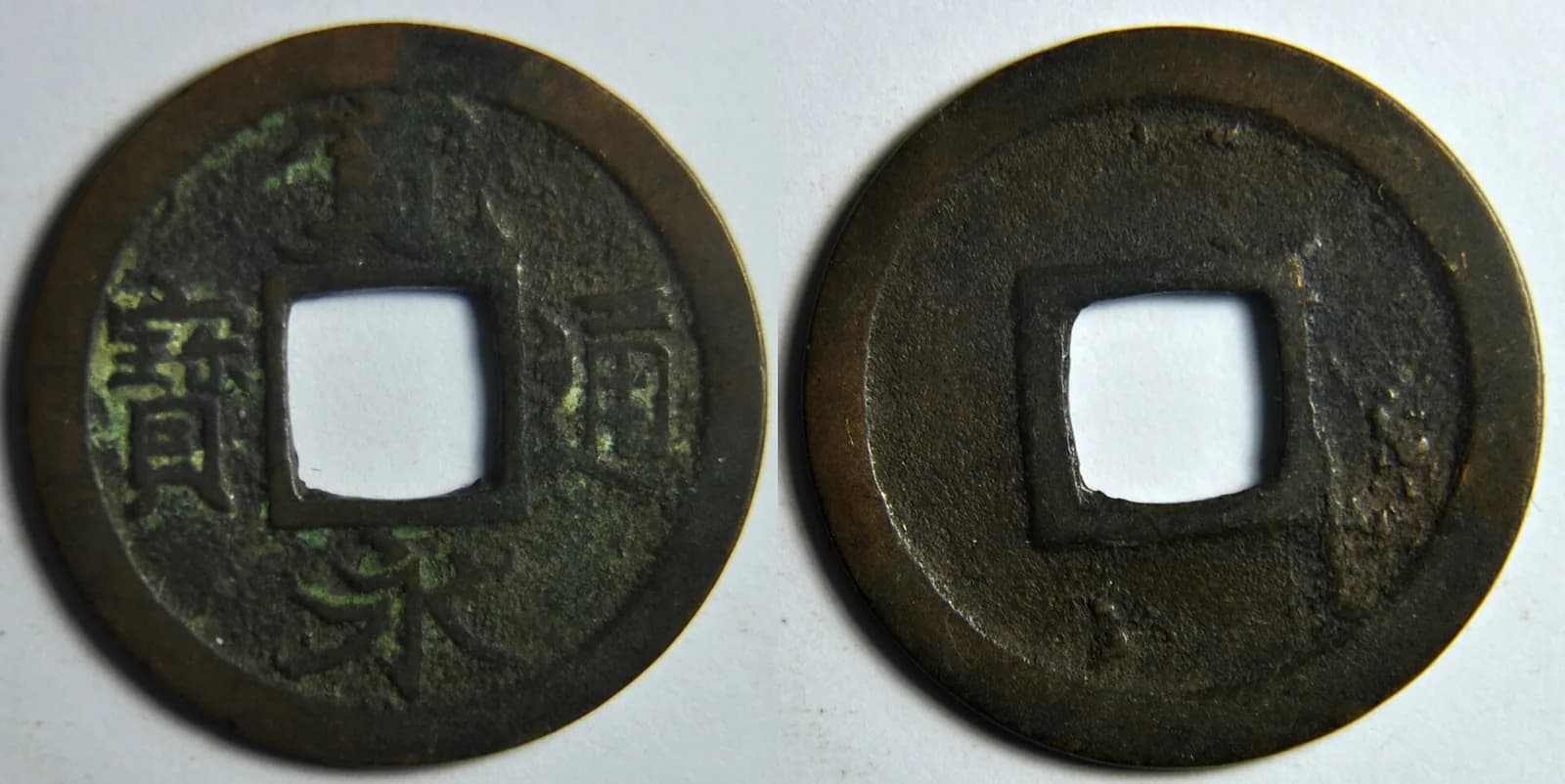
Image: Japanese holed coins (square-holed cash coins) / Jean-Michel Moullec from Vern sur Seiche (35, Bretagne), France / Wikimedia Commons / CC BY 2.0(source)
The Coin Selection Edict of the Sengoku Period — Tracing the History of Medieval Currency
"Only Accept Good Coins" — The Coin Selection That Spread During the Sengoku Period Was an Economic Terror That Troubled the Daimyo. Responses by Nobunaga, Ieyasu, and Shingen
Subject coin: 戦国時代の撰銭令
Overview
The coin selection edict of the Sengoku period is an essential piece when discussing Japanese currency history around 1400-1600. "Only accept good coins" — the coin selection that spread during the Sengoku period was an economic terror that troubled the daimyo. This article will trace the coin selection edict of the Sengoku period as medieval currency from its background, the minting technology, circulation, and its impact on later generations, as a historical story. By understanding the historical context carried by this currency, which is not visible in just market numbers, the way we perceive its value will change significantly. The history of Japanese currency has been handed down from the Wadokaichin minted in the Nara period, through the diverse gold and silver coins of the Edo period, to the modern currency of the Meiji period. For those who want to understand the basics, please also refer to The Value and Identification of Modern Currency and An Overview of Meiji Period Coins.
Specifications
- Denomination
- —
- Minting period
- 1400-1600
- Metal composition
- —
- Weight
- —
- Dimensions
- —
- Mintage
- 不詳(諸説あり)
- Mint supervisor
- 不詳
- Market price
- 状態により変動(落札履歴を参照)
The Era That Gave Birth to the Coin Selection Edict of the Sengoku Period — The Background of Minting
Image: Modern Japanese coinage / Coindesmonnaies / Wikimedia Commons / CC BY-SA 4.0(source)
The background to the coin selection edict of the Sengoku period involves the political and economic circumstances of that time. Medieval currency was minted as a response to the financial and circulation challenges faced by rulers and emerged out of the necessities of society at that time. Initially, we will examine the starting point of why and under what conditions this currency was needed. The fact that the quality gap of imported coins widened, resulting in dual circulation of good quality coins and bad coins, is indispensable for understanding the historical positioning of this currency. The fact that the nationwide uniform dissemination of Kan'ei Tsūhō by the Edo shogunate (from 1636 onwards) finally resolved the issue is indispensable for understanding the historical positioning of this currency. Additionally, checking Auction Prices in the Old Coin Auctions will further deepen understanding. Considering the commodity prices and systems of the era when they were minted, the significance of a currency with the same name can vary greatly depending on the time of issue. As existing samples wear and oxidize over the years, specimens that maintain the condition at the time of minting become more rare with time. Market valuation is determined by an intertwining of rarity, preservation state, and collector popularity, and price cannot be explained by just one of these factors alone.
How the Coin Selection Edict of the Sengoku Period Was Created — Material and Techniques
Image: Modern Japanese coinage / Coindesmonnaies / Wikimedia Commons / CC BY-SA 4.0(source)
When talking about the value of the coin selection edict of the Sengoku period, one cannot overlook the material and manufacturing techniques. Medieval currency is heavily marked by the craftsmanship of artisans in elements like the composition of the metal and the finishing techniques, which are directly connected to contemporary evaluations. By meticulously tracing the choice of materials and the manufacturing process, one can see the accumulation of technology contained within a single coin. The repeated issuance of the "prohibition of coin selection edicts" by figures like Oda Nobunaga, Tokugawa Ieyasu, and Takeda Shingen is indispensable for understanding the historical positioning of this currency. Referring to the Market Price Trends Chart will further deepen understanding. As existing samples wear and oxidize over the years, specimens that maintain the condition at the time of minting become more rare with time. Market valuation is determined by an intertwining of rarity, preservation state, and collector popularity, and price cannot be explained by just one of these factors alone. Understanding the basic points such as the font style, metal color, dimensions, and weight is the first step in distinguishing authenticity and lineage. Learning about the historical background allows one to feel the unique cultural depth of this currency that cannot be measured with just market figures.
The Coin Selection Edict of the Sengoku Period and People's Lives — Circulation and Economy
Image: Modern Japanese coinage / Coindesmonnaies / Wikimedia Commons / CC BY-SA 4.0(source)
After its issuance, the coin selection edict of the Sengoku period actually passed from hand to hand and was used in daily life. How medieval currency circulated in the market and what impact it had on prices and transactions is core to understanding monetary history. Through the economic movements and the reactions of the common people at the time, we interpret the role this currency played. The purpose of prohibiting coin selection was to smooth circulation, unify the economy, and stabilize military expenditures, which is indispensable for understanding the historical positioning of this currency. Also, referring to the Grading Standards for Old Coins will deepen understanding. Market valuation is determined by an intertwining of rarity, preservation state, and collector popularity, and price cannot be explained by just one of these factors alone. Understanding the basic points such as the font style, metal color, dimensions, and weight is the first step in distinguishing authenticity and lineage. Learning about the historical background allows one to feel the unique cultural depth of this currency that cannot be measured with just market figures. As you continue to collect, the background of each denomination and the conditions of minting get interconnected like a chain, effectively growing your knowledge. One old coin is a material that reflects the economic policy and people's lives of the time, and the more you know the background, the way value is perceived changes.
What the Coin Selection Edict of the Sengoku Period Left Behind — Impact on Later Generations
Image: Modern Japanese coinage / Coindesmonnaies / Wikimedia Commons / CC BY-SA 4.0(source)
Even after the era ended, the coin selection edict of the Sengoku period left its mark on subsequent currency and the history of collecting. Looking back at how medieval currency is positioned amid recoinage, abolition, and inheritance, and how it is evaluated today enhances the accuracy of value judgment when considering the significance of past coins on today's market. The fact that various daimyo set their own criteria for coin selection (what coins to accept at what ratio) is indispensable for understanding the historical positioning of this currency. Referring to the Monitor Prices of Coins of Interest in the Vault will further deepen understanding. Understanding the basic points such as the font style, metal color, dimensions, and weight is the first step in distinguishing authenticity and lineage. Learning about the historical background allows one to feel the unique cultural depth of this currency that cannot be measured with just market figures. As you continue to collect, the background of each denomination and the conditions of minting get interconnected like a chain, effectively growing your knowledge. One old coin is a material that reflects the economic policy and people's lives of the time, and the more you know the background, the way value is perceived changes. Considering the commodity prices and systems of the era when they were minted, the significance of a currency with the same name can vary greatly depending on the time of issue.
Value & Rarity
The market value of the coin selection edict of the Sengoku period is determined by the three factors of rarity, preservation state (grade), and collector popularity. Even within the same category of medieval currency, the price can vary several to several dozens of times depending on factors such as the minting period and script differences, and whether they are in near-unused condition. Brands with limited existing specimens rarely appear on the market, and those in good condition become more rare with each passing year. When reading the market, it is prudent to check not the listed prices but the actual realized auction prices through multiple instances. The latest price movements can be monitored in the Monitor Prices of Coins of Interest in the Vault. Market valuation is determined by an intertwining of rarity, preservation state, and collector popularity, and price cannot be explained by just one of these factors alone. Understanding the basic points such as the font style, metal color, dimensions, and weight is the first step in distinguishing authenticity and lineage.
Conclusion
The coin selection edict of the Sengoku period emerged out of necessity between 1400-1600, played its role in people's daily lives, and left a legacy for future generations. Knowing the history behind a coin cultivates accurate discernment that cannot be obtained from market numbers alone. Those interested in medieval currency are recommended to carefully build their own assessment axes while comparing multiple transaction data without rushing.
Related Stories
60th Anniversary of Local Autonomy Law 500 Yen Bicolor – 10-Year Journey Across 47 Prefectures
Commemorative Coin Series Born from the Law of 1947
Coin StoryFujushanpō — The End of Kōchōsen
The Story of the Fifth Kōchōsen Issued by Emperor Saga: Its Rise and Fall
Coin StoryCounterfeiting and Crackdowns on the Eiraku Tsūhō (永楽通宝) — The Most Widely Circulated and Most Counterfeited Coin
A History of Counterfeiting and Regulation from the Kamakura Period through the Edo Period
Dealers
Dealers Handling This Category
A reference when considering a sale or appraisal. All are dealers and auction houses with a proven track record.
Ginza Coins
Ginza, Chuo-ku, Tokyo
One of Japan's most established numismatic dealers. The scale and variety of their regular auctions is among the largest in the country. Their catalogs are considered a benchmark for market pricing.
Japan Coin Auction (JCA)
Tokyo
Holds regular auctions with reliable hammer price data, making it a useful resource for tracking market values. Caters to a wide range of collectors from beginners to advanced buyers.
Taisei Coins
Tokyo
A dealer with an international network. Offers advanced services such as consignment to overseas auctions and NGC/PCGS grading submission. Recommended for high-value or internationally recognized coins.