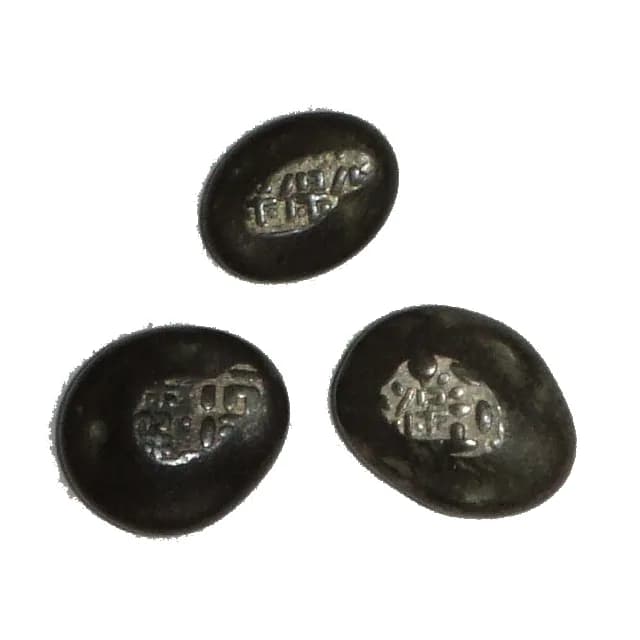
Image: Silver coins from the Edo to early Meiji periods / As6673 / Wikimedia Commons / CC BY-SA 3.0(source)
60th Anniversary of Local Autonomy Law 500 Yen Bicolor – 10-Year Journey Across 47 Prefectures
Commemorative Coin Series Born from the Law of 1947
Subject coin: 地方自治法施行60周年記念500円バイカラー・クラッド
Overview
The 60th Anniversary Local Autonomy Law Commemorative 500 Yen Bicolor Clad Coin series was issued from 2008 to 2017 to celebrate the 60th anniversary of the Local Autonomy Law enacted on May 3, 1947. Each of Japan's 47 prefectures had a coin designed with their symbols (flowers, landmarks, specialties), creating a collection over 10 years representing post-war Japan's largest commemorative coin project.
Technically, these coins use a "bicolor clad" technique, featuring a tri-layer structure of an outer ring (cupronickel), inner circle (nickel-brass), and core (copper), weighing 7.1g. This was the largest coin series since the Tokyo Olympics Commemorative 1000 Yen Silver Coin in 1964, manufactured by the Osaka Mint Bureau. For more, see History and Types of Commemorative Coins and Comparison with Tokyo Olympics Coins. Current market prices can be checked at Market Index.
Each prefecture's coin delicately engraves local symbols, drawing attention from tourism and regional revitalization perspectives. A collector's "47 Prefecture Coin Set" was also sold. Enthusiasts aim to complete the series, assisted by Basics of Antique Coin Auctions.
Specifications
- Denomination
- 500円
- Minting period
- 平成20年〜平成29年(2008年〜2017年)
- Metal composition
- バイカラー・クラッド(外周:白銅 / 内円:ニッケル黄銅 / 芯材:銅)
- Weight
- 7.1g
- Dimensions
- 直径26.5mm
- Mintage
- 各県版それぞれ100万枚程度(諸説あり)
- Mint supervisor
- 造幣局(大阪)
- Market price
- 1枚:500円〜数千円 / 47種完全セット:3万円〜10万円以上(状態による)
Chapter 1: The Local Autonomy Law of 1947 and the Significance of the 60th Anniversary
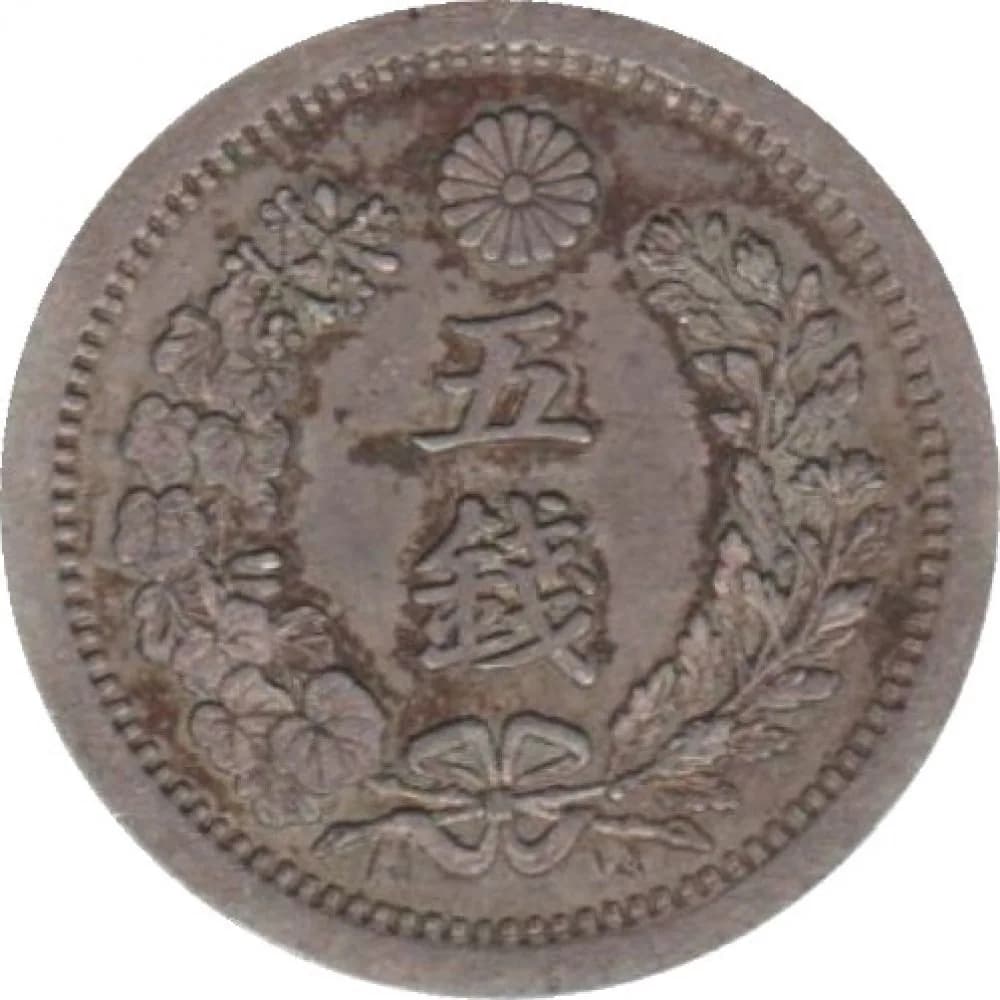
Image: Modern Japanese coinage / Coindesmonnaies / Wikimedia Commons / CC BY-SA 4.0(source)
May 3, 1947—a significant date marking the enforcement of Japan's Constitution and the Local Autonomy Law. As two pillars of post-war democracy, both were enacted simultaneously. Previously, local administration was under the strong control of the Ministry of Home Affairs, but the new Local Autonomy Law established the principle of "local autonomy," allowing prefectures and municipalities to govern themselves.
Sixty years later, in 2007, the government decided to issue special commemorative coins. The 60th anniversary aligns with the traditional Japanese notion of "kanreki," celebrating the maturity of the system. The Ministry of Finance and Mint Bureau spearheaded the project with prefectures selecting local symbolic designs.
From the first issuance in 2008 to the last in 2017, all 47 coins were released over a decade. Issued at a pace of 4-5 coins per year, the series was covered by local media, providing regional news. The order of issuance wasn't by the prefecture code but by a sequence considering the series' composition (details in the Mint Bureau's official records).
Since the 1964 Tokyo Olympics 1000 Yen Silver Coin, various commemorative coins have been issued in Japan. The 1998 Nagano Olympics 500 Yen series also holds significance, but a 10-year nationwide series for 47 prefectures was unprecedented. This project is deemed the zenith of the "Heisei commemorative coin history."
The 60 years of the Local Autonomy Law also represent 60 years of Japanese democracy. When the system from 1947 was commemorated with coins in the Heisei era, these coins encapsulated post-war Japan's journey. Enhance your collection quality by understanding Coin Grading Standards.
Chapter 2: The Technology of Bicolor Cladding – Why Two Colors?
Image: Modern Japanese coinage / Coindesmonnaies / Wikimedia Commons / CC BY-SA 4.0(source)
The most significant technical feature of the Local Autonomy Law 60th Anniversary 500 Yen coin is its "bicolor clad" structure. Though regular 500 Yen coins (post-2000) also use bicolor cladding, these commemorative coins achieved a higher degree of precision in engraving each prefecture's design.
"Bicolor" denotes a combination of different alloys: an outer ring (cupronickel: 25% nickel, 75% copper) and an inner circle plug (nickel-brass: 72% copper, 20% zinc, 8% nickel). "Clad" involves layering alloys over a pure copper core for counterfeit prevention and durability. This three-layer structure (cupronickel outer + nickel-brass inner + copper core) represented cutting-edge anti-counterfeiting technology.
The coin's specifications of 7.1g weight and 26.5mm diameter match those of regular 500 Yen coins. This ensured functionality in ATMs and vending machines while maintaining commemorative value, balancing practicality and collectibility.
Design selection respected local preferences. For instance, Hokkaido featured a brown bear and clover, and Okinawa the Shureimon gates with Bingata patterns. The Mint Bureau craftsmen's skill in engraving such detailed designs with 0.1mm precision ensured quality.
The bicolor cladding technology employed was a peak of Japanese manufacturing prowess when first released in 2008. Continuous improvements maintained quality consistency through to the final issue in 2017, lending a unified feel to the entire 47-coin series. Refer to Technical Explanation of Commemorative Coins for more.
Chapter 3: 47 Designs and Regional Culture – The Decade of Issuance
Image: Modern Japanese coinage / Coindesmonnaies / Wikimedia Commons / CC BY-SA 4.0(source)
Over the decade from 2008 to 2017, 4–5 commemorative coins were issued annually, each featuring the "face" of the assigned prefecture. Chosen motifs spanned flowers, landmarks, and specialties.
Each coin's design reflected regional identity, drawing crowds to local issuance events and offering communities a chance to reaffirm pride. Commemorative coins sparked demand from tourists, enhancing fine tourism promotion effects.
The issuance pace saw the first batch including Hokkaido and Osaka in 2008, with subsequent annual releases, culminating in a 2017 conclusion. This successful, decade-long national project demonstrated planning and execution prowess.
Collectors sought to complete all 47 coins. Officially, "47 Prefecture Coin Sets" were sold by the Mint Bureau and through banks and post offices, but scarcity in some years or prefectures led to secondary market price rises. As one of the largest series since the Tokyo Olympics issue of 1964, complete sets carry high collection value.
The concept of completeness with all 47 prefectures was brilliantly designed, appealing to the human instinct to "collect them all," positioning each coin as "one of 47." Compare with Tokyo Olympics Coins for an overview of Japan's commemorative coin history.
Chapter 4: Market Evaluation and Collectors' Perspectives Post-Completion
Image: Modern Japanese coinage / Coindesmonnaies / Wikimedia Commons / CC BY-SA 4.0(source)
Since the last issue in 2017, collector demand for the complete set of the 47 Prefecture 500 Yen Bicolor Clad coins remains robust. Post-issuance, the scarcity of "brand new" sets added rarity, boosting value for unopened official set editions.
Single coins range in market value from 500 Yen (face value) to a few thousand Yen based on condition. Circulated coins trend lower in price, while mint condition ones fetch several times higher evaluation. Full sets (in official cases) are sometimes traded for 30,000 Yen to over 100,000 Yen.
Price disparities emerge with popular tourist-prefectures like Kyoto, Tokyo, or Okinawa often valued higher than lesser-known areas, prompting collectors to strategically gather "cheaper editions" first.
Investors should approach coin investment cautiously. The relatively high mint numbers (around a million per prefecture version) limit extensive price hikes purely from rarity. However, post-issuance cessation led to a steady reduction in good-quality circulation. Understand Coin Grading Standards for accurate condition assessment.
It's crucial to note that the series' core value transcends economic aspects. It commemorates 60 years of the Local Autonomy Law, intertwining national culture and history, setting it apart from other commemorative coins. Build a collection strategy while reviewing Market Index for current pricing.
Value & Rarity
The market value of the 60th Anniversary Local Autonomy Law Commemorative 500 Yen Bicolor Clad coins varies significantly based on collection form. Single coins range from 500 Yen (face value) to several thousand, but the complete 47-coin set (in official case, unused) sees trades from 30,000 Yen to beyond 100,000 Yen. The rarity lies in the challenge of collecting all 47 unused coins.
With mint numbers relatively high (circa 1 million per prefecture), major price hikes from sheer rarity are limited. However, post-issuance, new coins became unavailable through official channels, gradually reducing circulation of quality pieces. Accurate condition grading is crucial, guided by understanding Coin Grading Standards.
Highly valued are the Mint Bureau official "proof" or "blister pack unused" editions, boasting meticulous surface treatment. For stable long-term values, well-maintained complete sets are a rational choice. Consider a collection plan alongside History and Types of Commemorative Coins.
Conclusion
The 60th Anniversary Local Autonomy Law Commemorative 500 Yen Bicolor Clad coins honored 60 years since the Local Autonomy Law of 1947, a decade-long project from 2008 to 2017 capturing all 47 prefectures, forming post-war Japan's largest commemorative coin series. Combining bicolor clad technology with regional culture and symbols, each coin tells a unique story. Collecting the full set is a small trip across Japan. As a commemorative collection pinnacle since the 1964 Tokyo Olympics coins, this series will be remembered for generations.
Related Stories
Nagano Olympic Commemorative 500 Yen — The Winter Festival and Five Cupronickel Coins in 1998
Japan's First Sport-Specific 500 Yen Coin Series Born from the 1998 Nagano Olympics
Coin StoryNagano Olympic Commemorative 5000 Yen Silver Coin — The Brilliance of Winter Sports
A Special Commemorative Coin Engraving the Memory of the Nagano Olympics
Coin StoryTōkaidō Shinkansen Opening Commemoration Medal — The Mystery of the Lost Coin
The History and Value of the Commemorative Medal Celebrating the Opening Just Before the Tokyo Olympics
Dealers
Dealers Handling This Category
A reference when considering a sale or appraisal. All are dealers and auction houses with a proven track record.
Ginza Coins
Ginza, Chuo-ku, Tokyo
One of Japan's most established numismatic dealers. The scale and variety of their regular auctions is among the largest in the country. Their catalogs are considered a benchmark for market pricing.
Tokyo Coin Club
Tokyo
A membership-based coin dealer known for carefully selected, quality inventory.
Japan Coin Auction (JCA)
Tokyo
Holds regular auctions with reliable hammer price data, making it a useful resource for tracking market values. Caters to a wide range of collectors from beginners to advanced buyers.