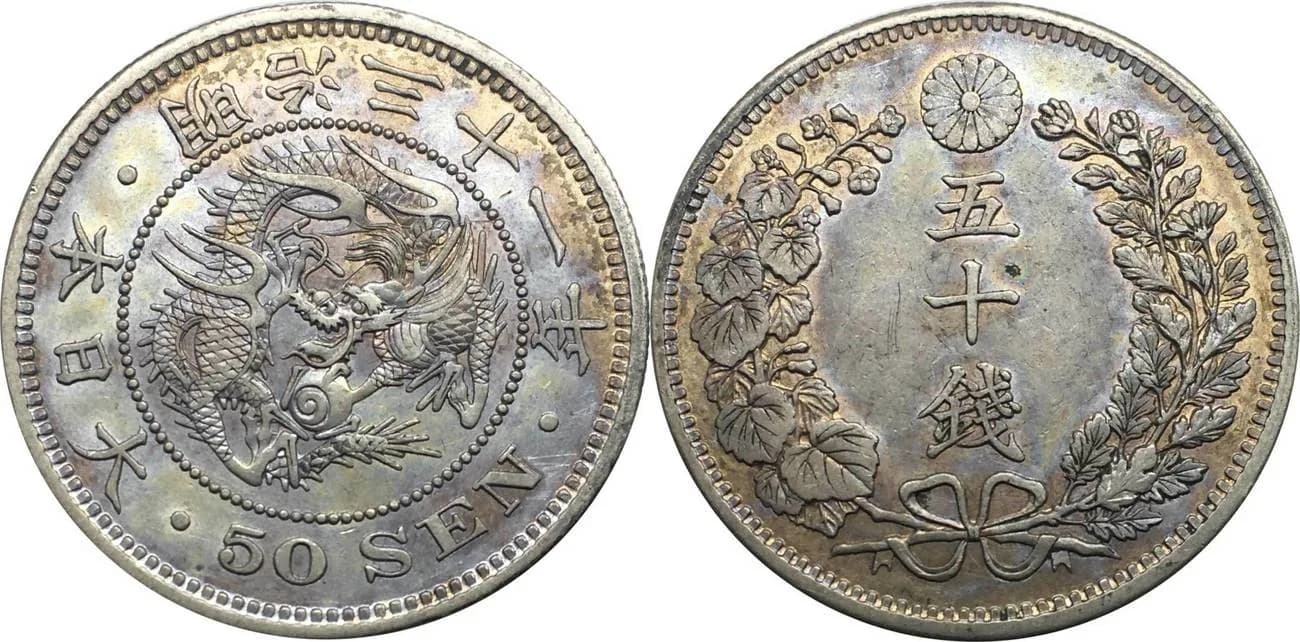
Image: Modern Japanese coinage / The government of the Empire of Japan. / Wikimedia Commons / Public domain(source)
Fujushanpō — The End of Kōchōsen
The Story of the Fifth Kōchōsen Issued by Emperor Saga: Its Rise and Fall
Subject coin: 富寿神宝
Overview
In the 9th year of Kōnin (818), the Fujushanpō, the fifth of the Kōchōsen series, was issued during the reign of Emperor Saga. This period marked a significant turning point in Japan's monetary system. Strongly influenced by Tang China, Japan sought to demonstrate its national prestige by issuing its own currency. However, the Fujushanpō failed to meet these expectations and did not circulate widely. Economic factors, such as the decline in copper quality leading to lower minting precision, contributed to this outcome. Under these circumstances, the Fujushanpō was sometimes used as offerings to Buddhist temples, but its circulation among common people was limited. Extant Fujushanpō coins are very rare and exhibit significant quality variance. As an important chapter in ancient Japan's numismatic history, the Fujushanpō remains a subject of study for later generations. Its uniqueness stands out, even when compared with the overview of ancient currency or the detailed explanation of Wado Kaichin.
Specifications
- Denomination
- 不詳
- Minting period
- 弘仁9年〜承和2年(818-835年)
- Metal composition
- 銅(品質低下が顕著)
- Weight
- 不詳(諸説あり)
- Dimensions
- 不詳(諸説あり)
- Mintage
- 不詳(諸説あり)
- Mint supervisor
- 不詳
- Market price
- 極めて高価(状態による)
Fujushanpō — Background of Issuance
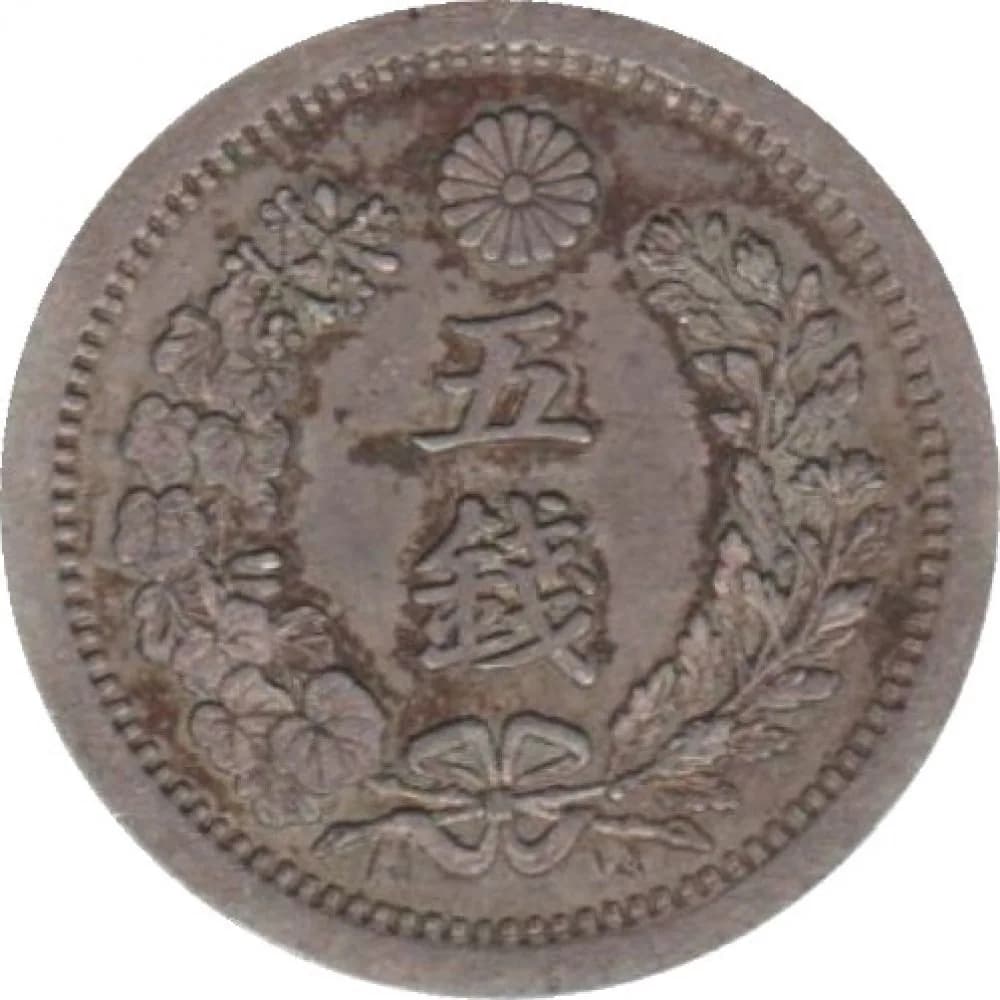
Image: Modern Japanese coinage / Coindesmonnaies / Wikimedia Commons / CC BY-SA 4.0(source)
In 818, Emperor Saga decided to issue the Fujushanpō. During this period, Japan absorbed much culture through immigrants and students from Tang China, while also aiming to build its own distinct culture. The Fujushanpō was a currency born from this context, aiming to establish Japan's own monetary system. By issuing this currency, Emperor Saga intended to enhance national prestige and stimulate the economy. However, even several years post-issuance, circulation was stagnant, with signs of disuse of currency emerging. Like other policies during Emperor Saga's reign, the issuance of the Fujushanpō also reflected Japan’s economic and political issues at the time. Although Emperor Saga abdicated in the first year of Tenchō (824), this currency saw little circulation afterward. Contrary to the previous success of Wado Kaichin, the Fujushanpō could not fulfill its intended role. Considering the era, the Fujushanpō was more than just currency; it reflected the challenges of its time. Understanding the necessity of the Fujushanpō during the climate from the 9th year of Kōnin to Jōwa 2 (818-835) deepens the weight imbued in each coin.
Minting Process and Technology — Lost Precision
Image: Modern Japanese coinage / Coindesmonnaies / Wikimedia Commons / CC BY-SA 4.0(source)
The Fujushanpō was supposedly minted at the minting office in Nara, but records on specific minting locations or craftsmen are scant. This suggests that minting technology of the time was gradually being lost. Unlike previous Kōchōsen, the copper quality for Fujushanpō had significantly declined. This was due to the interruption of copper imports from China and the exhaustion of domestic copper mining. Moreover, the precision of molds declined, resulting in variations in shape and weight of the coin. These technical issues significantly hindered circulation. Craftsmen involved in minting faced daily struggles to produce with limited resources. In contrast to the modern currency's value and identification, it narrates the limitations of ancient minting technology. Records also indicate their use as offerings to Buddhist temples during this period, hinting at religious connections. The craftsmanship traces left on the Fujushanpō are crucial for modern evaluations to discern authenticity and lineage. The material composition or finishing variations distinguish the evaluation of each Fujushanpō, enhancing discerning capability the more one observes the pieces.
Circulation and Economy — Stagnant Monetization
Image: Modern Japanese coinage / Coindesmonnaies / Wikimedia Commons / CC BY-SA 4.0(source)
When the Fujushanpō was issued, Japan's economy was still predominantly based on barter. The penetration of a currency economy was slow, and circulation was limited. From the beginning of its issuance, the value of the Fujushanpō was unstable, making it unreliable to commoners. Prices were also unstable, with little recognition of the convenience of using money. Moreover, the decline in the minting precision of the Fujushanpō further decreased its value as currency. In the market, practical goods were prioritized over the Fujushanpō, resulting in limited currency circulation. This differs from the stability of Edo-period Koban types and markets. For the populace, the use of money was rare, with barter or local currencies being more common. Record shows its use as offerings to Buddhist temples, but its impact on the broader economy was limited. The movement of the Fujushanpō in society is closely tied to their living conditions and prices at the time, providing clues to understanding currency history. How the Fujushanpō was embraced or avoided reflects the economic reality of the era.
Impact on Later Generations — The Road to Recasting and Abolition
Image: Modern Japanese coinage / Coindesmonnaies / Wikimedia Commons / CC BY-SA 4.0(source)
Several decades after the issuance of the Fujushanpō, Japan was compelled to rebuild its monetary system. Successors of Emperor Saga attempted recasting to promote currency circulation but securing trust in new currency was difficult with deteriorated copper quality. Subsequently, the Fujushanpō was abolished in Jōwa 2 (835), paving the way for a shift to a new monetary system. This coincided with the period when Fujiwara no Yoshifusa began consolidating political power as regent. The failure of the Fujushanpō served as a lesson for later currency reforms, gradually leading to improvements in the character and circulation of money. This process contributed to building the foundation of later monetary systems, as seen in Edo gold currency types and identification. In modern times, Fujushanpō holds significant historical value and is a valuable collection for ancient coin collectors. Retrospectively, the influence left by the Fujushanpō quietly lingers in subsequent currency and collection histories. Considering how the Fujushanpō is evaluated in the modern market helps nurture an eye for both history and market trends. The more one knows the historical background, the more one perceives the depth of value unique to Fujushanpō beyond mere market value.
Value & Rarity
The Fujushanpō is extremely rare, and its rarity commands high market value. Due to significant quality variations, well-preserved specimens can be particularly valuable. Generally, prices for the Fujushanpō might reach from several hundred thousand yen to several million yen, with evaluations heavily depending on condition, historical background, and provenance. Especially, those recorded as offerings to Buddhist temples are often highly appraised for their historical value. These factors show that the Fujushanpō is not merely ancient currency but an important part of Japan's numismatic history. For coin collectors and historians, the Fujushanpō offers valuable insights into past Japanese economy. In modern markets, evaluations are based on coin grading standards, with emphasis on preservation condition and minting quality. Thus, the Fujushanpō continues to be a symbol of historical value.
Conclusion
The Fujushanpō, the fifth coin of the Kōchōsen series issued during Emperor Saga's era, symbolizes the evolution of Japan's monetary system. Declines in copper quality and minting precision hindered its circulation, but its recorded uses as offerings to Buddhist temples suggest it played some social role. Extant Fujushanpōs are exceedingly rare and thus valuable for collectors and researchers. This currency is not only economically valuable but also a key to understanding the society and culture of the time. Although the Fujushanpō had a short-lived presence in history, its existence left many lessons for subsequent monetary systems. Studying the Fujushanpō is an indispensable theme in learning about Japan's monetary history.
Related Stories
Kan'ei Tsuho Tetsusen — The Unorthodox Currency Born from Copper Shortage
A Historical Scene Where Edo-period Minting Techniques and Economic Struggles Intersected
Coin StoryKan'ei Tsūhō — "Japan's Longest-Lived Coin" in Circulation for 230 Years
The history of the hole coin that continued to be used from the unification of Edo coinage in Kan'ei 13 (1636) to Meiji
Coin StoryKōchō Jūnisen — The Dream and Reality of the Ritsuryō State
The Rise and Fall of an Ancient State Over 250 Years of History
Dealers
Dealers Handling This Category
A reference when considering a sale or appraisal. All are dealers and auction houses with a proven track record.
Japan Coin Auction (JCA)
Tokyo
Holds regular auctions with reliable hammer price data, making it a useful resource for tracking market values. Caters to a wide range of collectors from beginners to advanced buyers.
Ginza Coins
Ginza, Chuo-ku, Tokyo
One of Japan's most established numismatic dealers. The scale and variety of their regular auctions is among the largest in the country. Their catalogs are considered a benchmark for market pricing.