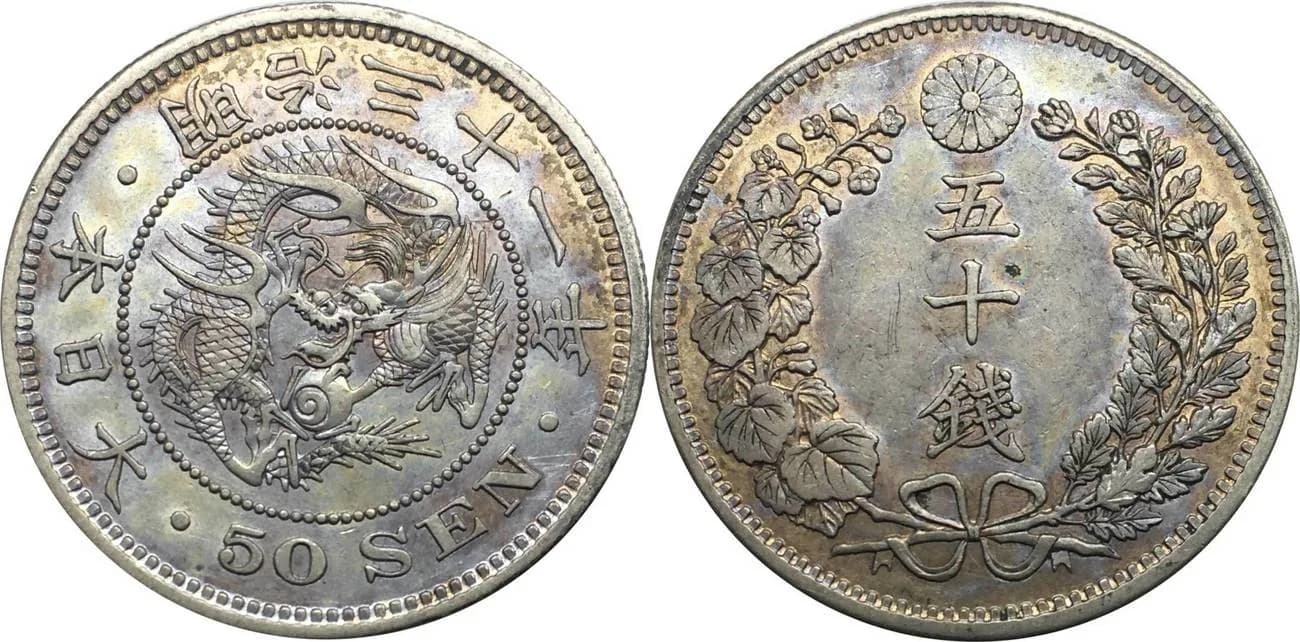
Image: Modern Japanese coinage / The government of the Empire of Japan. / Wikimedia Commons / Public domain(source)
Wadōkaichin — The Economic Revolution Sparked by Japan's First Coinage
The Story of Ancient Japan's Currency System Birth Sustained by the Discovery of the Nagato Copper Mine
Subject coin: 長門銅山と和同開珎
Overview
The story of Wadōkaichin begins with the discovery of natural copper, known as 'Wadō', in Chichibu, Musashi Province in 708. This discovery was revolutionary for the Japanese government at the time. In response to the discovery, the era name was changed to 'Wadō', and Japan's first circulating currency, 'Wadōkaichin', was minted. Notably, copper was also supplied from the Nagato Copper Mine in Yamaguchi Prefecture, which helped lay the foundation of Japan's currency system. The Nagato Copper Mine functioned as a major copper supply source supporting the minting of Wadōkaichin. Behind this was the introduction of mining and smelting technology by craftsmen from the continent, which supported Japan's mineral resource revolution. This story continues to captivate many history enthusiasts and coin collectors as a symbol of Japan's economic transformation. Overview and Charm of Ancient Coins can also be referenced.
Specifications
- Denomination
- 1文
- Minting period
- 和銅元年〜延暦年間(708-800年)
- Metal composition
- 銅
- Weight
- 約3.75g(諸説あり)
- Dimensions
- 直径約25mm
- Mintage
- 不詳(諸説あり)
- Mint supervisor
- 不詳(大陸系技術者と推測)
- Market price
- 10,000円〜50,000円(状態による)
Chapter 1: The Year of Wado and the Discovery of Copper — A Turning Point in Politics and Economics
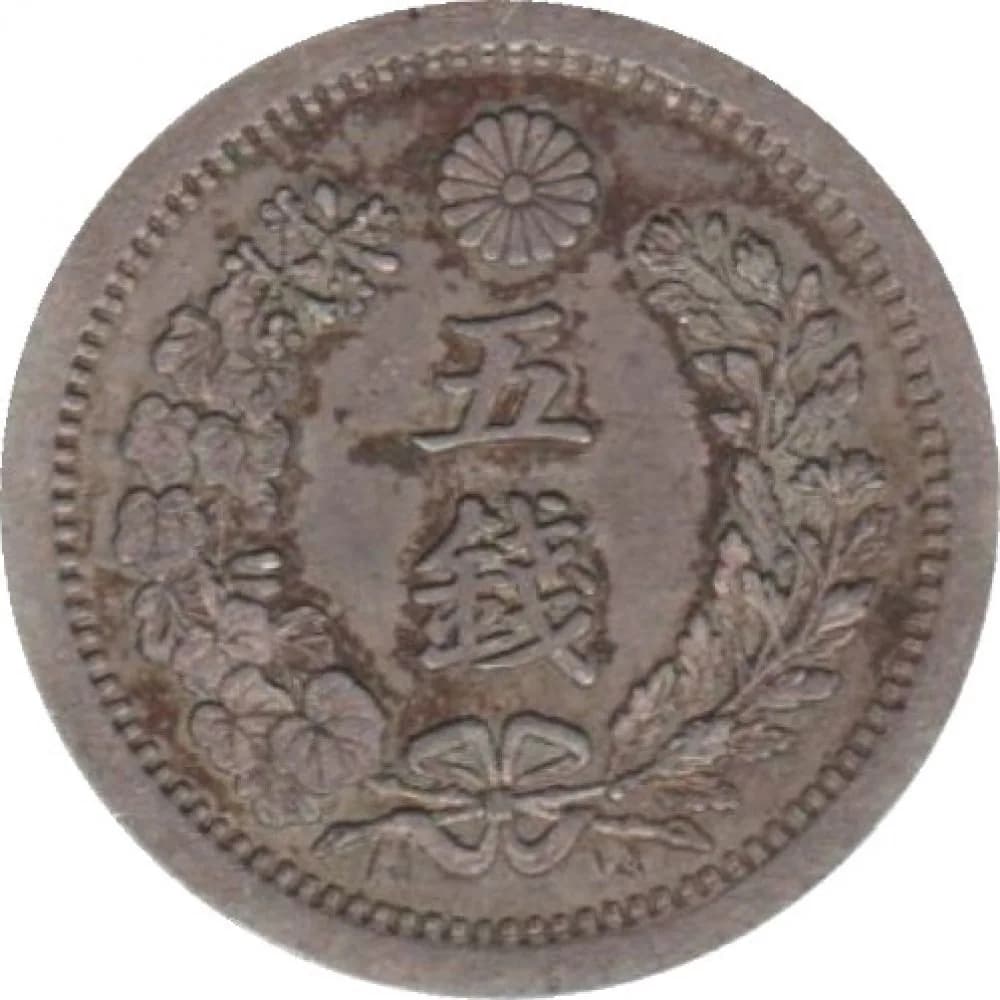
Image: Modern Japanese coinage / Coindesmonnaies / Wikimedia Commons / CC BY-SA 4.0(source)
In the first year of Wado (708), Japan ushered in a new era. That year, the discovery of natural copper, known as 'Wado', in Chichibu, Musashi Province, dramatically changed ancient Japan's economy. During this period, as the Taiho Code was being implemented and a centralized state system was being established, copper as a new resource promoted the establishment of a currency system. In response to the discovery of Wado, the government changed the era name to 'Wado' and decided to mint 'Wadōkaichin'. This was against the backdrop of attempts during Emperor Tenmu's era to establish a currency system based on China's Tang dynasty system, facing resource shortages. The discovery of Wado was the very solution to this problem. Furthermore, the Nagato Copper Mine in Yamaguchi Prefecture was also noted as a major source of copper supply. The Nagato Copper Mine was the first fully developed copper mine in Japan, and immigrant craftsmen from the continent were involved in its mining and smelting. Their technology significantly enhanced Japanese copper production, enabling the manufacture of Wadōkaichin. Thus, the first year of Wado marked a significant turning point in Japanese politics and economics, with geographical and technological factors intricately intertwined.
Chapter 2: The Minting Process of Wadōkaichin — The Effort and Technology of the People
Image: Modern Japanese coinage / Coindesmonnaies / Wikimedia Commons / CC BY-SA 4.0(source)
The minting of Wadōkaichin was more than just the production of currency; it was a project that combined the technology and wisdom of people. At the Nagato Copper Mine, mined copper ore was smelted and processed into copper plates. These processes required the advanced skills of craftsmen who immigrated from the continent. They brought Tang's advanced technologies and introduced smelting techniques to improve copper purity in Japan. Especially, the design of smelting furnaces and temperature control technology were groundbreaking in Japan at the time. The minting site was established in Heijō-kyō, Nara, where copper plates were cast into the shape of coins. The design of Wadōkaichin is said to have been inspired by Tang's Kaiyuan Tongbao, characterized by its square hole in the center. This design greatly influenced later Japanese coins. Workers involved in the minting processed vast amounts of copper daily, striving to meet targets. Wadōkaichin was realized through the technology and efforts of such people. This minting process promoted the development of Japan's industrial technology, laying the foundation for the economy in later periods. Details of Edo Silver Coins can also be viewed.
Chapter 3: The Circulation of Wadōkaichin — Economic Impact and Public Response
Image: Modern Japanese coinage / Coindesmonnaies / Wikimedia Commons / CC BY-SA 4.0(source)
Once Wadōkaichin was minted and circulated, its impact spread rapidly. The government began collecting taxes using these new coins and encouraged their circulation in the provinces. However, initial circulation was not easy. Many people were accustomed to bartering and felt awkward about using coins. It took time to understand the value of Wadōkaichin. Nevertheless, gradually the benefits of a monetary economy were recognized, and market transactions became more active. For example, an exchange rate was set where 1 Wadōkaichin was exchanged for one shō of rice, facilitating efficient trading. This made it easier for local goods to gather in the center, promoting national economic integration. However, limitations in copper production led to a decline in the quality of later imperial coins. This change affected people's lives significantly, making transactions using coins commonplace. Thus, Wadōkaichin fundamentally transformed Japan's economy, laying the foundation for a monetary economy. Types of Anasen and How to Identify Them can also be referred to.
Chapter 4: The Influence of Wadōkaichin on Later Generations — Recasting and Evaluation
Image: Modern Japanese coinage / Coindesmonnaies / Wikimedia Commons / CC BY-SA 4.0(source)
The minting of Wadōkaichin was a major turning point in Japan's coinage history, and its influence extended significantly to later generations. Following Wadōkaichin, many imperial coins were minted, but their quality was not always consistent due to copper supply shortages and technical problems. Particularly as the Heian period began, the decline in copper production resulted in lower quality copper coins. As a result, coins minted as successors to Wadōkaichin struggled to maintain value, causing occasional distribution confusions. Later monetary systems repeatedly recast coins, seeking stability based on these experiences. However, the significance of Wadōkaichin was very large in establishing the foundation of the currency system in Japan. Even in modern evaluations, Wadōkaichin is considered an important legacy that laid the foundation of Japan's coinage system, still holding great appeal for collectors and researchers. Thus, Wadōkaichin is more than just currency; it remains a significant symbol in Japan's economic history, still told today. Detailed Explanation of Wadōkaichin is also worth a look.
Value & Rarity
Wadōkaichin is a very attractive item for collectors due to its historical value as Japan's first circulating currency. Its rarity varies greatly depending on the number issued, circulation period, and preservation state. Especially well-preserved items are often traded at high prices in the market, ranging from 10,000 yen to 50,000 yen. However, there are many counterfeits circulating, so caution is needed at purchase as detailed in How to Identify Counterfeits and Processed Items. Understanding Standards for Grading Old Coins is also important for evaluating preservation state. The charm of Wadōkaichin lies in its beautiful design and historical background, attracting many collectors. Market transactions often take place at auctions or specialty shops, and it's good to use Basic Knowledge of Coin Auctions when purchasing.
Conclusion
Wadōkaichin is a coin symbolizing an important turning point in Japanese history. The story that began with the discovery of natural copper in 708 wasn't merely limited to coin minting; it fundamentally changed Japan's economy and society. With the development of the Nagato Copper Mine and the introduction of technology from the continent, Wadōkaichin became a reality. Although there were many challenges in the process of circulation, Wadōkaichin laid the foundation of Japan's coinage system, with its impact extending into later generations. Even today, its historical value makes it popular among collectors, and possessing one allows one to touch upon the ancient Japanese economic revolution. Wadōkaichin continues to assert its presence, promising new discoveries in future historical research.
Related Stories
Fujushanpō — The End of Kōchōsen
The Story of the Fifth Kōchōsen Issued by Emperor Saga: Its Rise and Fall
Coin StoryKan'ei Tsuho Tetsusen — The Unorthodox Currency Born from Copper Shortage
A Historical Scene Where Edo-period Minting Techniques and Economic Struggles Intersected
Coin StoryKan'ei Tsūhō — "Japan's Longest-Lived Coin" in Circulation for 230 Years
The history of the hole coin that continued to be used from the unification of Edo coinage in Kan'ei 13 (1636) to Meiji
Dealers
Dealers Handling This Category
A reference when considering a sale or appraisal. All are dealers and auction houses with a proven track record.
Japan Coin Auction (JCA)
Tokyo
Holds regular auctions with reliable hammer price data, making it a useful resource for tracking market values. Caters to a wide range of collectors from beginners to advanced buyers.
Ginza Coins
Ginza, Chuo-ku, Tokyo
One of Japan's most established numismatic dealers. The scale and variety of their regular auctions is among the largest in the country. Their catalogs are considered a benchmark for market pricing.