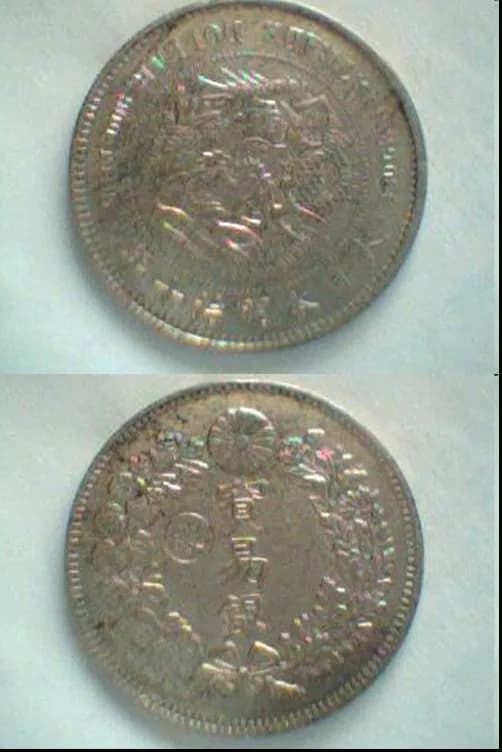
Image: Modern Japanese coinage / photographed by Samuel Ho / Wikimedia Commons / CC BY-SA 3.0(source)
Sendai Tsūhō — The Rise and Fall of a Domain's Exclusive Currency Born of Financial Crisis
The currency independently minted by the Sendai Domain without the shogunate's permission: its background and outcome
Subject coin: 仙台通宝
Overview
The Sendai Tsūhō (仙台通宝) occupies a unique position in Japanese history as a domain-exclusive currency. In Hōreki 8 (1784), the Sendai Domain minted this currency without the shogunate's authorization, driven by a financial crisis. The independent minting of such a currency was an extraordinary event in Japan at the time, rooted in the domain's severe fiscal circumstances. The Sendai Tsūhō was intended for use within the domain, and there was also the problem that its exchange rate worsened once it crossed domain borders. As a result, while it stimulated the domain's internal economy, it imposed constraints on economic relations with the outside world. Iron was the predominant material, but copper examples were extremely rare, which is one factor that attracts the interest of collectors. The history of the Sendai Tsūhō is an important case when considering Japan's economic history during the transitional period from the late Edo era to the Meiji era. Through this currency, one can glimpse the fiscal circumstances of the domain at the time and aspects of its economic policy. Comparing it with an overview of ana-sen (穴銭) types and how to identify them and types and identification of Edo gold coins brings its distinctiveness into sharp relief.
Specifications
- Denomination
- 額面不詳
- Minting period
- 流通時代: 宝暦8年〜明治3年(1784-1870年)
- Metal composition
- 鉄製、銅製(非常に希少)
- Weight
- 詳細不明
- Dimensions
- 直径約24mm(諸説あり)
- Mintage
- 不詳(諸説あり)
- Mint supervisor
- 不詳(仙台藩の鋳造所)
- Market price
- 現在の相場: 1万円〜10万円(状態による)
The Sendai Domain's Financial Crisis — Background to the Minting of the Tsūhō
Image: Modern Japanese coinage / Coindesmonnaies / Wikimedia Commons / CC BY-SA 4.0(source)
In Hōreki 8 (1784), the Sendai Domain faced a grave financial crisis. Domain lord Date Shigemura found himself compelled to restore the domain's finances as its debts continued to mount. The Sendai Domain's fiscal difficulties stemmed from the fact that, under the strict controls of the Edo shogunate following the Kyōhō Reforms, domain revenues could not be increased, while expenditures from wars and natural disasters accumulated. In particular, the Kyōhō Famine (1732) and the subsequent Tenmei Famine (1782–1788) caused a drastic decline in agricultural production, further squeezing domain revenues. Against this backdrop, the bold policy of issuing an independent currency was adopted in order to stimulate the domain's internal economy.
However, this decision was far from straightforward. Minting an independent currency without the shogunate's permission was contrary to the laws of the time, and opinion within the domain was divided. The Sendai Domain judged that, for the sake of fiscal reconstruction, it was necessary to accept the risk of defying shogunate policy, and resolved to proceed with the minting. The Sendai Tsūhō was regarded as a trump card for invigorating circulation within the domain and restoring its economy, yet lurking in the background were problems that would later arise from the failure to report the matter to the shogunate. The minting of this currency was limited to use within the domain, and it was difficult for it to cross domain borders, but it is said to have nonetheless succeeded in providing a certain stimulus to the domain's internal economy. The issuance of an independent currency was truly a last resort staked on the domain's very survival, and it constitutes an important chapter in the history of the Sendai Domain. Comparing it with an overview and appeal of ancient coinage also brings the complex circumstances underlying it to light.
The Minting of the Sendai Tsūhō — Technology and Those Involved
Image: Modern Japanese coinage / Coindesmonnaies / Wikimedia Commons / CC BY-SA 4.0(source)
The Sendai Tsūhō was minted at the Sendai Domain's mint. The mint was located in what is now Aoba Ward, Sendai City, Miyagi Prefecture, and was an important facility forming the core of the domain. Local craftsmen were involved in the minting, and their skills were fully demonstrated. As a result, the Sendai Tsūhō, while using iron as its primary material, displayed refined workmanship. In particular, the iron currency reflected the technological standards of the time, and the craftsmen devoted great ingenuity to its manufacture.
The person responsible for the minting was Tamura Seiemon, a retainer of Date Munemura who served as the domain's financial administrator. He worked diligently on the reconstruction of the domain's finances and played an important role in the minting of the currency as well. In addition to iron, copper was also used in the minting; however, since the domestic supply of copper in Japan at the time was limited, copper examples of the Sendai Tsūhō became extremely rare.
This currency bore the inscription「仙台通宝」, and some pieces were abbreviated to「仙通」. These inscriptions featured a design conscious of circulation within the domain and were intended to demonstrate the domain's prestige. However, because they were minted without the shogunate's permission, their existence came to be regarded as problematic in later years. Until the currency became officially recognized as a sanctioned domain currency, its circulation was unofficial, so its value was confined to the domain and its credibility outside was low. Given these circumstances, the Sendai Tsūhō continued to occupy a delicate position in relation to the shogunate, even as it supported economic activity within the domain.
The Reality of the Sendai Tsūhō's Circulation — The Economy and Popular Reaction
Image: Modern Japanese coinage / Coindesmonnaies / Wikimedia Commons / CC BY-SA 4.0(source)
The Sendai Tsūhō began circulating within the domain immediately after minting. Merchants within the domain were initially skeptical about the value of the new currency, but gradually came to recognize its convenience. The Sendai Tsūhō came to be widely used in markets and commercial transactions within the domain, and it is said to have circulated actively especially in transactions involving everyday goods such as rice and cloth.
However, when the Sendai Tsūhō crossed domain borders, its exchange rate became a problem. Outside the Sendai Domain, the value of the tsūhō was assessed as low, and unfavorable conditions were frequently imposed when exchanging it for currencies from other regions. For example, it is said that a single Sendai Tsūhō was sometimes recognized as worth only half its face value outside the domain. For this reason, merchants traveling outside the domain were compelled to pay high fees to exchange it for other currencies.
What was the reaction within the domain? The appearance of the Sendai Tsūhō temporarily invigorated the domain's economy, but as the volume of currency in circulation increased, inflation occurred, leading to rising prices. In particular, farmers struggled to adapt to the new currency and were bewildered by the instability of rice prices. Despite these problems, the Sendai Tsūhō played an important role in supporting the domain's finances, and its presence became indispensable to the domain's internal economy.
Ultimately, the circulation of the Sendai Tsūhō demonstrated how the Sendai Domain's economic policy influenced not only the domain's internal economy but also its relations with the outside world. While supporting the domain's economy, the risks and problems inherent in the currency itself also came to light, and this eventually led to pressure for a review of currency policy.
The Sendai Tsūhō's Influence on Later Generations — Recoinage and Abolition
Image: Modern Japanese coinage / Coindesmonnaies / Wikimedia Commons / CC BY-SA 4.0(source)
From the end of the Edo period through the Meiji era, Japan's monetary system underwent great transformation. Following the Meiji Restoration, the government rapidly advanced centralization, and currencies independently issued by domains were gradually abolished. The Sendai Tsūhō was no exception: in Meiji 3 (1870) it was abolished, and a unified currency under the new monetary system was introduced.
The abolition of the Sendai Tsūhō was an important turning point for the Sendai Domain. The disappearance of the currency that symbolized the domain's distinctiveness had a significant impact on its economic policy. Nevertheless, the Sendai Tsūhō had been an important element supporting economic activity within the domain, and it continued to underpin the Sendai Domain's economy for approximately 80 years until its abolition.
After its abolition, the Sendai Tsūhō came to be recognized as an item of historical value and attracted attention among collectors. In particular, copper examples of the Sendai Tsūhō are of high rarity value and are sometimes traded at high prices in the modern antique coin market. The history of the Sendai Tsūhō occupies an important position in considering the history of domain notes and domain currencies in Japan, and research into it continues to this day.
In this way, the Sendai Tsūhō is not merely a regional currency; it has become an important historical document reflecting the economic conditions and political background of its time. Through the history of the Sendai Tsūhō, one can understand the changes in Japan's economic policy during the transitional period from the Edo era to the Meiji era. The existence of the Sendai Tsūhō is a fine example of how domain economic policy continued to support regional economies, and it is an indispensable element when considering its influence on later generations.
Value & Rarity
The Sendai Tsūhō is an extremely popular item among collectors. Its value varies greatly depending on condition and material. While iron examples make up the large majority, the extremely rare copper Sendai Tsūhō in particular is often traded at high prices. Because the number minted was small, the number of surviving copper examples is limited, and this rarity increases their value. Market prices range from approximately 10,000 to 100,000 yen depending on condition, but particularly well-preserved pieces and rare copper examples may be traded at even higher prices.
The market value of the Sendai Tsūhō stems from the esteem in which its historical background and distinctiveness are held. The historical background of the Sendai Domain having minted it independently without the shogunate's permission is a highly intriguing element for collectors, and demand for it in the market is accordingly high. Moreover, since the Sendai Tsūhō occupies an important position in considering the changes in Japan's monetary system, it also has value as a research resource. Against this background, the Sendai Tsūhō has established a certain standing in the antique coin market, and its value is thought likely to remain high going forward. Referring to basic knowledge of antique coin auctions allows one to grasp points of caution and market trends when conducting transactions.
Related Guide: Details on the Kan'ei Tsūhō (寛永通宝)
Conclusion
The Sendai Tsūhō came into existence as a last resort for the Sendai Domain's fiscal reconstruction, and throughout its history it was an important presence that played a part in Japan's monetary system. As a domain's independent currency, it supported the domain's internal economy while simultaneously maintaining a tension-laden relationship with the shogunate. Nevertheless, the Sendai Tsūhō played an important role in the regional economy as a symbol of the domain's economic policy.
Thereafter, following its abolition in the Meiji era, the Sendai Tsūhō was reappraised as an antique coin of historical value and has attracted the attention of collectors and researchers alike. The history of the Sendai Tsūhō is a fine example illustrating both the possibilities and the limits of regional currencies, and it is indispensable for understanding how domain economic policy influenced regional society. Even in the present day its value has not been lost, and it will surely continue to assert its presence as a subject of historical research and collecting going forward.
Related Stories
Bunkyū Eihō — Tracing the History of Ansen
The last Ansen of the late Edo period. The 4-mon coin minted in Bunkyū 3 began circulating just shy of two years before the Meiji Restoration.
Coin StoryChikusen Jowi no Rei — An Ancient Japanese Attempt to Spread Currency
Wadō 4 (711): An Unprecedented System to Promote Currency Use
Coin StoryNaga-nen Taihō — Tracing the History of Ancient Coinage
The 7th coin of the Kōchō jūni-sen, issued in Shōwa 15 (848) during the reign of Emperor Ninmyō. From this time, the gap between the actual and nominal value of coins became serious.
Dealers
Dealers Handling This Category
A reference when considering a sale or appraisal. All are dealers and auction houses with a proven track record.
Japan Coin Auction (JCA)
Tokyo
Holds regular auctions with reliable hammer price data, making it a useful resource for tracking market values. Caters to a wide range of collectors from beginners to advanced buyers.
Osaka Numismatic Auction
Osaka
A Kansai-based coin auction house with particular strength in regional and hole coins.
Ginza Coins
Ginza, Chuo-ku, Tokyo
One of Japan's most established numismatic dealers. The scale and variety of their regular auctions is among the largest in the country. Their catalogs are considered a benchmark for market pricing.