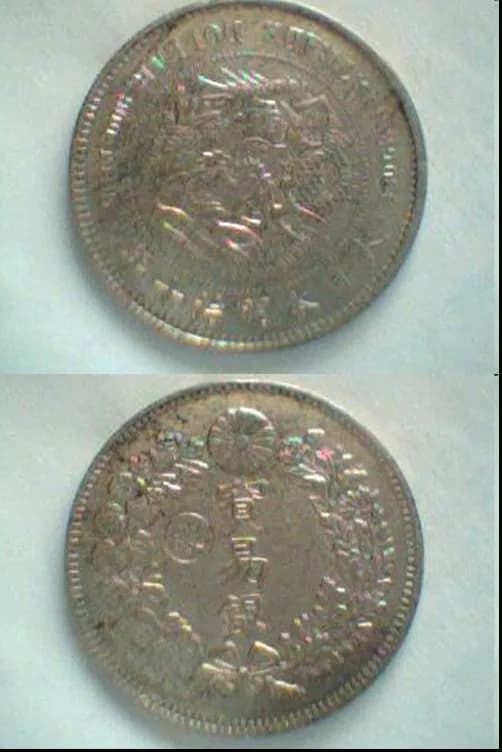
Image: Modern Japanese coinage / photographed by Samuel Ho / Wikimedia Commons / CC BY-SA 3.0(source)
Ryūkyū Tsūhō — The Only Coin of the Ryukyu Kingdom Born Under the Shadow of Satsuma Domain
The Story of the Coin Symbolizing the Uniqueness of the Ryukyu Kingdom, from Its Birth to Its Demise
Subject coin: 琉球通宝
Overview
In 1863, the Ryukyu Kingdom minted the 'Ryūkyū Tsūhō' to demonstrate its uniqueness. This coin was neither Japanese nor Chinese but uniquely Ryukyuan. Under the influence of the Satsuma Domain, the Ryukyu Kingdom was in a politically complex situation, and the background of this coin's birth is said to involve the Satsuma Domain aiming to secure economic advantages between Japan and China through the Ryukyu Kingdom (various theories exist). However, the amount minted was extremely limited, and existing specimens are extremely rare. This coin was abolished due to the Ryukyu Disposal in Meiji 12 (1879), leaving its mark as a historical legacy symbolizing the uniqueness of the Ryukyu Kingdom. Because of its peculiar historical background and rarity, Ryūkyū Tsūhō continues to captivate many antiquarian coin collectors. Additionally, Types and Recognition of Holed Coins and Overview and Appeal of Ancient Coins should be referred to for deeper understanding of ancient monetary culture.
Specifications
- Denomination
- 不明(諸説あり)
- Minting period
- 文久3年〜明治12年(1863-1879年)
- Metal composition
- 銅(諸説あり)
- Weight
- 不詳(諸説あり)
- Dimensions
- 不詳(諸説あり)
- Mintage
- 極めて少ない(不詳)
- Mint supervisor
- 不詳(諸説あり)
- Market price
- 100万円〜500万円(状態による)
Chapter 1: Birth of Ryūkyū Tsūhō — Influence of the Satsuma Domain and Decisions of the Ryukyu Kingdom
Image: Modern Japanese coinage / Coindesmonnaies / Wikimedia Commons / CC BY-SA 4.0(source)
Ryūkyū Tsūhō was born in Bunkyū 3 (1863). During this period, the Ryukyu Kingdom was under Satsuma Domain's influence and was in a highly complex political position. The Ryukyu Kingdom had been under the control of the Satsuma Domain since 1609 and, while formally independent, had to advance its policies under Satsuma’s surveillance. This background is believed to have greatly influenced the birth of Ryūkyū Tsūhō. The Satsuma Domain aimed to use the Ryukyu Kingdom as a transit point for trade between Japan and China to gain economic benefits. Ryūkyū Tsūhō may have been a means to demonstrate economic autonomy while reflecting the intentions of the Satsuma Domain by the Ryukyu Kingdom issuing its own currency. However, it is also believed that the creation of Ryūkyū Tsūhō was motivated by the Ryukyu Kingdom's intention to assert its identity. By trying to preserve their culture and economy, the Ryukyu Kingdom demonstrated its presence by minting unique currency. Nevertheless, the amount minted was extremely limited, and few were actually circulated. This may have been influenced by the economic constraints of the Ryukyu Kingdom and the strict supervision of the Satsuma Domain. The minting of Ryūkyū Tsūhō was more than just issuing currency; it was a symbol of the Ryukyu Kingdom’s political and economic challenges.
Chapter 2: The Minting Process — Craftsmanship and Secret Workshops
Image: Modern Japanese coinage / Coindesmonnaies / Wikimedia Commons / CC BY-SA 4.0(source)
The minting of Ryūkyū Tsūhō was reportedly conducted on a very limited scale. The minting location and specific methods remain unknown, with various theories suggesting that unique Ryukyuan techniques were undoubtedly used. According to historical records, Ryūkyū Tsūhō was primarily minted with copper, but much about its exact composition and minting methods is shrouded in mystery. It is thought that artisans of the Ryukyu Kingdom were involved in minting Ryūkyū Tsūhō, utilizing unique Ryukyuan skills and materials to create this coin. Ryukyuan craftsmen may have independently developed upon techniques inherited from China and Japan, leveraging these skills to the fullest in producing Ryūkyū Tsūhō. However, due to the extremely limited quantity minted, the exact scale of this operation remains uncertain. Manufactured Ryūkyū Tsūhō were strictly managed by the government of the Ryukyu Kingdom, with their circulation being limited. Consequently, while Ryūkyū Tsūhō served as the currency of the Ryukyu Kingdom, it rarely reached the hands of the general populace. It is said that artisans minted Ryūkyū Tsūhō under the surveillance of the Satsuma Domain, yet specifics remain scarce, contributing to the enigma. The minting of Ryūkyū Tsūhō was an act symbolizing the economic independence of the Ryukyu Kingdom, as well as a technical achievement.
Chapter 3: Circulation of Ryūkyū Tsūhō — Economic Role and Public Reaction
Image: Modern Japanese coinage / Coindesmonnaies / Wikimedia Commons / CC BY-SA 4.0(source)
While Ryūkyū Tsūhō was minted to demonstrate economic independence, its circulation faced numerous constraints. Ryūkyū Tsūhō was primarily used within the Ryukyu Kingdom and was also employed in trade with the Satsuma Domain and other regions. However, the circulation was extremely limited, and its economic impact within Ryukyu was constrained. Ryūkyū Tsūhō held certain value in exchange rates with other coins, but its rarity made its usage among the populace limited. Since the types of currency in Ryukyu were limited at the time, Ryūkyū Tsūhō was often used in local commercial transactions. Public reactions varied, as the perceived economic value of Ryūkyū Tsūhō differed by region and trading partner. As part of the Ryukyu Kingdom’s economic policy and reflecting the intentions of the Satsuma Domain, the circulation of Ryūkyū Tsūhō was complex for the general populace. Though its economic impact was modest, Ryūkyū Tsūhō held a certain presence as a symbol of the Ryukyu Kingdom and its uniqueness. This context means the circulation of Ryūkyū Tsūhō reflects the complex political and economic environment of the Ryukyu Kingdom and, due to its rarity, holds special value for posterity. Referencing Basic Knowledge of Coin Auctions will further enhance understanding of its value.
Chapter 4: Disappearance of Ryūkyū Tsūhō — Abolition and Its Aftermath
Image: Modern Japanese coinage / Coindesmonnaies / Wikimedia Commons / CC BY-SA 4.0(source)
In Meiji 12 (1879), with the Ryukyu Disposal, the Ryukyu Kingdom was abolished, and it was incorporated as Okinawa Prefecture into Japan. Consequently, Ryūkyū Tsūhō also ended its role. Ryūkyū Tsūhō symbolized the identity of the Ryukyu Kingdom, but under the new administration, its value quickly diminished, and it became obsolete. Post-abolition, while sometimes preserved as part of history, Ryūkyū Tsūhō was no longer used in actual economic activities. The abolishment of Ryūkyū Tsūhō, alongside the dissolution of the Ryukyu Kingdom, also influenced cultural identity in the region. Though the symbolic significance carried by Ryūkyū Tsūhō signified a historical loss for the local populace, it remained a part of Ryukyu's history and culture. The abolition of Ryūkyū Tsūhō marked the end of an era in Ryukyu’s history and also impacted the subsequent currency culture in Okinawa. In the present day, Ryūkyū Tsūhō is highly valued among antiquarian coin collectors as a rare historical heritage. Its value surpasses that of mere currency, serving as an important testament to the history of the Ryukyu Kingdom. Referencing Detailed Explanation of Wadōkaichin and Understanding the Value and Recognition of Modern Currency will deepen understanding of Japan’s monetary history.
Value & Rarity
Due to its rarity, Ryūkyū Tsūhō today holds extremely high market value. With an extremely limited quantity minted, only a handful of Ryūkyū Tsūhō exist today. This scarcity generates high demand among collectors. It rarely circulates in the market, often fetching high prices at auctions. The price of Ryūkyū Tsūhō generally ranges from 1,000,000 to 5,000,000 yen, depending on its condition and historical background. This rarity and historical value make Ryūkyū Tsūhō a special existence. In collecting and trading Ryūkyū Tsūhō, evaluating conditions is crucial, and referring to Standards for Grading Antique Coins is recommended. Concerns about fakes also exist, making it important to refer to Recognition of Fakes and Altered Items. Ryūkyū Tsūhō, transcending mere currency value, continues to captivate many as a precious heritage narrating Ryukyu’s history and culture.
Conclusion
Ryūkyū Tsūhō is a valuable heritage symbolizing the history and culture of the Ryukyu Kingdom. The process from its birth to abolition reflects the political and economic situation of the Ryukyu Kingdom, and it continues to receive high evaluation due to its rarity. Understanding the Ryukyu Kingdom’s uniqueness and the historical background through this coin provides a valuable opportunity to deepen historical comprehension beyond mere coin collection. Although Ryūkyū Tsūhō has vanished into history, its value and charm continue to shine. For collectors and history enthusiasts, Ryūkyū Tsūhō holds more significance than a mere coin, evoking the proud past of Ryukyu. Engaging with Ryūkyū Tsūhō promises to deepen understanding of Japan’s diverse monetary culture.
Related Stories
Bunkyū Eihō — Tracing the History of Ansen
The last Ansen of the late Edo period. The 4-mon coin minted in Bunkyū 3 began circulating just shy of two years before the Meiji Restoration.
Coin StoryChikusen Jowi no Rei — An Ancient Japanese Attempt to Spread Currency
Wadō 4 (711): An Unprecedented System to Promote Currency Use
Coin StoryNaga-nen Taihō — Tracing the History of Ancient Coinage
The 7th coin of the Kōchō jūni-sen, issued in Shōwa 15 (848) during the reign of Emperor Ninmyō. From this time, the gap between the actual and nominal value of coins became serious.
Dealers
Dealers Handling This Category
A reference when considering a sale or appraisal. All are dealers and auction houses with a proven track record.
Japan Coin Auction (JCA)
Tokyo
Holds regular auctions with reliable hammer price data, making it a useful resource for tracking market values. Caters to a wide range of collectors from beginners to advanced buyers.
Osaka Numismatic Auction
Osaka
A Kansai-based coin auction house with particular strength in regional and hole coins.
Ginza Coins
Ginza, Chuo-ku, Tokyo
One of Japan's most established numismatic dealers. The scale and variety of their regular auctions is among the largest in the country. Their catalogs are considered a benchmark for market pricing.