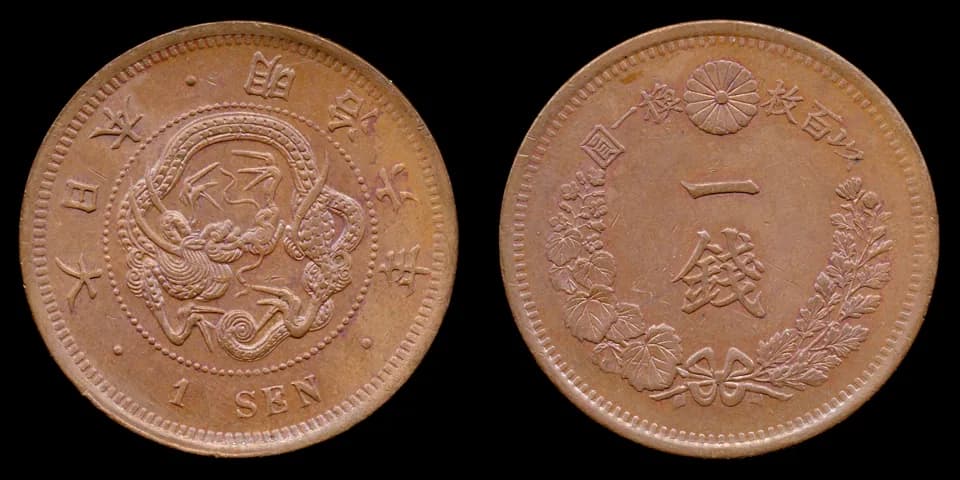
Image: Modern Japanese coinage / As6673 / Wikimedia Commons / CC BY-SA 3.0(source)
Transition to the Gold Standard in Meiji Japan — Foundation of Modern Japanese Economy
The Monetary Revolution Brought About by the Sino-Japanese War Reparation
Subject coin: 明治金本位制移行
Overview
In Meiji 30 (1897), Japan embraced a new economic era by introducing the gold standard. This move was prompted by receiving most of the 360,000,000 yen reparation in gold from the Sino-Japanese War. At this time, Japan was rapidly modernizing, and the Meiji government felt the need to keep pace with international monetary systems. The government defined 1 yen as 0.75g of pure gold, demoting silver and copper coins to auxiliary currency. This policy contributed not only to domestic economic stability but also to the promotion of international trade. However, with the re-imposition of the gold export ban in Shōwa 6 (1931), the gold standard effectively came to an end. This transition to the gold standard was a significant turning point in Japan's economic history, laying the foundation for its current monetary system. For coin collectors, the gold coins from this period hold special value and are highly regarded in modern coin values and identification.
Specifications
- Denomination
- 1円
- Minting period
- 明治30年〜昭和6年(1897-1931年)
- Metal composition
- 純金
- Weight
- 0.75g
- Dimensions
- 不詳(諸説あり)
- Mintage
- 不詳(諸説あり)
- Mint supervisor
- 不詳(日本政府)
- Market price
- 状態により異なる(不詳)
Chapter 1: Meiji's Turning Point — Path to the Gold Standard
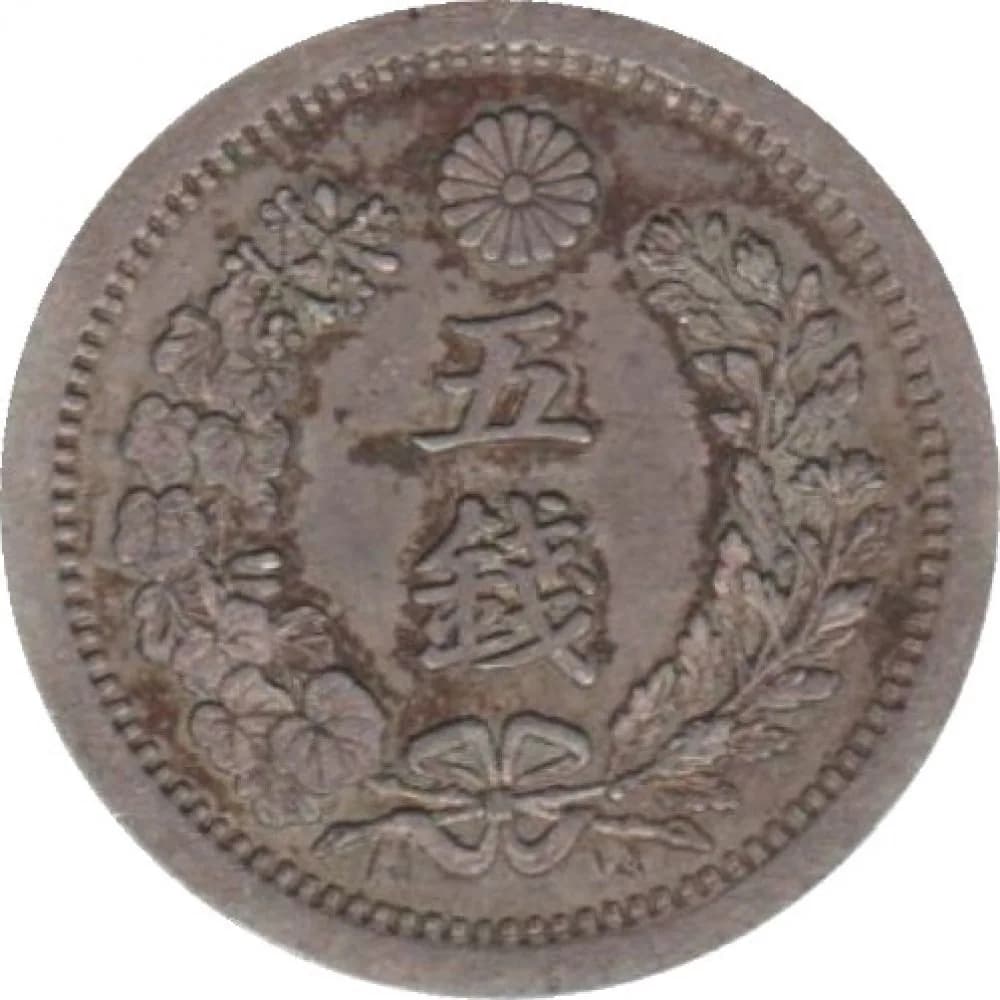
Image: Modern Japanese coinage / Coindesmonnaies / Wikimedia Commons / CC BY-SA 4.0(source)
In Meiji 30 (1897), Japan faced a major financial reform. The Meiji government decided to introduce the gold standard to elevate Japan's economy to a global standard. The backdrop for this was Japan's victory in the Sino-Japanese War of 1895. Victorious Japan was awarded a massive indemnity of 360,000,000 yen from Qing China. This amount was more than double Japan's national budget at the time, proving to be a significant fiscal boon for the Meiji government. With most of the indemnity paid in gold, the government was ready to adopt the gold standard. The introduction of the gold standard aimed at promoting international trade and stabilizing the domestic economy. Specifically, it legally established 1 yen as 0.75g of pure gold, thereby enhancing the currency's credibility. Consequently, silver and copper coins were demoted to auxiliary currency, and a new currency law was enacted. The gold coins from this period became new currency types different from types and identification of Edo period gold coins and supported the Japanese economy. This decision by the government was not merely a domestic policy but an essential step for Japan to establish its economic position in the international community.
Chapter 2: Minting of Gold Coins — Meiji's Industrial Power
Image: Modern Japanese coinage / Coindesmonnaies / Wikimedia Commons / CC BY-SA 4.0(source)
With the introduction of the gold standard, Japan began minting new gold coins. In this endeavor, the Meiji government aimed to produce high-quality gold coins by leveraging the latest technology. Minting was carried out at the Mint Bureau in Tokyo, which boasted cutting-edge facilities of the time. The Mint Bureau strictly managed the purity of gold and produced the 1 yen gold coins using 0.75g of pure gold. The minting process was complex, beginning with the refining of gold, followed by pouring it into molds, cooling, and finally stamping. The design of the gold coins reflected a fusion of Japanese tradition and modernization, with motifs of the paulownia and chrysanthemum. Consequently, the gold coins transcended their role as mere currency, becoming symbols of Japanese culture and technology. The artisans working at the Mint Bureau embodied Japan's industrial power at the time, and their skills were world-class. Through these gold coins, the Meiji government aimed to demonstrate Japan's economic independence and earn international credit. The minting technology of these gold coins later influenced the types and market of koban coins, laying the groundwork for further technological innovations.
Chapter 3: Circulation of Gold Coins — A New Era in the Japanese Economy
Image: Modern Japanese coinage / Coindesmonnaies / Wikimedia Commons / CC BY-SA 4.0(source)
The introduction of the gold standard brought tremendous change to the Japanese economy. First, with the enactment of the currency law in Meiji 30 (1897), the circulation of gold coins increased the credibility of the currency, further invigorating international trade. This law legally set 1 yen = 0.75g of gold (pure gold), granting Japan's currency a stable international value. Particularly, the fact that most of the 360,000,000 yen indemnity from the Sino-Japanese War was paid in gold bolstered the establishment of the gold standard. This stable value of gold coins facilitated smooth transactions with foreign countries, and Japanese products gained competitiveness in overseas markets. Domestically, the circulation of gold coins stabilized prices, allowing the common people to conduct transactions with confidence. Silver and copper coins were demoted to auxiliary currency, further enhancing the trust in gold coins. For merchants and farmers, gold coins became a medium for high-value transactions, contributing to the expansion of economic activity. Notably, the 1 yen gold coin, due to its weight and purity, was widely accepted as a reliable currency, comparable to details of Keichō Koban. The circulation of gold coins strengthened the government's fiscal base, enabling investments in public works. As a result, infrastructure development progressed, and the wave of the industrial revolution spread across Japan. With advancements in railroads, ports, and communications, Japan was able to establish its foundation as a modern nation. Economic stability and growth also led to improved living standards for the populace, ushering in a new era of prosperity for Meiji Japan. Thus, the introduction of the gold standard was not merely a change in currency system but a crucial element in supporting Japan's economic self-reliance and development. However, in Shōwa 6 (1931), with the re-imposition of the gold export ban, the gold standard effectively came to an end. This measure was influenced by the global depression, presenting new challenges to the Japanese economy.
Chapter 4: The End and Aftermath — Impact and Lessons of the Gold Standard
Image: Modern Japanese coinage / Coindesmonnaies / Wikimedia Commons / CC BY-SA 4.0(source)
The gold standard reached a significant turning point in Shōwa 6 (1931). At the time, Japan was facing severe economic turmoil due to the global great depression that began in 1929, requiring policies to address the situation. Under the guidance of Finance Minister Inoue Junnosuke, the government implemented a policy of re-imposing the gold export ban to stabilize the economy, which effectively marked the end of the gold standard. This decision significantly impacted the domestic and international economic landscape, prompting a reevaluation of currency policy. The end of the gold standard highlighted Japan's vulnerability to international economic fluctuations. However, this experience later became a valuable lesson for Japan to develop a flexible currency policy. For instance, after moving away from the gold standard, Japan adopted a more diverse monetary system to achieve economic stability and growth. The gold coins from this period have increased in historical value and are notable in basic knowledge of coin auctions. Although the era of the gold standard indeed came to an end, its influence remains reflected in Japan's economic policies today and is passed down as a historical lesson. The gold standard established in Meiji 30 (1897) was based on the majority of the 360,000,000 yen indemnity from the Sino-Japanese War paid in gold, legally setting 1 yen = 0.75g of pure gold, and demoting silver and copper coins to auxiliary currency. While this temporarily enhanced Japan's international credit, it also exposed vulnerabilities to global economic fluctuations.
Value & Rarity
Gold coins from the gold standard era hold very high value due to their historical background. In particular, the 1 yen gold coin from that time was produced to a standard of 0.75g of pure gold, gaining international credibility, making them attractive to collectors even today. Meiji-period gold coins, due to their manufacturing process and historical significance, are often traded at high prices in auction markets. Those in good condition are especially rare and can be priced in the range of several hundred thousand to several million yen. These gold coins are valued not only as old currency but also as symbols of Japan's modernization. It is essential to be cautious of identifying counterfeits and altered coins, requiring expert knowledge to discern authenticity. Factors affecting their value include the coin's condition, minting year, and design details; thus, careful consideration is necessary when collecting them. These gold coins, as a testament to a major turning point in Japan's economic history, will continue to maintain high esteem.
Conclusion
The introduction of the gold standard in Meiji 30 marked a crucial turning point in Japan's economic history. This system, starting with the indemnity from the Sino-Japanese War, served as a catalyst to elevate Japan onto the global economic stage. The circulation of gold coins promoted domestic economic stability and growth, enhancing international credibility. Though the gold standard met its end with the re-imposition of the gold export ban in Shōwa 6, the lessons learned in the process had a profound impact on Japan's subsequent flexible currency policies. The gold coins from this period continue to be highly valued for their historical significance and rarity, captivating many collectors today. The history of the gold standard is an important narrative to be passed down as a component of Japan's economic development.
Related Stories
60th Anniversary of Local Autonomy Law 500 Yen Bicolor – 10-Year Journey Across 47 Prefectures
Commemorative Coin Series Born from the Law of 1947
Coin StoryAichi Expo Commemorative Silver Coin — Hope for the Future Carved with the Wisdom of Nature
The History and Value of the 1000-yen Silver Coin Commemorating the 2005 Aichi Expo
Coin StoryCommemorative 500 Yen Cupronickel Coin for the Enthronement of the Heisei Emperor — A Bridge from Heisei to Reiwa
The Story of a Historic Commemorative Coin Celebrating the Enthronement of the Heisei Emperor
Dealers
Dealers Handling This Category
A reference when considering a sale or appraisal. All are dealers and auction houses with a proven track record.
Ginza Coins
Ginza, Chuo-ku, Tokyo
One of Japan's most established numismatic dealers. The scale and variety of their regular auctions is among the largest in the country. Their catalogs are considered a benchmark for market pricing.
Taisei Coins
Tokyo
A dealer with an international network. Offers advanced services such as consignment to overseas auctions and NGC/PCGS grading submission. Recommended for high-value or internationally recognized coins.
Tokyo Coin Club
Tokyo
A membership-based coin dealer known for carefully selected, quality inventory.