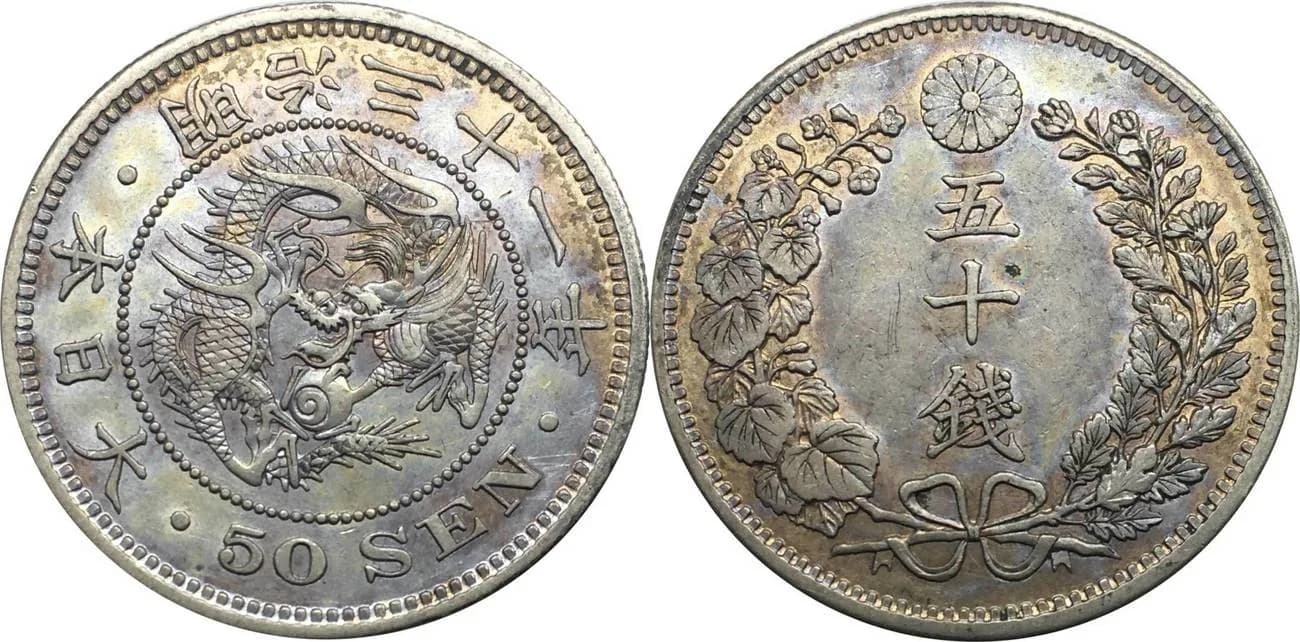
Image: Modern Japanese coinage / The government of the Empire of Japan. / Wikimedia Commons / Public domain(source)
Continental Bronze Coins — The History of Imported Coins in Japan
From Tang to Ming, Entering Across Eras
Subject coin: 大陸青銅銭の分類
Overview
In ancient Japan, currency was primarily managed through imported coins from the Chinese continent. These imported coins, extending from the Tang's Kaigen Tsūhō to the Ming's Yongle Tongbao, are products of diverse eras and regions. Especially, Tang coins, weighing 3.75g, were considered an international standard at the time. Song coins, like Yuanyou Tongbao and Xining Yuanbao, were introduced in varieties, influencing the Japanese market. Furthermore, coins such as Yuan's Zhiyuan Tongbao and Ming's Hongwu Tongbao also entered Japan, discovered at various sites. These continental bronze coins differed in material and specification across eras, greatly influencing Japan's economy and culture. From Tang to Song, Yuan, and Ming, the influx of coins over four centuries formed a crucial economic foundation for ancient Japan, laying the groundwork for the subsequent monetary system.
Specifications
- Denomination
- 多種多様
- Minting period
- 7世紀後半〜17世紀(700-1600年頃)
- Metal composition
- 青銅
- Weight
- 3.75g(唐銭の標準)
- Dimensions
- 不詳(諸説あり)
- Mintage
- 不詳(諸説あり)
- Mint supervisor
- 不詳
- Market price
- 状態により数千円〜数万円
Chapter 1: Tang Coins — Impact of Kaigen Tsūhō
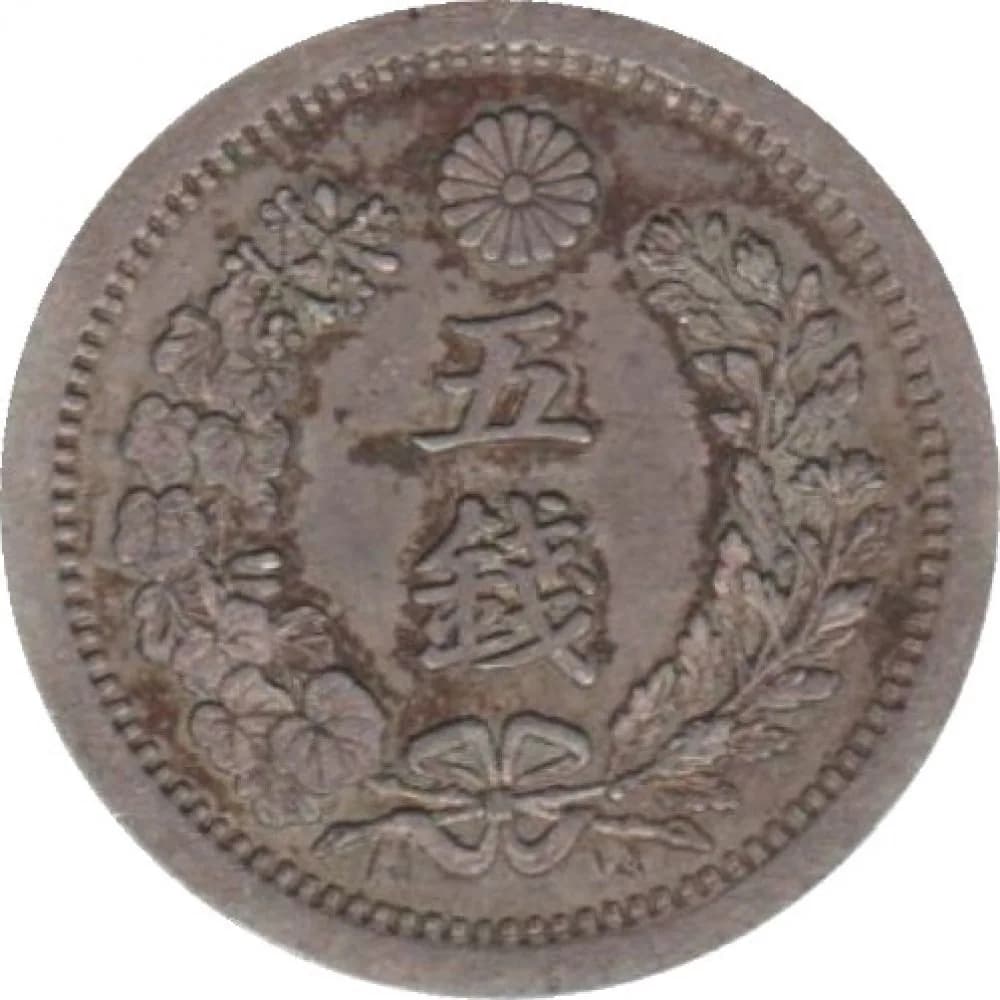
Image: Modern Japanese coinage / Coindesmonnaies / Wikimedia Commons / CC BY-SA 4.0(source)
During the Tang dynasty, the Kaigen Tsūhō was minted under Emperor Xuanzong during the Kaiyuan era (713-741). Aiming for domestic unity, the 3.75g Kaigen Tsūhō symbolized the 'beginning of a new era' literally. Its standardized design and production were meticulously planned, and it circulated through East Asia, coming to Japan as well. In early Nara period Japan, the government worked on creating a Ritsuryō state, where coin-based economy introduction became urgent under Emperors Tenmu and Jitō, with the influx of Tang coins playing a significant role.
The Kaigen Tsūhō’s consistency and reliability made it valuable for trade and tax payment, becoming prominent in Nara period Japanese economy. Temples like Tōdai-ji and Daian-ji utilized these coins, aiding the development of Buddhist culture. Through diplomatic relations with Tang, many Tang coins were stored in Shōsōin, a state warehouse preserving treasures, showcasing international exchange back then. These coins were indispensable for developing Japan's monetary system, influencing the issuance of Wadōkaichin in 708, Japan’s first official coin, heavily influenced by Kaigen Tsūhō. Such coin flows and issuances bolstered Japan’s economic base and led to prosperity in the Heian period.
Chapter 2: Song Coins — Economic Diversification and Impact
Image: Modern Japanese coinage / Coindesmonnaies / Wikimedia Commons / CC BY-SA 4.0(source)
In the Song dynasty, the variety of coins entering Japan increased dramatically. Coins like the Yuanyou Tongbao of Northern Song's Yuanyou years (1078-1085) and Xining Yuanbao of the Xining years (1068-1077) arrived in Japan. The diversification of Song coins stemmed from the Song regime issuing localized currencies. These coins, cast independently in various regions, were brought to Japan through trade. The Song, under its centralized government, promoted monetary economic development, surpassing Tang coins in volume, although Tang coins like Kaigen Tsūhō set a 3.75g standard, Song coins varied regionally.
In Japan's Heian period, the influx of Song coins energized trade. Taira no Kiyomori promoted trade with Song, escalating to active Japan-Song trade, spreading Song coins widely within Japan. Kiyomori became Chancellor in 1167, expanded trade with Song using his position, invigorating the economy centered in the Seto Inland Sea, indicated by discovered Song coins near Itsukushima Shrine in Hiroshima.
This fostered market economy growth, normalizing coin usage among commoners. Through Song coins’ circulation, Japan shifted from barter to a monetary economy. This era saw commercial growth, leading to urban expansion and new trade zones, with cities like Kyoto and Kamakura becoming commercial centers dotted with markets. Song coins transformed Japan's economic structure, reinforcing its monetary economy foundation for the expanding commerce in subsequent Kamakura and Muromachi periods.
Chapter 3: Yuan Coins — Entry and Scarcity of Zhiyuan Tongbao
Image: Modern Japanese coinage / Coindesmonnaies / Wikimedia Commons / CC BY-SA 4.0(source)
Zhiyuan Tongbao, minted during the Yuan era from 1271 to 1368, corresponds with mid-Kamakura to Nanboku-chō period in Japan. Despite two Mongol invasions, trade persisted. Yuan coins, minted under Kublai Khan aiming for currency unification, circulated continent-wide but reached Japan in limited amounts. This scarcity links to the Yuan era's wide use of paper currency, or Jiaochao, which reduced coin circulation, encouraged by Kublai Khan for new economic policy and its recognized convenience.
Moreover, post-invasion Japan avoided direct trade with Yuan, restricting coin entry. Especially, the Kamakura shogunate, wary from Mongol invasions, tightened trade management, causing Yuan coins to continue trickling mainly through Southern Song and Ming eras. Their rarity reflected Japan’s international trade limits and shifts under Yuan's changes, with political disruptions affecting currency circulation. Yet some Yuan coins reached Japan through limited trade routes, gaining currency value. Typically, they came via Kyushu and Chugoku region ports, carried into Japan by merchants, contributing to Japan’s limited currency flow then. Though rare, excavations show them alongside Tang and Song coins, confirming presence.
Chapter 4: Ming Coins — Yongle Tongbao and Japan's Economy
Image: Modern Japanese coinage / Coindesmonnaies / Wikimedia Commons / CC BY-SA 4.0(source)
During the Ming era, coins like Yongle Tongbao and Hongwu Tongbao flowed abundantly into Japan. Yongle Tongbao, issued by Emperor Yongle (1402-1424), served as major currency for Ming. Ascending in 1403, Emperor Yongle actively promoted trade for stability and economic growth, leading to active maritime trade with Japan and Southeast Asia. Post-15th century, these coins notably impacted Sengoku era Japan's economy, showing active Sino-Japanese trade then. After the Ōnin War (1467-1477), regional daimyo formed independent economies, using trade for economic power, valuing Ming coins as a tool. Ming coins boosted Japanese currency flow, sparking commercial activity.
The influx marked Japan’s active trading with China, also affecting Edo period currency systems. Edo shogunate developed coin policies based on Ming coins, paving Japan's own monetary system foundations. For instance, Edo era’s gold, silver, and copper coin tri-system built from Ming flow experience. Yongle and Hongwu Tongbao influenced Edo gold coin types and identification, playing crucial roles in economic development and monetary evolution.
Value & Rarity
The value of continental bronze coins varies significantly by type and condition. Particularly, Tang coins like Kaigen Tsūhō or Song coins like Yuanyou Tongbao can fetch tens of thousands of yen if well preserved. However, due to higher circulation, Yuan and Ming coins often trade cheaper. In the antique coin market, rarity and condition are major valuation points. Near-mint or historically significant coins can garner high prices. For collectors, understanding coin grading standards for accurate assessment is crucial. Learning to distinguish fakes and altered coins is recommended due to market presence of such items.
Related Guides: Detailed Explanation of Wadōkaichin
Conclusion
Continental bronze coins played a pivotal role in Japan's currency history. From Tang to Ming, coins entering Japan greatly influenced its economy and culture. Imported coins laid the foundation for Japan's monetary system development, impacting through to the Edo era. Currency flow from ancient to medieval Japan reflected its political, economic, and social changes beyond mere trade means. These coins remain highly historically valued, offering precious material for collectors and researchers. Delving into antique coins allows renewed appreciation of historical Japan-China exchanges.
Related Stories
Bunkyū Eihō — Tracing the History of Ansen
The last Ansen of the late Edo period. The 4-mon coin minted in Bunkyū 3 began circulating just shy of two years before the Meiji Restoration.
Coin StoryChikusen Jowi no Rei — An Ancient Japanese Attempt to Spread Currency
Wadō 4 (711): An Unprecedented System to Promote Currency Use
Coin StoryNaga-nen Taihō — Tracing the History of Ancient Coinage
The 7th coin of the Kōchō jūni-sen, issued in Shōwa 15 (848) during the reign of Emperor Ninmyō. From this time, the gap between the actual and nominal value of coins became serious.
Dealers
Dealers Handling This Category
A reference when considering a sale or appraisal. All are dealers and auction houses with a proven track record.
Japan Coin Auction (JCA)
Tokyo
Holds regular auctions with reliable hammer price data, making it a useful resource for tracking market values. Caters to a wide range of collectors from beginners to advanced buyers.
Ginza Coins
Ginza, Chuo-ku, Tokyo
One of Japan's most established numismatic dealers. The scale and variety of their regular auctions is among the largest in the country. Their catalogs are considered a benchmark for market pricing.