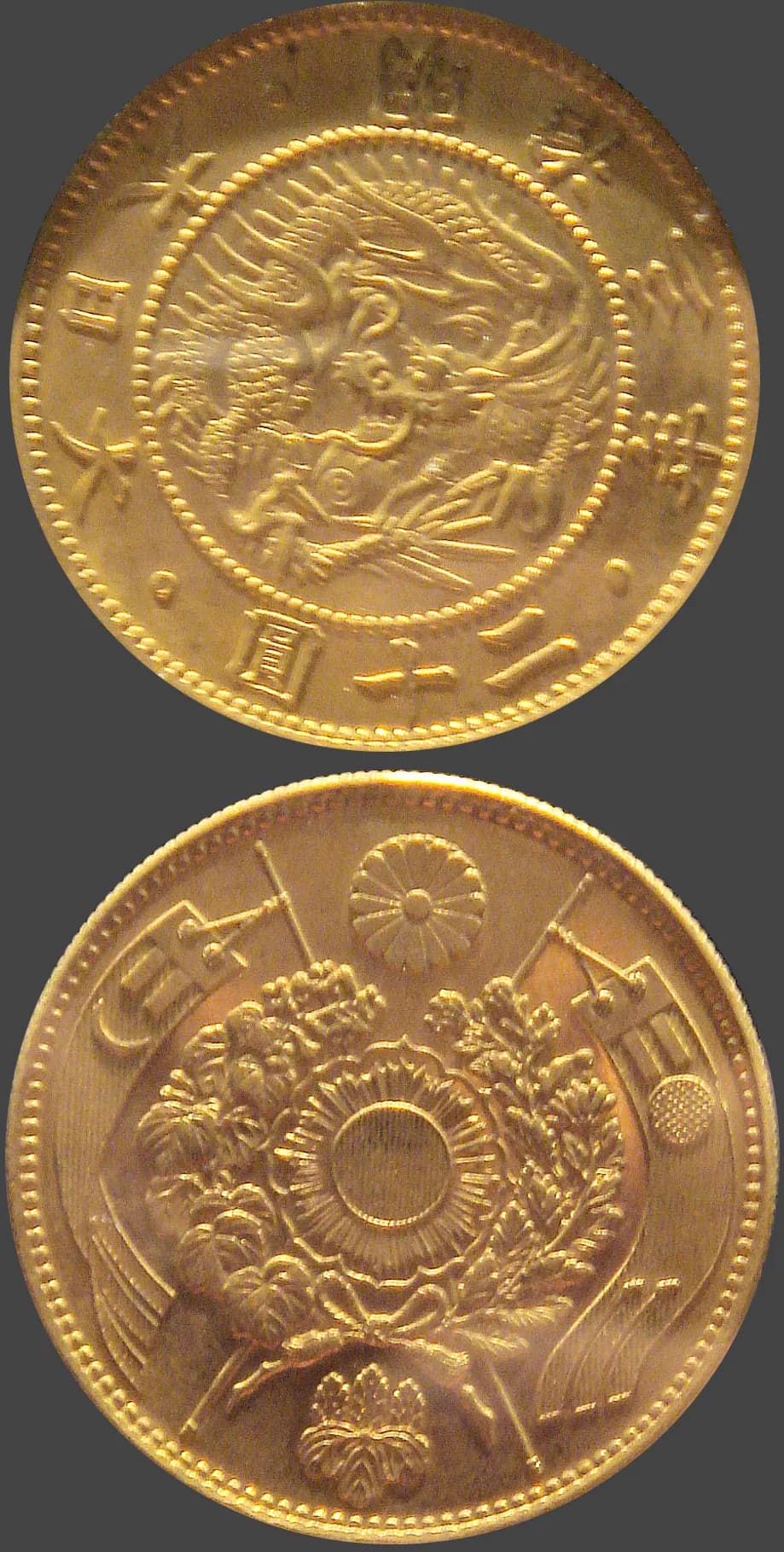
Image: Modern Japanese coinage / PHGCOM / Wikimedia Commons / CC BY-SA 3.0(source)
Mameitagin — The Small Silver Coins Supporting Edo Economy
The Role of Irregularly Shaped and Weighted Mameitagin
Subject coin: 豆板銀
Overview
Mameitagin were Japanese silver coins circulating between 1601 and 1869, named for their resemblance to soybeans. They appeared around the same time as Keichō Koban (慶長小判) and mainly served to complement odd amounts of Chōgin. Their shapes and weights were irregular, ranging from 0.1g to 15g, but this irregularity was actually advantageous, leading to their widespread use as part of Edo Gingūhan's silver. With a silver purity of about 80%, they maintained the same standard as Chōgin and played a crucial role in supporting the foundation of Japan's economy. With the introduction of a new currency system in 1869 (Meiji 2), Mameitagin concluded its role but remained deeply embedded in the everyday lives of common people throughout the Edo period.
Specifications
- Denomination
- 不定額
- Minting period
- 1601年〜1869年
- Metal composition
- 銀80%(慶長期)
- Weight
- 0.1〜15g
- Dimensions
- 不定(形状により異なる)
- Mintage
- 不詳(諸説あり)
- Mint supervisor
- 不詳
- Market price
- 5,000円〜50,000円(状態による)
Chapter 1: The Birth of Mameitagin — Currency Reforms in Early Edo
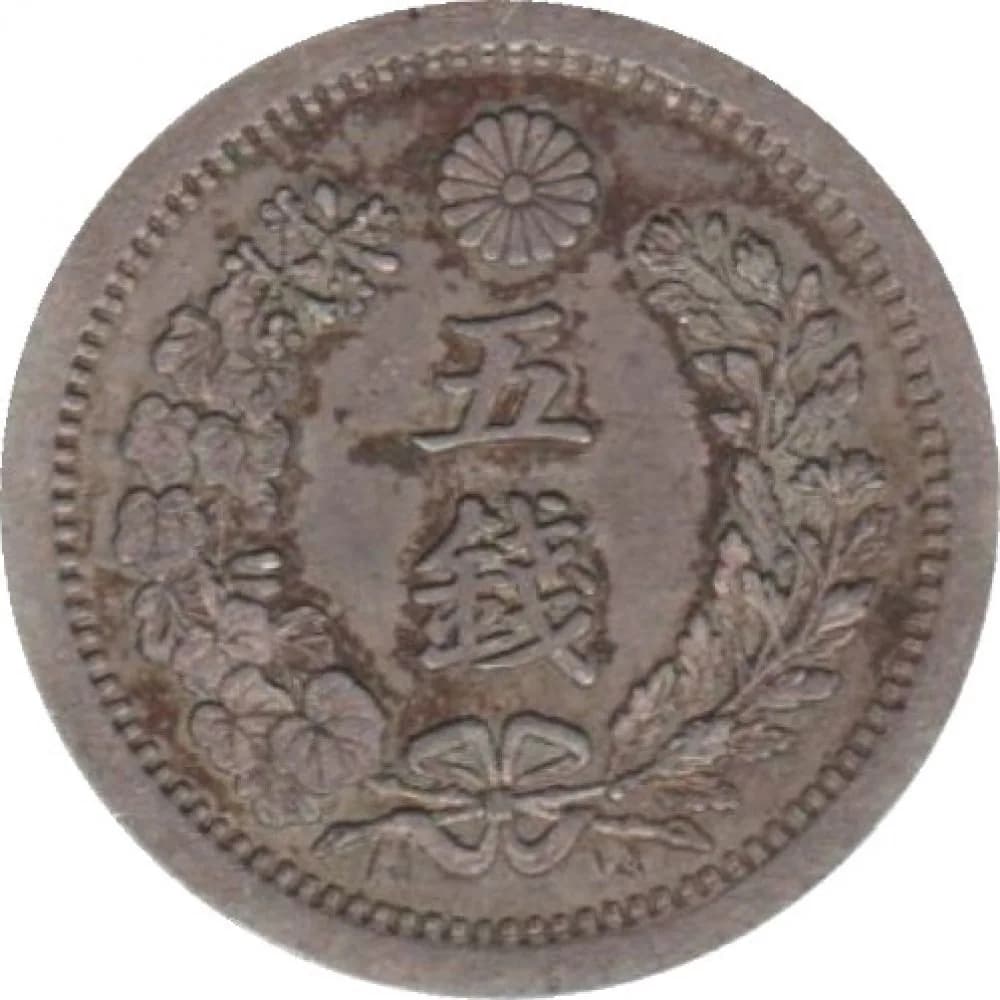
Image: Modern Japanese coinage / Coindesmonnaies / Wikimedia Commons / CC BY-SA 4.0(source)
In 1601, Tokugawa Ieyasu established the Edo Shogunate and implemented significant reforms in Japan's currency system. During this period, Keichō Koban (慶長小判) and Chōgin were introduced to stabilize the economic foundation. Although Chōgin was suitable for large transactions, it was inconvenient for smaller trades. Thus, Mameitagin was introduced to complement Chōgin's odd amounts. These small silver ingots were named for their soybean-like appearance. They varied significantly in weight from 0.1g to 15g, depending on the material used during casting. With a silver purity of about 80%, they were reliable in quality. Alongside Edo Kinka (江戸金貨) and various other forms of currency, the shogunate circulated Mameitagin to ensure currency diversity and facilitate economic activities. Mameitagin's introduction made daily transactions easier for merchants and commoners, contributing to economic revitalization. This silver currency became a pillar supporting the Edo economy and influenced the development of future currency systems.
Chapter 2: Minting of Mameitagin — Craftsmanship and the Role of Ginza
Image: Modern Japanese coinage / Coindesmonnaies / Wikimedia Commons / CC BY-SA 4.0(source)
The minting of Mameitagin was primarily handled by Ginza (ぎんざ) under the Edo Shogunate, a critical institution responsible for the minting and distribution of silver coins initially set up in Nihonbashi, Edo. Skilled artisans gathered at Ginza, employing advanced techniques to melt and pour silver into molds. Despite their various shapes and weights, Mameitagin maintained a certain level of quality. The minting techniques at Ginza, applied to other currencies as Edo Gingūhan's silver, supported Japan's currency system for a long time. Careful management maintained Mameitagin's silver purity at about 80%. Ginza officials meticulously selected materials from mining sources to ensure quality. Such a system ensured Mameitagin gained high trust and wide circulation among the populace. The craftsmanship of workers and Ginza's management system significantly influenced economic development, positioning Ginza as a major minting hub in Japan. The craftsmanship marks on Mameitagin are essential clues for authenticating and tracing lineage in modern evaluations.
Chapter 3: Circulation of Mameitagin — Small Change Supporting Common Life
Image: Modern Japanese coinage / Coindesmonnaies / Wikimedia Commons / CC BY-SA 4.0(source)
Throughout the Edo period, Mameitagin deeply permeated everyday life, circulating very actively. Merchants used Mameitagin in daily transactions, utilizing their irregular shapes and weights effectively for fine adjustments in amounts. For example, they were indispensable for everyday purchases of fish, vegetables, and household items. As a result, alongside Anasen (穴銭), Mameitagin was widely accepted among commoners. The value of Mameitagin depended on its weight and silver purity, with merchants calculating and conducting transactions using scales. For commoners, Mameitagin was a very convenient currency and played an essential role in supporting Edo's economic activities. It also circulated in rural areas, contributing to regional economic revitalization. Despite its irregular shape, Mameitagin was a foundation supporting Edo's economy, continuously supporting many people's lives. Its existence symbolizes the diversity and flexibility of Edo's economy, and its historical significance is considerable.
Chapter 4: Meiji Restoration and the End of Mameitagin — Transition to a New Era
Image: Modern Japanese coinage / Coindesmonnaies / Wikimedia Commons / CC BY-SA 4.0(source)
In 1869, the Meiji government fundamentally reformed Japan's currency system. Edo era currencies, including Mameitagin, were abolished, and a new currency system was introduced. This reform, impacting Modern Currency's Kagetsu system, was part of Japan's economic modernization. The new currency system, using the yen as the basic unit, could not accommodate irregular currencies like Mameitagin. Consequently, Mameitagin ceased circulating, surrendering its role to new coins. However, for about 260 years, Mameitagin supported Japan's economy and was indispensable in many people's lives. The abolition of Mameitagin symbolized more than just the disappearance of old currency; it marked significant social changes in Japan. Entering the Meiji era, Japan rapidly modernized and increased its presence in the international community. Mameitagin witnessed many changes throughout history, ultimately marking a milestone in heralding a new era. Its impact continued to be inherited by subsequent generations, contributing to the establishment of the modern currency system.
Value & Rarity
Mameitagin's irregular shape and weight make it a highly attractive item for modern collectors. In the market, its price varies significantly depending on its condition, weight, and silver purity. While many Mameitagin were in everyday circulation, making surviving numbers high, those with excellent preservation or proven historical backgrounds hold high value. Market prices range from 5,000 yen to 50,000 yen, with rare pieces trading for even higher amounts. For collectors and history enthusiasts, Mameitagin is a valuable heritage symbolizing Edo's economy and culture, obtainable through coin auctions. Additionally, collecting Mameitagin offers a valuable opportunity to deepen understanding of Edo's currency system and economy. Its market value reflects the historical significance and context, and its evaluation is likely to continue.
Conclusion
Despite its irregular shape and weight, Mameitagin was a critical currency that supported Edo's economy. Over roughly 260 years, it continuously supported many people's lives, providing essential insights into Japan's currency system transitions. With its abolition during the Meiji era and the introduction of a new currency system, Mameitagin left the historical stage, but its influence persists into modern times. In the market, it remains a valuable item for collectors, representing a precious heritage that reflects Edo's economy and culture. The story of Mameitagin provides many insights for learning about Japanese history and culture.
Related Stories
Genroku Ichibuban Kin — The Small Gold Coins of Edo That Changed Overnight
The Drastic Drop in Gold Purity of Genroku Ichibuban and Its Impact
Coin StoryThe Genroku Koban — Shigehide Ogiwara's Financial Revolution and the Consequences of the Genroku Bubble
The man who halved the gold content to save the shogunate, and the merits and demerits of his actions
Coin StoryIchibu-gin — The 'Gold-Silver Ratio Trap' Exposed by Unequal Treaties and the Monetary Crisis of the Late Edo Period
The Systematic Outflow of Gold Coins Triggered by the Opening of Ports in 1858, and the Shogunate's Last Resort: The Manen Recoinage
Dealers
Dealers Handling This Category
A reference when considering a sale or appraisal. All are dealers and auction houses with a proven track record.
Japan Coin Auction (JCA)
Tokyo
Holds regular auctions with reliable hammer price data, making it a useful resource for tracking market values. Caters to a wide range of collectors from beginners to advanced buyers.
Ginza Coins
Ginza, Chuo-ku, Tokyo
One of Japan's most established numismatic dealers. The scale and variety of their regular auctions is among the largest in the country. Their catalogs are considered a benchmark for market pricing.
Osaka Numismatic Auction
Osaka
A Kansai-based coin auction house with particular strength in regional and hole coins.