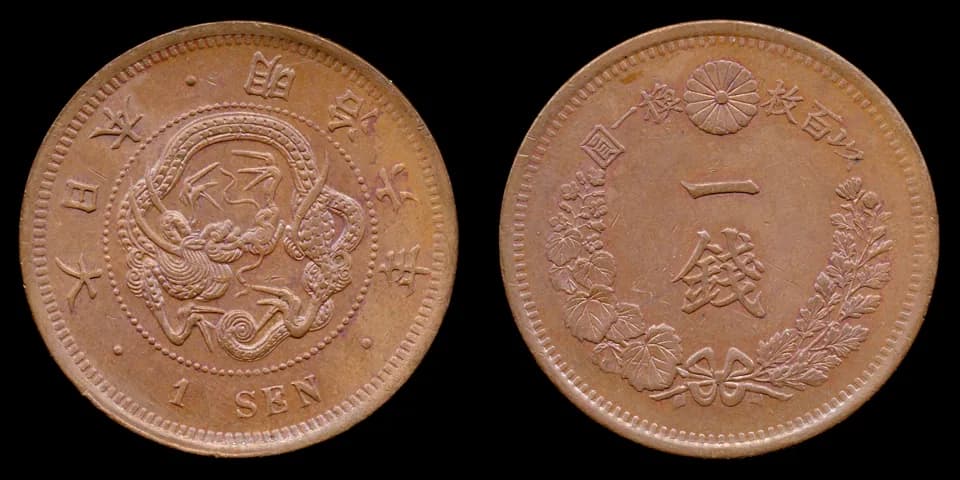
Image: Modern Japanese coinage / As6673 / Wikimedia Commons / CC BY-SA 3.0(source)
Shōwa 10-sen Nickel Coin — A Modern Coin Reflecting an Era of War-time Prioritization
Material Changes in Early Shōwa Era Reveal the Intersection of War and Economy
Subject coin: 昭和10銭ニッケル貨
Overview
In 1933 (Shōwa 8), Japan issued a new 10-sen coin made of nickel. During this era, Japan was preparing for war, necessitating economic efficiency. Nickel was seen as an ideal choice due to its lower cost compared to silver, while maintaining durability and appearance as a coin. The birth of the Shōwa 10-sen nickel coin symbolized the political situation and economic policies of the time, heralding an era prioritizing war expenditures. This coin was used for everyday small transactions throughout Japan, but as the Pacific War approached, its role was replaced by the value of its material for military supplies. By 1940 (Shōwa 15), further material efficiency led to the introduction of coins made from tin and aluminum, and the nickel coin disappeared. Through the background concerning Modern Coin Value and Identification, we explore the historical significance of the Shōwa 10-sen nickel coin.
Specifications
- Denomination
- 10銭
- Minting period
- 昭和8年〜昭和15年(1933-1940年)
- Metal composition
- ニッケル
- Weight
- 3.75g
- Dimensions
- 直径22.6mm
- Mintage
- 不詳(諸説あり)
- Mint supervisor
- 不詳
- Market price
- 5,000円〜30,000円(状態による)
Historical Background and Motivation for Minting — Economic Strategies of Early Shōwa
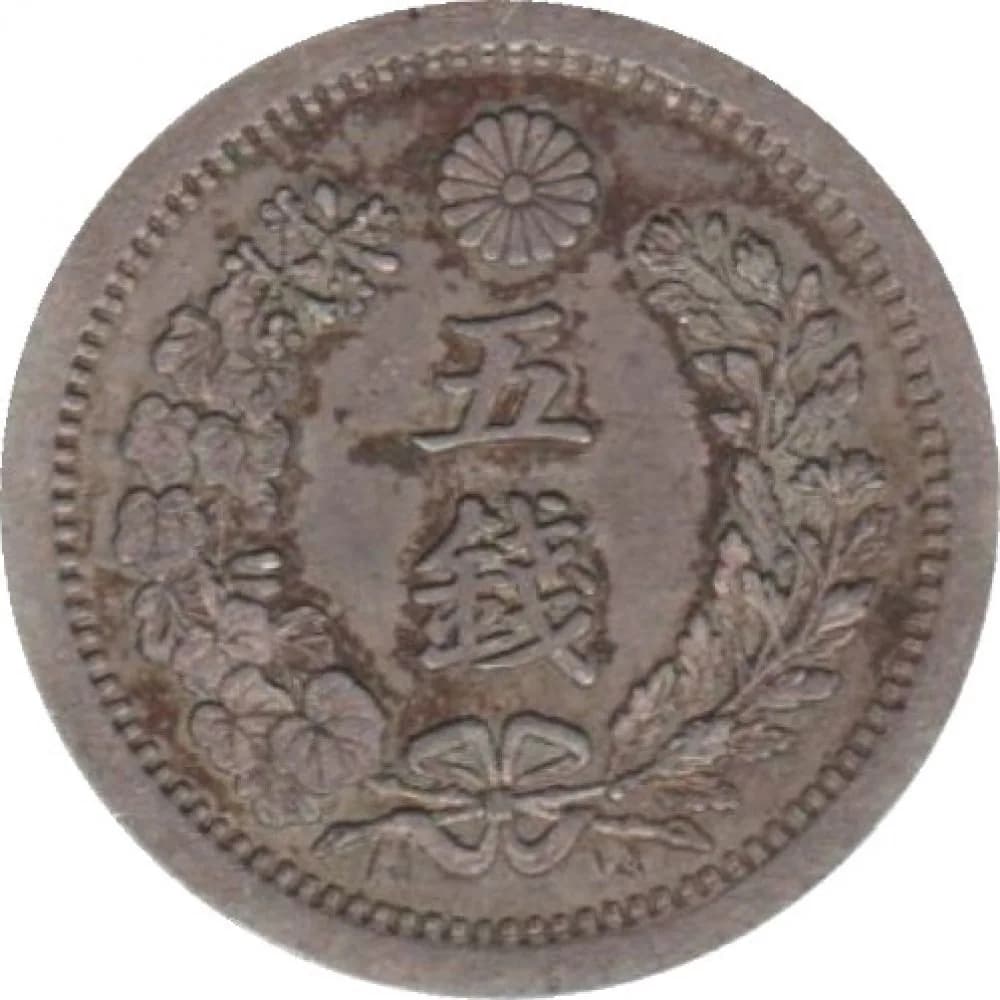
Image: Modern Japanese coinage / Coindesmonnaies / Wikimedia Commons / CC BY-SA 4.0(source)
In early Shōwa, Japan faced rapidly changing global conditions. In 1933 (Shōwa 8), Japan issued the Shōwa 10-sen nickel coin, greatly influenced by the economic backdrop of the time. In the early 1930s, Japan was experiencing economic hardships due to the Great Depression. The departure from the gold standard necessitated stabilizing currency value. Consequently, the government looked to re-evaluate metallic coin materials for economic efficiency. Silver, being expensive, drove the need for a cheaper alternative. Nickel was chosen as a candidate. This material change was not only for economic reasons but also included political intent. Japan was expanding its military at the time, and efficient use of domestic resources for war funding was urgent. The new 10-sen coin was a symbol of this and was closely tied to the national strategy prioritizing military expansion. The issuance of the Shōwa 10-sen nickel coin reflected Japan's economic policies in preparing for war, setting it apart from the Types of Edo Gold Coins and Their Identification of that era.
Minting Process and Technology — Birth of the Nickel Coin
Image: Modern Japanese coinage / Coindesmonnaies / Wikimedia Commons / CC BY-SA 4.0(source)
The minting of the Shōwa 10-sen nickel coin was part of Japan's technological innovation at the time. The minting was done at the Tokyo Mint Bureau, Japan's central facility for coin production since the Meiji era. Technicians faced the challenge of working with nickel, a new material, which was more difficult to process than silver, requiring high-temperature minting. However, its excellent durability and beautiful luster made it suitable for coins. The minting process involved melting nickel ingots at high temperatures, pouring the molten metal into molds to create round cast pieces. These were then rolled to the appropriate thickness and pressed into the shape of a 10-sen coin. Precision in the coin's inscriptions and patterns was essential, highlighting the skills of experienced artisans. The coin's design aimed to inspire confidence among the public. Manufacturing nickel coins was a new challenge for Japanese technicians, and their success laid the foundation for future innovations in coin production. Thus, the Shōwa 10-sen nickel coin symbolized the evolution of Japan's economy and technology, demonstrating technical advancements different from those of the Detailed Study of Keichō Koban.
Circulation and Economic Impact — The Role of the 10-sen
Image: Modern Japanese coinage / Coindesmonnaies / Wikimedia Commons / CC BY-SA 4.0(source)
The Shōwa 10-sen nickel coin quickly circulated nationwide in Japan after its issuance. This coin played a key role in everyday small transactions. In early Shōwa Japan, prices were relatively stable, and the 10-sen was vital in numerous transactions. For instance, newspapers cost about 1 to 2 sen at the time, making the 10-sen coin valuable enough to purchase several items. Its appearance also inspired public trust. However, the outbreak of the Second Sino-Japanese War in 1937 drastically changed the economic situation. The government sought further efficiency in resource use for war funding, with metal resources like nickel prioritized for military needs. Consequently, coin production was restricted, and coins made from aluminum and tin appeared by 1940 (Shōwa 15). The Shōwa 10-sen nickel coin soon disappeared, but its short circulation period undeniably impacted Japan's economic activities. Among the public, there was confusion over the material change in coins and anxiety over wartime price fluctuations. Thus, the Shōwa 10-sen nickel coin vividly narrates changes in Japan's economy, with its economic role differing sharply from that of the Detailed Study of Edo Silver Coins.
Influence and Evaluation in Later Eras — Legacy of the Nickel Coin
Image: Modern Japanese coinage / Coindesmonnaies / Wikimedia Commons / CC BY-SA 4.0(source)
The Shōwa 10-sen nickel coin ceased its role by 1940, but its influence extends to posterity. This coin marks a significant turning point in the history of Japanese currency with its material change. Amidst war-driven allocation of economic resources to military needs, the transition from nickel to tin and aluminum aimed at further cost reduction. This material shift also impacted post-war Japanese currency reforms. Experience gained from the Shōwa 10-sen nickel coin was utilized when a new currency system was introduced amid post-war inflation. In modern times, the Shōwa 10-sen nickel coin holds value as a collector's item. Those in good condition are often traded at high prices in the market. The nickel coin represents the economic challenges Japan faced and the government's responses, earning high historical evaluations. Thus, the Shōwa 10-sen nickel coin is not just a monetary unit but a historical witness reflecting the era's transitions, similar to research on Types and Market of Koban.
Value & Rarity
The Shōwa 10-sen nickel coin enjoys a certain popularity among collectors. Its rarity is highly valued, especially for well-preserved examples. In the market, they typically trade in the price range of 5,000 yen to 30,000 yen depending on condition. Notably, unused items or those without prominent damage tend to fetch higher prices. The coin's value lies beyond its material price, in its historical background and beautiful design. The Shōwa 10-sen nickel coin occupies an important place in modern Japanese coin history, with its material transformation continuously evaluated for its economic and political impact. Recently, the coin attracts attention as a subject of collection and historical research. These elements combine to bestow the Shōwa 10-sen nickel coin with value beyond being merely an old coin. Understanding the Basics of Old Coin Auction is important for collectors in light of this context.
Conclusion
The Shōwa 10-sen nickel coin marks a significant page in Japan's modern history. Its material transformation vividly illustrates the interplay of economy and politics amid a wartime backdrop. Through this coin, one can observe the challenges Japan faced and the responses to them. Even today, its value remains undiminished, continuously drawing attention as a subject of collection and historical research. In this way, the Shōwa 10-sen nickel coin transcends its role as merely currency, maintaining its significance as a historical witness.
Related Stories
60th Anniversary of Local Autonomy Law 500 Yen Bicolor – 10-Year Journey Across 47 Prefectures
Commemorative Coin Series Born from the Law of 1947
Coin StoryFormer 20-Yen Gold Coin (Meiji 3) — The Highest-Denomination Gold Coin That Stamped Modern Japan's 'Gold Standard'
The Story of the New Currency Regulations and the Osaka Mint Born from the Scars of the Boshin War, and the Enigmatic Meiji 3 Issue
Coin StoryNagano Olympic Commemorative 500 Yen — The Winter Festival and Five Cupronickel Coins in 1998
Japan's First Sport-Specific 500 Yen Coin Series Born from the 1998 Nagano Olympics
Dealers
Dealers Handling This Category
A reference when considering a sale or appraisal. All are dealers and auction houses with a proven track record.
Ginza Coins
Ginza, Chuo-ku, Tokyo
One of Japan's most established numismatic dealers. The scale and variety of their regular auctions is among the largest in the country. Their catalogs are considered a benchmark for market pricing.
Taisei Coins
Tokyo
A dealer with an international network. Offers advanced services such as consignment to overseas auctions and NGC/PCGS grading submission. Recommended for high-value or internationally recognized coins.
Tokyo Coin Club
Tokyo
A membership-based coin dealer known for carefully selected, quality inventory.