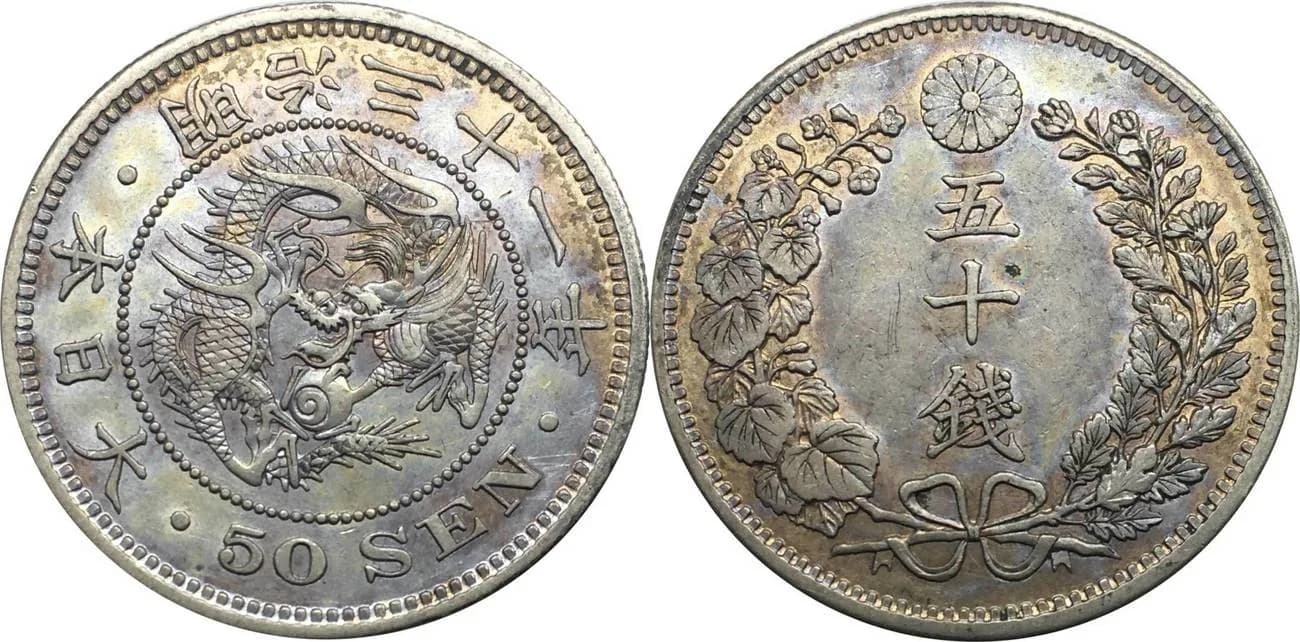
Image: Modern Japanese coinage / The government of the Empire of Japan. / Wikimedia Commons / Public domain(source)
Kōchō Jūnisen — The Dream and Reality of the Ritsuryō State
The Rise and Fall of an Ancient State Over 250 Years of History
Subject coin: 皇朝十二銭
Overview
The story of the Kōchō Jūnisen, which begins in 708 with the detailed explanation of Wadōkaichin, is precisely about the rise and fall of ancient Japan. From Wadōkaichin to Kengen Taihō, twelve types of coins were minted over 250 years. These coins symbolize Japan's attempt to introduce a currency economy for the first time. As the Ritsuryō system was established, coins were minted to strengthen the economic foundation, but their purpose became increasingly complex. Particularly, the influx of Chinese coins contributed to the decline of ancient coins, ultimately concluding with the Kengen Taihō. Of the twelve types, mainly those from the early period have survived, while those from the later period are extremely rare. By touching on the overview and charm of ancient coins, one can understand their value and rarity.
Specifications
- Denomination
- 1銭(諸説あり)
- Minting period
- 708年〜958年
- Metal composition
- 銅(主成分)
- Weight
- 不詳(諸説あり)
- Dimensions
- 直径約24mm(諸説あり)
- Mintage
- 不詳(諸説あり)
- Mint supervisor
- 不詳(国家主導)
- Market price
- 数万円〜数百万円(状態・種類による)
Chapter 1: Wadōkaichin — The Beginning of a Dream
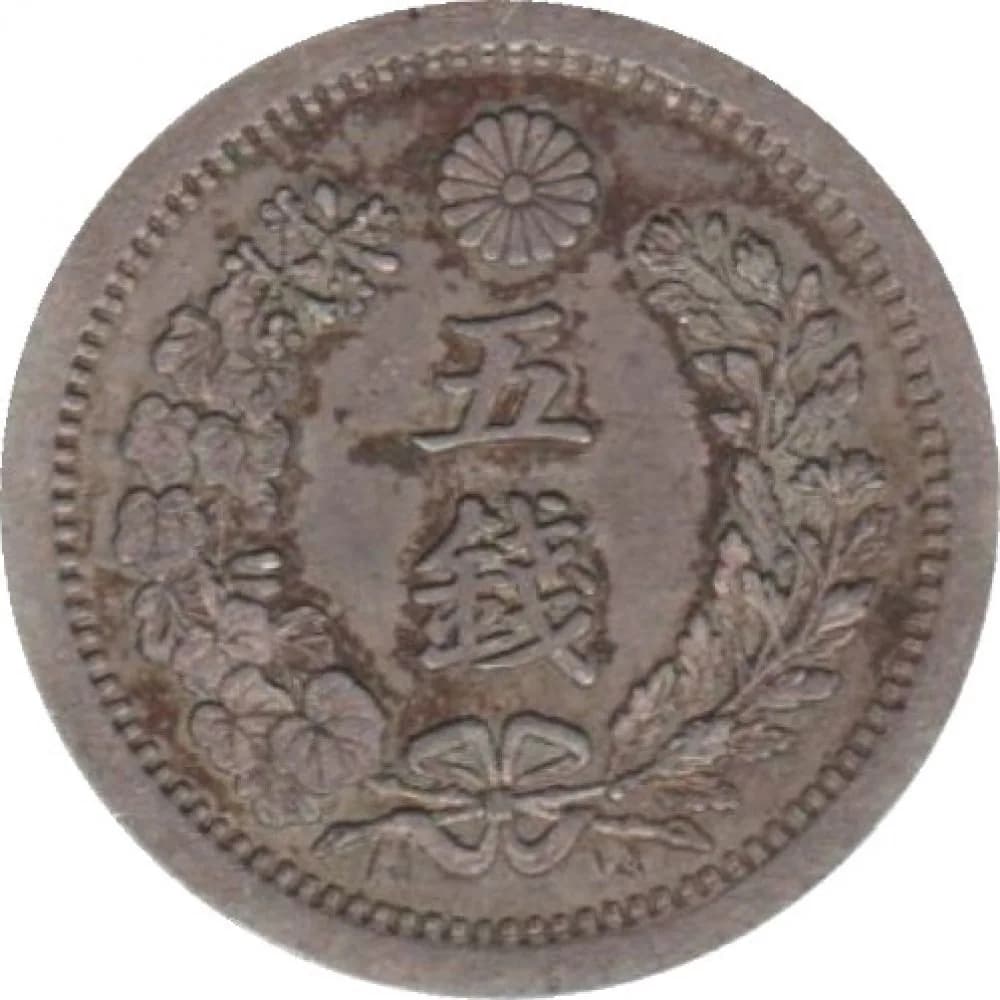
Image: Modern Japanese coinage / Coindesmonnaies / Wikimedia Commons / CC BY-SA 4.0(source)
In 708, during the reign of Empress Genmei, Wadōkaichin was minted. This was a groundbreaking attempt aimed at establishing a monetary system by the state. Nara-period Japan aimed to model itself as a centralized state after China’s Tang dynasty, and the introduction of a monetary economy was part of this effort. The minting of Wadōkaichin was carried out by the Mint Bureau established in Yamashiro Province (now Kyoto Prefecture), where contemporary craftsmen painstakingly created each piece using copper-based alloy. Initially, an exchange rate was set, where 100 coins could purchase one koku (approximately 150 liters) of rice. This was expected to promote a shift from a barter economy to a currency economy. However, in reality, circulation was limited, and acceptance among the common people did not advance. Nevertheless, this attempt was an important step in ancient Japan's economic policy and laid the foundation for the subsequent Kōchō Jūnisen. Wadōkaichin was a symbol of national prestige and simultaneously demonstrated its ambitions and limitations. Considering the circumstances of the times, the Kōchō Jūnisen was more than mere coins; it was an entity reflecting the challenges of the era. Understanding why the Kōchō Jūnisen was necessary between 708 and 958 deepens the weight felt in each piece.
Chapter 2: The Technology of Minting and Its Evolution
Image: Modern Japanese coinage / Coindesmonnaies / Wikimedia Commons / CC BY-SA 4.0(source)
The minting of Kōchō Jūnisen evolved technologically over time. In the initial minting of Wadōkaichin, copper-based alloys were used, but as time progressed, copper shortages became severe. Especially by the mid-Nara period, alloys mixed with lead or zinc started to be used instead of copper. This was due to the depletion of copper mines and the impact of the influx of Chinese coins. At the Mint Bureau established near the Heijō Palace ruins in Nara City, skilled artisans continued to seek more efficient minting methods. They tried to enhance the coins' value by improving molds and applying more intricate designs. Under the Ritsuryō system, this minting process progressed as part of national economic policy, and the political intentions of each era were strongly reflected. Inflationary policies, such as setting the face value ten times that of the previous coins for each minting, were unique attempts of this era. However, whether such policies were sustainable in the long term is questionable. The traces of handiwork left on the construction of Kōchō Jūnisen provide crucial clues for determining authenticity and lineage in modern appraisal.
Chapter 3: Circulation and Its Impact
Image: Modern Japanese coinage / Coindesmonnaies / Wikimedia Commons / CC BY-SA 4.0(source)
The minting of Kōchō Jūnisen theoretically should have permeated the currency economy throughout Japan. However, their actual circulation was limited, and bartering remained prevalent, especially in rural areas. From the late Nara period to the Heian period, even when observing major trade routes in Japan, there are few traces showing that these coins were actually used. In urban areas, there was a certain amount of circulation, but for rural commoners, the Kōchō Jūnisen held only 'value as tax.' Exchange rates were unstable, with the price of a koku of rice varying significantly by region, and the coin's value sometimes fluctuated abruptly. As a result, distrust in using coins grew among commoners. Furthermore, due to the influx of Chinese coins, the value of the Kōchō Jūnisen decreased relatively, and their circulation decreased. This highlighted the vulnerability of the monetary system, coinciding with the decline of the Ritsuryō state. The movement of Kōchō Jūnisen in the market was intimately tied to the lives and prices of the time, providing clues to understanding monetary history. How the Kōchō Jūnisen was received or shunned itself tells the economic reality of the times.
Chapter 4: Subsequent Impact and Evaluation
Image: Modern Japanese coinage / Coindesmonnaies / Wikimedia Commons / CC BY-SA 4.0(source)
The Kengen Taihō was minted in 958, marking the end of Kōchō Jūnisen. With the collapse of the Ritsuryō system, the state’s ability to supply coins reached its limit. After Kengen Taihō, Japan's economy was supported by imported coins from China and privately minted coins. The impact of the monetary policies from this era extended to the currency system of the Edo period. In particular, the importance of state-supplied currency was re-evaluated in the details of the Keichō Koban of the Edo period. Even today, Kōchō Jūnisen is indispensable in discussing Japan's monetary history, with its rarity leading to high trade values among antique coin collectors. Especially late-period coins are extremely rare and hold very high value. These coins are valued not just as simple money but as important cultural heritage that tells the history and culture of Japan. Looking back from later generations, the influence left by Kōchō Jūnisen quietly persists in the history of subsequent coins and collecting. Considering how Kōchō Jūnisen is evaluated in the modern market leads to cultivating an eye for both history and market value.
Value & Rarity
Kōchō Jūnisen holds extremely high value among collectors. Especially coins minted in the later period have few surviving specimens, and they can fetch prices as high as several million yen. These coins are regarded as important cultural heritage narrating the history of ancient Japan, beyond their value as mere old coins. Market prices vary greatly depending on the condition and type, so understanding the basic knowledge of coin auctions is important. Additionally, since many counterfeits exist, learning how to differentiate between fakes and modified pieces is essential. Kōchō Jūnisen carries timeless value, but understanding their historical significance further deepens their allure.
Conclusion
Kōchō Jūnisen represents an important legacy symbolizing the attempt by Japan’s ancient state to introduce a monetary economy. From the Wadōkaichin in 708 to the Kengen Taihō in 958, its 250-year history narrates the shifts in political intent and economic policy. Its failure serves as a lesson on monetary systems, influencing eras like the Edo period and even modern times. Learning from the story of Kōchō Jūnisen provides many insights into how Japan built and failed in its economic systems. For antique coin collectors, its rarity and historical significance are attractive, and it is highly valued in the trading market. Understanding Japan's monetary history makes Kōchō Jūnisen an indispensable chapter.
Related Stories
Kan'ei Tsūhō — "Japan's Longest-Lived Coin" in Circulation for 230 Years
The history of the hole coin that continued to be used from the unification of Edo coinage in Kan'ei 13 (1636) to Meiji
Coin StoryChōsen Tsūhō — The Mission of the Imported Coin that Filled 600 Years of Coin Blank in Japan
From the Muromachi to Sengoku Period, the Foreign Copper Coin that Crossed the Sea and Moved the Japanese Market
Coin StoryTenpō Tsūhō — The Ambition and Forgery Storm of 'Tōhyaku Sen' Created by Financial Crisis
The Elliptical Coin Born from Famine and Financial Struggle in Late Edo Period, A Tumultuous 40 Years and Its End
Series
Ancient Japanese Coins Tour
Part 4 of 5 in this series
- 1CoinpediaIntroduction to Ancient Coinage
- 2Coin StoryWadōkaichin — Empress Genmei's Monetary Revolution
- 3CoinpediaWado Kaichin
- 4Coin StoryKōchō Jūnisen — The Dream and Reality of the Ritsuryō State
- 5CoinpediaImperial Court Twelve Coins
Dealers
Dealers Handling This Category
A reference when considering a sale or appraisal. All are dealers and auction houses with a proven track record.
Japan Coin Auction (JCA)
Tokyo
Holds regular auctions with reliable hammer price data, making it a useful resource for tracking market values. Caters to a wide range of collectors from beginners to advanced buyers.
Ginza Coins
Ginza, Chuo-ku, Tokyo
One of Japan's most established numismatic dealers. The scale and variety of their regular auctions is among the largest in the country. Their catalogs are considered a benchmark for market pricing.