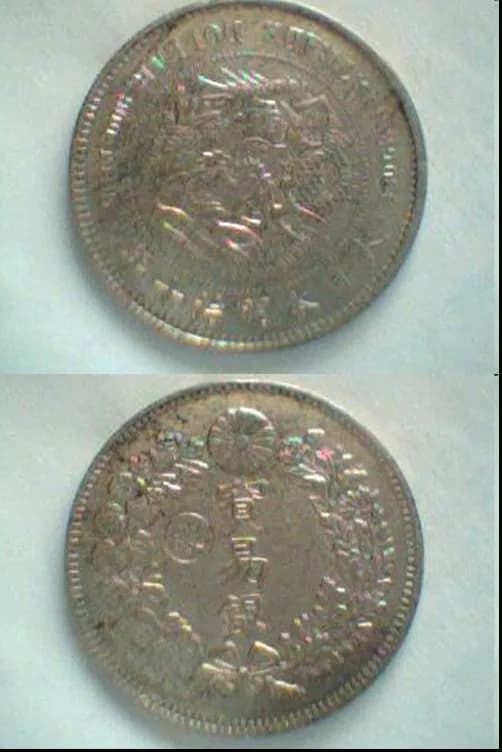
Image: Modern Japanese coinage / photographed by Samuel Ho / Wikimedia Commons / CC BY-SA 3.0(source)
Kyoto-Minted Kan'ei Tsūhō — The Hidden Brilliance of the Capital Intertwined with the Court and Samurai
The historical thread woven by Kan'ei Tsūhō minted in Kyoto
Subject coin: 京都鋳寛永通宝
Overview
Kyoto-minted Kan'ei Tsūhō played a significant role in Japan's economy from the early Edo period to the end of the Edo period. In Kan'ei 13 (1636), during the shogunate's initiative to consolidate the currency system, mints were established nationwide, one of which was in Kyoto. The Kyoto mint, located around Saga and Fushimi, connected the economies of the imperial court (kuge) and the samurai. Kyoto's Kan'ei Tsūhō features diverse script styles, requiring specialized knowledge for identification. Records indicate these coins were used in trading Kyoto's traditional crafts like Nishijin textiles and Kiyomizu pottery. The mint's intermittent operation until the end of the Edo period reflects the economic shifts in the region. Considering their historical context, these coins represent more than just currency, deeply involving the social and economic dynamics of their time.
Specifications
- Denomination
- 寛永通宝
- Minting period
- 1636年〜1860年
- Metal composition
- 銅
- Weight
- 約3.5g(諸説あり)
- Dimensions
- 直径約24mm
- Mintage
- 不詳(諸説あり)
- Mint supervisor
- 不詳
- Market price
- 1,000円〜10,000円(状態により)
Chapter 1: The Background of Coinage — In a Changing Era
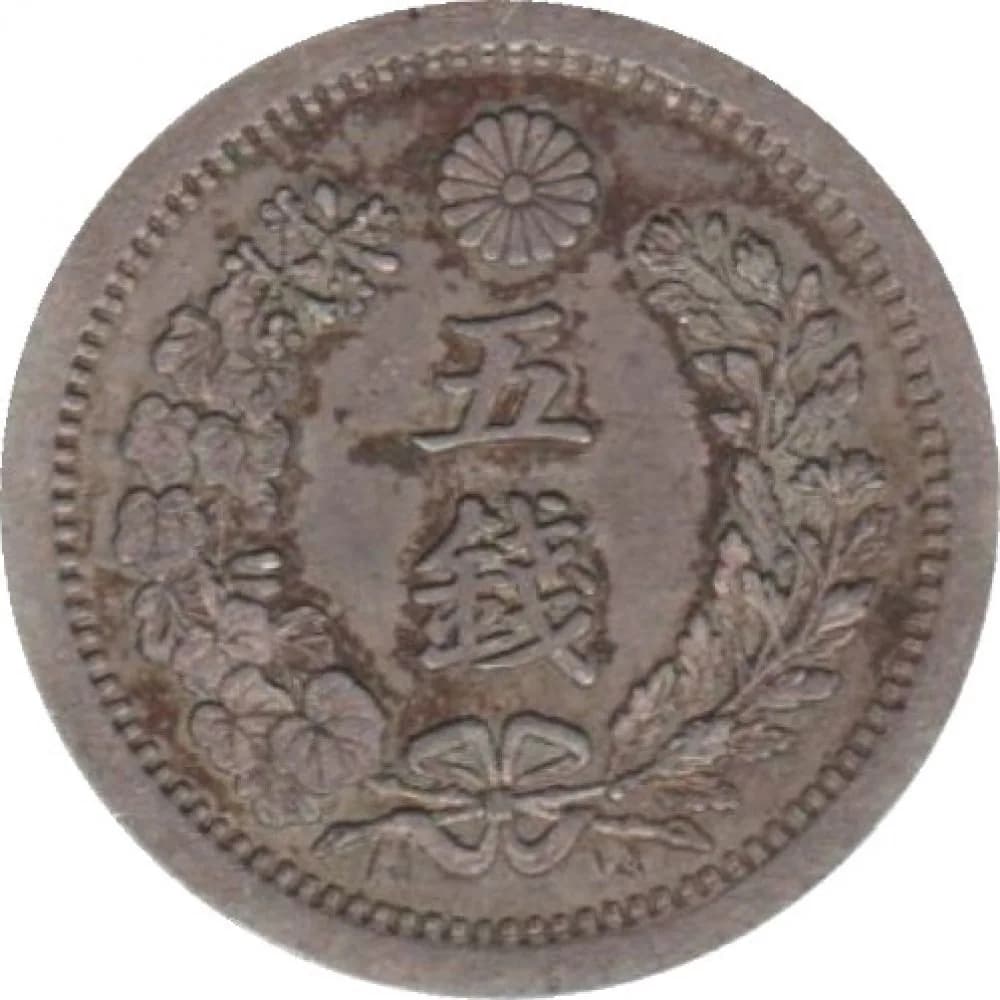
Image: Modern Japanese coinage / Coindesmonnaies / Wikimedia Commons / CC BY-SA 4.0(source)
In Kan'ei 13 (1636), under the rule of Tokugawa Iemitsu, the minting of Kan'ei Tsūhō began in Kyoto. At this time, the Edo shogunate prioritized establishing a nationwide currency system. The Kyoto mint was established around Saga and Fushimi, employing numerous craftsmen for minting. Under shogunate orders, primarily copper Kan'ei Tsūhō was minted here and circulated nationwide. This currency introduction aimed to stabilize society by linking the samurai and kuge economies. Kyoto, while retaining its Heian era legacy, functioned as a political and economic center. Especially popular among the kuge, Kan'ei Tsūhō minted here was widely used in the trade of traditional industries like Nishijin textiles and Kiyomizu pottery. The introduction of Kan'ei Tsūhō invigorated economic activities, providing new business opportunities for merchants. This policy, following the introduction of silver coins in Genna 3 (1617), accelerated the establishment of a currency economy. The Kan'ei Tsūhō, with its background, is closely tied to Kyoto's history.
Chapter 2: Coining Process and Techniques — The Craftsmen's Skill
Image: Modern Japanese coinage / Coindesmonnaies / Wikimedia Commons / CC BY-SA 4.0(source)
The coinage of Kan'ei Tsūhō at the Saga and Fushimi mints represented the technological standard of the time. The mints utilized casting methods where copper was melted at high temperatures and poured into molds. These molds were made from wood patterns engraved with intricate designs, with craftsmen striving for precision and durability. The coin's surface had the inscription '寛永通宝,' while the reverse was stamped with seals indicating the minting location. Kyoto-made coins utilized diverse script styles, requiring expertise for identification. Styles like 'comb shape' and 'octagonal' indicated production at different mints. Numerous craftsmen engaged in this work, their skill highly valued. Cutting-edge technology of the time ensured the quality of Kan'ei Tsūhō, with copper sourced from local mines like Tanba and Tajima, selected for meeting strict standards. This maintained coin durability and reliability, facilitating economic activities. Alongside technological advances, minting efficiency was improved, making Kyoto mints a core of Japan’s currency system. The Saga and Fushimi mints operated intermittently until the end of the Edo period, undergoing various trials and improvements. Techniques and operations evolved with the times, as craftsmen continually honed their skills to adapt to changes.
Chapter 3: Economy and Populace — Circulation and Impact of Kan'ei Tsūhō
Image: Modern Japanese coinage / Coindesmonnaies / Wikimedia Commons / CC BY-SA 4.0(source)
Kan'ei Tsūhō circulated not only in Kyoto but nationwide, forming the foundation of the Edo period economy. In Kyoto particularly, it became indispensable for merchants trading in unique industries like Nishijin textiles and Kiyomizu pottery. Nishijin textiles, known for their luxurious silk fabrics, were a key Kyoto industry since the Sengoku period, using large amounts of Kan'ei Tsūhō in trade. Similarly, Kiyomizu pottery developed throughout the Edo period, with growing domestic and international demand. Kan'ei Tsūhō stabilized prices and invigorated economic activity, such as purchasing a bale of rice for a kanmon of Kan'ei Tsūhō, enabling smoother transactions. Merchants used the coins to enhance capital fluidity and expand market areas. For common people, Kan'ei Tsūhō was widely accepted in daily life, aiding their economic endeavors. Market transactions with Kan'ei Tsūhō improved economic efficiency, contributing to local social development in Kyoto. The Kyoto mint, established around Saga and Fushimi, operated intermittently until the end of the Edo period, with records showing its diverse script needing specialized knowledge for Kyoto-specific identification. The currency economy's penetration directly impacted the populace's lives, enhancing their purchasing power. Thus, Kan'ei Tsūhō functioned as a nexus between imperial and samurai economies, profoundly affecting Kyoto's socio-economic landscape.
Chapter 4: Influence on Posterity — Recasting and Modern Evaluation
Image: Modern Japanese coinage / Coindesmonnaies / Wikimedia Commons / CC BY-SA 4.0(source)
Until the end of the Edo period, Kyoto’s mints continued coining, producing numerous Kan'ei Tsūhō. Located around Saga and Fushimi, these mints operated intermittently throughout the Edo period. Particularly significant were Kan'ei Tsūhō minted in Kyoto, serving as points of contact between imperial and samurai economies and playing crucial roles in commerce. This coin was essential in trading traditional Kyoto industries like Nishijin textiles and Kiyomizu pottery. During the Meiji Restoration, the currency system reached a turning point. The new government introduced Western-style currency, leading to the gradual obsolescence of old coins. However, due to its historic value, Kan'ei Tsūhō continues to be highly regarded among collectors and researchers. Today, its diverse script styles and minting locations acknowledge its rarity, making it a popular collectible. Especially those minted in Kyoto receive individual evaluations for their script and minting technology differences. Kyoto-made Kan'ei Tsūhō require specialized knowledge due to each mint's unique script. Kan'ei Tsūhō’s influence on subsequent currency system organization places it importantly in Japan's monetary history. Despite many being recast, existing varieties are valuable research subjects for their diversity. When reflecting on Japan's currency past, Kan'ei Tsūhō remains an essential element, its historical significance widely recognized.
Value & Rarity
The market value of Kan'ei Tsūhō varies significantly by condition, mint location, and script style. Especially those minted in Kyoto are popular among collectors for their script diversity. The Kyoto mints, around Saga and Fushimi, produce coins considered particularly rare. Well-preserved coins usually trade for 1,000 to 10,000 yen, but rare scripts or exceptionally preserved pieces may fetch higher prices. Examples with specific scripts or limited production times can trade for tens of thousands of yen. Auctions frequently offer opportunities to acquire these rare coins as they attract collectors for their historical and cultural significance. Kyoto-minted Kan'ei Tsūhō, used in trading Kyoto's industries like Nishijin textiles and Kiyomizu pottery, with several mints operating intermittently until the end of the Edo era, adds cultural significance beyond monetary value, earning high collector interest.
Conclusion
Kyoto-minted Kan'ei Tsūhō holds an important position in Japan's currency history, intricately tied to historical and economic activities. Throughout the Edo period, these coins facilitated commerce by linking imperial and samurai economies, ensuring smooth transactions. Today, their historical value is re-evaluated, especially Kyoto-minted coins for their script diversity, making them attractive to collectors, continuing to garner research and collection interest. As more than mere currency, Kan'ei Tsūhō serves as a vital cultural heritage narrating history. Engaging with history can deepen understanding of the modern currency system through past lifestyles and economic activities.
Related Stories
Bunkyū Eihō — Tracing the History of Ansen
The last Ansen of the late Edo period. The 4-mon coin minted in Bunkyū 3 began circulating just shy of two years before the Meiji Restoration.
Coin StoryChikusen Jowi no Rei — An Ancient Japanese Attempt to Spread Currency
Wadō 4 (711): An Unprecedented System to Promote Currency Use
Coin StoryNaga-nen Taihō — Tracing the History of Ancient Coinage
The 7th coin of the Kōchō jūni-sen, issued in Shōwa 15 (848) during the reign of Emperor Ninmyō. From this time, the gap between the actual and nominal value of coins became serious.
Dealers
Dealers Handling This Category
A reference when considering a sale or appraisal. All are dealers and auction houses with a proven track record.
Japan Coin Auction (JCA)
Tokyo
Holds regular auctions with reliable hammer price data, making it a useful resource for tracking market values. Caters to a wide range of collectors from beginners to advanced buyers.
Osaka Numismatic Auction
Osaka
A Kansai-based coin auction house with particular strength in regional and hole coins.
Ginza Coins
Ginza, Chuo-ku, Tokyo
One of Japan's most established numismatic dealers. The scale and variety of their regular auctions is among the largest in the country. Their catalogs are considered a benchmark for market pricing.