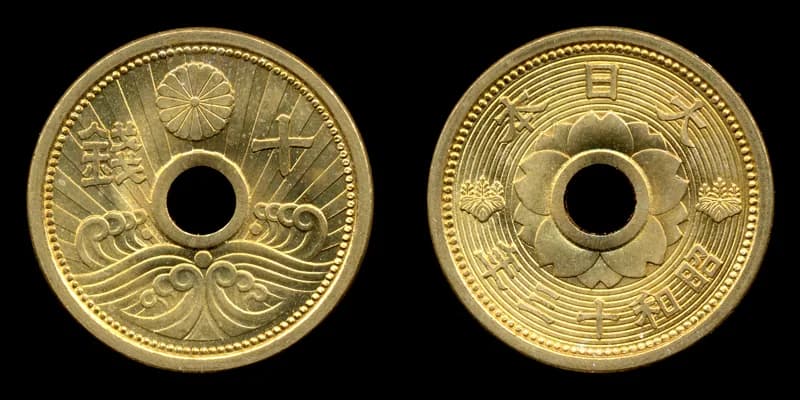
Image: Modern Japanese coinage / As6673 / Wikimedia Commons / CC BY-SA 3.0(source)
Kyōhō Koban — The High-Purity Gold Coin Born of Yoshimune's Reforms
The Elusive Koban That Shone During the Kyōhō Reform Era
Subject coin: 享保小判
Overview
Tokugawa Yoshimune, the eighth shōgun, who carried out the Kyōhō Reforms, minted the Kyōhō Koban (享保小判) as part of his effort to rebuild the shogunate's finances. Compared with the preceding Genroku Koban, Yoshimune dramatically raised the gold purity in order to restore confidence in the currency. Minting began in 1715 (per catalogue records), with a gold purity of approximately 87% (per catalogue records) and a weight of approximately 18 g (per catalogue records), making it lighter than the Keichō Koban (慶長小判). This was an important measure taken as part of the reforms to recover economic stability and credibility. Yoshimune's policies are regarded as an attempt to rebuild trust in coinage during the Edo period. The Kyōhō Koban survives in very small numbers and is treated as a highly premium item in the collector's market. It stands as a particularly notable presence among Edo-period gold coins, and its historical significance has not faded to this day.
Specifications
- Denomination
- 1両
- Minting period
- 1715年〜元文元年(1736年)(図録: 鋳造開始1715年)
- Metal composition
- 金86.0% / 銀14.0%
- Weight
- 約18g(日本銀行所蔵標本の実測 17.70〜17.75g)
- Dimensions
- 縦約43mm × 横約26mm
- Mintage
- 不詳(諸説あり)
- Mint supervisor
- 後藤家(金座)
- Market price
- 照合済みの落札記録が揃うまで提示しません
Chapter 1: The Emergence of Yoshimune and the Kyōhō Reforms
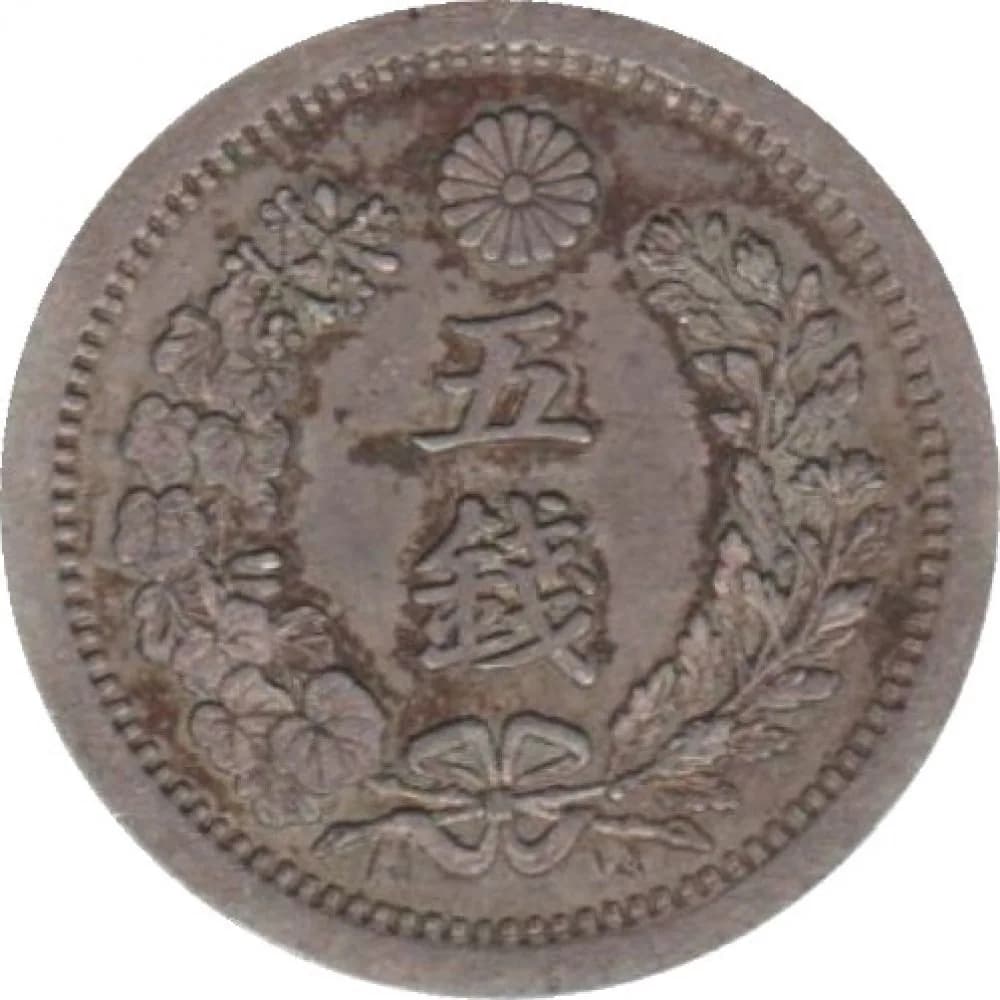
Image: Modern Japanese coinage / Coindesmonnaies / Wikimedia Commons / CC BY-SA 4.0(source)
The Kyōhō Reforms were a series of policy changes introduced by the eighth shōgun, Tokugawa Yoshimune, aimed at rebuilding the shogunate's finances and overhauling its administration. Yoshimune assumed the position of shōgun in Kyōhō 1 (1716). At the time, the shogunate's finances were strained, and the deterioration of coinage quality that had continued since the Genroku era was cited as one of the causes. Yoshimune addressed this by identifying the restoration of monetary credibility as a critical task. As part of its currency reform, the shogunate began minting the Kyōhō Koban (minting commenced in 1715, per catalogue records). Yoshimune resolved to maintain this high-purity approach, raising the gold content dramatically from 56.4% in the Genroku Koban to 86.0%. Despite encountering considerable opposition, this reform was an important step toward recovering the shogunate's credibility and achieving economic stability. Yoshimune entrusted this mission in particular to the Gotō family of the gold mint (kinza), receiving their technical support for the minting process. Through this process, the currency policy of Edo underwent a major shift, forming the foundation for promoting the soundness of the economy. The monetary policy arising from the Kyōhō Reforms occupies an important place in the economic history of the Edo period. Within the reforms, Yoshimune pursued fiscal austerity, seeking to promote economic soundness by eliminating waste. The Kyōhō Koban is a symbol of this era, and its high gold purity continues to attract attention in historical research to this day.
Chapter 2: The Minting of the Kyōhō Koban and Technological Innovation
Image: Modern Japanese coinage / Coindesmonnaies / Wikimedia Commons / CC BY-SA 4.0(source)
The minting of the Kyōhō Koban was led by the Edo shogunate's gold mint. The Gotō family, entrusted with running the mint, drew upon traditional casting techniques while also taking on new technological innovations to raise the purity of the gold. Minting of the Kyōhō Koban began in 1715 (per catalogue records) and served as the centerpiece of the shogunate's currency policy. The gold purity of this koban was 86.0%, a dramatic increase from the Genroku Koban's 56.4%. This achievement was realized through the efforts of craftsmen including Gotō Shōzaburō of the gold mint. The gold mint was situated at the heart of Edo, and the koban minted there symbolized the shogunate's authority. Technological innovations included optimizing the alloy composition of gold and silver and introducing new assay techniques to guarantee gold purity. This necessitated technical trial and error, with numerous experiments repeated. The minting of the Kyōhō Koban was also dependent on the production capacity of the Sado gold mines, the source of its gold supply. Yoshimune advanced the efficiency of the gold mines and put forward policies to secure a stable supply of gold. Against this backdrop, the Kyōhō Koban played an important role in restoring the shogunate's credibility and stabilizing the economy. The integration of minting technology innovation with economic policy marked a significant turning point. The Kyōhō Koban was the fruit of the craftsmen's efforts and Yoshimune's policies combined, and its significance in the economic history of the Edo period is immeasurable.
Chapter 3: Circulation and Its Impact on the Economy
Image: Modern Japanese coinage / Coindesmonnaies / Wikimedia Commons / CC BY-SA 4.0(source)
The appearance of the Kyōhō Koban had a major impact on the economy of the Edo period. From 1715 (per catalogue records), when minting began, the high gold purity meant the koban regained credibility in the market and contributed to stabilizing commercial transactions. In the marketplace, the Kyōhō Koban was quickly accepted as a currency of high value, and it is said that its high purity also brought exchange rates into greater stability. Price stability was an important concern in the town of Edo at the time, but the circulation of the Kyōhō Koban caused the relative value of currency to rise, and it had the effect of curbing rapid price inflation. The circulation of the Kyōhō Koban was extremely important for merchants and farmers alike, functioning as a fair medium of exchange in everyday commercial transactions and in the buying and selling of agricultural produce. In rural areas in particular, the penetration of the monetary economy advanced and the move away from barter trade was accelerated. Because of its high gold purity, the Kyōhō Koban was also used as a means of saving, and its value as an asset was recognized. Against this backdrop, the Kyōhō Koban is recorded in history as an important currency that supported the economic foundation of the Edo period. The circulation of the Kyōhō Koban advanced the stabilization of the shogunate's finances and raised the overall credibility of the economy, bringing a sense of reassurance to the common people of the time as well.
Chapter 4: Influence on Later Ages and Historical Assessment
Image: Modern Japanese coinage / Coindesmonnaies / Wikimedia Commons / CC BY-SA 4.0(source)
The Kyōhō Koban continued to exert important influence throughout Japan's subsequent monetary history. The minting of high-purity koban that Yoshimune implemented through the Kyōhō Reforms restored confidence in the currency and served as a guiding principle for the shogunate's subsequent economic policies. The existence of the Kyōhō Koban was used as a benchmark in later recoinages and the minting of new currencies, influencing the evolution of the monetary system through to, for example, the Man'en Koban (万延小判) of the late Edo period. Even when compared with later coins, the Kyōhō Koban boasts a high gold purity, making it an extremely valuable object for collectors. Surviving examples of the Kyōhō Koban are very few in number, and this rarity has generated premium value in the market. Assessment of the Kyōhō Koban is high not only as a gold coin in terms of its intrinsic value, but also as a historical document illustrating the economic policies and social impacts of the Edo period. Even today, the Kyōhō Koban is a particularly noteworthy item in auction settings, and its value is expected to continue rising. The Kyōhō Koban is an indispensable presence for understanding the changes in the Edo-period monetary system, and its historical significance continues to be explored by many researchers and collectors to this day.
Value & Rarity
The Kyōhō Koban is considered extremely valuable in today's collector's market owing to its high gold purity and rarity. Transaction prices in the market reach from several million yen to 10,000,000 yen, with prices varying according to condition and historical background. Pieces in particularly fine condition that retain traces of the original minting are frequently traded at even higher prices. For collectors and investors in the Kyōhō Koban, its rarity is an attractive feature, and combined with its historical value it is often placed at the center of collections. The value of this koban goes beyond the mere value of its gold, carrying significance as evidence of the Edo period's currency policy. The Kyōhō Koban is a symbol of Yoshimune's reforms, and it is also an object that requires particular care in identifying counterfeits and altered pieces. In the collector's market, detailed appraisals are conducted to verify originality, and the coin is evaluated together with its historical value. The market value of the Kyōhō Koban may rise further in the future as a result of ongoing historical research and new discoveries. Its importance in the economic history of the Edo period continues to captivate many people to this day.
Conclusion
The Kyōhō Koban played an important role in the monetary system of the Edo period as a symbol of the Kyōhō Reforms undertaken by Tokugawa Yoshimune. This koban, which restored credibility through its high gold purity, contributed to the stabilization of the shogunate's finances and brought stability to the economy. The historical significance of the Kyōhō Koban goes beyond its value as a mere currency; it is important evidence that tells the story of Edo-period economic policy and social transformation. Even today, its rarity and historical background mean it remains a precious subject of study for collectors and researchers alike. The existence of the Kyōhō Koban forms an important chapter in Japan's monetary history, and its value will not fade in the future but will be passed on to generations to come. What we learn through the Kyōhō Koban is the role of currency throughout history and the policies and social movements that lie behind it. We are called upon to continue rediscovering its value and conveying it to the next generation.
Related Stories
Ansei Chōgin — The Final Edo Era Silver Bullion Coin amidst the Turbulence of the Bakumatsu
A Short-lived yet Historical Silver Bullion Created Amidst the Turmoil of Opening Japan
Coin StoryAnsei Nibus Gin — A Silver Coin Born Amidst Port Opening and Fiscal Crisis
The Role of Subsidiary Silver Coins Issued in the Turbulent Closing Years of the Edo Period
Coin StoryBunkyū Eiho and the End of the Gold Coin System — Tracing the History of Edo Gold Coins
Bunkyū 2 (1862) marks the final currency reform of the shogunate, with a gold coin series issued alongside the Bunkyū Eiho (copper coins) as a symbol of late shogunate monetary chaos
Related Encyclopedia Entries
System and Overview of Edo Gold Coins
Conclusion: Edo gold coins are a stable and attractive investment/collection target, combining historical background, intrinsic gold value, and collector's premium.
EncyclopediaTypes and Evolution of Koban
Conclusion: Koban reflects the transitions of the Edo economy; understanding each type's characteristics and market value is crucial for purposeful collection and investment strategies.
EncyclopediaKeicho Koban
Conclusion: Keicho Koban is the first high-purity gold coin of the Edo Shogunate, representing the pinnacle of collection with both historical value and investment appeal.
Dealers
Dealers Handling This Category
A reference when considering a sale or appraisal. All are dealers and auction houses with a proven track record.
Ginza Coins
Ginza, Chuo-ku, Tokyo
One of Japan's most established numismatic dealers. The scale and variety of their regular auctions is among the largest in the country. Their catalogs are considered a benchmark for market pricing.
Japan Coin Auction (JCA)
Tokyo
Holds regular auctions with reliable hammer price data, making it a useful resource for tracking market values. Caters to a wide range of collectors from beginners to advanced buyers.
Taisei Coins
Tokyo
A dealer with an international network. Offers advanced services such as consignment to overseas auctions and NGC/PCGS grading submission. Recommended for high-value or internationally recognized coins.