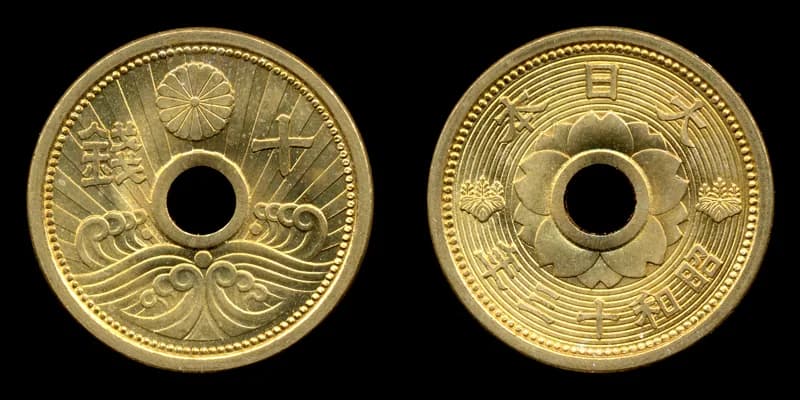
Image: Modern Japanese coinage / As6673 / Wikimedia Commons / CC BY-SA 3.0(source)
Keichō Ōban — The Golden Symbol of the Edo Shogunate's Prestige
Not circulated, displayed, and gifted: The 'National Treasure-grade Gold Ingot'
Subject coin: 慶長大判
Overview
The Keichō Ōban (慶長大判) is a coin that symbolizes the prestige of the Edo Shogunate, established in the early Edo period. Minting of this gold coin began in Keichō 6 (1601), designed by Gotō Shōzaburō Mitsutsugu. Weighing approximately 165 grams with a gold purity of about 67%, there are differing opinions on its specifications. The Ōban was not used in regular circulation but played an essential role as a reward from the shogun to daimyo and as a gift during the sankin-kōtai process. Although production continued until the end of the Edo period, their numbers were highly limited, making existing specimens extremely rare and considered National Treasure-grade. Often compared to the Keichō Koban (details), unlike the Koban intended for circulation, the Ōban held a stronger symbolic representation of power. Thus, the Keichō Ōban occupies a unique place in Japan's monetary history.
Specifications
- Denomination
- 10両相当
- Minting period
- 慶長6年〜元禄8年(1601-1695年)
- Metal composition
- 金純度67%程度(諸説あり)
- Weight
- 約165g
- Dimensions
- 縦約174mm × 横約103mm
- Mintage
- 不詳(諸説あり)
- Mint supervisor
- 後藤庄三郎光次
- Market price
- 現在の相場:数千万円以上(状態による)
Chapter 1: Monetary Reforms in Early Edo Period — The Birth of Keichō Ōban
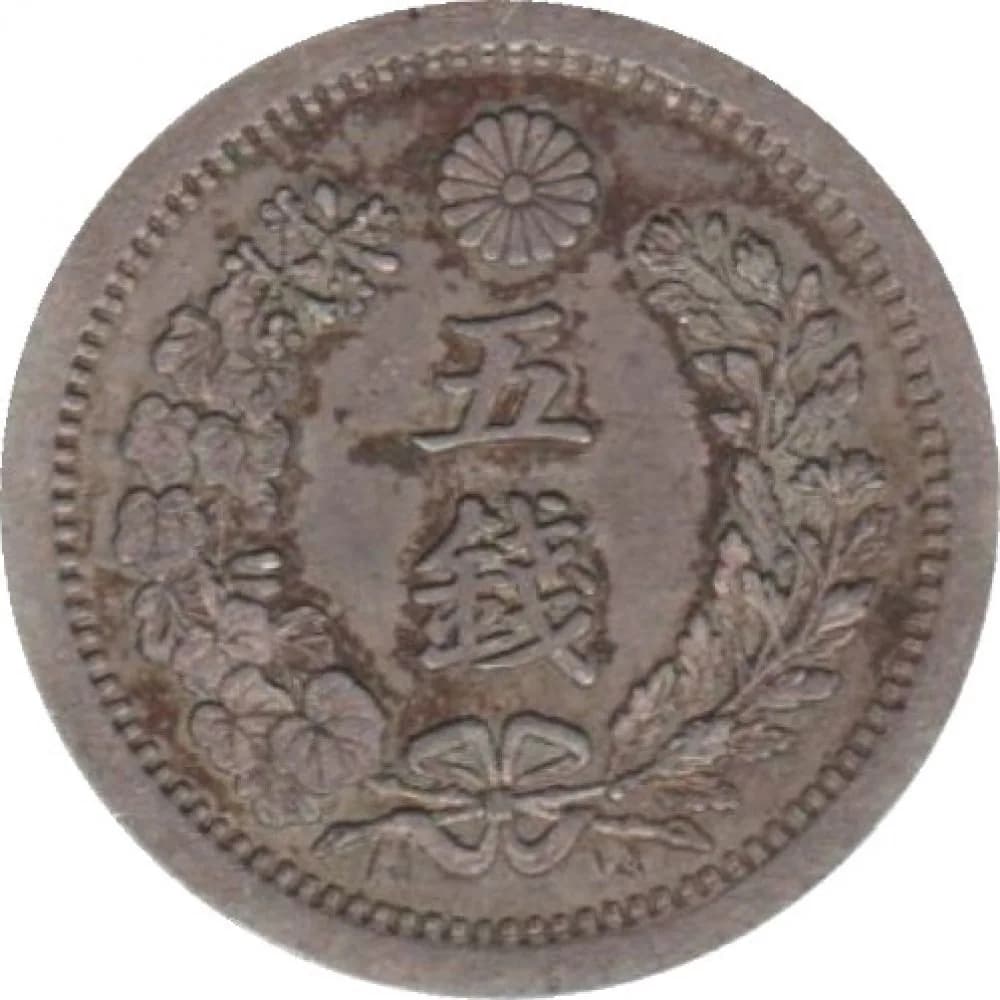
Image: Modern Japanese coinage / Coindesmonnaies / Wikimedia Commons / CC BY-SA 4.0(source)
In Keichō 6 (1601), Tokugawa Ieyasu began reforming the currency system to solidify the foundation of the Edo Shogunate. During this era of post-Sengoku diversity in coinage, a unified currency system was necessary. Ieyasu aimed to stabilize the economy by issuing reliable and valuable coins. It was during this period that the Keichō Ōban and Keichō Koban (Keichō Koban (慶長小判) — The Symbol of the Early Modern Monetary System Built by Tokugawa Ieyasu) were introduced. The Ōban, supervised by Gotō Shōzaburō Mitsutsugu, was not used as regular currency but as a reward from the shogun to daimyo and as diplomatic gifts. Ieyasu's aim was to demonstrate his authority and reliability to retainers and daimyo. The Ōban, with its size and weight, conferred honor upon its holder, strongly impressing the Shogunate's intentions. While the minting volume is unknown, it is believed that production continued until the late Edo period. The birth of the Keichō Ōban was more than just an issuance of gold coins; it carried a political message, making Ōban a significant symbol in Japanese society of the time.
Chapter 2: The Minting Process and Role of Gotō Shōzaburō Mitsutsugu
Image: Modern Japanese coinage / Coindesmonnaies / Wikimedia Commons / CC BY-SA 4.0(source)
The minting of the Keichō Ōban was a crucial project undertaken by Gotō Shōzaburō Mitsutsugu. As the overseer of the gold mint, Shōzaburō played a central role in the Edo Shogunate's monetary policy. Entrusted by Tokugawa Ieyasu, he handled the design and minting of the gold coin. Considering the technological standard of the time, producing the Ōban required highly advanced skills. The Ōban was designed with thickness to ensure weight, with a gold purity of about 67%, demanding high quality for the currency of its day. From material procurement to minting, Shōzaburō conducted operations under strict management. The mint was located in Edo's gold office, where skilled workers meticulously crafted the Ōban. The minting process included gold melting, pouring into molds, cooling, and surface polishing, all conducted by hand. Shōzaburō supervised these processes, ensuring quality. His technical and managerial proficiency was a key factor in the high finish of the Keichō Ōban. Thus created, the Ōban served as a symbol of the Edo Shogunate, transcending its status as mere gold ingots.
Chapter 3: Circulation Reality and Economic Impact
Image: Modern Japanese coinage / Coindesmonnaies / Wikimedia Commons / CC BY-SA 4.0(source)
The Keichō Ōban scarcely circulated as regular currency. Mainly used as rewards from the shogun to daimyo and as diplomatic gifts, its role as currency was limited. Consequently, the Ōban was barely seen in everyday life or the circulation market. Thus, the Ōban was valued more as a symbol of authority and honor than as a medium of exchange. While it did not directly impact the economy, the Ōban demonstrated the Shogunate's financial power and reliability domestically and internationally. Valued at around 10 ryō, the actual worth of an Ōban varied depending on the gift-giving context or the holder's status. For example, receiving an Ōban from the Shogunate during sankin-kōtai was seen as a testament of trust, with considerable influence. Since production continued until the end of the Edo period, Ōban likely maintained its role as a symbol of the Shogunate over a long duration. Hence, the Keichō Ōban functioned more as a political and social tool rather than an economic one. Compared to Edo silver coins (System of Edo Silver Coins), the Ōban's unique circulation underscores its significance.
Chapter 4: Influence on Posterity and Modern Evaluation
Image: Modern Japanese coinage / Coindesmonnaies / Wikimedia Commons / CC BY-SA 4.0(source)
The distinct presence of the Keichō Ōban has continued to influence posterity significantly. As a symbol of the Shogunate's authority, the Ōban continually increased its historical value, receiving National Treasure-grade appraisal even today. Despite other coins' presence, its rarity stands out. While its minting ceased with the monetary system reforms post-Edo period, its historical legacy remains highly valued. On the modern numismatic market, Keichō Ōban's value is tremendously high, sometimes reaching tens of millions of yen depending on condition and minting year. Those well-preserved are particularly prized by collectors due to their rarity and historical significance. Gotō Shōzaburō Mitsutsugu's technical contributions are also being re-evaluated, with attention drawn to the precision of the Ōban's manufacturing, indicative of high technical capabilities of the era. Thus, the Keichō Ōban transcends mere currency, serving as a symbol of Japanese history and culture. Understanding the basics of coin auctions (Auction Strategy Guide) helps comprehend its contemporary market valuation.
Value & Rarity
The market value and rarity of the Keichō Ōban are highly esteemed. Due to the extremely limited number of existing specimens, it is not uncommon for one to fetch over tens of millions of yen at auction. Particularly well-preserved examples are expected to command even higher prices due to their rarity and historical value. Since the Keichō Ōban was not a regular circulation coin, it is an incredibly attractive subject for collectors and historical researchers. The price varies significantly depending on the minting year, location, and condition, but it is a highly precious entity regardless. Due to its prolonged minting until the end of the Edo period, subtle differences specific to each era and technical variations by Gotō Shōzaburō Mitsutsugu are appreciated. When compared to the value and market of commemorative coins (details), its value is notably significant. Coins like the Keichō Ōban, highly valued for their historical and artistic merits, transcend mere investment targets, maintaining their significance as cultural assets. Consequently, the Keichō Ōban continues to be an object of eternal aspiration among numismatists and history enthusiasts.
Conclusion
The Keichō Ōban served as a symbol of the grandiose monetary policies of the Edo Shogunate, affirming its prestige. As an Ōban not meant for regular circulation, its luxuriousness and rarity have bestowed exceptional value throughout history. The high technical skill of Gotō Shōzaburō Mitsutsugu and the politically infused design significantly influenced contemporary society. Even today, the Keichō Ōban is cherished by collectors and history researchers as an important entity in Japan's monetary history. The historical significance of this coin and the narrative behind it provide insights into the politics, economy, and culture of the Edo period. The study of the Keichō Ōban will undoubtedly continue to offer many insights.
Related Stories
Ansei Chōgin — The Final Edo Era Silver Bullion Coin amidst the Turbulence of the Bakumatsu
A Short-lived yet Historical Silver Bullion Created Amidst the Turmoil of Opening Japan
Coin StoryAnsei Nibus Gin — A Silver Coin Born Amidst Port Opening and Fiscal Crisis
The Role of Subsidiary Silver Coins Issued in the Turbulent Closing Years of the Edo Period
Coin StoryBunkyū Eiho and the End of the Gold Coin System — Tracing the History of Edo Gold Coins
Bunkyū 2 (1862) marks the final currency reform of the shogunate, with a gold coin series issued alongside the Bunkyū Eiho (copper coins) as a symbol of late shogunate monetary chaos
Dealers
Dealers Handling This Category
A reference when considering a sale or appraisal. All are dealers and auction houses with a proven track record.
Ginza Coins
Ginza, Chuo-ku, Tokyo
One of Japan's most established numismatic dealers. The scale and variety of their regular auctions is among the largest in the country. Their catalogs are considered a benchmark for market pricing.
Japan Coin Auction (JCA)
Tokyo
Holds regular auctions with reliable hammer price data, making it a useful resource for tracking market values. Caters to a wide range of collectors from beginners to advanced buyers.
Taisei Coins
Tokyo
A dealer with an international network. Offers advanced services such as consignment to overseas auctions and NGC/PCGS grading submission. Recommended for high-value or internationally recognized coins.