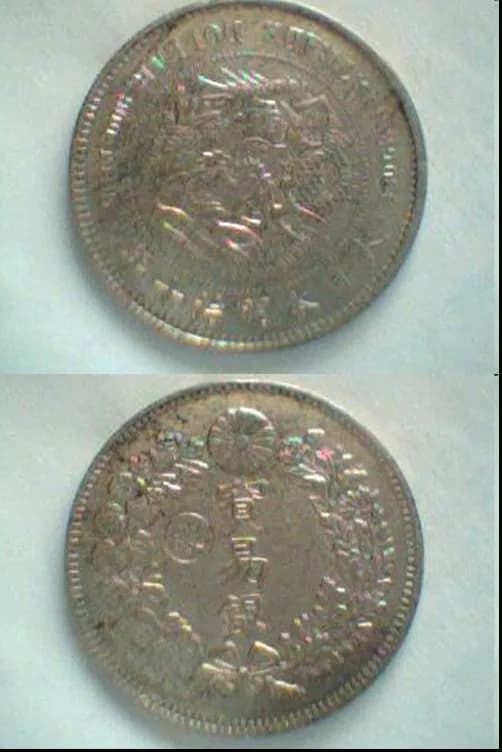
Image: Modern Japanese coinage / photographed by Samuel Ho / Wikimedia Commons / CC BY-SA 3.0(source)
Tsuruga (Echizen) Kan'ei Tsūhō — The Story of Local Currency from Hokuriku
The Trajectory of Unofficial Currency That Supported the Local Economy in the Edo Period
Subject coin: 敦賀(越前)寛永通宝
Overview
Tsuruga (Echizen) Kan'ei Tsūhō is a local currency secretly minted in the Hokuriku region from the early to mid-Edo period. In the Tsuruga and Echizen regions, which thrived as a key point of trade in the Sea of Japan, there was a high demand for currency, leading to unofficial minting. Compared to official mint coins like the Keichō Koban (慶長小判), they were of lesser quality but played an important role in supporting the local economy. This unofficial currency was actively traded by local merchants and shipping agents, supporting the region's economy. Due to often lower quality copper and less precise molds than those minted in Edo, identifying Tsuruga origins involves analyzing excavation sites and copper materials. Despite not being officially recognized, these coins were deeply rooted in the regional economy and reflect the trends of Sea of Japan commerce of the time.
Specifications
- Denomination
- 寛永通宝
- Minting period
- 1636-1720
- Metal composition
- 銅
- Weight
- 不詳(諸説あり)
- Dimensions
- 不詳(諸説あり)
- Mintage
- 不詳(諸説あり)
- Mint supervisor
- 不詳
- Market price
- 10,000円〜50,000円(状態による)
The Birth of Regional Currency — The Economic Background of Tsuruga and Echizen
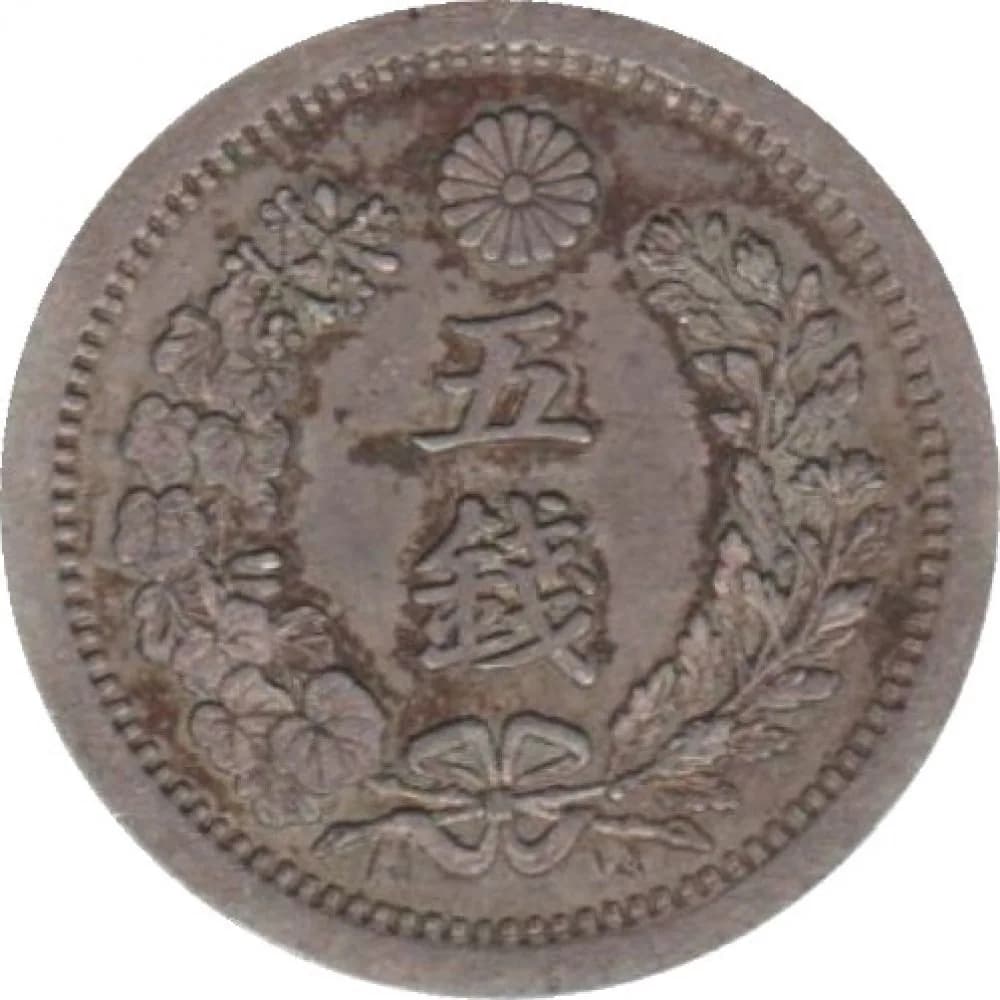
Image: Modern Japanese coinage / Coindesmonnaies / Wikimedia Commons / CC BY-SA 4.0(source)
In the early Edo period of 1636, the Tokugawa shogunate nationally controlled the minting of currency and issued the Kan'ei Tsūhō. This policy aimed to control the national economy and strengthen the shogunate's power. However, in regions like Tsuruga and Echizen in Hokuriku, independent economic activities beyond the shogunate’s control developed. These regions were significant trading hubs in the Sea of Japan, with Tsuruga known as a port of call for ships. From 1636 to 1720, the Kan'ei Tsūhō unofficially minted in this area was used by local merchants and shipping agents, revitalizing the regional economy. Trade via the Sea of Japan promoted the distribution of rice, silk products, and other specialties, creating a demand that led to the birth of regional currency. Local merchants, unable to meet demand with official shogunate currency, decided to mint local coins. As a result, the Tsuruga region formed its own economic sphere, playing a part in the Edo period Sea of Japan trade. Though this unofficial minting temporarily invigorated the local economy, it also created tension with the shogunate's strict regulations.
The Reality of Unofficial Minting — The Role of Technology and Artisans
Image: Modern Japanese coinage / Coindesmonnaies / Wikimedia Commons / CC BY-SA 4.0(source)
The minting of Tsuruga (Echizen) Kan'ei Tsūhō was secretly carried out not in official mints but by local artisans. This involved contemporary minting technology and the significant role of artisans supporting it. Echizen artisans independently mixed copper and created mold-making technology. However, under strict shogunate surveillance, obtaining high-quality copper like that from official mints was difficult, so the quality and precision of the molds often fell short. Nonetheless, local artisans used their wisdom to maximize available resources for minting. They adjusted mold precision and copper mixes to produce coins durable for regional use. Local merchants supported these artisans by providing necessary materials, thereby promoting unofficial minting. As a result, the Tsuruga (Echizen) Kan'ei Tsūhō played an important role in the regional economy, forming a foundation for commercial activity. Ultimately, these unofficially minted coins circulated locally, escaping the eyes of the shogunate, and became an important means for merchants to smooth out transactions.
Circulation within the Regional Economy — The Role of Tsuruga Kan'ei Tsūhō
Image: Modern Japanese coinage / Coindesmonnaies / Wikimedia Commons / CC BY-SA 4.0(source)
Tsuruga (Echizen) Kan'ei Tsūhō played a crucial role in regional economic circulation. For local merchants and shipping agents, these unofficial coins were vital for smoothing trade. Tsuruga, as a key point on trade routes via the Sea of Japan, gathered a wide variety of goods and carried out active trade. Rice, silk products, salt, and seafood were traded, and the shipping vessels critical for transporting these goods were indispensable to the region. To cope with situations where official currency like Kan'ei Tsūhō or Edo silver coins were insufficient, merchants used unofficially minted Tsuruga Kan'ei Tsūhō in transactions. This revitalized the local economy, allowing merchants to trade goods efficiently and secure profits. For common people, this regional currency became indispensable for daily life, supporting price stability. Thus, the Tsuruga Kan'ei Tsūhō functioned like the lifeblood of the regional economy, sustaining commercial activities. However, with increasing shogunate regulation, circulation of these unofficial coins gradually became restricted, and their role diminished following currency system reforms.
Impact on Posterity — The Disappearance and Evaluation of Unofficial Currency
Image: Modern Japanese coinage / Coindesmonnaies / Wikimedia Commons / CC BY-SA 4.0(source)
As time passed, Tsuruga (Echizen) Kan'ei Tsūhō completed its role and faded into history. The shogunate aimed to unify currency systems, enforcing stringent regulations to curb the circulation of unofficial currency. Consequently, regionally minted Kan'ei Tsūhō gradually vanished, and official currencies such as Kan'ei Tsūhō and Edo gold coins regained dominance. By around 1720, circulation of such unofficial currency nearly ceased, and the regional economy returned under shogunate control. However, Tsuruga Kan'ei Tsūhō recognized its historical significance by temporarily enhancing the regional economy and supporting merchants’ transactions. In modern times, these coins are valued as historical materials, attracting interest among numismatists and historians. Their authenticity is determined through site location and copper material analysis, becoming academic research subjects. Due to their rarity, they hold high market value and are esteemed as collector's items. In this way, Tsuruga Kan'ei Tsūhō continues to represent the story of the Edo period's regional economy in posterity.
Value & Rarity
Tsuruga (Echizen) Kan'ei Tsūhō, being unofficially minted, has a limited existing number compared to official Kan'ei Tsūhō. Consequently, its rarity is highly valued among numismatists. Particularly, those with clear excavation locations and precisely identifiable origins through copper material analysis command greater value. According to Numismatic Auction Basics, well-preserved ones can be traded for around 10,000 to 50,000 yen, but rarer ones or those with detailed historical backgrounds may trade for higher prices. Furthermore, due to their historical background in supporting the regional economy, they also hold high academic value and are important for exhibitions and research in museums and institutions. Thus, Tsuruga Kan'ei Tsūhō remains an attractive subject for collectors and researchers due to its historical significance and rarity.
Conclusion
Tsuruga (Echizen) Kan'ei Tsūhō tells the story of regional economic uniqueness and unofficial currency history during the Edo period. In Tsuruga, which thrived as a key point in Sea of Japan trade, this currency played a vital role in supporting merchants' transactions. Although it completed its role as time passed, its historical significance remains undimmed, holding continued value as a research subject. For numismatists and historians, Tsuruga Kan'ei Tsūhō serves as valuable evidence illustrating the dynamism of regional economies, and it is expected to be highly valued in the future for its rarity. As an editor, the aim of widely transmitting the story of this currency is to let readers catch a glimpse of an aspect of the local economy during the Edo period.
Related Stories
Bunkyū Eihō — Tracing the History of Ansen
The last Ansen of the late Edo period. The 4-mon coin minted in Bunkyū 3 began circulating just shy of two years before the Meiji Restoration.
Coin StoryChikusen Jowi no Rei — An Ancient Japanese Attempt to Spread Currency
Wadō 4 (711): An Unprecedented System to Promote Currency Use
Coin StoryNaga-nen Taihō — Tracing the History of Ancient Coinage
The 7th coin of the Kōchō jūni-sen, issued in Shōwa 15 (848) during the reign of Emperor Ninmyō. From this time, the gap between the actual and nominal value of coins became serious.
Dealers
Dealers Handling This Category
A reference when considering a sale or appraisal. All are dealers and auction houses with a proven track record.
Japan Coin Auction (JCA)
Tokyo
Holds regular auctions with reliable hammer price data, making it a useful resource for tracking market values. Caters to a wide range of collectors from beginners to advanced buyers.
Osaka Numismatic Auction
Osaka
A Kansai-based coin auction house with particular strength in regional and hole coins.
Ginza Coins
Ginza, Chuo-ku, Tokyo
One of Japan's most established numismatic dealers. The scale and variety of their regular auctions is among the largest in the country. Their catalogs are considered a benchmark for market pricing.