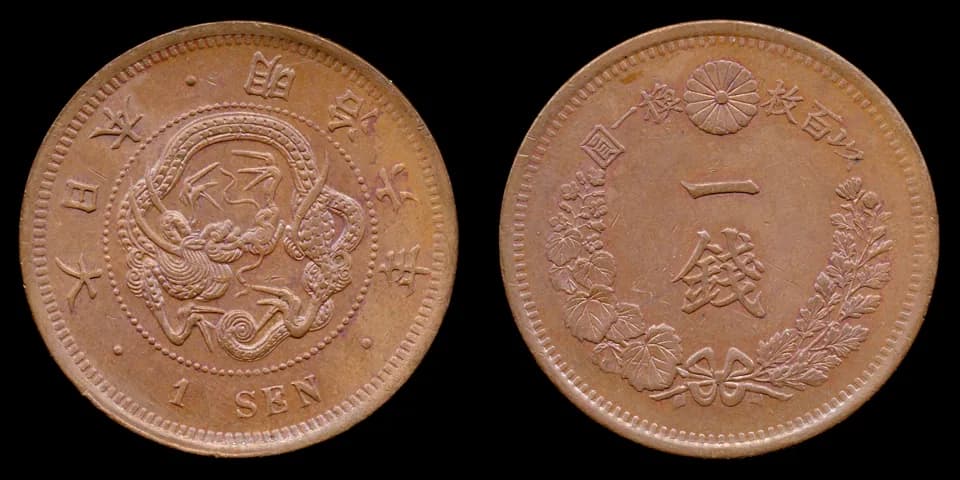
Image: Modern Japanese coinage / As6673 / Wikimedia Commons / CC BY-SA 3.0(source)
New 500 Yen Bi-Color Clad — World-Class Anti-Counterfeit Technology
The new 500 yen coin issued in 2021 is a marvel of anti-counterfeiting technology
Subject coin: 新500円バイカラークラッド
Overview
The new 500 yen coin issued in Reiwa 3 (2021) is the culmination of Japanese minting technology. This coin, which has brought anti-counterfeiting technology to the ultimate limit, adopts a three-layer bi-color clad structure and features various innovations such as an irregular rim and micro-letters on the sides. Such technology is unprecedented in the history of Japanese coins, and its significance is enormous, especially in modern times where counterfeiting is a problem. With the advent of the new 500 yen coin, Japan's currency system has evolved further. Compared to previous coins, its technological and design evolution is evident, making it a noteworthy entity in the Value and Identification of Modern Coins. By closely examining the historical background and technical aspects, it will provide an opportunity to reconsider the nature of modern currency.
Specifications
- Denomination
- 500円
- Minting period
- 令和3年(2021年)〜現在
- Metal composition
- 白銅+黄銅合金
- Weight
- 7.1g
- Dimensions
- 直径26.5mm
- Mintage
- 不詳(諸説あり)
- Mint supervisor
- 不詳
- Market price
- 額面以上の価値はまだ付いていない(2023年現在)
Historical Background — Birth of the New Coin and Political Motives
Image: Modern Japanese coinage / Coindesmonnaies / Wikimedia Commons / CC BY-SA 4.0(source)
The issuance of the new 500 yen coin in 2021 marked the third year of the Reiwa era. This year was underscored by the urgent need for innovation in anti-counterfeiting technology. Economic stagnation continuing from the Heisei era and global financial instability necessitated enhancing currency trustworthiness. Particularly, the 500 yen coin, being a high-value coin easily targeted for counterfeiting, required urgent measures. Thus, the Japanese government instructed the Mint Bureau to develop a new coin with unprecedented anti-counterfeiting technology. This was influenced by economic policy changes, such as the consumption tax increase in 2019. After the tax hike, the importance of cash transactions was reassessed, and ensuring the trustworthiness of coins became a political issue. In this context, the three-layer bi-color clad was chosen as the cutting-edge technology for anti-counterfeiting. This technology combines different metals to make counterfeiting extremely difficult. The introduction of bi-color clad technology was revolutionary in Japan's coin history, akin to the historical transformation brought by the Keichō Koban.
Minting Process — A Crystallization of Technological Innovation
Image: Modern Japanese coinage / Coindesmonnaies / Wikimedia Commons / CC BY-SA 4.0(source)
The minting of the new 500 yen coin was carried out at the Mint Bureau in Saitama Prefecture. The coin's most significant feature is its three-layer structure called bi-color clad. The outer part is made of cupronickel, and the inner part is a brass alloy, making counterfeiting extremely difficult. Cupronickel, an alloy of nickel and copper, is known for its durability and corrosion resistance. On the other hand, the brass alloy, a combination of copper and zinc, is noted for its workability and attractive luster. Combining these two metals resulted in a coin that balances aesthetics and functionality. Furthermore, the coin employs an irregular rim. This adds slanted reeding to the sides of the coin, enhancing its anti-counterfeiting effect. Also, the sides engrave micro-letters of "500円", a feature for anti-counterfeiting. These micro-letters can only be reproduced with specialized machinery, not accessible to typical counterfeiting methods. Thus, the new 500 yen coin is the culmination of multi-layered technologies, representing the summit of anti-counterfeiting technology unseen elsewhere in the world. The adoption of bi-color clad technology and irregular rims has modern-day innovation compared with historical coinage technologies like those seen in the Edo Silver Coin.
Circulation Reality — Acceptance of the New Coin and Its Economic Impact
Image: Modern Japanese coinage / Coindesmonnaies / Wikimedia Commons / CC BY-SA 4.0(source)
The new 500 yen coin, which began circulation in 2021, quickly spread nationwide. Initially, its varying design and functionality sparked discussions among consumers and shops. The coins, incorporating new technologies such as irregular rims and micro-letters, astonished many who encountered them for the first time. In some cases, vending machines and cash exchange machines were not equipped to handle the new coins, causing confusion, but adjustments were rapidly made. The improved anti-counterfeiting technology enhanced the reliability of currency transactions, prompting a resurgence of cash transactions and stimulating consumer activity. Particularly in local shops, the assurance of cash safety led to increased economic activities. For coin collectors, too, the new 500 yen coin became a subject of interest. Its amalgamated technologies make it highly collectible, frequently featured in Basic Knowledge of Coin Auctions. Collectors across the country are eagerly seeking to acquire the new 500 yen coin, and the market is expected to expand.
Future Impact — The Future Brought by the New Coin
Image: Modern Japanese coinage / Coindesmonnaies / Wikimedia Commons / CC BY-SA 4.0(source)
The appearance of the new 500 yen coin is expected to significantly influence Japanese currency in the future. The advanced anti-counterfeiting technologies adopted in this coin will serve as crucial benchmarks for future currency design. For instance, the bi-color clad technology might be applied to other coins, and similar technology is already being considered for some coins. Bi-color clad, composed of a three-layer structure of cupronickel and brass alloy, offers advanced anti-counterfeiting capabilities. Moreover, technologies such as irregular rims and micro-letters might be applied to other coins and banknotes, driving further progress in anti-counterfeiting efforts. The irregular rims feature serrations and slanted reeding, which, when combined, not only make it easily identifiable but also realize advanced anti-counterfeiting functions. The success of the new 500 yen coin is attracting international attention, with requests for technology provision coming from other countries' mints. For example, some European countries and Asian region mints aim to enhance their coin safety by referencing Japanese technology. This ensures Japanese minting technology is globally acknowledged. Furthermore, technologies from the new 500 yen coin are expected to be employed in issuing special coins like Types and Characteristics of Commemorative Coins. Thus, the new 500 yen coin emerges as more than just currency, signifying crucial indicators for future currency concepts. Although it does not incorporate an IC chip, the coin issued in Reiwa 3 (2021) realizes world-class anti-counterfeiting measures through the combination of materials and processing technology.
Value & Rarity
Since the new 500 yen coin has only been issued for a few years, its current market value remains around its face value of 500 yen. However, its unique technology and design are gaining attention among collectors. Especially, anti-counterfeiting features like the irregular rim and micro-letters are distinctive characteristics not seen in other coins, potentially leading to increased future value. While the number of coins in circulation is high, reducing immediate rarity, the coin's technological value may be recognized over time, increasing its popularity as a collector's item. Particularly, coins preserved in mint condition or those from the issuance's first year could see value appreciation. These coins tend to be carefully kept by collectors, whose rarity may enhance their market value. The value and rarity of the new 500 yen coin are often evaluated based on Grading Standards for Old Coins, with continued interest anticipated in its future trends.
Conclusion
The new 500 yen coin embodies modern Japanese minting technology and stands at the forefront of anti-counterfeiting techniques. Its issuance not only enhances currency trustworthiness and stimulates economic activity but also offers an important guideline for future currency design. Technologies like bi-color clad, irregular rims, and micro-letters may find application in other coins and banknotes, supporting the global recognition of Japanese minting technology. Whenever you encounter the new 500 yen coin, take the opportunity to appreciate its technological essence. Furthermore, reconsidering the future of Japan's currency in light of the new 500 yen coin's presence could be beneficial.
Related Stories
60th Anniversary of Local Autonomy Law 500 Yen Bicolor – 10-Year Journey Across 47 Prefectures
Commemorative Coin Series Born from the Law of 1947
Coin StoryAichi Expo Commemorative Silver Coin — Hope for the Future Carved with the Wisdom of Nature
The History and Value of the 1000-yen Silver Coin Commemorating the 2005 Aichi Expo
Coin StoryPhoenix 100 Yen Silver Coin - The Final Edition Tells the Transition of the Showa Era
1964, The End of Silver Coins and the Dawn of a New Era
Dealers
Dealers Handling This Category
A reference when considering a sale or appraisal. All are dealers and auction houses with a proven track record.
Ginza Coins
Ginza, Chuo-ku, Tokyo
One of Japan's most established numismatic dealers. The scale and variety of their regular auctions is among the largest in the country. Their catalogs are considered a benchmark for market pricing.
Taisei Coins
Tokyo
A dealer with an international network. Offers advanced services such as consignment to overseas auctions and NGC/PCGS grading submission. Recommended for high-value or internationally recognized coins.
Tokyo Coin Club
Tokyo
A membership-based coin dealer known for carefully selected, quality inventory.