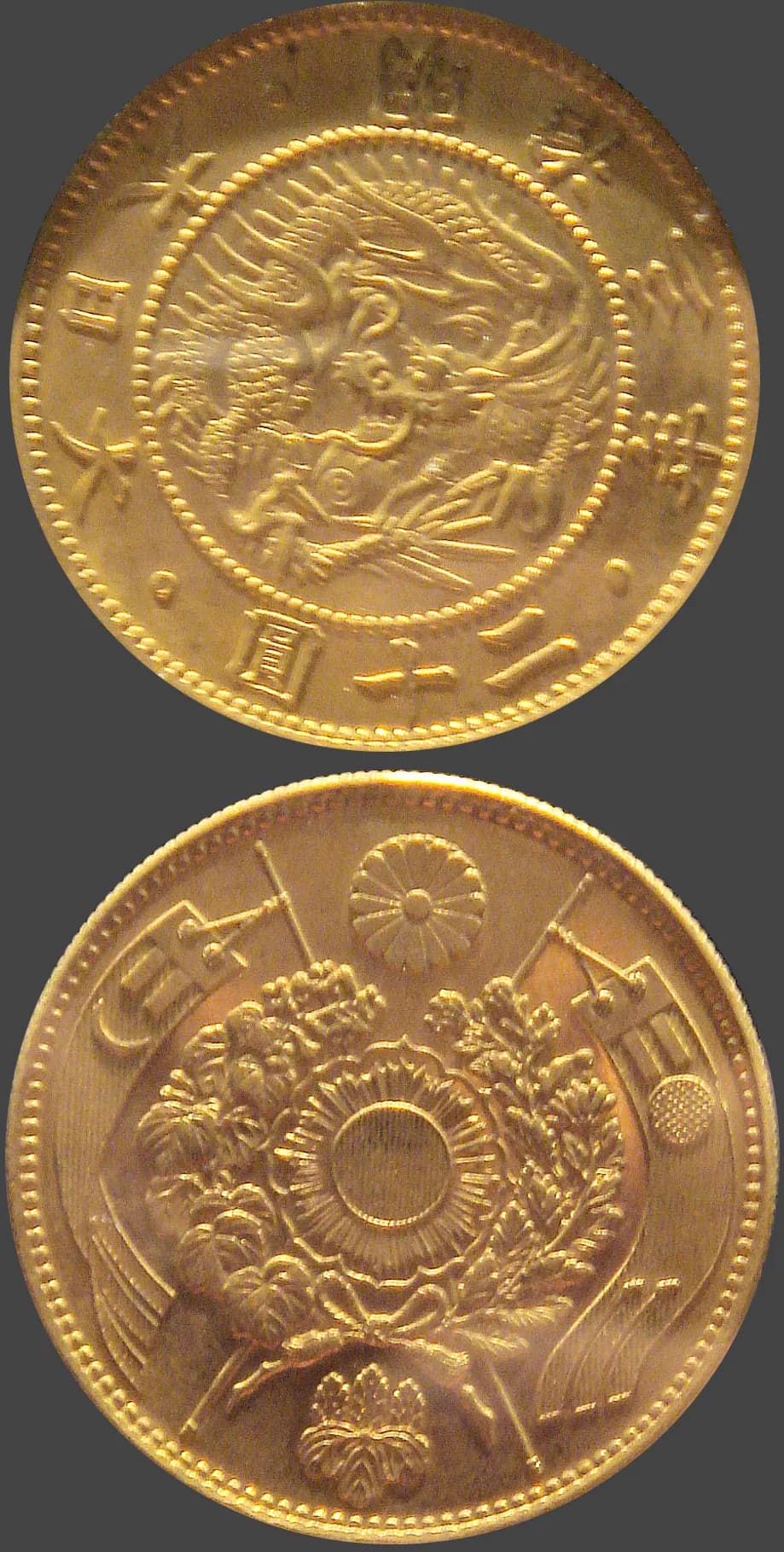
Image: Modern Japanese coinage / PHGCOM / Wikimedia Commons / CC BY-SA 3.0(source)
Sanbungin — The Experimental Silver Coin from the Tenpō Reforms
Why the Rectangular Fixed-Denomination Sanbungin Became a Collector's Treasure
Subject coin: 三分銀
Overview
In 1853, amidst the upheaval caused by Perry's arrival in Japan, the shogunate minted a new silver coin called Sanbungin. Born in the political and economic turmoil of the time, this silver coin disappeared quickly but has since garnered significant attention from collectors. Among Edo Silver Details, it stands out as particularly unique. The face value corresponded to 3/4 of a gold ryō and had a distinctive rectangular shape. This shape markedly differed from the contemporary Details of Keichō Koban and Types and Identification of Edo Gold Coins, representing a product of trial and error during the turbulent late Edo period. The initial purpose was to address the increased demand for silver due to the expansion of foreign trade, but it was short-lived, circulating for only just over a decade. Nevertheless, its brevity has bestowed it with high rarity value today.
Specifications
- Denomination
- 三分銀
- Minting period
- 嘉永6年〜慶応4年(1853-1868年)
- Metal composition
- 銀80% / 銅20%
- Weight
- 8.6g
- Dimensions
- 縦約29mm × 横約20mm
- Mintage
- 不詳(諸説あり)
- Mint supervisor
- 不詳(幕府の命により鋳造)
- Market price
- 50万円〜200万円(状態による)
The Turbulent Bakumatsu and the Birth of Sanbungin — Political Background
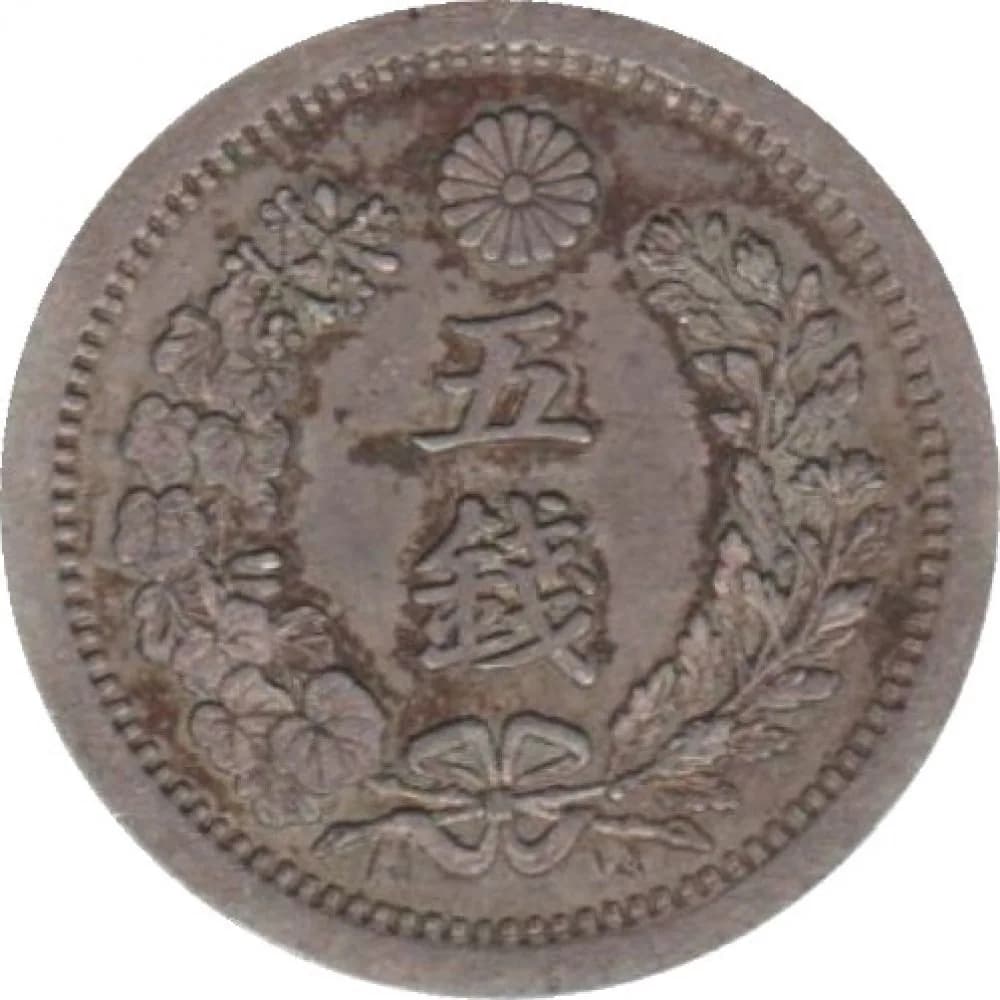
Image: Modern Japanese coinage / Coindesmonnaies / Wikimedia Commons / CC BY-SA 4.0(source)
In the 6th year of Kaei (1853), the appearance of black ships on Japan's coast, demanding the opening of the country, shocked Japanese society. During this tumultuous era, the shogunate attempted various reforms to stabilize its economic base. As part of this, the shogunate decided to mint a new silver coin, the Sanbungin. This coin had a face value equivalent to 3/4 of one gold ryō and featured an unusual rectangular shape. This shape represented a new experiment in the silver coin market of the time, with the shogunate's intention being clear; it was to address the increased demand for silver due to the expansion of foreign trade. As part of the Tenpō reforms, a review of the monetary system was carried out, and Sanbungin became a symbolic presence of this effort. However, contrary to the shogunate's intent, the economic confusion following Perry's arrival and rebellions and disturbances across the land hindered the distribution of Sanbungin. Opinions within the shogunate were divided, and amid political confusion, the presence of Sanbungin gradually faded away. Nevertheless, the decision to mint it reflects the shogunate's desperate attempts at experimentation under the external pressure of Perry's arrival. Sanbungin can be seen as an experimental product created by the shogunate under such external pressures.
The Minting Process and Participants — Behind Sanbungin's Manufacture
Image: Modern Japanese coinage / Coindesmonnaies / Wikimedia Commons / CC BY-SA 4.0(source)
The minting of the Sanbungin was carried out in Edo's Kinza by order of the shogunate. Kinza was the institution responsible for coin minting during the Edo period, and technicians worked under the strict supervision of the shogunate. Sanbungin was made from an alloy of 80% silver and 20% copper, a standard composition among silver coins of the time. However, its rectangular shape was unique, requiring special technology for minting. This shape was innovative for currency at the time, posing a new challenge for the minting technicians. Many workers were involved in minting, among them craftsmen with exceptional skills. The process involved first melting the silver-copper alloy, pouring it into molds to create rectangular ingots, cutting these into fixed sizes, polishing the surfaces, and finally stamping them. Despite this labor-intensive process, the circulation of Sanbungin faced difficulties from the start. Contrary to the shogunate's expectations, the changing regional and economic conditions made it hard for Sanbungin to maintain its presence. The technicians involved in minting personally experienced the shifts in the monetary system during the chaotic late Edo period.
Circulation and Its Impact — The Brief Life of Sanbungin
Image: Modern Japanese coinage / Coindesmonnaies / Wikimedia Commons / CC BY-SA 4.0(source)
When Sanbungin appeared on the market, its unique shape and face value attracted attention. However, problems arose soon after it began circulating. In the chaotic economic situation of the late Edo period, with fluctuating silver coin values, the circulation of Sanbungin did not proceed as expected. Particularly after the port openings in 1854, exchange rates with foreign currencies fluctuated, spreading distrust of Sanbungin's value among the populace. Many merchants avoided using Sanbungin to profit from exchange rate differences. Additionally, its large denomination made everyday transactions inconvenient, leading to poor acceptance among the common people. This situation resulted in a decline in trust towards Details of Keichō Koban and previous monetary systems. Moreover, opinions within the shogunate about Sanbungin were divided, with some advocating for its continued circulation and others calling for its swift abolition. Amidst such circumstances, Sanbungin gradually disappeared from the market, with its circulation lasting only a little over a decade. Nevertheless, its rarity has increased its value in modern times.
Influence on Later Generations — Evaluation and Comparison of Sanbungin
Image: Modern Japanese coinage / Coindesmonnaies / Wikimedia Commons / CC BY-SA 4.0(source)
Despite its short historical lifespan, Sanbungin's influence on later generations was significant. Although it had low practicality as a silver coin, its unique rectangular design is said to have influenced later coin designs. Especially during the coinage system reforms after entering the Meiji era, its existence attracted the attention of some officials and numismatists. Compared to other silver coins in circulation at the same time, like the Ichibugin and Ichishugin, opinions on Sanbungin varied, but its rarity leads collectors with Basic Knowledge of Coin Auctions to highly value it. When the Meiji Government reformed the monetary system, it is believed that they learned many points from Sanbungin's failure, particularly the necessity for design considering circulation and user convenience. Additionally, in modern times, Sanbungin is traded at high prices due to its historical value and rarity, making it a coveted item among collectors. Through Sanbungin, one can interpret the transitions in the monetary system from the late Edo to the Meiji period and the political and economic situations behind them.
Value & Rarity
Sanbungin has considerable value in the modern numismatic market due to its rarity. Its short circulation period means that existing pieces are limited, and those in good condition are traded at especially high prices. Well-preserved Sanbungin can fetch prices from 500,000 yen to 2,000,000 yen, with value also determined by Coin Grading Standards. Uncirculated or extremely fine specimens are particularly in demand among collectors. Among the silver coins of the Edo period, Sanbungin holds historical significance due to its unique shape and denomination, while also appealing as an investment for collectors. The Sanbungin's market dynamics are influenced by economic conditions and popularity among collectors, making it important to regularly Check Price Trends with Market Charts. Additionally, caution is needed when purchasing to distinguish Fakes and Altered Coins. Sanbungin will continue to hold high value in the numismatic market due to its rarity and historical background.
Conclusion
Sanbungin ended its short life as a product of the shogunate's experimentation during the tumultuous late Edo period. However, its rarity and unique design have given it high historical value in modern times. Through Sanbungin, one can interpret the economic and political challenges Japan faced at the time, and its existence is not just an old coin but a testimony to history. For collectors, it combines appeal as an investment, and its value will continue to captivate many people's interests. Sanbungin symbolizes the transitions in the monetary system from the late Edo to the Meiji period, and re-evaluating its historical significance may provide an opportunity to reassess the role of currency in Japan's modernization.
Related Stories
Ansei Chōgin — The Final Edo Era Silver Bullion Coin amidst the Turbulence of the Bakumatsu
A Short-lived yet Historical Silver Bullion Created Amidst the Turmoil of Opening Japan
Coin StoryAnsei Nibus Gin — A Silver Coin Born Amidst Port Opening and Fiscal Crisis
The Role of Subsidiary Silver Coins Issued in the Turbulent Closing Years of the Edo Period
Coin StoryBunkyū Eiho and the End of the Gold Coin System — Tracing the History of Edo Gold Coins
Bunkyū 2 (1862) marks the final currency reform of the shogunate, with a gold coin series issued alongside the Bunkyū Eiho (copper coins) as a symbol of late shogunate monetary chaos
Dealers
Dealers Handling This Category
A reference when considering a sale or appraisal. All are dealers and auction houses with a proven track record.
Japan Coin Auction (JCA)
Tokyo
Holds regular auctions with reliable hammer price data, making it a useful resource for tracking market values. Caters to a wide range of collectors from beginners to advanced buyers.
Ginza Coins
Ginza, Chuo-ku, Tokyo
One of Japan's most established numismatic dealers. The scale and variety of their regular auctions is among the largest in the country. Their catalogs are considered a benchmark for market pricing.
Osaka Numismatic Auction
Osaka
A Kansai-based coin auction house with particular strength in regional and hole coins.