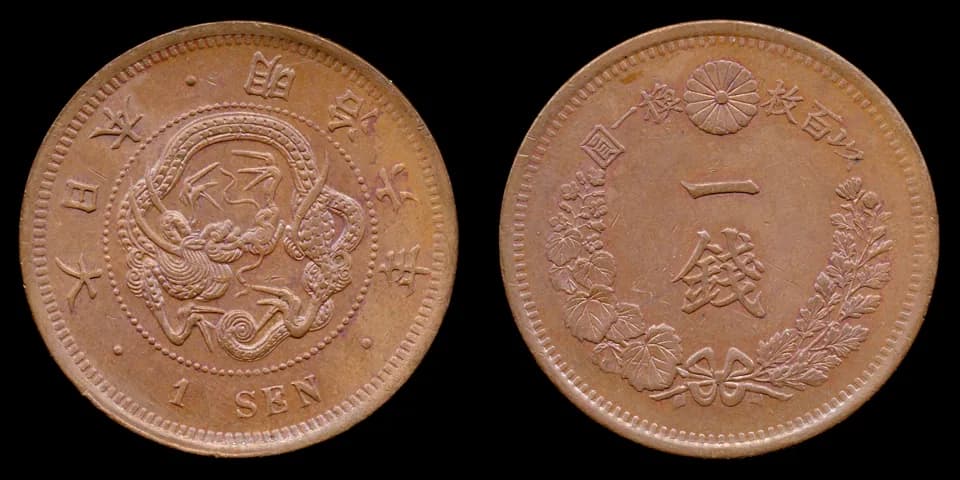
Image: Modern Japanese coinage / As6673 / Wikimedia Commons / CC BY-SA 3.0(source)
Phoenix 100 Yen Silver Coin - The Final Edition Tells the Transition of the Showa Era
1964, The End of Silver Coins and the Dawn of a New Era
Subject coin: 鳳凰100円銀貨(昭和39年最終版)
Overview
In 1964, Japan hosted the Tokyo Olympics. That year was also the last year Phoenix 100 yen silver coins were minted. As Japan's economy grew rapidly and the price of silver rose, the bullion value of the 100 yen silver coin approached its face value. To address this issue, the government decided to change the material from silver to cupro-nickel starting in 1966. This decision symbolized an era prioritizing economic rationality. Despite the large number of coins issued in the final year, the 1964 edition is special to collectors for its scarcity in good condition. Additionally, the 1000 yen silver coin for the Tokyo Olympics issued the same year also increased its value as a commemorative coin. These factors highlight Japan's postwar progress and enhancement of its international status. Let's unravel the history of the Phoenix 100 yen silver coin, also referring to the value and market of commemorative coins.
Specifications
- Denomination
- 100円
- Minting period
- 昭和34年〜昭和39年(1959-1964年)
- Metal composition
- 銀60% / 銅40%
- Weight
- 4.8g
- Dimensions
- 直径22.6mm
- Mintage
- 約1億枚(諸説あり)
- Mint supervisor
- 不詳(大蔵省造幣局)
- Market price
- 300円〜5,000円(状態による)
Historical Context and Motivation for Minting - Japan's Growth and the End of Silver Coins
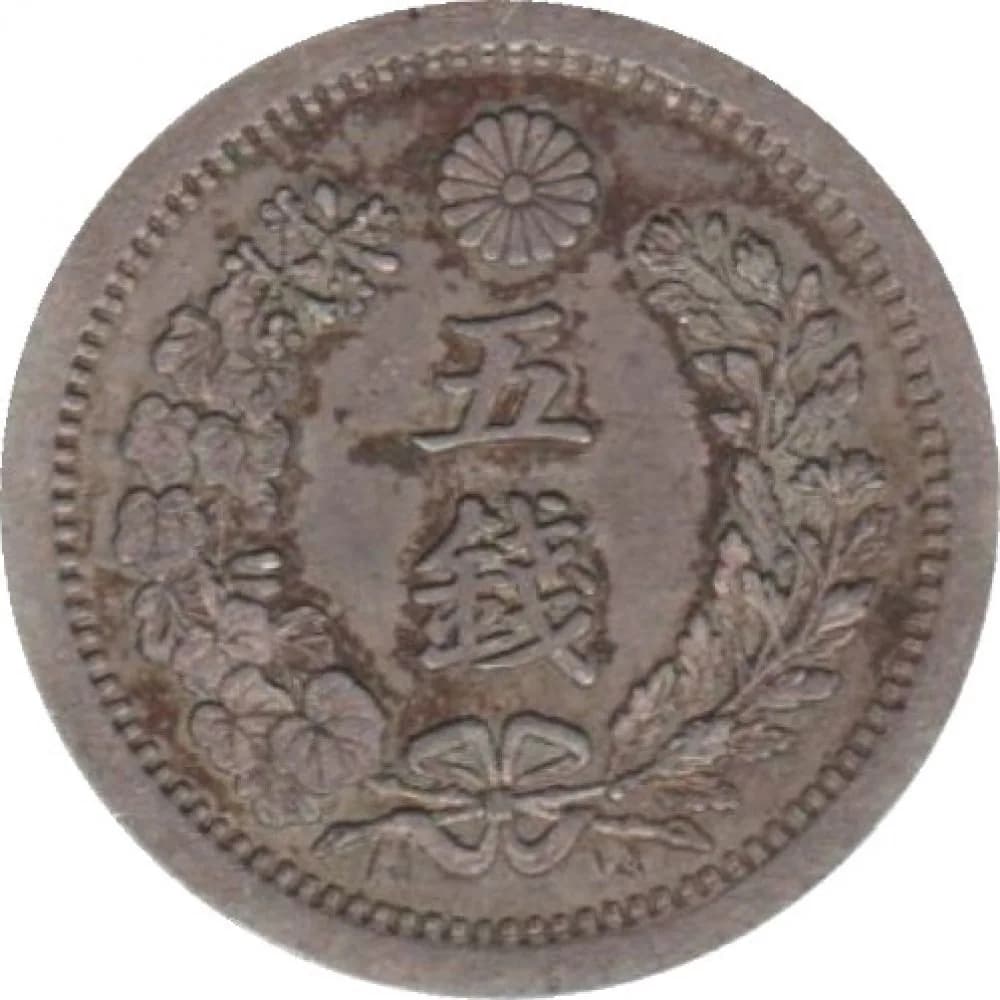
Image: Modern Japanese coinage / Coindesmonnaies / Wikimedia Commons / CC BY-SA 4.0(source)
The year 1964 was a turning point for Japan. After postwar reconstruction, Japan was in the midst of an economic growth boom and had the opportunity to showcase its global standing by hosting the Tokyo Olympics. However, economic prosperity also brought unintended consequences. The continuous rise in silver prices led to the bullion value of the 100 yen silver coin (60% silver, 4.8g) approaching its face value. This revealed the issue of the material's inherent value threatening its currency value. In response, the Ministry of Finance decided in 1966 to switch to new 100 yen coins made of cupro-nickel (nickel alloy). This decision sought economic rationality by using materials without silver to maintain international competitiveness. That same year, the Olympic 1000 yen silver coin also had a symbolic meaning. These events were significantly influenced by Japan's rapid economic growth after the war and subsequent resource price fluctuations. The year when the Phoenix 100 yen silver coin was last minted truly symbolized Japan's transformation, and its impact on currency is immeasurable. Let's explore this historical background further, referring to the value and identification of modern coins.
Behind the Minting Process - The Efforts of Technology and Craftsmen
Image: Modern Japanese coinage / Coindesmonnaies / Wikimedia Commons / CC BY-SA 4.0(source)
The Phoenix 100 yen silver coin was minted at the mint bureau in Tokyo. Here, craftsmen employed their skills to apply intricate designs. The design of the phoenix symbolized peace and prosperity, embodying the hopes and confidence of Japan at the time. In the minting process, an alloy of 60% silver and 40% copper was created, and then processed into sheets. These sheets were rolled to the appropriate thickness and punched into circles using a special press machine. Further pressure was applied to imprint the design. This process required the artisans' skilled techniques, especially in depicting the fine details of the phoenix. The mint bureau's technicians strived to create the best products with limited time and resources. As a result of these efforts, the 1964 edition of the Phoenix 100 yen silver coin is praised for its beauty and intricacy despite its large issuance. However, economic reasons led to a gradual shift to cupro-nickel, and the craftsmen's skills were also required to adapt to new materials. In this way, the Phoenix 100 yen silver coin, born from the interplay of technology and material, marked a pinnacle of Japan's coin minting techniques. Let's trace the history of Japan's coin minting technology together with the detailed explanation of Wadokaiho.
Actual Circulation and Economic Impact - Changing Values
Image: Modern Japanese coinage / Coindesmonnaies / Wikimedia Commons / CC BY-SA 4.0(source)
In 1964 Japan, the Phoenix 100 yen silver coin was widely circulated in daily life. The use of silver coins was also seen as a status symbol, especially cherished during celebrations or as gifts. However, as silver prices rose, the possibility emerged that its value could exceed its face value. As a result, the tendency to store silver coins among people became strong. For example, there were instances where shopkeepers secretly hoarded silver coins received from customers, leading to a decline in circulation. Additionally, those sensitive to economic changes opted to store silver coins as assets rather than use them as cash. This caused the role of silver coins in actual circulation to gradually diminish. Such trends influenced the overall Japanese economy. The government, considering this, aimed to stabilize the monetary system by deciding to transition to new materials without silver. This decision was an adaptation to economic realities and a challenge to new technologies. Thus, the Phoenix 100 yen silver coin ended its role, passing the baton to the next era. Let's look more closely at the circulation reality of the time while learning about how to identify fakes and alterations.
Impact on Posterity and Evaluation of Silver Coins - Legacy to New Generations
Image: Modern Japanese coinage / Coindesmonnaies / Wikimedia Commons / CC BY-SA 4.0(source)
The Phoenix 100 yen silver coin, last minted in 1964, holds a special place for future collectors due to its historical value. That year was also memorable for hosting the Tokyo Olympics, and together with the 1000 yen silver coin issued for that, the Phoenix 100 yen silver coin gained value as a commemorative coin. After 1966, new cupro-nickel 100 yen coins emerged, concluding the role of the Phoenix 100 yen silver coin, but it still enjoys high popularity in the collector market. Particularly well-preserved coins are often traded at high prices because, despite their large issuance, perfect condition coins are scarce due to wear from daily use and poor preservation conditions. Additionally, as a symbol of a pivotal moment in Japan's monetary system, it remains a valuable resource for numismatists and history enthusiasts. The Phoenix 100 yen silver coin, signaling the end of one era and the beginning of another, continues to tell its story to this day. Refer to types and features of commemorative coins to consider the significance of this silver coin today.
Value & Rarity
The Phoenix 100 yen silver coin maintains a certain value in the collector market. The final version minted in 1964 holds special value due to its historical background, with well-preserved coins being traded for high prices. Market prices vary depending on conservation status, ranging from 300 yen to 5,000 yen. Unlike the 100 yen coins made from cupro-nickel introduced in 1966, it contains 60% silver, which also contributes to its valuation. Additionally, being issued in the year of the Tokyo Olympics, it also has a commemorative coin aspect. This gives the Phoenix 100 yen silver coin significance beyond mere currency, making it a precious collection item for collectors. In market transactions, guidelines for coin grading are emphasized, particularly for mint state or proof coins, which tend to be more highly valued. Thus, the Phoenix 100 yen silver coin is expected to increase in value due to its rarity and historical background.
Conclusion
The Phoenix 100 yen silver coin played an important role in Japan's monetary history. Its last minting occurred in 1964, followed by a switch to cupro-nickel due to the rise in silver prices driven by economic growth. This silver coin serves as a valuable witness to Japan's postwar economic and social changes, with its value enduring in the collector market. Notably, issued in the same year as the Tokyo Olympics, it remains a symbol of a commemorative year, continuing to be passed down through generations. The phoenix design symbolizes peace and prosperity, beloved by many even today. It remains crucial to reassess the historical significance of silver coins in modern times and pass on their allure to future generations.
Related Stories
60th Anniversary of Local Autonomy Law 500 Yen Bicolor – 10-Year Journey Across 47 Prefectures
Commemorative Coin Series Born from the Law of 1947
Coin StoryHōō 100-Yen Silver Coin — Wings of Recovery, and the End of the Silver Coin Era
The Brilliance of the High-Growth Period and the Short Life of a Silver 100-Yen Coin Buffeted by Soaring Silver Prices
Coin StoryCommemorative Coins for the Crown Prince's Wedding — Tracing the History of Commemorative Currency
In 1993, commemorative coins of a 50,000 yen gold coin and a 10,000 yen silver coin were issued for the Crown Prince's (current Emperor) marriage, attracting 1,000,000 applications for the 'Congratulations Currency'
Dealers
Dealers Handling This Category
A reference when considering a sale or appraisal. All are dealers and auction houses with a proven track record.
Ginza Coins
Ginza, Chuo-ku, Tokyo
One of Japan's most established numismatic dealers. The scale and variety of their regular auctions is among the largest in the country. Their catalogs are considered a benchmark for market pricing.
Taisei Coins
Tokyo
A dealer with an international network. Offers advanced services such as consignment to overseas auctions and NGC/PCGS grading submission. Recommended for high-value or internationally recognized coins.
Tokyo Coin Club
Tokyo
A membership-based coin dealer known for carefully selected, quality inventory.