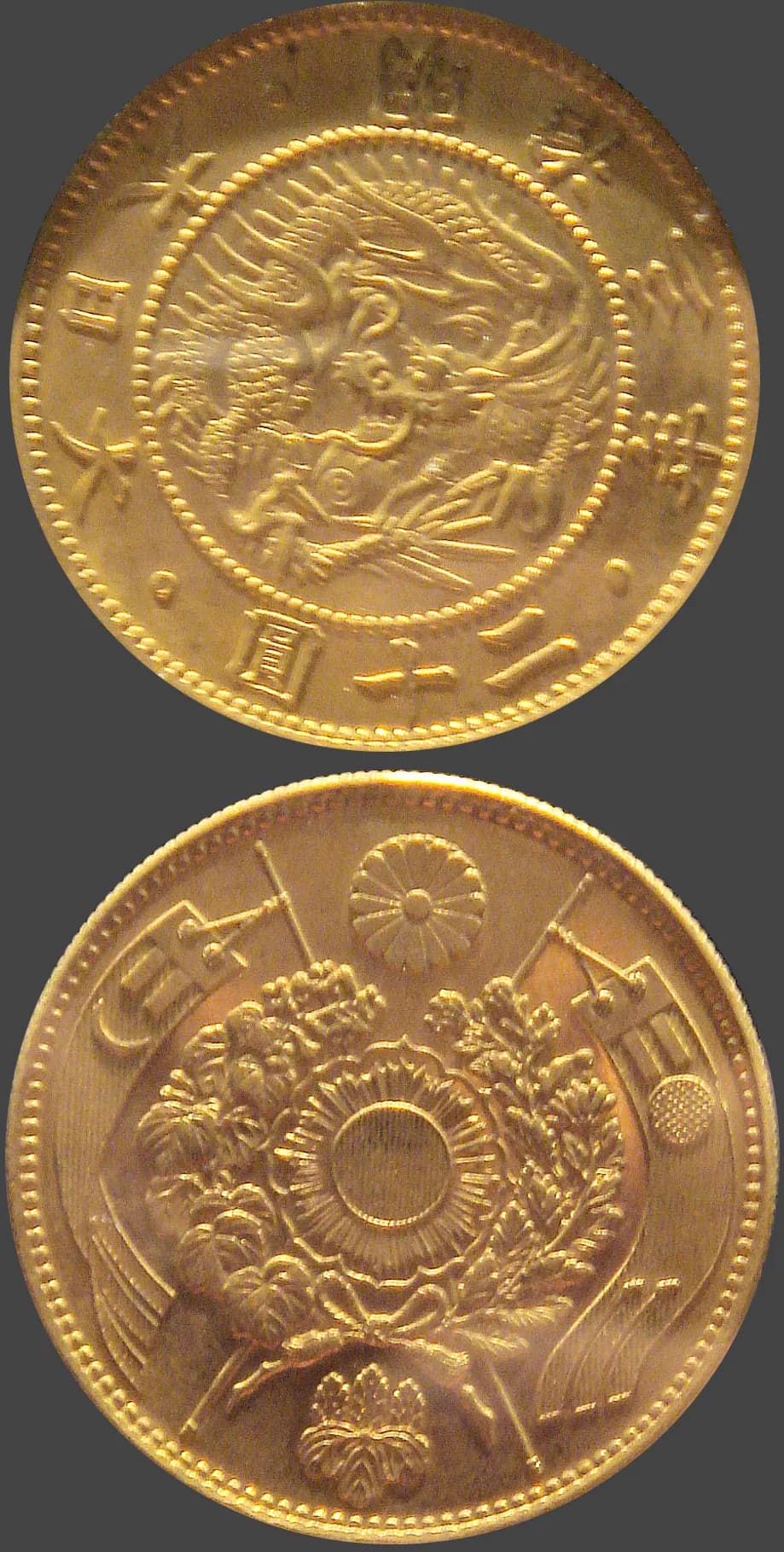
Image: Modern Japanese coinage / PHGCOM / Wikimedia Commons / CC BY-SA 3.0(source)
Nanryō Isshugin (南鐐一朱銀) — The Era of Small Denomination Silver Coins
The Role of Isshugin in Supporting the Late Edo Period Economy
Subject coin: 南鐐一朱銀
Overview
Nanryō Isshugin was a small denomination silver coin issued in 1824 (Bunsei 7) in Japan. In the late Edo period, the shogunate issued Nanryō Nishugin as an auxiliary silver coin to stabilize the economy but the demand for even smaller denominations led to the birth of this Isshugin. Each coin was valued at 1/16 ryō with a high silver purity of 98%, making it a currency circulated as a counting silver coin. Counting silver coins have value determined by the number of coins rather than weight, facilitating smoother commercial transactions and supporting daily life. Especially during the late Edo period, amidst the circulation of coins with reduced silver purity, this high-standard Nanryō Isshugin maintained its trustworthiness as a currency. Following the success of the Nanryō Nishugin, the issuance of the even smaller Isshugin promoted the spread of counting silver coins in the market. The impact of Nanryō Isshugin extended to modern monetary systems, marking its immeasurable historical significance.
Specifications
- Denomination
- 1朱
- Minting period
- 文政7年〜明治2年(1824-1869年)
- Metal composition
- 銀98%
- Weight
- 約3.75g
- Dimensions
- 縦約25mm × 横約15mm
- Mintage
- 不詳(諸説あり)
- Mint supervisor
- 後藤庄三郎(金座)
- Market price
- 個別の価格は、照合済みの記録(出典つき)が得られたものだけを市場記録に掲載する方針です。
Chapter 1: The Late Edo Period Economy and Coin Issuance — Background of Nanryō Isshugin
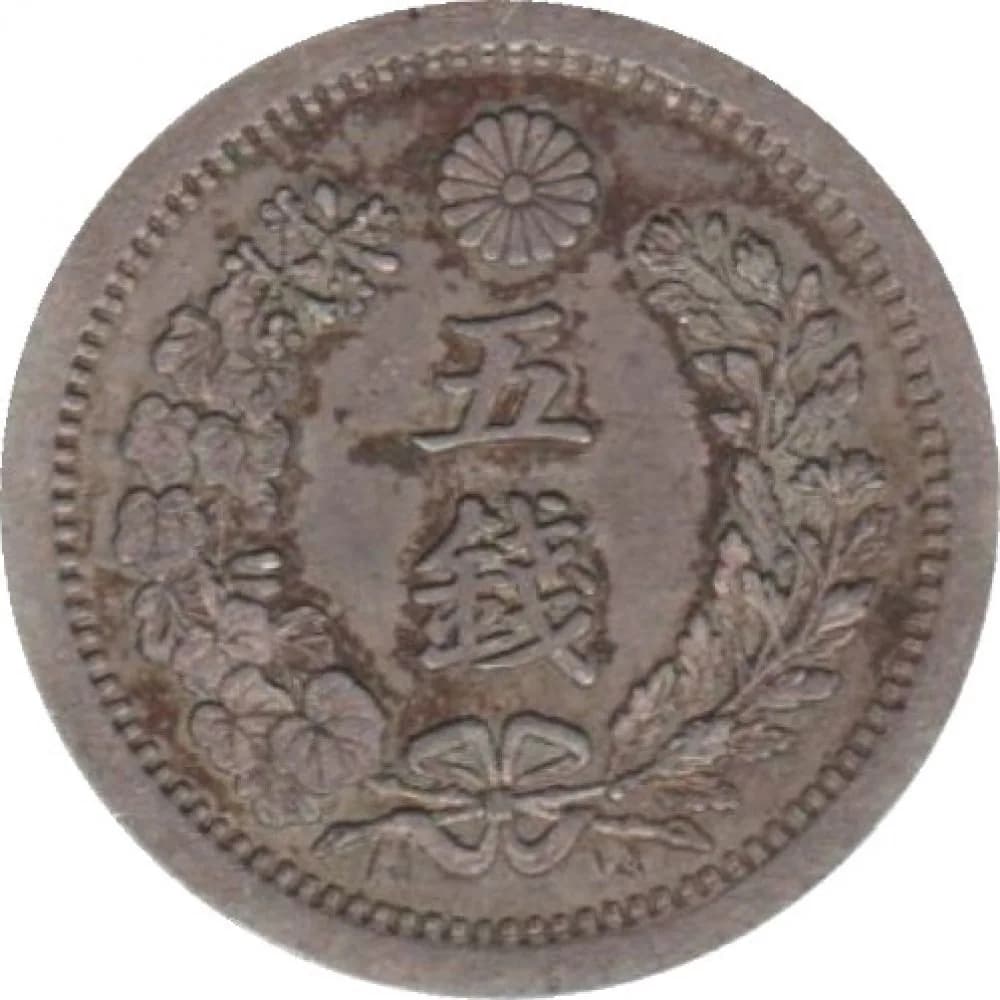
Image: Modern Japanese coinage / Coindesmonnaies / Wikimedia Commons / CC BY-SA 4.0(source)
1824, Bunsei 7 in Japan. The Edo shogunate was implementing various policies to stabilize the economy. Particularly, in commercial hubs like Edo and Osaka, the circulation of currency influenced the vitality of society. Japan's economy at the time depended on the land tax system based on rice, with gold and silver coins also in circulation. Gold coins were used for high-value transactions as described in Types and Identification of Edo Gold Coins, while silver coins were used for daily commerce. However, silver coins' value relied on weight, necessitating weighing during every transaction, which was inconvenient for many. To resolve this, the shogunate decided to issue coins possible for counting-based transactions. Issued in 1772, the Nanryō Nishugin was a precursor; however, the demand to facilitate even smaller transactions led to the emergence of Nanryō Isshugin in 1824. Valued at 1/16 ryō per coin, the silver's 98% purity was highly regarded. As a counting silver coin, it paved the way for a new era in Japanese currency circulation. During this period, economic stability was a top priority for the shogunate, with the issuance of Nanryō Isshugin playing a significant role.
Chapter 2: Minting Technology and Process — The Birth of Nanryō Isshugin
Image: Modern Japanese coinage / Coindesmonnaies / Wikimedia Commons / CC BY-SA 4.0(source)
The minting of Nanryō Isshugin was carried out at the Edo Kinza. The Kinza, responsible for coin minting, was traditionally overseen by the Gotō family. Gotō Shōzaburō, responsible for the Kinza, designed and minted the Nanryō Isshugin. He implemented technological innovations to enhance silver purity, achieving high-purity coins of 98%. This resulted in the coin being highly regarded as a quality currency. The minting process involved melting pure silver, pouring it into molds, cooling to solidify, embossing designs, and then verifying weight and purity through inspection. The Nanryō Isshugin thus weighed approximately 3.75 grams, measuring 25 millimeters by 15 millimeters, entering the market as a compact silver coin. Its size was particularly convenient for daily transactions and was especially valued for small-scale commerce. Furthermore, to ensure stable silver supply, the shogunate secured silver from mines nationwide for minting. As such, the Nanryō Isshugin maintained a stable supply and reliability in circulation, becoming an important coin in Japan, with its technology and quality influencing future generations.
Chapter 3: Distribution and Economic Impact — The Beloved Nanryō Isshugin
Image: Modern Japanese coinage / Coindesmonnaies / Wikimedia Commons / CC BY-SA 4.0(source)
Once the Nanryō Isshugin entered the market, it spread rapidly. Its value was especially evident in everyday commerce. In Japan at the time, there was a lively trade in rice, vegetables, fish, and other foods, where the Nanryō Isshugin was extremely handy for small transactions. For example, Edo merchants used the Isshugin to conduct daily purchases and sales, completing transactions quickly. This eliminated the hassle of weight-based calculations inherent in traditional silver coins, enabling counting-based transactions. As a result, the Nanryō Isshugin became known as the 'commoners’ silver coin.' It also played a role in enhancing the reliability of currency. Even during the chaotic end of the Edo period, when coins with reduced silver purity were widespread, the Nanryō Isshugin maintained its high purity, offering stable value. It gained consumer trust, contributing to economic stability. Furthermore, as part of Japan's currency system reform, it promoted the dissemination of counting silver coins, resulting in smoother currency circulation and lively commerce. The Nanryō Isshugin was a crucial element supporting the lives of commoners and had a significant impact on Japan's economy.
Chapter 4: Transition and Influence — The Legacy of Nanryō Isshugin
Image: Modern Japanese coinage / Coindesmonnaies / Wikimedia Commons / CC BY-SA 4.0(source)
The circulation of Nanryō Isshugin continued through the turbulent times from the late Edo period to the Meiji Restoration. However, in 1869 (Meiji 2), with the new government's currency system reform, the Nanryō Isshugin gradually disappeared. The newly introduced currency system lowered silver purity, ending the role of counting silver coins. Nonetheless, due to its high purity and the convenience of counting-based transactions, the Nanryō Isshugin remained a memorable entity. Today, it is popular among collectors as detailed in Edo Silver Coins. Because of its rarity and historical background, it is sometimes traded at high prices. Especially, it is often collected separately from Ansei or Man'en period Isshugins with reduced silver purity, marking it as valuable. Additionally, in the evolution of Japan's currency system, Nanryō Isshugin played an important role. The spread of counting silver coins influenced subsequent Modern Currency Value and Identification, forming the basis for efficient currency circulation. This enabled further economic growth in Japan. The Nanryō Isshugin symbolized a revolution in Japan's economic history, beyond merely being a coin.
Value & Rarity
Nanryō Isshugin remains highly popular among collectors today. One reason for this is its high silver purity of 98%. During the tumultuous end of the Edo period, when many coins with reduced silver purity circulated, the Nanryō Isshugin maintained its high standard. Therefore, it is regarded as a valuable antique coin today. Furthermore, as a unique counting silver coin, it is very attractive to collectors. As a symbol of the evolution of Japan's currency system, its historical significance is also appreciated. Additionally, differentiation from other silver coins is crucial for collectors. For instance, Ansei or Man'en period Isshugins, with reduced silver purity, present value differences despite being same denominations. Hence, Nanryō Isshugin occupies a special place among collectors, with its rarity and historical background expected to enhance its future value.
Related Guides: Chogin and Mameitagin Details / Check Auction Prices of Antique Coins
Individual prices are listed only once verifiably matched, sourced records exist.
Conclusion
Nanryō Isshugin was a crucial currency supporting Japan's economy from the late Edo period to the early Meiji period. Its high-quality silver content and convenience for counting-based transactions were favored by many merchants and commoners, offering stable value even during the chaotic end of the Edo period. As a counting silver coin, its role influenced later currency systems, embodying a revolution in Japan's economic history. Its value remains high today, captivating collectors as an intriguing entity. Reflecting on the history of Nanryō Isshugin is vital for understanding the evolution of Japan's economy and currency system, enduringly significant.
Related Stories
Ansei Chōgin — The Final Edo Era Silver Bullion Coin amidst the Turbulence of the Bakumatsu
A Short-lived yet Historical Silver Bullion Created Amidst the Turmoil of Opening Japan
Coin StoryAnsei Nibus Gin — A Silver Coin Born Amidst Port Opening and Fiscal Crisis
The Role of Subsidiary Silver Coins Issued in the Turbulent Closing Years of the Edo Period
Coin StoryBunkyū Eiho and the End of the Gold Coin System — Tracing the History of Edo Gold Coins
Bunkyū 2 (1862) marks the final currency reform of the shogunate, with a gold coin series issued alongside the Bunkyū Eiho (copper coins) as a symbol of late shogunate monetary chaos
Related Encyclopedia Entries
System of Edo Silver Coins
Conclusion: Understanding the two systems (weighed and counted) and complex fineness changes of Edo silver coins, along with appraisal points and market prices, enables smart collecting and investing.
EncyclopediaThe World of Chogin
Conclusion: Chogin is a fascinating weighing silver coin from the Edo period, whose value is determined by its fineness changes, hallmarks, and condition, making it an attractive collectible and investment.
Dealers
Dealers Handling This Category
A reference when considering a sale or appraisal. All are dealers and auction houses with a proven track record.
Japan Coin Auction (JCA)
Tokyo
Holds regular auctions with reliable hammer price data, making it a useful resource for tracking market values. Caters to a wide range of collectors from beginners to advanced buyers.
Ginza Coins
Ginza, Chuo-ku, Tokyo
One of Japan's most established numismatic dealers. The scale and variety of their regular auctions is among the largest in the country. Their catalogs are considered a benchmark for market pricing.
Osaka Numismatic Auction
Osaka
A Kansai-based coin auction house with particular strength in regional and hole coins.