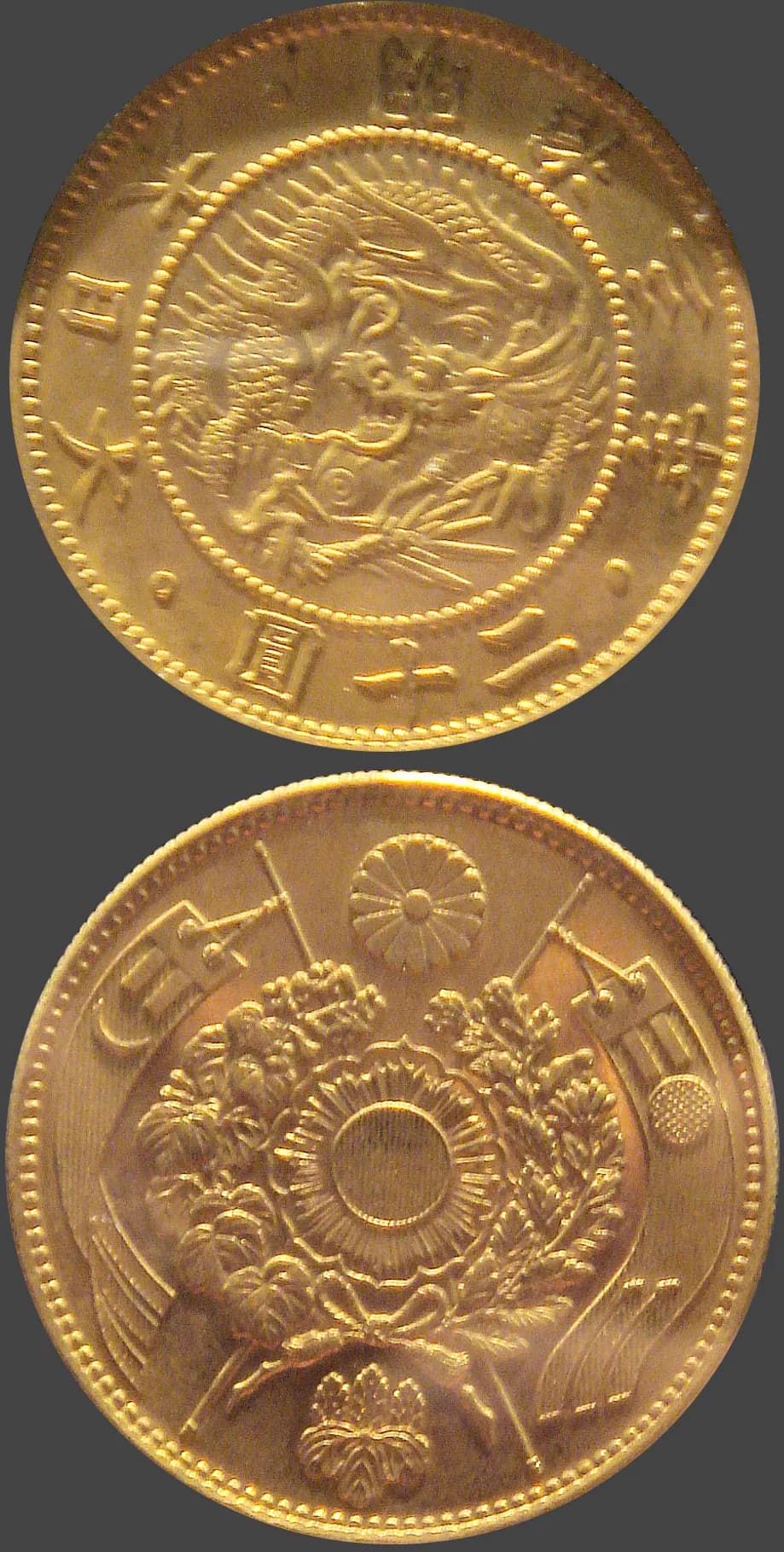
Image: Modern Japanese coinage / PHGCOM / Wikimedia Commons / CC BY-SA 3.0(source)
Meiwa Gomome Gin — Tracing the History of Edo Silver Coins
The distinct weight mark "Gomome". The story of the Meiwa era's attempt to abolish the weighing system and its eventual failure
Subject coin: 明和五匁銀
Overview
The Meiwa Gomome Gin is an indispensable piece when discussing the history of Japanese currency from 1765-1772. With the clear weight mark "Gomome", it reflects the Meiwa era's attempt to abolish the weighing system and its eventual failure. This document traces the Meiwa Gomome Gin as an Edo silver coin, from its historical background and minting techniques to its circulation and impact on later generations, following historical facts. Understanding the historical context of this coin, which cannot be seen from mere market figures, will greatly change the perceived value. The history of Japanese currency begins with Wadōkaichin minted in the Nara period, goes through various gold and silver coins of the Edo period, and leads to modern currency in the Meiji era. If you want to learn the basics, please also see Types and Identification of Edo Silver Coins and Details of Chogin and Mameitagin.
Specifications
- Denomination
- —
- Minting period
- 1765-1772
- Metal composition
- —
- Weight
- —
- Dimensions
- —
- Mintage
- 不詳(諸説あり)
- Mint supervisor
- 不詳
- Market price
- 状態により変動(落札履歴を参照)
The Era when Meiwa Gomome Gin was Born — Background of Minting
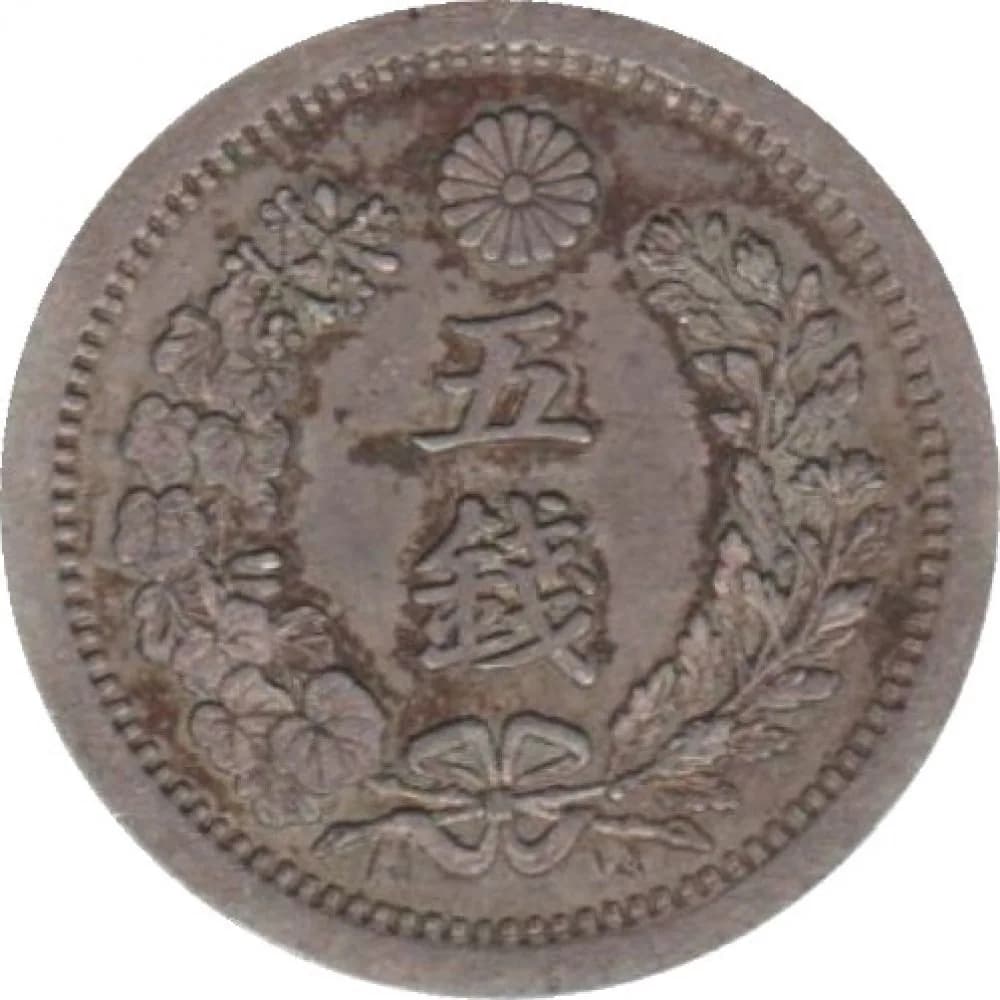
Image: Modern Japanese coinage / Coindesmonnaies / Wikimedia Commons / CC BY-SA 4.0(source)
The background to the appearance of Meiwa Gomome Gin is deeply tied to the political and economic circumstances of the time. Edo silver coins were minted in response to the fiscal and circulation challenges faced by the rulers and emerged out of the needs of the society then. We begin by exploring the starting point of why this coin was needed under the circumstances of the time. The fact of its minting beginning in Meiwa 2 (1765) is essential for understanding its historical position. Its short minting period and rarity of existing pieces is a crucial fact for understanding its historical position. Refer to Check the Auction Prices for Ancient Coins for further understanding. Considering the commodity prices and systems of the minting era, it becomes clear that the meaning of coins with the same name varies greatly depending on the issuance period. Surviving pieces undergo wear and oxidation over the years, so those that retain their state from the minting period become increasingly rare. The market evaluation is determined by the intersection of rarity, preservation state, and collector popularity, and the price cannot be explained by just one of these factors.
How Meiwa Gomome Gin was Made — Material and Technique
Image: Modern Japanese coinage / Coindesmonnaies / Wikimedia Commons / CC BY-SA 4.0(source)
Essential to discussing the value of Meiwa Gomome Gin are the materials and methods of minting. Edo silver coins vividly retain the craftsmanship of workers at the time in the metal composition and finishing techniques, which directly affects modern evaluations. By carefully tracing the selection of materials and the crafting process, one can see the accumulation of techniques embedded in each coin. The fact that a weight of 5 momme (approximately 18.75g) is engraved as a weight guarantee is essential for understanding its historical position. Refer to Check Price Trends with Market Charts for further understanding. Surviving pieces undergo wear and oxidation over the years, so those that retain their state from the minting period become increasingly rare. The market evaluation is determined by the intersection of rarity, preservation state, and collector popularity, and the price cannot be explained by just one of these factors. Grasping the basics like the style of the characters, the color of the metal, dimensions, and weight is the first step in determining authenticity and lineage. By studying historical backgrounds, one can feel the cultural depth of the currency that cannot be measured by market figures alone. Continuously collecting coins increases knowledge in a multi-dimensional way, connecting the background and minting circumstances of each brand like links in a chain.
Meiwa Gomome Gin and People's Lives — Circulation and Economy
Image: Modern Japanese coinage / Coindesmonnaies / Wikimedia Commons / CC BY-SA 4.0(source)
After its issuance, Meiwa Gomome Gin was actually handed from person to person and used in daily life. Understanding how Edo silver coins circulated in the city and their impact on prices and transactions is the core of understanding currency history. We interpret the role this currency played through the economic movements and the reactions of ordinary people at the time. The fact that its silver purity is higher than the Chogin series (with various opinions) is essential for understanding its historical position. Refer to Standards for Ancient Coin Grading for further understanding. The market evaluation is determined by the intersection of rarity, preservation state, and collector popularity, and the price cannot be explained by just one of these factors. Grasping the basics like the style of the characters, the color of the metal, dimensions, and weight is the first step in determining authenticity and lineage. By studying historical backgrounds, one can feel the cultural depth of the currency that cannot be measured by market figures alone. Continuously collecting coins increases knowledge in a multi-dimensional way, connecting the background and minting circumstances of each brand like links in a chain. A single ancient coin is material that reflects the economic policies and people's lives of the era, and the more one understands the background, the more the perception of value changes.
Legacy of Meiwa Gomome Gin — Its Impact on Later Generations
Image: Modern Japanese coinage / Coindesmonnaies / Wikimedia Commons / CC BY-SA 4.0(source)
Even after its era ended, Meiwa Gomome Gin left an impact on subsequent currency and the history of collecting. Reviewing how Edo silver coins were positioned amidst recoinage, abolition, and succession and how they are evaluated today enhances precision in value judgment. The fact of its experimental precursor position for the South Ryō Ni Shu Gin (1772) is essential for understanding its historical position. Refer to Price Monitoring for Coins of Interest in Vault for further understanding. Grasping the basics like the style of the characters, the color of the metal, dimensions, and weight is the first step in determining authenticity and lineage. By studying historical backgrounds, one can feel the cultural depth of the currency that cannot be measured by market figures alone. Continuously collecting coins increases knowledge in a multi-dimensional way, connecting the background and minting circumstances of each brand like links in a chain. A single ancient coin is material that reflects the economic policies and people's lives of the era, and the more one understands the background, the more the perception of value changes. Considering the commodity prices and systems of the minting era, it becomes clear that the meaning of coins with the same name varies greatly depending on the issuance period.
Value & Rarity
The market value of Meiwa Gomome Gin is determined by three factors: rarity, preservation state (grade), and collector popularity. Even within Edo silver coins, prices can range from several times to several dozen times depending on the minting period, character style, and near-mint condition. Brands with limited surviving numbers appear less often in the market, and well-preserved pieces increase in rarity over time. When reading the market, it is prudent to confirm the actual finalized auction prices through multiple examples, rather than the listed prices. The latest price movements can be checked at Price Monitoring for Coins of Interest in Vault. The market evaluation is determined by the intersection of rarity, preservation state, and collector popularity, and the price cannot be explained by just one of these factors. Grasping the basics like the style of the characters, the color of the metal, dimensions, and weight is the first step in determining authenticity and lineage.
Conclusion
Meiwa Gomome Gin was born out of the needs of the era from 1765-1772, fulfilled its role in people's lives, and left footprints for later generations. Knowing the history behind a single coin fosters a keen eye that cannot be gained through market figures alone. Those interested in Edo silver coins are encouraged to gradually develop their assessment criteria by comparing multiple transaction data without rushing.
Related Stories
Two-System of Chōgin and Mameitagin — Tracing the History of Edo Silver Coins
Edo silver coins were always circulated as a set of 'Chōgin (丁銀, Large)' and 'Mameitagin (豆板銀, Small)'. Why was this peculiar two-system created?
Coin StoryGenroku Ichibuban Kin — The Small Gold Coins of Edo That Changed Overnight
The Drastic Drop in Gold Purity of Genroku Ichibuban and Its Impact
Coin StoryThe Genroku Koban — Shigehide Ogiwara's Financial Revolution and the Consequences of the Genroku Bubble
The man who halved the gold content to save the shogunate, and the merits and demerits of his actions
Related Encyclopedia Entries
System of Edo Silver Coins
Conclusion: Understanding the two systems (weighed and counted) and complex fineness changes of Edo silver coins, along with appraisal points and market prices, enables smart collecting and investing.
EncyclopediaThe World of Chogin
Conclusion: Chogin is a fascinating weighing silver coin from the Edo period, whose value is determined by its fineness changes, hallmarks, and condition, making it an attractive collectible and investment.
Dealers
Dealers Handling This Category
A reference when considering a sale or appraisal. All are dealers and auction houses with a proven track record.
Japan Coin Auction (JCA)
Tokyo
Holds regular auctions with reliable hammer price data, making it a useful resource for tracking market values. Caters to a wide range of collectors from beginners to advanced buyers.
Ginza Coins
Ginza, Chuo-ku, Tokyo
One of Japan's most established numismatic dealers. The scale and variety of their regular auctions is among the largest in the country. Their catalogs are considered a benchmark for market pricing.
Osaka Numismatic Auction
Osaka
A Kansai-based coin auction house with particular strength in regional and hole coins.