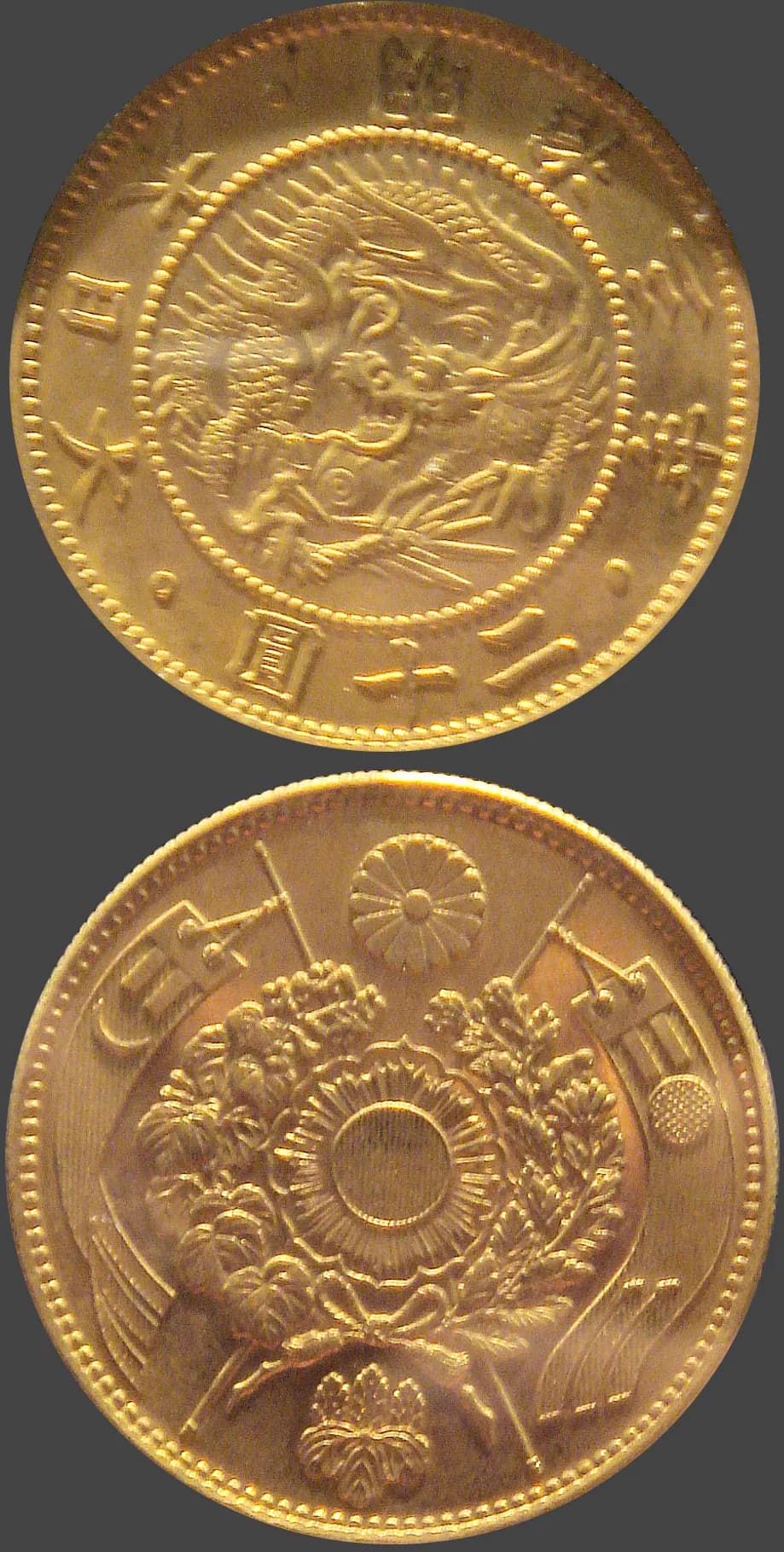
Image: Modern Japanese coinage / PHGCOM / Wikimedia Commons / CC BY-SA 3.0(source)
Two-System of Chōgin and Mameitagin — Tracing the History of Edo Silver Coins
Edo silver coins were always circulated as a set of 'Chōgin (丁銀, Large)' and 'Mameitagin (豆板銀, Small)'. Why was this peculiar two-system created?
Subject coin: 丁銀と豆板銀の二体制
Overview
The two-system of Chōgin and Mameitagin is an indispensable piece when discussing the monetary history of Japan from 1601 to 1854. Edo silver coins were always circulated as a set of 'Chōgin (丁銀, Large)' and 'Mameitagin (豆板銀, Small)'. Why was this peculiar two-system created? In this article, we follow the story of the two-system of Chōgin and Mameitagin as Edo silver coins, from their historical background, minting technology, actual circulation, and their impact on later generations. By understanding the historical context that this currency carries, which cannot be seen in exchange rates alone, one's perception of value should significantly change. The history of Japanese currency began with Wadō kaichin minted in the Nara period, passed through the diverse gold and silver coins of the Edo period, and was inherited by the modern currency of the Meiji period. Those who want to cover the basics should also refer to Types and Distinctions of Edo Silver Coins and Details of Chōgin and Mameitagin.
Specifications
- Denomination
- —
- Minting period
- 1601-1854
- Metal composition
- —
- Weight
- —
- Dimensions
- —
- Mintage
- 不詳(諸説あり)
- Mint supervisor
- 不詳
- Market price
- 状態により変動(落札履歴を参照)
The Era When the Two-System of Chōgin and Mameitagin Was Born — Background of Minting
Image: Modern Japanese coinage / Coindesmonnaies / Wikimedia Commons / CC BY-SA 4.0(source)
The background to the emergence of the two-system of Chōgin and Mameitagin is deeply related to the political and economic circumstances of that era. Edo silver coins were minted in response to the financial and distribution challenges faced by rulers and were created out of the needs of the society at that time. First, let's look at what kind of historical circumstances necessitated such currency. The fact that Chōgin (weighing tens of grams) and Mameitagin (weighing several to over ten grams) were always circulated as a pair is indispensable to understanding the historical positioning of this currency. The fact that the Chōgin + Mameitagin system disappeared with the spread of kaisū ginka, such as Ichibugin, is indispensable to understanding the historical positioning of this currency. Referring to Check Auction Prices in Antique Coins can deepen your understanding. Considering the prices and systems of the era when they were minted, it is evident that even currencies with the same name can have significantly different meanings depending on the issuance period. Existing specimens become rarer over time as they wear and oxidize; thus, pieces that maintain their mint condition become rarer as time passes. Market evaluation is determined by rarity, preservation state, and collection popularity—all intertwined, and none alone can explain the price.
How the Two-System of Chōgin and Mameitagin Was Created — Materials and Technology
Image: Modern Japanese coinage / Coindesmonnaies / Wikimedia Commons / CC BY-SA 4.0(source)
When discussing the value of the two-system of Chōgin and Mameitagin, one cannot overlook the materials and manufacturing methods involved. Edo silver coins are heavily marked by the craftsmanship of workers of the time in terms of precious metal blending and finishing techniques, which directly link to modern evaluation. By carefully tracing the selection of materials and the manufacturing process, one can see the accumulation of techniques imbued in each coin. The fact that large transactions used Chōgin and small fractions used Mameitagin is essential to understanding the historical positioning of this currency. Referring to Price Trends in Market Charts can deepen your understanding further. Existing specimens become rarer over time as they wear and oxidize; hence, pieces that maintain their condition over time increase in rarity. Market evaluation is determined by rarity, preservation condition, and collection popularity—all intertwined, and none alone can explain the price. Grasping the basics, such as the character styles, metal hues, dimensions, and weights, is the first step in discerning authenticity and lineage. Learning about the historical background allows you to feel the cultural depth unique to the currency that cannot be measured by price figures alone. As you continue collecting, the historical background and minting circumstances of each series interconnect, growing a multidimensional understanding.
The Two-System of Chōgin and Mameitagin and People's Lives — Circulation and Economy
Image: Modern Japanese coinage / Coindesmonnaies / Wikimedia Commons / CC BY-SA 4.0(source)
The two-system of Chōgin and Mameitagin, once issued, were actually used by passing from one hand to another in people's lives. How Edo silver coins circulated in the city and what impact they had on prices and transactions is the core understanding of coinage history. Through the economic movements and civilian responses of that time, we interpret the roles this currency played. The fact that weight was not constant and was measured with scales for each transaction is indispensable to understanding the historical positioning of this currency. Reference to Grading Standards for Antique Coins can deepen understanding further. Market evaluation is determined by rarity, preservation condition, and collection popularity—all intertwined, and none alone can explain the price. Grasping the basics, such as the character styles, metal hues, dimensions, and weights, is the first step in discerning authenticity and lineage. Learning about the historical background allows you to feel the cultural richness unique to the currency that cannot be measured by price figures alone. As you continue collecting, the historical background and minting circumstances of each series interconnect, nurturing a three-dimensional knowledge. One old coin is a document that reflects the economic policies and people's lives of that era; the more you know the background, the more the perception of its value changes.
What the Two-System of Chōgin and Mameitagin Left Behind — Impact on Posterity
Image: Modern Japanese coinage / Coindesmonnaies / Wikimedia Commons / CC BY-SA 4.0(source)
Even after the era ended, the two-system of Chōgin and Mameitagin left an impact on subsequent coins and collecting history. We look back at how Edo silver coins were positioned amid re-minting, abolition, and succession, and how they are evaluated today. Considering what meaning a piece of the past holds in today's market hones the precision of value judgment. The fact that 'Itchō' (one piece of Chōgin) was the basic unit, supplemented by Mameitagin for shortfalls, is indispensable to understanding the historical positioning of this currency. Reference to Monitor Prices of Coins of Interest in Vault can deepen understanding. Grasping the basics, such as the character styles, metal hues, dimensions, and weights, is the first step in discerning authenticity and lineage. Learning about the historical background allows you to feel the cultural richness unique to the currency that cannot be measured by price figures alone. As you continue collecting, the historical background and minting circumstances of each series interconnect, nurturing a multi-dimensional knowledge. One old coin is a document that reflects the economic policies and people's lives of that era; knowing the background more profoundly alters the perception of its value. Considering the prices and systems of the era when they were minted, it becomes evident that even currencies with the same name can have significantly different meanings depending on the issuance period.
Value & Rarity
The market value of the two-system of Chōgin and Mameitagin is determined by three factors: rarity, preservation condition (grade), and collection popularity. Even among the same Edo silver coins, prices can vary by several to several tens of times based on minting period differences and calligraphy distinctions, and whether they are in near-unused condition. Brands with limited existing numbers rarely appear in the market, and well-preserved specimens become increasingly rare each year. When reading the market, checking finalized auction prices rather than asking prices from multiple instances is a secure approach. The latest price movements can be checked at Monitor Prices of Coins of Interest in Vault. Market evaluation is determined by rarity, preservation condition, and collection popularity—all intertwined, and none alone can explain the price. Grasping the basics, such as the character styles, metal hues, dimensions, and weights, is the first step in discerning authenticity and lineage.
Conclusion
The two-system of Chōgin and Mameitagin was born out of the needs of the era from 1601 to 1854, played roles in people's lives, and left footprints for posterity. Knowing the history behind a single piece of currency cultivates a discerning eye that cannot be obtained by market figures alone. Those interested in Edo silver coins are recommended to gradually develop their judgment criteria by comparing multiple transaction data without haste.
Related Stories
Genroku Ichibuban Kin — The Small Gold Coins of Edo That Changed Overnight
The Drastic Drop in Gold Purity of Genroku Ichibuban and Its Impact
Coin StoryThe Genroku Koban — Shigehide Ogiwara's Financial Revolution and the Consequences of the Genroku Bubble
The man who halved the gold content to save the shogunate, and the merits and demerits of his actions
Coin StoryFoundation of the Ginza — The Story of Silver that Supported the Edo Period
Exploring the Currency System of the Edo Period and Its Historical Significance
Related Encyclopedia Entries
System of Edo Silver Coins
Conclusion: Understanding the two systems (weighed and counted) and complex fineness changes of Edo silver coins, along with appraisal points and market prices, enables smart collecting and investing.
EncyclopediaThe World of Chogin
Conclusion: Chogin is a fascinating weighing silver coin from the Edo period, whose value is determined by its fineness changes, hallmarks, and condition, making it an attractive collectible and investment.
Dealers
Dealers Handling This Category
A reference when considering a sale or appraisal. All are dealers and auction houses with a proven track record.
Japan Coin Auction (JCA)
Tokyo
Holds regular auctions with reliable hammer price data, making it a useful resource for tracking market values. Caters to a wide range of collectors from beginners to advanced buyers.
Ginza Coins
Ginza, Chuo-ku, Tokyo
One of Japan's most established numismatic dealers. The scale and variety of their regular auctions is among the largest in the country. Their catalogs are considered a benchmark for market pricing.
Osaka Numismatic Auction
Osaka
A Kansai-based coin auction house with particular strength in regional and hole coins.