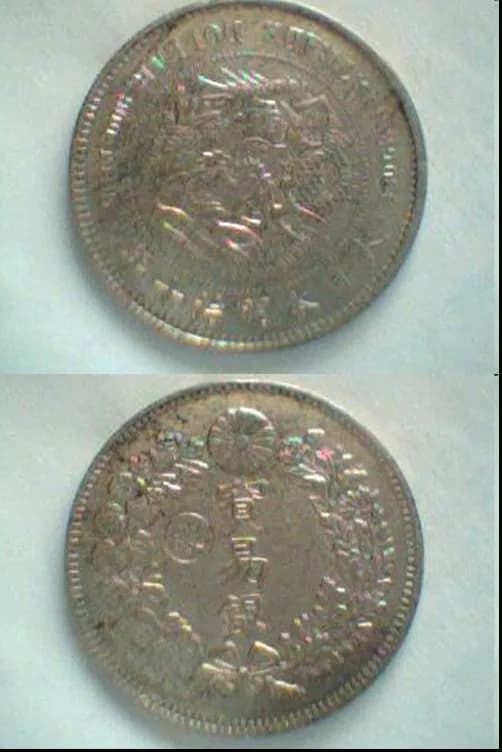
Image: Modern Japanese coinage / photographed by Samuel Ho / Wikimedia Commons / CC BY-SA 3.0(source)
Kan'ei Tsuho Tetsusen — The Unorthodox Currency Born from Copper Shortage
A Historical Scene Where Edo-period Minting Techniques and Economic Struggles Intersected
Subject coin: 寛永通宝鉄銭
Overview
Kan'ei Tsuho Tetsusen symbolizes a turning point in currency circulation in mid-Edo period Japan. In the 4th year of Genbun (1739), Japan faced a chronic copper shortage. Therefore, the shogunate decided to mint round coins with a hole in them using iron. This decision differed from traditional currency, as noted in Types and Identification of Edo Gold Coins. Kan'ei Tsuho Tetsusen came in two types: 1-mon coins and 4-mon coins, and were minted across various domains including Mito, Sendai, and Morioka, though it was reportedly unpopular among the common people. Nevertheless, this currency serves as an important clue to understanding the economic situation of the Edo period. The fate of Kan'ei Tsuho Tetsusen vividly illustrates one aspect of Japan's currency policies that were tossed about by the tides of the times.
Specifications
- Denomination
- 1文、4文
- Minting period
- 1739年〜1860年
- Metal composition
- 鉄
- Weight
- 不詳(諸説あり)
- Dimensions
- 直径約24mm(1文銭)
- Mintage
- 不詳(諸説あり)
- Mint supervisor
- 不詳
- Market price
- 数百円〜数千円(状態による)
Chapter 1: Crisis of Copper Shortage — Shogunate's Decision
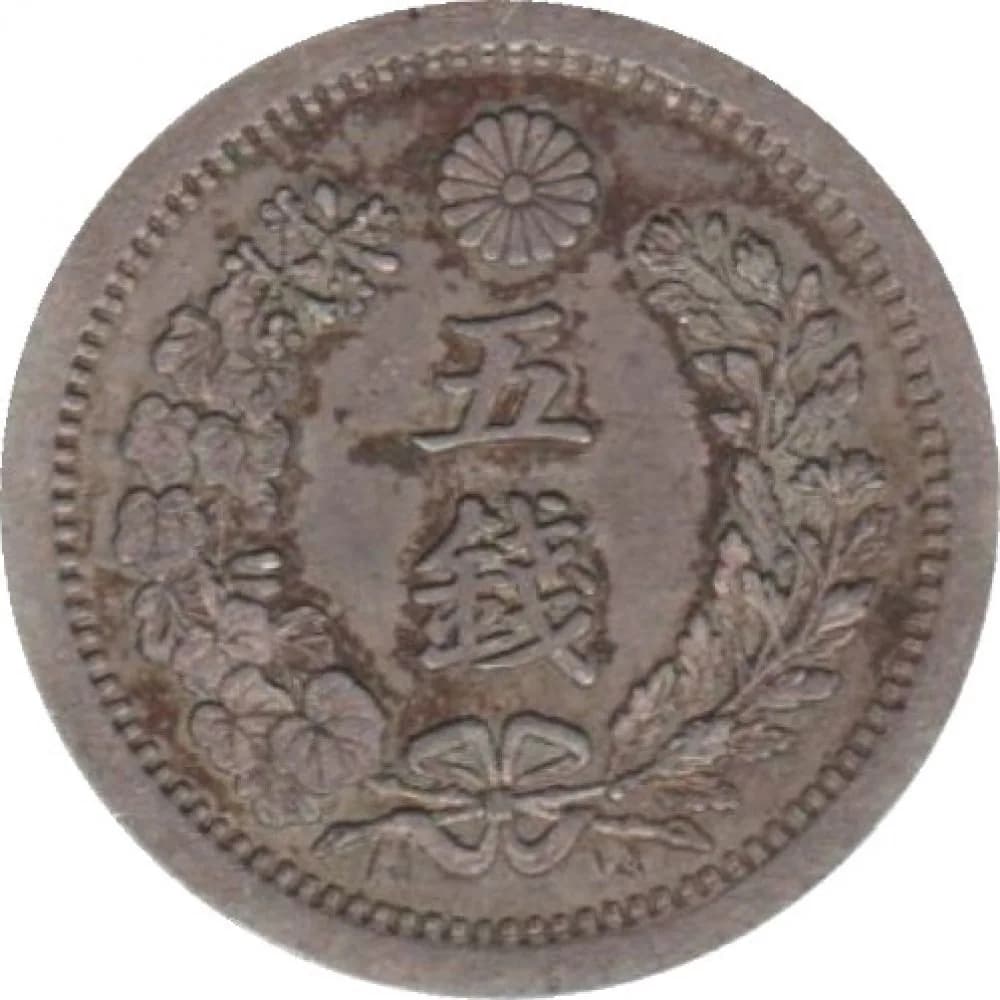
Image: Modern Japanese coinage / Coindesmonnaies / Wikimedia Commons / CC BY-SA 4.0(source)
In 1739, the Edo Shogunate faced a serious issue. The copper coins that had been used as currency since the early Edo period were in short supply due to the depletion of domestic copper mines and the outflow of copper overseas. In particular, in the 4th year of Genbun, the copper shortage became prominent, and the shogunate was forced to make a bold decision to address this. Holding power as the Senior Councilor, Tanuma Okitsugu considered introducing new material to maintain stable currency circulation. Under Tanuma's directive, the shogunate finally decided to proceed with minting round coins with a hole using iron. This decision was one of the innovative attempts in Japanese currency history, as seen in Detailed Explanation of Wado Kaichin. The newly minted Kan'ei Tsuho Tetsusen came in two types, 1-mon coins and 4-mon coins, and circulated at the same face value as copper coins. However, the feel of iron differed from the familiar touch of copper, causing a sense of discomfort among the common people. Nonetheless, the shogunate bet on this new currency system, advancing minting in various domains. Particularly in Mito Domain, Sendai Domain, and Morioka Domain, active production of iron coins took place.
Chapter 2: Minting Sites — Techniques and Struggles
Image: Modern Japanese coinage / Coindesmonnaies / Wikimedia Commons / CC BY-SA 4.0(source)
The minting of Kan'ei Tsuho Tetsusen involved many technical challenges. Iron, as a material, was more difficult to process compared to copper, requiring high-temperature handling. This compelled domains to acquire new technological skills. In Mito Domain, experts in minting techniques were invited, and unique furnaces and tools were developed. Similarly, in Morioka Domain, local workers were trained to adapt to new techniques, aiming for efficiency in minting. In Sendai Domain, minting using local iron ore was conducted, promoting technological innovation. In various domains, developing mines to secure the necessary iron for minting was promoted, and the iron supplied from there was transported to minting sites. At these minting sites, temperature management of furnaces was a major challenge, and workers had to exercise utmost caution when working with high-temperature furnaces. Measures to prevent rust on iron were also devised, and the completed coins underwent anti-rust treatment, although this was not a complete solution, and corrosion during circulation remained an unavoidable issue. Despite these efforts, the production of iron coins required more labor and time than anticipated, imposing a greater economic burden compared to traditional copper coins.
Chapter 3: Circulation and Repercussions — Reception and Limitations of Iron Coins
Image: Modern Japanese coinage / Coindesmonnaies / Wikimedia Commons / CC BY-SA 4.0(source)
When Kan'ei Tsuho Tetsusen was introduced to the market, it was not warmly received among the common people, contrary to expectations. The texture of iron differed from copper, being heavier and feeling different to the touch. This discomfort was particularly strong among merchants and citizens, who still preferred using copper coins. Economically, although iron coins were supposed to circulate at the same face value as copper coins, gaining market trust proved difficult, and differences in actual prices and exchange rates arose in certain areas. For example, while a 1-mon value was maintained in Edo, in rural areas, 4-mon coins were sometimes regarded as having a value of only about 2 mons. This loss of trust led to the rejection of iron coins in many transactions, causing disruptions in currency circulation and adversely affecting economic activities. Types and Identification of Round Coins with a Hole details how these coins were identified and treated in circulation. The shogunate explored additional policies to resolve this issue, but short-term solutions were not found, and iron coins gradually disappeared from the market.
Chapter 4: Changing Times and the End of Iron Coins
Image: Modern Japanese coinage / Coindesmonnaies / Wikimedia Commons / CC BY-SA 4.0(source)
Kan'ei Tsuho Tetsusen existed as part of the Japanese economy from the late 18th century to the mid-19th century, but its circulation gradually decreased. The shogunate sought a new currency system and endeavored to construct a more stable currency regime. Entering the 19th century, as copper supply gradually recovered, the minting of copper coins was again promoted. Consequently, the demand for iron coins declined, and their circulation decreased. Furthermore, by the late Edo period, influenced by the West, new currencies as seen in Value and Identification of Modern Coins were introduced, ending the role of iron coins. Around 1860, iron coins were scarcely seen in the market, and their existence was buried in history. However, Kan'ei Tsuho Tetsusen remains an important document reflecting the economic and political background of the time and is valuable for modern historical research. It provides many lessons for posterity on issues of currency trust and the relationship between material and value. When viewed from the perspective of later generations, the impact left by Kan'ei Tsuho Tetsusen quietly endures in the history of subsequent currencies and collection.
Value & Rarity
Kan'ei Tsuho Tetsusen is known as a relatively accessible item in the antique coin market. Due to the nature of iron, it rusts easily, and few have survived in perfect condition, making those in good preservation somewhat pricey. However, they are generally traded for a few hundred to a few thousand yen, making them an affordable antique coin for collectors. In terms of rarity, while there are slight differences depending on the minting site and period, there is generally no significant disparity. Most on the market are from the late Edo period, with earlier ones being somewhat rare. When collecting Kan'ei Tsuho Tetsusen, it is important to refer to Coin Grading Standards and check the condition, minting site, and year to form a more valuable collection.
Conclusion
Kan'ei Tsuho Tetsusen is a symbol of a turning point in the monetary policies of the Edo period, reflecting Japan's economic difficulties and technological innovations in its historical background. Introduced to address the issue of copper shortage, iron coins had a short lifespan, but their attempt influenced many subsequent currency systems. Even today, Kan'ei Tsuho Tetsusen remains a valuable document as a witness to history, aiding the understanding of social conditions and economic policies of that time. It provides an opportunity to reflect on what the intrinsic value of money is and how trust is formed.
Related Stories
Kan'ei Tsūhō — "Japan's Longest-Lived Coin" in Circulation for 230 Years
The history of the hole coin that continued to be used from the unification of Edo coinage in Kan'ei 13 (1636) to Meiji
Coin StoryKōchō Jūnisen — The Dream and Reality of the Ritsuryō State
The Rise and Fall of an Ancient State Over 250 Years of History
Coin StoryChōsen Tsūhō — The Mission of the Imported Coin that Filled 600 Years of Coin Blank in Japan
From the Muromachi to Sengoku Period, the Foreign Copper Coin that Crossed the Sea and Moved the Japanese Market
Dealers
Dealers Handling This Category
A reference when considering a sale or appraisal. All are dealers and auction houses with a proven track record.
Japan Coin Auction (JCA)
Tokyo
Holds regular auctions with reliable hammer price data, making it a useful resource for tracking market values. Caters to a wide range of collectors from beginners to advanced buyers.
Osaka Numismatic Auction
Osaka
A Kansai-based coin auction house with particular strength in regional and hole coins.
Ginza Coins
Ginza, Chuo-ku, Tokyo
One of Japan's most established numismatic dealers. The scale and variety of their regular auctions is among the largest in the country. Their catalogs are considered a benchmark for market pricing.