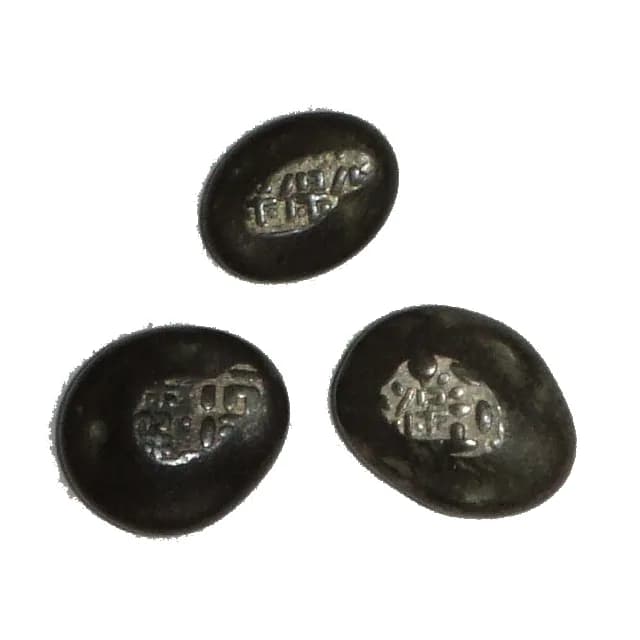
Image: Silver coins from the Edo to early Meiji periods / As6673 / Wikimedia Commons / CC BY-SA 3.0(source)
Shōwa Emperor's 50th Reign Anniversary 100-Yen Cupronickel Coin — A Commemorative Coin Marking Japan's Turning Point
The Story of the 100-Yen Cupronickel Coin Issued as a Symbol of the Stagflation Era
Subject coin: 昭和天皇在位50年記念100円白銅貨
Overview
In Shōwa 51 (1976), Japan had brought its period of high economic growth to a close and was entering an era of stagflation triggered by the oil shock. That year, a 100-yen cupronickel coin was issued to commemorate the 50th anniversary of Emperor Shōwa's reign. The obverse bears a majestic phoenix and chrysanthemum crest, while the reverse is inscribed with the characters「昭和天皇御在位50年記念」. This commemorative coin circulated alongside ordinary 100-yen coins, and was issued in quantities of tens of millions. Although a commemorative issue, it had the character of a 'disposable commemorative coin' used in everyday life, strongly reflecting the economic conditions and social significance of the time. The purchasing power of 100 yen had declined amid stagflation, symbolizing the harshness of the era. Later, in 1986, when the Emperor's 60th year of reign arrived, a 100,000-yen gold coin was issued, throwing the evolution of commemorative coin policy into sharp relief. This prompted a reassessment of the significance of commemorative coins, and they came to attract keen interest among antique coin collectors.
Specifications
- Denomination
- 100円
- Minting period
- 昭和51年(1976年)
- Metal composition
- 白銅(銅75%・ニッケル25%)
- Weight
- 4.8g
- Dimensions
- 直径22.6mm
- Mintage
- 数千万枚
- Mint supervisor
- 不詳(日本造幣局)
- Market price
- 500円〜3,000円(状態による)
Chapter 1: Japan in Stagflation — The Motivation Behind Minting the Commemorative Coin
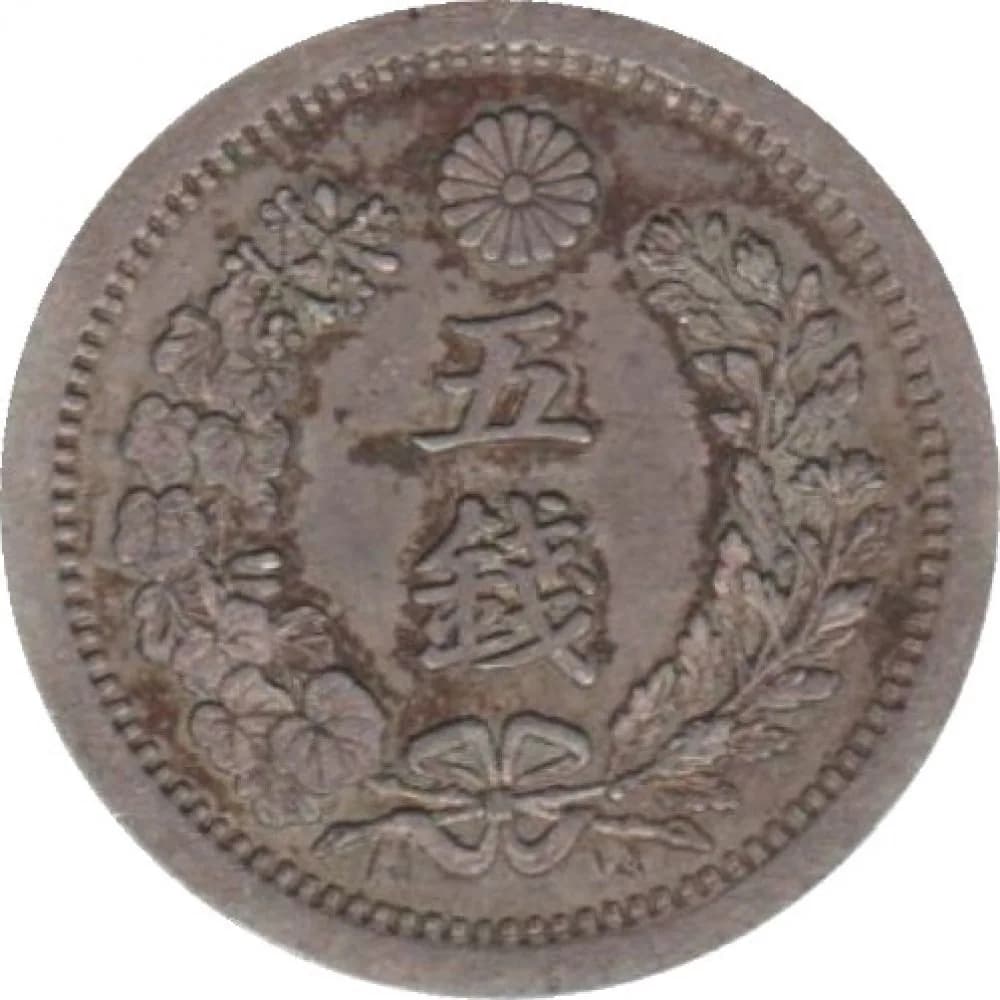
Image: Modern Japanese coinage / Coindesmonnaies / Wikimedia Commons / CC BY-SA 4.0(source)
In 1976, Japan was confronting an economic recession following the second oil shock. During this period, rising prices combined with stagnating economic growth — so-called stagflation — was making life hard for the people. The government decided to issue a 100-yen cupronickel commemorative coin marking the 50th anniversary of Emperor Shōwa's reign, in part as a symbol in response to these difficult circumstances. Emperor Shōwa had ascended to the throne in 1926 and had reigned as the symbol of Japan for 50 years thereafter. Celebrating this anniversary of his reign was an attempt to offer the people a moment of hope. That year, the Japanese government was lowering the official discount rate and seeking to engineer an economic recovery, but the effects were limited. The consumer price index for Shōwa 51 rose above the previous year's level, with prices of daily necessities in particular surging. The issuance of the 100-yen cupronickel coin was one policy measure within this economic context, intended to boost public morale through the release of a commemorative coin. This decision was made under the administration of Prime Minister Takeo Miki, who was searching for a shift in economic policy. The phoenix and chrysanthemum crest — symbols of Japan's tradition and the imperial institution — were chosen for the commemorative coin's design. The intention was thereby to reaffirm Japan's history and culture and to emphasize the national identity of its people.
Chapter 2: The Minting Process — Behind the Scenes of the Cupronickel Coin's Birth
Image: Modern Japanese coinage / Coindesmonnaies / Wikimedia Commons / CC BY-SA 4.0(source)
The minting of the Shōwa Emperor's 50th Reign Anniversary 100-Yen Cupronickel Coin (昭和天皇在位50年記念100円白銅貨) was carried out by the Japan Mint. The Mint is a long-established institution dating back to the Meiji era, known for its advanced technical capabilities. In 1976, the Mint had facilities in three cities — Osaka, Tokyo, and Hiroshima — and minting operations proceeded at each of these locations. For the production of the cupronickel coin, an alloy of 75% copper and 25% nickel was used. This alloy was highly durable and well suited to circulation. The minting process was strictly managed: alloy ingots were first fed into casting machines, then blanks were struck into coin shapes by presses. Because this was a commemorative coin, particular care was taken to faithfully reproduce the design, and precise engraving techniques were employed. The phoenix and chrysanthemum crest on the obverse and the inscription「昭和天皇御在位50年記念」on the reverse were refined through many test strikes to achieve the most beautiful finish. Many craftsmen were involved in the minting process, and the culmination of their skill and experience resulted in the successful production of tens of millions of commemorative coins. These then circulated throughout the country's markets, marking a new chapter in Japan's history. This minting process demonstrated the high level of technical capability of the time and represented an important step in the history of Japanese coin production.
Chapter 3: Circulation and Impact — The Commemorative Coin Woven into People's Lives
Image: Modern Japanese coinage / Coindesmonnaies / Wikimedia Commons / CC BY-SA 4.0(source)
The 100-yen cupronickel coin issued in Shōwa 51 came to be used in everyday life in the same way as ordinary 100-yen coins, despite being a commemorative issue. The number of coins issued ran into the tens of millions, and they circulated widely through banks and post offices across the country. In the stagflation era, the face value of 100 yen on this commemorative coin reflected the actual decline in purchasing power. Because the consumer price index had risen above the previous year's level and the prices of daily necessities in particular had surged, the number of goods that could be purchased for 100 yen was limited. For example, the price of gasoline exceeded 80 yen per liter, and the prices of rice and vegetables had also risen across the board. Among ordinary people, voices such as 'the commemorative coin is beautiful, but it doesn't do much to help in real life' were frequently heard. At the same time, however, those who held the commemorative coin in their hands sensed the historical milestone of Emperor Shōwa's 50 years of reign and felt a certain pride. In particular, it became an opportunity to reaffirm what Emperor Shōwa had meant to the people, deepening understanding of the significance of the imperial institution and of Japanese culture. The circulation of this commemorative coin was a symbolic event that exerted an influence on society as a whole, transcending mere economic activity.
Chapter 4: Influence on Later Generations — The Evolution and Evaluation of Commemorative Coin Policy
Image: Modern Japanese coinage / Coindesmonnaies / Wikimedia Commons / CC BY-SA 4.0(source)
The Shōwa Emperor's 50th Reign Anniversary 100-Yen Cupronickel Coin came to occupy an important position as a benchmark for commemorative coins issued later. It is frequently compared, in particular, to the 100,000-yen gold coin issued in 1986 to commemorate the 60th anniversary of Emperor Shōwa's reign. That gold coin reflected the backdrop of a period when the value of gold was rising, and because the number issued was limited, it is now considered to be of very high rarity value. The 100-yen cupronickel coin, by contrast, was issued in large quantities, so its rarity value is low; nevertheless, it maintains a certain popularity among antique coin collectors on account of its symbolic nature and historical significance. Furthermore, from the perspective of commemorative coin policy, the issuance of the cupronickel coin in 1976 influenced the approach to commemorative coin issuances that followed. For example, from the 1990s onward, activity increased among local governments issuing their own commemorative coins, which came to be used as a means of promoting regional culture and history. Even today, the issuance of commemorative coins is an important means of expressing the identity of a nation or region. In this way, the Shōwa Emperor's 50th Reign Anniversary 100-Yen Cupronickel Coin holds significance beyond that of a mere coin, playing a role in conveying Japan's history and culture to future generations.
Value & Rarity
Because the Shōwa Emperor's 50th Reign Anniversary 100-Yen Cupronickel Coin was issued in very large numbers, its rarity is considered low. However, owing to its historical significance and the special background of commemorating Emperor Shōwa's 50 years of reign, it holds a certain value as a collector's item. In the market, it is generally traded at around 500 to 3,000 yen, with the price varying considerably depending on condition and state of preservation. In particular, uncirculated specimens in fine condition and proof versions tend to command higher prices. This commemorative coin reflects the state of the Japanese economy and the social background of the time, making it a valuable reference for collectors looking back on the Shōwa era. It can frequently be found on auction sites and at specialist antique coin dealers, so those who are interested may wish to take one in hand. In this way, the value of the Shōwa Emperor's 50th Reign Anniversary 100-Yen Cupronickel Coin deepens further when one understands its historical background.
Related Guides: Value and Market Price of Commemorative Coins / Types and Features of Commemorative Coins / Checking Hammer Prices at Antique Coin Auctions / Checking Price Trends with the Market Chart
Conclusion
The Shōwa Emperor's 50th Reign Anniversary 100-Yen Cupronickel Coin carries meaning beyond that of a mere coin, radiating its presence as a symbol of its era. Issued amid the harsh economic conditions of stagflation, this commemorative coin offered the people a moment of hope and became an opportunity to deepen understanding of Japan's history and culture. It also influenced subsequent commemorative coin policy and came to play a role as a means of promoting regional culture and history. In this way, the Shōwa Emperor's 50th Reign Anniversary 100-Yen Cupronickel Coin symbolizes an important turning point in Japan's history of coinage, and its significance will continue to be passed down for generations to come.
Related Stories
60th Anniversary of Local Autonomy Law 500 Yen Bicolor – 10-Year Journey Across 47 Prefectures
Commemorative Coin Series Born from the Law of 1947
Coin StoryAichi Expo Commemorative Silver Coin — Hope for the Future Carved with the Wisdom of Nature
The History and Value of the 1000-yen Silver Coin Commemorating the 2005 Aichi Expo
Coin StoryCommemorative 500 Yen Cupronickel Coin for the Enthronement of the Heisei Emperor — A Bridge from Heisei to Reiwa
The Story of a Historic Commemorative Coin Celebrating the Enthronement of the Heisei Emperor
Dealers
Dealers Handling This Category
A reference when considering a sale or appraisal. All are dealers and auction houses with a proven track record.
Ginza Coins
Ginza, Chuo-ku, Tokyo
One of Japan's most established numismatic dealers. The scale and variety of their regular auctions is among the largest in the country. Their catalogs are considered a benchmark for market pricing.
Tokyo Coin Club
Tokyo
A membership-based coin dealer known for carefully selected, quality inventory.
Japan Coin Auction (JCA)
Tokyo
Holds regular auctions with reliable hammer price data, making it a useful resource for tracking market values. Caters to a wide range of collectors from beginners to advanced buyers.