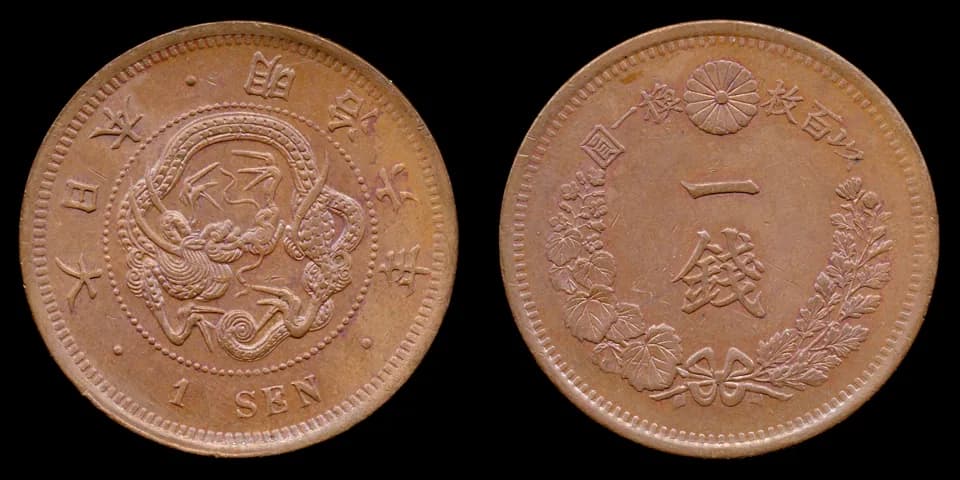
Image: Modern Japanese coinage / As6673 / Wikimedia Commons / CC BY-SA 3.0(source)
Meiji Ryū 10 Sen Silver Coin (明治竜10銭銀貨) — A Currency Reflecting the Growth of Modern Japan
From the Dragon Design to the Phoenix Design: 35 Years of Monetary Transition
Subject coin: 明治竜10銭銀貨
Overview
The Meiji Ryū 10 Sen Silver Coin (明治竜10銭銀貨) circulated widely as a fundamental subsidiary currency of modern Japan for 35 years, from 1873 to 1905. After the Meiji Restoration, Japan rapidly pursued Westernization and modernization, and in the process its monetary system underwent sweeping reform. The Meiji government enacted the New Currency Regulations (新貨条例), setting the silver purity of silver coins at 80% and the weight at 2.70 g. The coin was initially issued with a dragon (ryū) design, but the motif was later changed to designs featuring the rising sun and the phoenix. This was intended to reflect Japan's international image and clearly embodies the government's intentions.
Specifications
- Denomination
- 10銭
- Minting period
- 明治6年〜38年(1873-1905年)
- Metal composition
- 銀80%(新貨条例)
- Weight
- 2.70g
- Dimensions
- 直径約18.8mm
- Mintage
- 不詳(諸説あり)
- Mint supervisor
- 不詳
- Market price
- 5,000円〜50,000円(状態による)
The Meiji Restoration and the New Currency Regulations — The First Step Toward Modernization
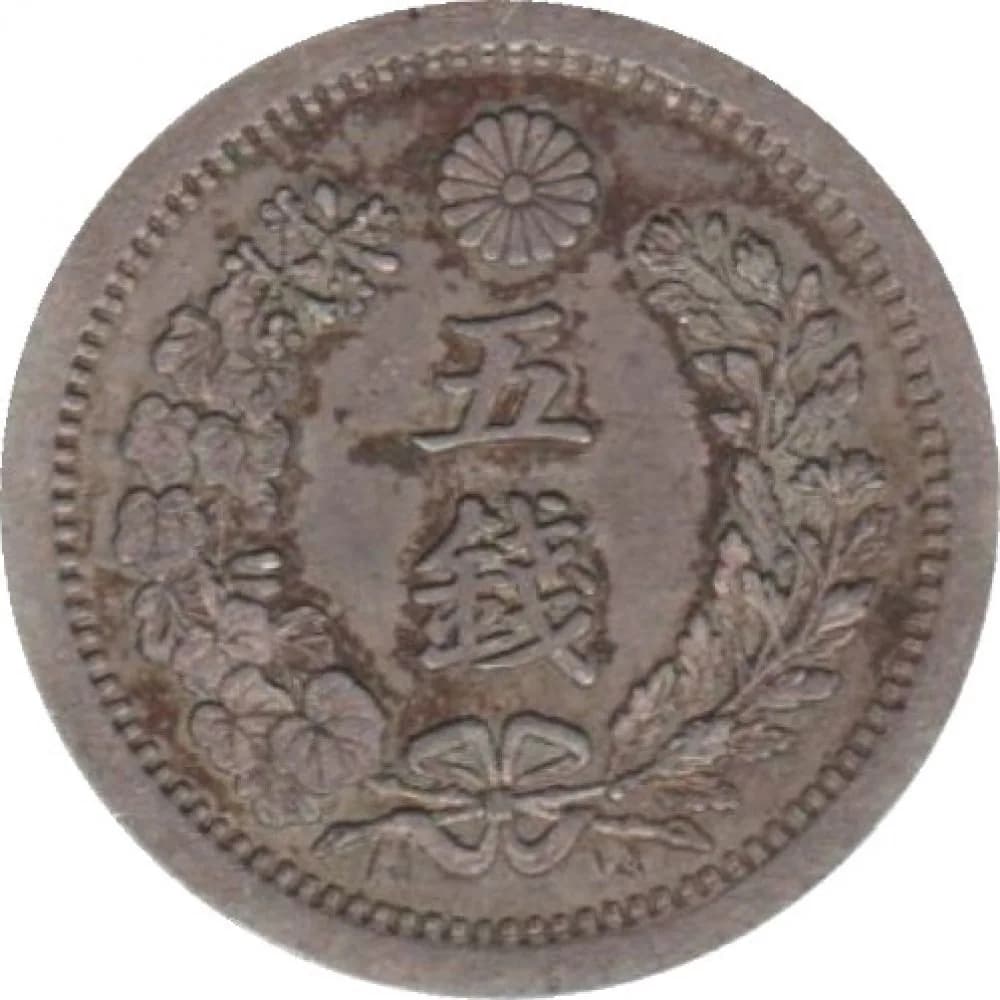
Image: Modern Japanese coinage / Coindesmonnaies / Wikimedia Commons / CC BY-SA 4.0(source)
The Meiji Restoration brought transformation to every aspect of Japan's politics, economy, and society. With the enthronement of Emperor Meiji in 1868 and the collapse of the Tokugawa shogunate, Japan broke free from the feudal system and rapidly pursued modernization in order to catch up with Western nations. During this period, the Japanese government decided to introduce a new monetary system. In 1871 (Meiji 4), the New Currency Regulations were enacted and the gold standard was adopted. Through this, the Meiji government aimed to unify the currency throughout Japan, and various types of coins were issued. Among them, the Ryū 10 Sen Silver Coin issued in Meiji 6 (1873) played an important role. This coin, with specifications of 2.70 g in weight and 80% silver purity, became a symbol of the Meiji government's modernization policy. The new monetary system laid the foundation for Japan to stand on equal footing with Western nations, and as part of that effort the 10 sen silver coin was introduced. The Meiji government also incorporated an international perspective into coin design, initially adopting the dragon motif before later changing to designs featuring the rising sun and the phoenix. This allowed Japan to present its new national image to the world.
Minting Technology and the Craftsmen — Japan's Technological Innovation
Image: Modern Japanese coinage / Coindesmonnaies / Wikimedia Commons / CC BY-SA 4.0(source)
In the Meiji era, Japan actively adopted Western technology and promoted domestic technological innovation. The minting process for the 10 sen silver coin was part of that effort. Coin minting was carried out using the most advanced technology available in Japan at the time. Minting was conducted primarily at the Osaka Mint (大阪造幣局), where the latest minting machinery imported from the West was used. This equipment was indispensable for ensuring accurate weight and consistent quality. Many skilled craftsmen were involved in the minting process, and they performed meticulous work to reproduce fine details of the design with precision. The minting engineers succeeded in creating high-quality coins by fusing Japan's traditional techniques with new Western technology. The silver purity was set at 80%, which preserved the coin's durability and aesthetic appeal. Thanks to the efforts of these craftsmen, the 10 sen silver coin was able to achieve the solid quality needed to withstand circulation within Japan. The Meiji government thus strengthened the technological foundation supporting the new monetary system and promoted Japan's economic growth.
Currency Circulation and Its Economic Effects — Impact on Daily Life
Image: Modern Japanese coinage / Coindesmonnaies / Wikimedia Commons / CC BY-SA 4.0(source)
In Meiji-era Japan, the 10 sen silver coin circulated widely and played an important role in everyday life. As a basic subsidiary currency, this coin was indispensable for ordinary transactions among the common people. It was affectionately known among the populace as the 'Ryū 10 Sen' and became an essential part of daily life. As the volume in circulation increased, economic activity also became more vigorous, contributing greatly to Japan's modernization. The circulation of currency promoted commercial development and had a positive impact not only on the urban economy but also on regional economies. In particular, as currency circulation advanced alongside the development of transportation networks, commercial activity flourished in regional cities as well. In Japan at the time, gold and silver coins were the mainstream, but subsidiary coins such as the 10 sen silver coin were extremely important to ordinary people. Such currency circulation strengthened the economic foundation and became an element supporting Japan's modernization.
The Design Change and Its Significance — The Transition to the Phoenix Design
Image: Modern Japanese coinage / Coindesmonnaies / Wikimedia Commons / CC BY-SA 4.0(source)
The design change of the 10 sen silver coin was part of the Meiji government's strategy to raise Japan's standing in international society. Initially bearing the dragon motif, this coin symbolized Japan's strength and dignity. However, in the later Meiji period, the design was changed to one more conscious of international sensibilities. In particular, in 1897 (Meiji 30), designs featuring the rising sun and the phoenix were newly adopted. This change signaled Japan's intention to participate in international society not merely as one nation of Asia, but as a member of the world community. The phoenix is traditionally regarded as a symbol of peace and prosperity, expressing Japan's hope for its future. This design change was intended to appeal, both domestically and internationally, to Japan's modernization and internationalization. The change in coin design was motivated not only by aesthetic reasons, but also embodied political intent and international strategy. Such transitions in design tell the story of how Japan redefined its own identity and sought its place in international society.
Value & Rarity
The Meiji Ryū 10 Sen Silver Coin is one of the popular coins in today's antique coin market. Its value varies greatly depending on condition and rarity. In particular, the design transition from the dragon motif to the phoenix motif is an element of great interest to collectors. In the market, coins in good condition are traded for between 5,000 yen and 50,000 yen. Especially, uncirculated specimens and coins in fine condition are often traded at high prices. These coins carry historical significance in Meiji-era Japan, and one can sense the atmosphere of that era from both their design and their material. For those with an interest in historical background, the Meiji Ryū 10 Sen Silver Coin is also a valuable source for learning about the process of Japan's modernization.
Conclusion
The Meiji Ryū 10 Sen Silver Coin is a currency that symbolizes Japan's modernization and internationalization. Throughout its 35 years of circulation, it supported the economic foundation and was deeply woven into the lives of ordinary people. The transition in its design reflects the change in Japan's positioning within international society. The shift from the dragon motif to the phoenix motif reflects the process by which Japan evolved from a single Asian nation into a member of the world community, and strongly expresses political intent. With such a historical background, the Meiji Ryū 10 Sen Silver Coin remains a valued object for collectors and history enthusiasts today, and is an important cultural heritage that conveys to the present the image of Japan in that era. Learning history through coinage provides a precious key to understanding Japan's past and reflecting on modern Japan.
Related Stories
60th Anniversary of Local Autonomy Law 500 Yen Bicolor – 10-Year Journey Across 47 Prefectures
Commemorative Coin Series Born from the Law of 1947
Coin StoryAichi Expo Commemorative Silver Coin — Hope for the Future Carved with the Wisdom of Nature
The History and Value of the 1000-yen Silver Coin Commemorating the 2005 Aichi Expo
Coin StoryCommemorative 500 Yen Cupronickel Coin for the Enthronement of the Heisei Emperor — A Bridge from Heisei to Reiwa
The Story of a Historic Commemorative Coin Celebrating the Enthronement of the Heisei Emperor
Dealers
Dealers Handling This Category
A reference when considering a sale or appraisal. All are dealers and auction houses with a proven track record.
Ginza Coins
Ginza, Chuo-ku, Tokyo
One of Japan's most established numismatic dealers. The scale and variety of their regular auctions is among the largest in the country. Their catalogs are considered a benchmark for market pricing.
Taisei Coins
Tokyo
A dealer with an international network. Offers advanced services such as consignment to overseas auctions and NGC/PCGS grading submission. Recommended for high-value or internationally recognized coins.
Tokyo Coin Club
Tokyo
A membership-based coin dealer known for carefully selected, quality inventory.