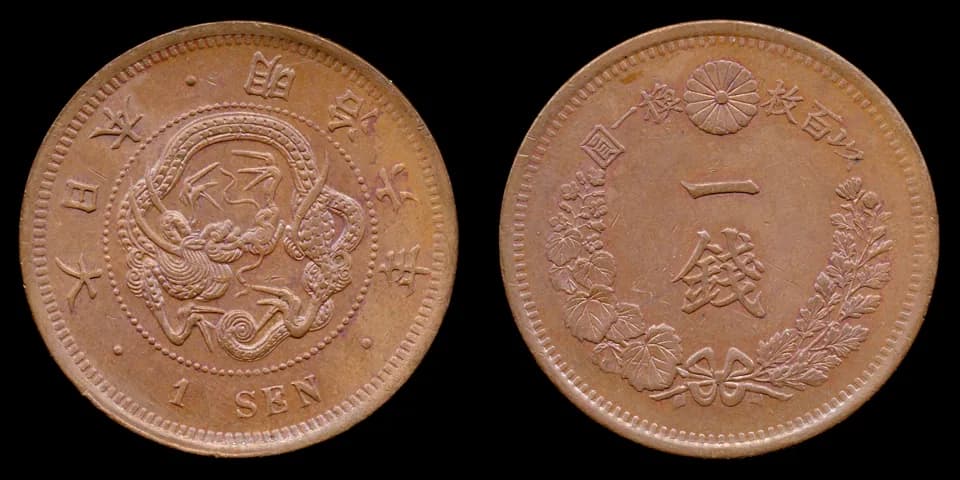
Image: Modern Japanese coinage / As6673 / Wikimedia Commons / CC BY-SA 3.0(source)
Meiji Trade Silver Coins — The Reason for the Birth of Silver Coins Exclusively for Foreign Trade
Japanese silver coins forbidden for domestic circulation, their design philosophy and fate
Subject coin: 明治貿易銀の設計思想
Overview
In Meiji 9 (1876), Japan issued the 'Meiji Trade Silver Coin', a unique silver coin forbidden for domestic circulation. These coins were primarily used for trade settlement in Asian regions at ports like Yokohama and Kobe. The design aligned with the standards of the widely used Mexican dollar in international trade at the time, with 90% silver purity and a weight of 26.96g. The Japanese government's aim was to establish the credibility of Japanese silver coins in Asian trade. However, after the First Sino-Japanese War in 1897, Japan transitioned to the gold standard, resulting in the abolition of the trade silver coins. Today, these coins attract attention as symbols of Japan's monetary system evolution and adaptation to the global economy. For more details, please visit Value and Distinction of Modern Coins.
Specifications
- Denomination
- 貿易銀
- Minting period
- 明治9年〜明治30年(1876-1897年)
- Metal composition
- 銀90%
- Weight
- 26.96g
- Dimensions
- 直径約38mm
- Mintage
- 不詳(諸説あり)
- Mint supervisor
- 大蔵省(不詳)
- Market price
- 数万円〜数十万円(状態による)
Chapter 1: Birth of the Meiji Trade Silver Coin — Internationalization and Monetary Reform
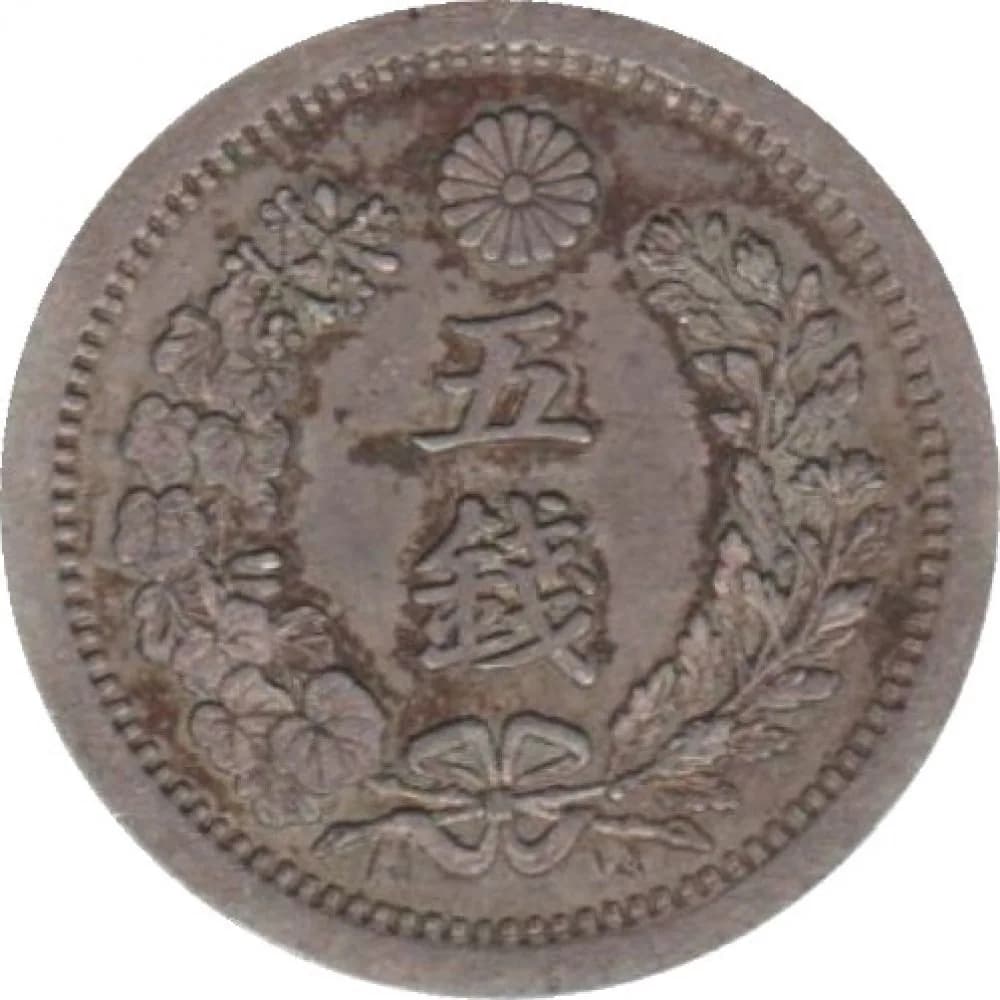
Image: Modern Japanese coinage / Coindesmonnaies / Wikimedia Commons / CC BY-SA 4.0(source)
In Meiji 9 (1876), Japan issued a special silver coin to revitalize trade with Asia. The background of this was the Meiji government's intent to enhance the credit of its domestic currency in international trade. In particular, in Asian markets where the Mexican dollar was widely circulated, Japan followed the standards of these coins to facilitate easy transactions.
At that time, the Japanese government was at a disadvantage in trade competition with Western powers. The Ministry of Finance was established in Meiji 6 (1873) to address urgent needs for strengthening financial foundations. Silver coins played a critical role in settlement within the Asian trade zone, including China, and thus, the issuance of trade silver coins in Meiji 9 was intended to enhance competitiveness.
The issuance of this new silver coin prohibited domestic circulation, unlike Details of Edo Silver Coins, making it exclusively for trade. By limiting domestic use, its value in overseas markets was maintained. Also, currency policies during this period were closely tied with Shigenobu Okuma, then Minister of Finance, under whose guidance these developments proceeded. Okuma was a pivotal figure in leading fiscal reforms and modernizing the monetary system.
Thus, the Meiji Trade Silver Coin was born amid the significant trends of internationalization and monetary reform in Japan.
Chapter 2: The Minting Process of the Meiji Trade Silver Coin — Technology and Craftsmen
Image: Modern Japanese coinage / Coindesmonnaies / Wikimedia Commons / CC BY-SA 4.0(source)
The minting of the Meiji Trade Silver Coin was a crucial process testing Japan's technological capabilities at the time. Minting began in Meiji 9 (1876) at the Osaka Mint, established in 1868, utilizing the latest technology and industrial power of the era. Japan was advancing modern industrialization during this period, with minting technology developing as part of this.
Skilled craftsmen with advanced techniques were involved in producing trade silver coins. Domestically mined silver was used as the material, refined to a purity of 90%. This silver purity was strictly managed to match international standards. Minting employed steam engines, the latest technology of the time, enabling efficient and precise production.
Further, innovation was applied in the design aspect. Cherry blossoms, a symbol of contemporary Japan, decorated the coin's surface, with the inscription '貿易銀' (trade silver) engraved on the reverse. This illustrated Japan's culture and identity while also fulfilling its function as an international currency.
The Ministry of Finance led the production, gathering domestic and foreign technicians. Conducted under the guidance of foreign experts, high-quality silver coins adhering to international currency standards were completed. The minting process of the Meiji Trade Silver Coin thus demonstrated Japan's technological prowess and ability to meet international standards.
Chapter 3: Circulation of the Meiji Trade Silver Coin and Its Economic Impact
Image: Modern Japanese coinage / Coindesmonnaies / Wikimedia Commons / CC BY-SA 4.0(source)
After issuance, the Meiji Trade Silver Coin quickly began circulating in major ports like Yokohama and Kobe. It was used to settle payments for Japanese export goods, especially silk and tea, playing a vital role in transactions in the Asian market. Due to its equal value to the Mexican dollar, it was also accepted readily by international merchants.
However, since domestic circulation was prohibited, it became relatively unknown to the ordinary Japanese people. The Meiji government's policy limited its use domestically, specializing it for trade purposes. Thus, while having little direct impact on the domestic economy, it indirectly fostered economic development by boosting trade.
The introduction of trade silver coins significantly enhanced Japan's presence in the Asian market. Especially in trade with China and Southeast Asia, earning trust for Japanese silver coins facilitated smoother transactions. This was a crucial strategy for Japan to compete against Western powers, aiming to elevate its status in international trade.
Meanwhile, the Meiji government strived to maintain the credibility of trade silver coins, implementing anti-counterfeiting measures. Consequently, even in international usages, reliability was ensured, leading to the successful integration of trade silver coins as part of Japan's trade strategy.
Chapter 4: Abolition of the Meiji Trade Silver Coin and Its Impact on Future Generations
Image: Modern Japanese coinage / Coindesmonnaies / Wikimedia Commons / CC BY-SA 4.0(source)
In Meiji 30 (1897), Japan transitioned to the gold standard. This major monetary reform led to the abolition of the Meiji Trade Silver Coin. Post the First Sino-Japanese War, Japan decided to adopt the gold standard to further enhance its international credibility. This drastically changed the role of silver coins, marking the end of their mission.
The abolition of trade silver coins symbolized the modernization of Japan's monetary system. Transitioning to the gold standard further elevated Japan's credibility in international trade. Even after their role had ended, trade silver coins were appreciated as proof of Japan's technological capability in meeting international currency standards.
Moreover, the issuance and abolition of trade silver coins marked a significant turning point in Japan's economic history. Japan utilized this event to achieve further economic growth and establish its position in international trade. Particularly in the economic expansion following the First Sino-Japanese War, the role of trade silver coins was notable.
In contemporary times, Meiji Trade Silver Coins remain precious to collectors. Their unique background and historical significance have led many to reevaluate their value. These silver coins, as an important heritage symbolizing the transition and internationalization of Japan's monetary system, still shine today.
Value & Rarity
Meiji Trade Silver Coins are very popular among collectors due to their historical background and unique status. Forbidden for domestic circulation, existing coins are relatively rare, enhancing their value. The market price varies depending on the condition and year, ranging from tens to hundreds of thousands of yen.
Especially those well-preserved and with clear inscriptions are traded at high prices. The value of trade silver coins is appreciated not merely for their coinage worth but also for their symbolism of historical context and Japan's internationalization. This makes them highly attractive items for history enthusiasts and coin collectors alike. For detailed market trends, please visit Basics of Coin Auctions.
Related Guide: Overview of Meiji Era Coins / Check Price Trends on Market Charts
Conclusion
The Meiji Trade Silver Coin is a significant silver coin that narrates how Meiji-era Japan sought to enhance its position in international trade. Beyond being a mere currency, its unique status and role have made it a symbol in Japan's economic history. Though abolished with the transition to the gold standard, its historical significance and rarity still endear it to many today. Understanding the transition of Japan's monetary system is incomplete without the Meiji Trade Silver Coin. Through it, one can learn how Japan adapted to and grew within the international community at the time.
Related Stories
60th Anniversary of Local Autonomy Law 500 Yen Bicolor – 10-Year Journey Across 47 Prefectures
Commemorative Coin Series Born from the Law of 1947
Coin StoryFormer 20-Yen Gold Coin (Meiji 3) — The Highest-Denomination Gold Coin That Stamped Modern Japan's 'Gold Standard'
The Story of the New Currency Regulations and the Osaka Mint Born from the Scars of the Boshin War, and the Enigmatic Meiji 3 Issue
Coin StoryNagano Olympic Commemorative 500 Yen — The Winter Festival and Five Cupronickel Coins in 1998
Japan's First Sport-Specific 500 Yen Coin Series Born from the 1998 Nagano Olympics
Dealers
Dealers Handling This Category
A reference when considering a sale or appraisal. All are dealers and auction houses with a proven track record.
Ginza Coins
Ginza, Chuo-ku, Tokyo
One of Japan's most established numismatic dealers. The scale and variety of their regular auctions is among the largest in the country. Their catalogs are considered a benchmark for market pricing.
Taisei Coins
Tokyo
A dealer with an international network. Offers advanced services such as consignment to overseas auctions and NGC/PCGS grading submission. Recommended for high-value or internationally recognized coins.
Tokyo Coin Club
Tokyo
A membership-based coin dealer known for carefully selected, quality inventory.