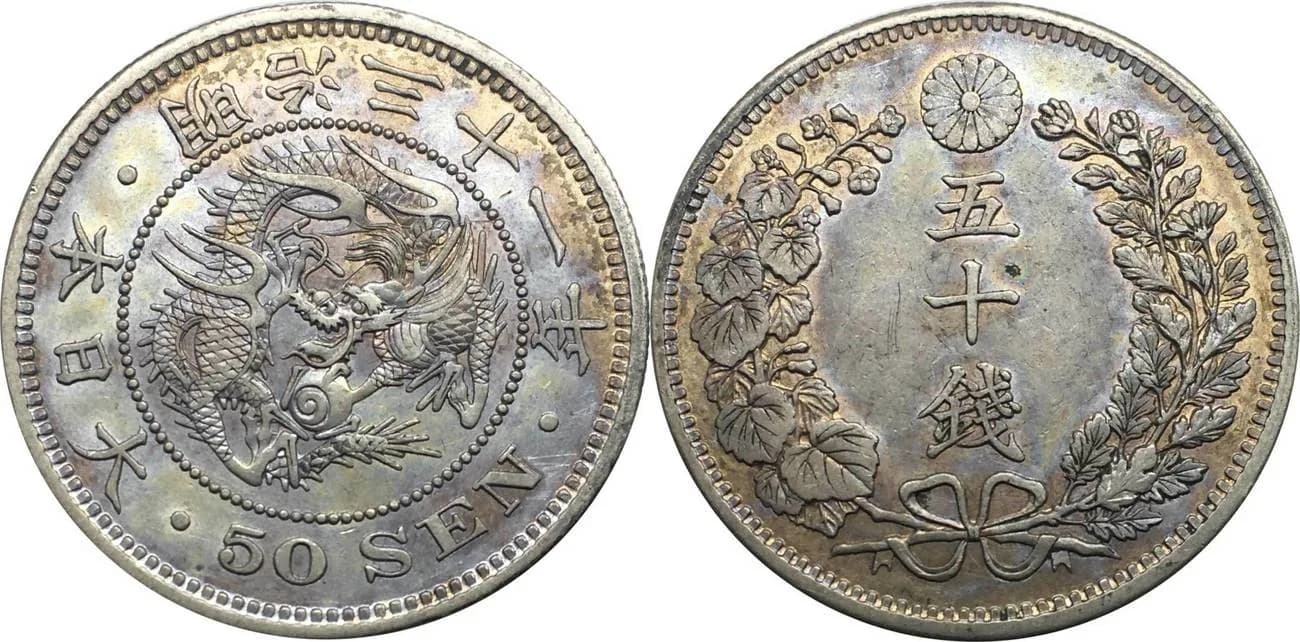
Image: Modern Japanese coinage / The government of the Empire of Japan. / Wikimedia Commons / Public domain(source)
The Transition of the Imperial Twelve Coins — From Wadō Kaichin to Kengen Taihō
A 250-Year Tale of Lost Quality and Trust
Subject coin: 皇朝十二銭の品質変遷
Overview
Japan's ancient coins known as the 'Imperial Twelve Coins' underwent a 250-year transformation from the minting of Wadō Kaichin (和同開珎) in 708 to Kengen Taihō (乾元大宝) in 958, deeply influencing Japan's economic history. Wadō Kaichin, weighing about 4 grams and relatively high in copper purity, played a crucial role in supporting the economic foundation of its time. However, with each new era name, its quality declined, and by the time of the Kengen Taihō, the minting precision had greatly deteriorated. While the initial minting quantity was large, it drastically reduced in the later stages, and this quality decline gave rise to currency avoidance and the practice of 'sovereign picking,' regarded as an early form of coin selection. This transformation of currency explores how it affected the political backdrop, technological innovations, and the lives of the populace at the time. As you refer to our detailed explanation of the Wadō Kaichin, rediscover the charm of ancient coins.
Specifications
- Denomination
- 不定(諸説あり)
- Minting period
- 708年〜958年
- Metal composition
- 銅、銀、鉛(時代により変化)
- Weight
- 4g前後(和同開珎)〜不定(乾元大宝)
- Dimensions
- 不明(諸説あり)
- Mintage
- 不詳(諸説あり)
- Mint supervisor
- 不明
- Market price
- 数万円〜数十万円(状態による)
Chapter 1: The Birth of Wadō Kaichin — Building the Economic Foundation
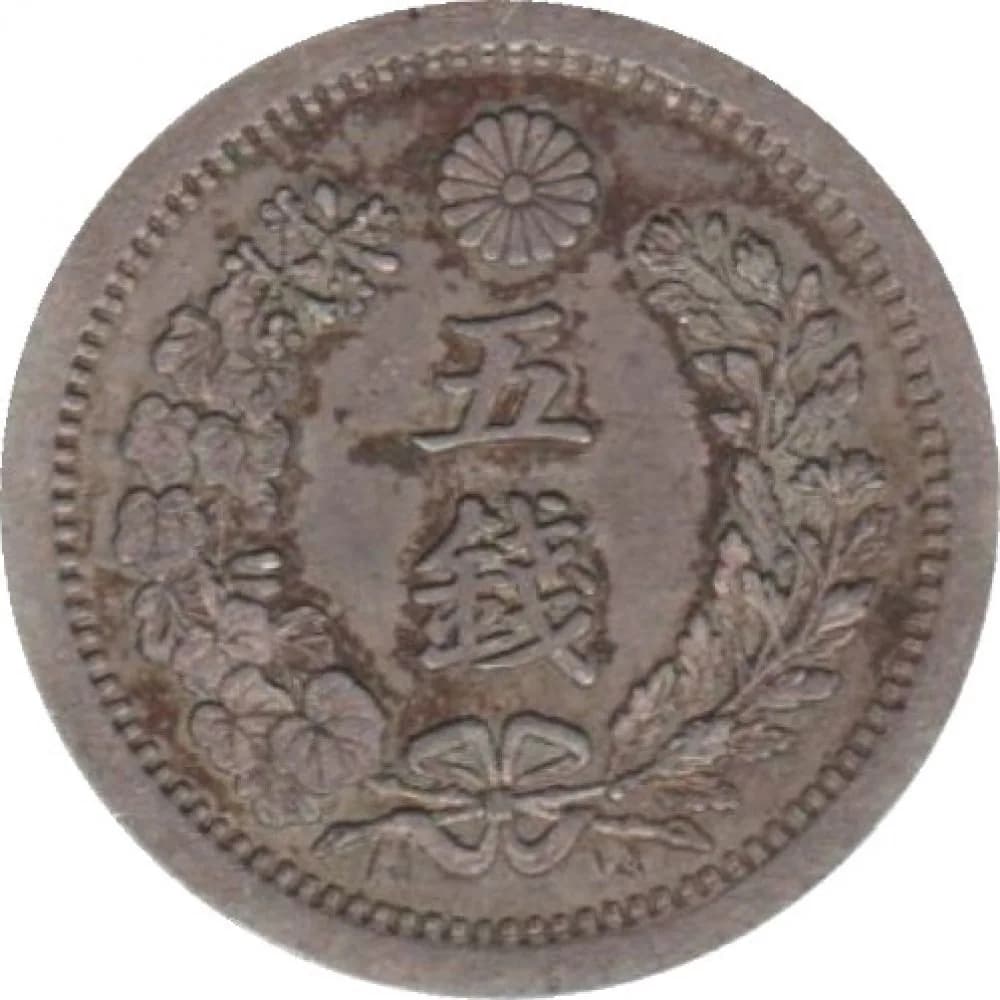
Image: Modern Japanese coinage / Coindesmonnaies / Wikimedia Commons / CC BY-SA 4.0(source)
In 708, during the reign of Empress Genmei, Wadō Kaichin, Japan's first full-fledged currency, was issued. This coin was minted in Heijō-kyō, Nara, and symbolized the centralization trend in Japan at the time. The Wadō Kaichin was about 4 grams, used high-purity copper, and was manufactured using advanced technology of the era. During this time, the government, led by Fujiwara no Fuhito, pushed forward the Ritsuryō system and attempted to strengthen the economic base by introducing currency. The issuance of Wadō Kaichin was modeled after China's Kaiyuan Tongbao, with intentions both to showcase the central government's authority and to promote trade transactions.
However, actual circulation did not proceed as expected, and the penetration of a monetary economy faced difficulties. Factors hindering the spread of currency included the continuing prevalence of bartering and insufficient currency supply. Moreover, although the minting quantity of coins was initially large, as the eras progressed, tendencies towards decreased weight and quality were observed. For example, while Wadō Kaichin had high copper purity, later coins suffered from a decline in this purity, and minting precision deteriorated. By the time of Kengen Taihō (958), minting precision was significantly lower compared to earlier coins. This decline in quality caused currency avoidance and led to the practice called 'sovereign picking,' considered a prototype for good coin selection.
The currency circulation during this period indicates a significant gap between the central government's policies and the actual living conditions of the populace. Moreover, the institutional foundation to support a monetary economy was immature, making it challenging for the government to establish the intended economic base. Please also refer to the overview and attraction of ancient coins.
Chapter 2: Evolution of Casting Techniques — Beginning of Quality Decline
Image: Modern Japanese coinage / Coindesmonnaies / Wikimedia Commons / CC BY-SA 4.0(source)
The history of the Imperial Twelve Coins, which began with Wadō Kaichin, shows the transition of casting techniques and quality over time. The first Wadō Kaichin was made with high-purity copper, but as time went on, copper supply started to dwindle, leading to the inclusion of silver and lead. As a result, subsequent coins such as the Tenpyō Hōji coins (760s) and Jingū Kaihō (late 760s) gradually lost quality. Especially by the issuance of Kengen Taihō in 958, casting techniques had significantly deteriorated. The casting was initially centralized in Heijō-kyō but gradually dispersed to more local areas, contributing to the inconsistency in quality. Additionally, changes in the workforce involved in minting, with a decrease in skilled artisans, also accelerated the decline in quality. Factors such as prolonged political instability, warfare, and internal strife are thought to have influenced these developments. Consequently, circulating coins gradually lost trust and began to be avoided by the populace. By comparing with the types and identification of Edo period gold coins, the processes of technical development become more pronounced.
Chapter 3: The Reality of Circulation and the Origin of Sovereign Picking — Public Reaction
Image: Modern Japanese coinage / Coindesmonnaies / Wikimedia Commons / CC BY-SA 4.0(source)
Initially, when the Imperial Twelve Coins began circulating in Japan, they were highly valued. However, as time went on and the quality of coins began to decline, public reaction gradually became cooler. By the time of Kengen Taihō, the lack of minting precision led to coins being avoided in circulation by the populace. This currency avoidance became known as 'sovereign picking,' characterized by the selection between good and bad coins. This phenomenon starkly illustrated the lack of trust within the monetary economy. Circulation stagnation caused price fluctuations, leading to issues with unstable exchange rates. For example, in some areas, grain trade reverted to primarily using rice as a key transaction method instead of currency. In response, the central government attempted reminting and currency collection, but effectiveness was limited. In such an economic environment, it became increasingly difficult for the populace to regain trust in currency. Explore further with the reference to types and identification of holed coins, delving deeper into the currency circulation and its impacts.
Chapter 4: Impact and Evaluation on Future Generations — Legacy of the Imperial Twelve Coins
Image: Modern Japanese coinage / Coindesmonnaies / Wikimedia Commons / CC BY-SA 4.0(source)
Following Kengen Taihō, the history of the Imperial Twelve Coins came to a close, but its impact extended to future generations. The failures in currency policy during this period became a crucial lesson in Japan's economic history, greatly influencing subsequent monetary systems. For example, from the late Heian to the Kamakura periods, coin minting nearly ceased, with bartering returning to prominence. Later, with the onset of the Edo period, coin minting resumed, and stringent quality control resulted in the circulation of more reliable coins. In this way, the failure of the Imperial Twelve Coins served as a lesson for building the foundation of later monetary policies. Additionally, the Imperial Twelve Coins serve as important clues in historical studies to understand the political and economic conditions of the time. Issues such as copper supply problems and changes in casting techniques highlight the technical limitations and political challenges of Japanese society during that era. Thus, these coins are evaluated for their historical significance beyond mere monetary value. Also, consider the types and features of commemorative coins to deepen your understanding of the historical value of coins.
Value & Rarity
The Imperial Twelve Coins hold significant value in today's collector markets due to their long history and the complexity of their production processes. Particularly, early Wadō Kaichin is highly prized for its high copper purity and minting precision, sometimes fetching prices in the hundreds of thousands of yen when in good condition. Conversely, later coins like Kengen Taihō have mixed evaluations due to their lower quality, although they also can command high prices depending on their historical value, particularly if they are well-preserved. These coins are highly valued not only as collectibles but also as historical artifacts reflecting the technology and economic backgrounds of their time. Market transactions rely heavily on conditions and rarity, with coins retaining clear inscriptions being particularly attractive to collectors. By consulting the basic knowledge of coin auctions, you can grasp the market trends of these coins and aid in collections and investments.
Conclusion
The history of the Imperial Twelve Coins serves not only as a transition of currencies but also as a mirror reflecting changes in Japanese politics, economics, and technology. The 250 years from Wadō Kaichin to Kengen Taihō saw quality declines, which also brought about circulation difficulties, yet these failures were inherited as valuable lessons for future generations. The story of these coins provides keys to understanding the challenges Japan faced at that time and the motivations behind political centralization. Even today, these ancient coins remain valuable assets for collectors and history researchers alike. Through learning this history, we can gain insights into the future.
Related Stories
Bunkyū Eihō — Tracing the History of Ansen
The last Ansen of the late Edo period. The 4-mon coin minted in Bunkyū 3 began circulating just shy of two years before the Meiji Restoration.
Coin StoryChikusen Jowi no Rei — An Ancient Japanese Attempt to Spread Currency
Wadō 4 (711): An Unprecedented System to Promote Currency Use
Coin StoryNaga-nen Taihō — Tracing the History of Ancient Coinage
The 7th coin of the Kōchō jūni-sen, issued in Shōwa 15 (848) during the reign of Emperor Ninmyō. From this time, the gap between the actual and nominal value of coins became serious.
Dealers
Dealers Handling This Category
A reference when considering a sale or appraisal. All are dealers and auction houses with a proven track record.
Japan Coin Auction (JCA)
Tokyo
Holds regular auctions with reliable hammer price data, making it a useful resource for tracking market values. Caters to a wide range of collectors from beginners to advanced buyers.
Ginza Coins
Ginza, Chuo-ku, Tokyo
One of Japan's most established numismatic dealers. The scale and variety of their regular auctions is among the largest in the country. Their catalogs are considered a benchmark for market pricing.