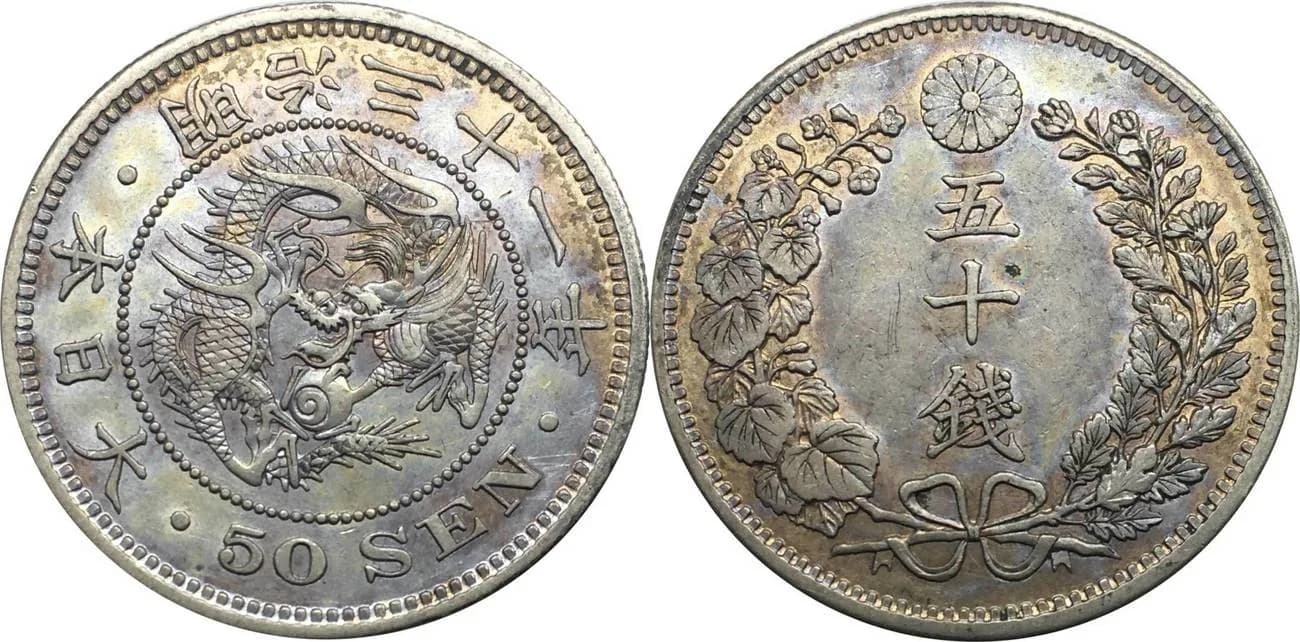
Image: Modern Japanese coinage / The government of the Empire of Japan. / Wikimedia Commons / Public domain(source)
Jōgan Eihō — The End of the Twelve Imperial Coins and Economic Transformation
Ancient coins issued in Jōgan 12 (870) marking a turning point in Japanese economic history
Subject coin: 貞観永宝
Overview
Jōgan Eihō, issued in Jōgan 12 (870), is a recognized ancient Japanese coin known as the ninth in the series of Twelve Imperial Coins. Its issuance occurred amidst economic turmoil in Japan, where silk, cloth, and rice circulated as currency substitutes, undermining the coins' value. The government attempted to stabilize the economy through Jōgan Eihō, wishing for perpetual circulation as implied by the name 'Eihō'. However, its actual circulation was limited. In the following century, coin issuance ceased, marking a critical juncture in Japan's ancient monetary history. Jōgan Eihō holds intrigue among collectors and history enthusiasts. For a deeper dive into the coinage history of the era, refer to Overview and Charm of Ancient Coins.
Specifications
- Denomination
- 不明
- Minting period
- 貞観12年〜(870年〜890年)
- Metal composition
- 銅
- Weight
- 不明
- Dimensions
- 径約22mm
- Mintage
- 不詳(諸説あり)
- Mint supervisor
- 不詳
- Market price
- 10,000円〜50,000円(状態による)
Chapter 1: The Background of Jōgan Eihō's Issuance — Between Politics and Economy
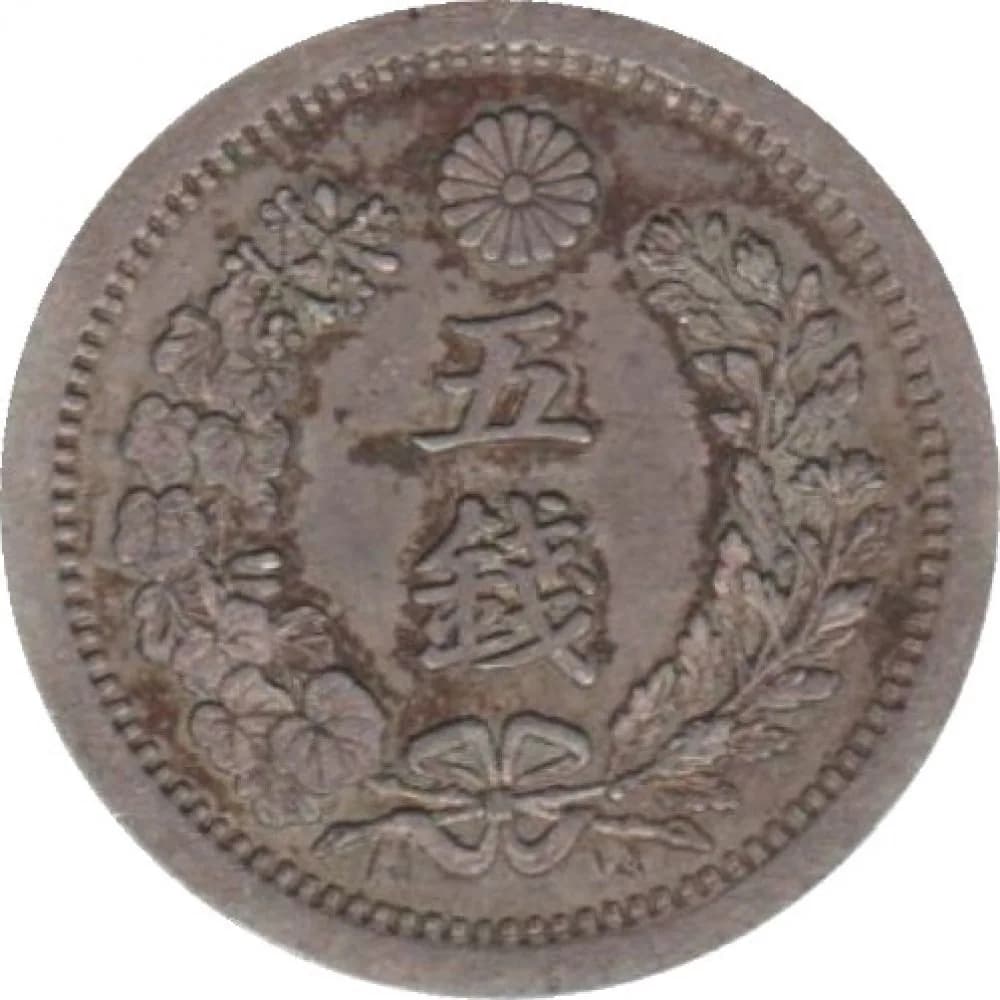
Image: Modern Japanese coinage / Coindesmonnaies / Wikimedia Commons / CC BY-SA 4.0(source)
Jōgan 12 (870) marked a significant turning point in ancient Japanese history. During Emperor Seiwa's reign, Fujiwara no Mototsune held actual power as regent, aiming to strengthen the imperial and Fujiwara power bases through economic policies. The Japanese economy was highly unsettled, with coin value depreciating and silk, cloth, and rice effectively serving as currency, especially in local areas where taxes were often paid in these goods, leading to fiscal difficulties for the government. Consequently, Jōgan Eihō was released as the ninth of the Twelve Imperial Coins, with the inscription 'Eihō' intended to signify perpetual circulation. However, actual circulation was regionally limited, failing to meet government expectations. The number of coins minted is unknown, with various theories suggesting it was minimal considering the economic conditions then. Jōgan Eihō's issuance was the government's attempt to stabilize the monetary economy, intertwined with political motives, cementing its significance in Japan's ancient coinage history.
Chapter 2: The Minting Process of Jōgan Eihō — Technological and Human Efforts
Image: Modern Japanese coinage / Coindesmonnaies / Wikimedia Commons / CC BY-SA 4.0(source)
The coinage of Jōgan Eihō was a culmination of the sophisticated technology and labor force of the time in Japan. The minting was conducted at the Mint Office established in Heijō-kyō, responsible for everything from copper mining to minting, essential for national finance. Craftsmen and laborers, drawing on Chinese technology and adding their innovations, contributed to the minting process. Jōgan Eihō was primarily made from copper, with small amounts of lead and tin added to ensure durability and ease of processing. Copper was mined in present-day Okayama and Hyōgo Prefectures and transported to the Mint Office. The process involved melting the copper, pouring it into molds, and hardening it. The molds were inscribed with 'Jōgan Eihō', beautifully embossed on the coin's surface through high-temperature baking. The extensive use of fuel led to deforestation, contributing to future environmental issues. The artisans, bearing the nation's fate, dedicated themselves to their daily work. Jōgan Eihō's minting was the fruit of their efforts and technology, resulting in a precious cultural legacy available for us to admire today.
Chapter 3: The Circulation and Economic Impact of Jōgan Eihō — Economic Fluctuations
Image: Modern Japanese coinage / Coindesmonnaies / Wikimedia Commons / CC BY-SA 4.0(source)
After its issuance, Jōgan Eihō's circulation was limited to certain regions. The prevailing economic instability hindered smooth transactions using coins, with silk cloth and rice used predominantly as exchange means. In particular, in rural areas, coin circulation was restricted, and acceptance of Jōgan Eihō was limited. For instance, it is reported that areas corresponding to modern-day Nara and Kyoto saw relatively more circulation of Jōgan Eihō, whereas in rural areas, it was often unknown. In this context, Jōgan Eihō was primarily used in urban markets and trade, with little distribution in rural regions. The government aimed to stabilize the economy through Jōgan Eihō's issuance, but the impact was limited and did not lead to price stabilization. Consequently, the government struggled to continue coin issuance, leading to the cessation of minting in the following century. Jōgan Eihō's circulation and economic impact left significant lessons in Japan's monetary history.
Chapter 4: The Legacy of Jōgan Eihō — The Historical Footprints Left Behind
Image: Modern Japanese coinage / Coindesmonnaies / Wikimedia Commons / CC BY-SA 4.0(source)
Jōgan Eihō's circulation nearly ceased about 20 years after issuance, with coin minting completely halting in the next century. Yet, its impact persisted into later eras. As part of the Twelve Imperial Coins, Jōgan Eihō influenced subsequent monetary systems. The intention to stabilize the economy and centralize authority underpinned its issuance, affecting later policies. Particularly from the late Heian to Kamakura periods, Chinese imported coins circulated anew, leading to a near halt in domestic coin issuance. This ushered in significant changes in Japan’s monetary system, with increased trade and economic exchange with China. Additionally, Jōgan Eihō gained archaeological value due to its rarity, providing insights into the economy and society of its time through excavations. Jōgan Eihō stands as a symbol denoting a pivotal transition in Japanese history, passed down through generations. From this perspective, Jōgan Eihō maintains its vital position in Japan's monetary history.
Value & Rarity
Jōgan Eihō remains highly popular among collectors even after approximately 1150 years since its issuance. Well-preserved Jōgan Eihō coins are rare and may fetch high prices in the numismatic market. Market prices vary based on condition, typically trading between 10,000 and 50,000 yen. The coin's value stems from its historical significance and rarity, serving as crucial material for studying ancient Japan's monetary system. Referencing Basic Knowledge for Coin Auctions helps understand auction trade prices and considerations. The rarity of Jōgan Eihō is partly due to its unknown mintage, presumed limited given the economic situation and restricted circulation at the time. Consequently, for collectors and numismatists, Jōgan Eihō is an especially valuable acquisition. Acquiring Jōgan Eihō offers a rare opportunity to engage with ancient Japanese history, with its rarity driving market attention ever higher.
Related Guides: Check Price Trends via Market Chart / Coin Grading Standards
Conclusion
Jōgan Eihō holds a unique place in Japan's ancient monetary history from its background, minting, circulation, to its legacy. Issued in 870 amidst economic turmoil, it was a government endeavor to stabilize the economy, though its impact was limited. Nevertheless, Jōgan Eihō influenced subsequent Japanese monetary systems and economic policies and remains valuable archaeologically. In modern times, Jōgan Eihō is a highly valued collectible among collectors and history enthusiasts, with its market value set to rise. For those interested in Japanese monetary history, Jōgan Eihō offers an excellent opportunity to explore its allure and provides a precious window to understand ancient economy and society.
Related Stories
Bunkyū Eihō — Tracing the History of Ansen
The last Ansen of the late Edo period. The 4-mon coin minted in Bunkyū 3 began circulating just shy of two years before the Meiji Restoration.
Coin StoryChikusen Jowi no Rei — An Ancient Japanese Attempt to Spread Currency
Wadō 4 (711): An Unprecedented System to Promote Currency Use
Coin StoryNaga-nen Taihō — Tracing the History of Ancient Coinage
The 7th coin of the Kōchō jūni-sen, issued in Shōwa 15 (848) during the reign of Emperor Ninmyō. From this time, the gap between the actual and nominal value of coins became serious.
Dealers
Dealers Handling This Category
A reference when considering a sale or appraisal. All are dealers and auction houses with a proven track record.
Japan Coin Auction (JCA)
Tokyo
Holds regular auctions with reliable hammer price data, making it a useful resource for tracking market values. Caters to a wide range of collectors from beginners to advanced buyers.
Ginza Coins
Ginza, Chuo-ku, Tokyo
One of Japan's most established numismatic dealers. The scale and variety of their regular auctions is among the largest in the country. Their catalogs are considered a benchmark for market pricing.