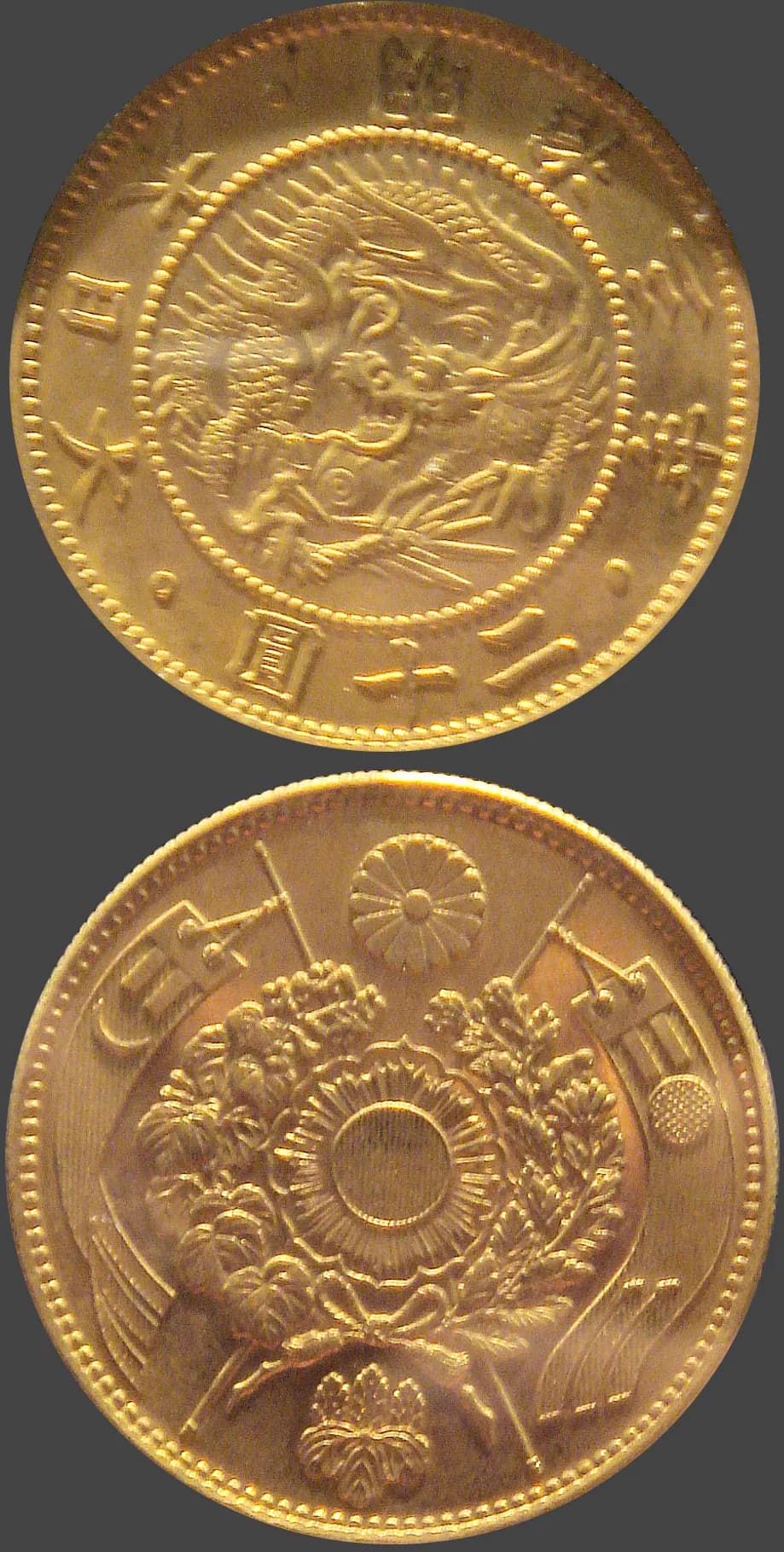
Image: Modern Japanese coinage / PHGCOM / Wikimedia Commons / CC BY-SA 3.0(source)
The Window of the Closed Country, Ripples of Silver — How VOC Coins Transformed Japan's Economic Map
A Collision of Foreign Silver and Japanese Wealth on Dejima, Nagasaki
Subject coin: VOC銀貨と出島貿易
Overview
From the mid-17th century to the early 19th century, while the Tokugawa shogunate enforced a strict seclusion policy, the only window to the West was Nagasaki's Dejima. On this small artificial island, the Dutch East India Company (VOC) sought Japan's valuable products, bringing a large number of silver coins as a means of payment. Among them, the Dutch 'Leeuwendaalder' silver coins, known as 'Lion Dollars,' symbolized foreign silver's significant influence on Japan's monetary economy. The shogunate rigorously assessed these foreign silver coins without allowing them to circulate domestically and established a system to recoin them into Japanese currency based on their purity and weight. However, the annual influx of several thousand kilograms of silver caused Japan's gold-silver exchange rate to deviate significantly from international standards, creating complex ripples in the domestic economy. In particular, in copper trade, which was a major Japanese export, silver functioned as an essential means of payment, directly impacting Japan's finances. This story unravels how foreign silver intricately intertwined with Japan's economy and culture under the unique environment of seclusion. Understanding the presence of VOC silver is indispensable to understanding Edo silver coins in detail, and compared to the Keichō Koban in detail which circulated domestically during the same period, its uniqueness stands out.
Specifications
- Denomination
- 日本国内では純銀量で評価(額面として流通せず)
- Minting period
- 寛永18年〜寛政12年頃(1641-1800年頃)
- Metal composition
- 銀(レウェンダールダー銀貨は銀品位約87.5%)
- Weight
- 約27.6g(レウェンダールダー銀貨の場合)
- Dimensions
- 直径約41mm(レウェンダールダー銀貨の場合)
- Mintage
- 不詳(外国貨幣であり、日本国内での鋳造ではないため)
- Mint supervisor
- オランダ東インド会社(VOC)管轄下の鋳造所
- Market price
- 数万円〜数十万円(外国貨幣としての状態による。日本国内での歴史的資料としての価値も加味)
Chapter 1: The Door Named Seclusion and the Influx of Foreign Silver — 1641, the Commencement of Dejima Trade
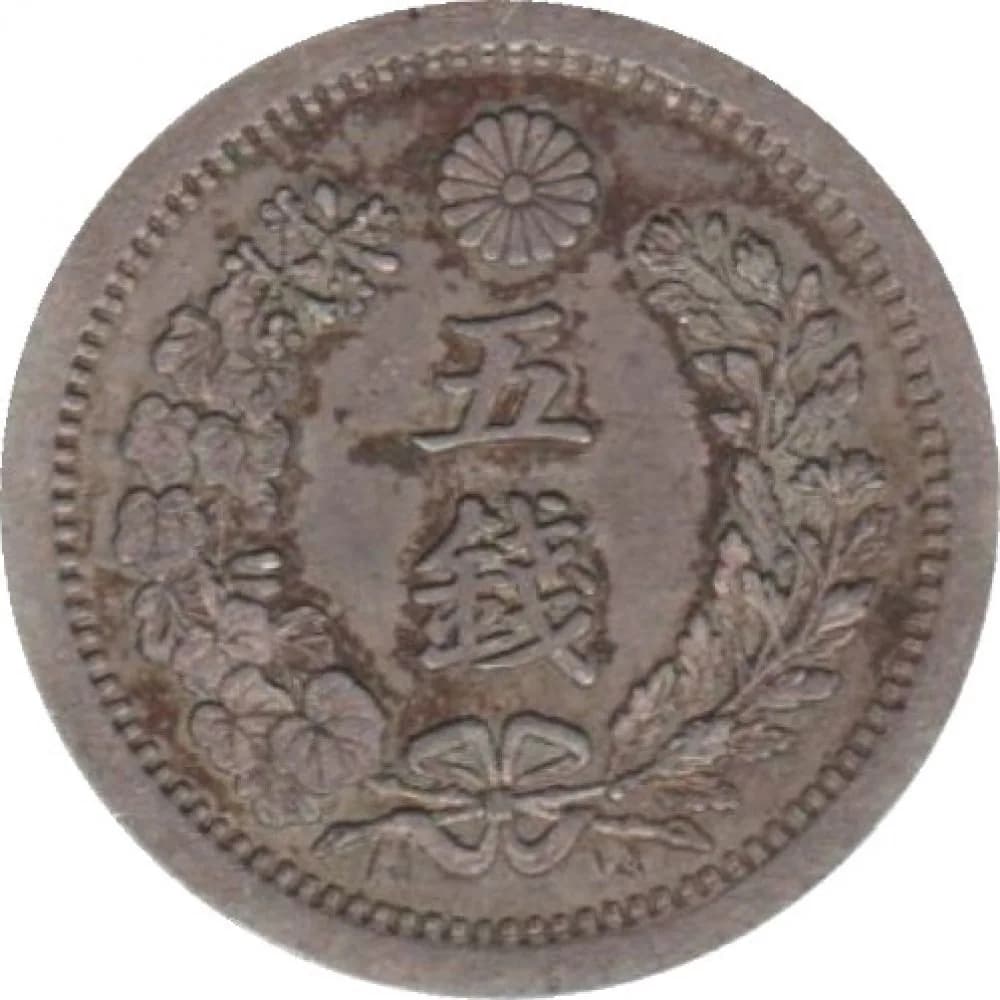
Image: Modern Japanese coinage / Coindesmonnaies / Wikimedia Commons / CC BY-SA 4.0(source)
In the 17th century, Japan was undergoing a period of centralization under the Tokugawa shogunate, having emerged from a turbulent era. The prohibition of Christianity and restrictions on overseas travel intensified, with the complete ban on Portuguese ships in 1639. In 1641, the shogunate moved the Dutch trading post residing in Nagasaki to Dejima, an artificial island. This resolutely closed Japan's 'door of seclusion,' confining trade with the West to Nagasaki's Dejima, and limiting interactions to China and Korea. During this period, the VOC held enormous influence in East Asian trade. Among the diverse types of silver coins they introduced to trade with Japan were prominently the 'Leeuwendaalder,' known as 'Lion Dollars,' stamped with a lion. This high-quality silver coin had been circulating in the Netherlands since the late 16th century and was widely used in international trade with a purity reaching approximately 87.5%. The VOC eagerly sought Japan's abundant silver and particularly copper for trade, offering these silver coins in exchange. The shogunate strictly controlled trade through the Nagasaki magistrate, imposing annual trade limits. For instance, in 1685, trade was limited to 6,000 kan of gold coins and 9,375 kan of silver coins, demonstrating exhaustive regulation. However, despite these restrictions, the fact of several thousand kilograms of silver flowing into Japan annually significantly impacted the otherwise closed Japanese economy. The influx of foreign silver coins testifies to Japan not being completely isolated from the global economy, a precious historical testament. Unlike types and identification of Edo gold coins, VOC silver coins were not allowed direct circulation but had immeasurable economic impact.
Chapter 2: Japan's Ginzas on Foreign Silver — Rigorous Assessments and Re-coinage Systems
Image: Modern Japanese coinage / Coindesmonnaies / Wikimedia Commons / CC BY-SA 4.0(source)
Foreign silver coins brought by VOC ships arriving at Dejima, such as the Leeuwendaalder, never circulated in the Japanese market as is. The Tokugawa shogunate strictly prohibited the domestic circulation of foreign currencies to maintain the independence and stability of its monetary system. These silver coins were first placed under the strict supervision of the Nagasaki magistrate. Through the Nagasaki Kaisho trade management institution, their purity and weight were meticulously examined. This evaluation process was carried out by skilled officials from the Ginza, utilizing advanced refining techniques such as the cupellation method to accurately measure the silver's fineness. For example, when Leeuwendaalder coins were brought in, the pure silver amount for domestic use was calculated based on their weight of 27.6g and purity of 87.5%. Records from the Nagasaki magistrate meticulously document the annual exchange of several thousand kilograms of silver from the 17th to the 18th century, illustrating the vast trade scale. After assessment, foreign silver coins were exchanged based on their pure silver content, or sent directly to the Ginza offices in Edo and Kyoto for melting and recoining. At these Ginzas, foreign silver was used to produce Japan's representative silver coins, Chōgin and Ichibukin. This process became a crucial channel through which silver from abroad indirectly influenced Japan's monetary supply and economy. Through this strict management system, the shogunate aimed to prevent domestic economic confusion by foreign currency and maintain sovereignty over its coinage rights. This recoining system, unlike types and values of Koban, demonstrates the unique role of silver coins in international trade.
Chapter 3: Seeking Copper and the Flow of Silver — Distorted Gold-Silver Ratio and Japan's Economy
Image: Modern Japanese coinage / Coindesmonnaies / Wikimedia Commons / CC BY-SA 4.0(source)
In trade with Japan, VOC prioritized Japan's abundant natural resources, particularly copper. In the latter half of the 17th century, Japan's copper production was among the world's largest, with about 4 million kin (approximately 2,400 tons) of copper exported annually through Nagasaki. This 'Nagasaki Copper' was a strategic material essential for European coin minting and cannon manufacturing, motivating VOC to spare no effort in bringing copious silver coins to acquire Japanese copper. VOC silver coins served as the means of payment in this copper trade, bringing a substantial influx of silver into Japan. However, this large-scale silver inflow resulted in a significant distortion of Japan's gold-silver exchange rate. At the time, the international gold-silver ratio was roughly 1:15 in gold to silver, but in Japan, the ratio remained at 1:4 to 5, extremely undervaluing silver. This was primarily due to the decreasing domestic gold output and continuous inflow of trade silver. The discrepancy in gold-silver ratio heavily impacted the shogunate's finances, allowing it to profit by exchanging foreign trade silver for domestic gold, though it also threatened the stability of the national currency system. Additionally, increased silver supply inevitably led to domestic price hikes, indirectly affecting commoners' lives. Particularly, fluctuations in rice prices were often linked to social unrest. Although VOC silver coins did not directly reach the public, their presence shook the foundations of Japan's currency economy, leaving a deep imprint on the economic structure under seclusion. At the time, types and identification of punched coins were widespread among commoners, their value indirectly influenced by silver influx.
Chapter 4: Decline of the East India Company and Transforming Trade Silver — Towards the End of Seclusion Trade
Image: Modern Japanese coinage / Coindesmonnaies / Wikimedia Commons / CC BY-SA 4.0(source)
Entering the late 18th century, the management of the Dutch East India Company (VOC) steadily worsened. Repeated wars, management corruption, and intensified competition with Britain led to its decline. By 1799, VOC was dissolved, and its trading activities transferred to direct control under the Dutch government. Consequently, silver imports to Japan markedly decreased. The annual silver inflow that once reached several thousand kilograms diminished significantly by the end of the 18th century, altering the nature of the currency used in Nagasaki trade. In place of silver, Japan's focus shifted to exporting manufactured goods such as marine products, ceramics, and lacquerware. Raw materials like silk also played a crucial role in trade. This shift was not unrelated to the declining silver production in Japan and shogunate policies aimed at correcting the domestic gold-silver ratio. The reduced inflow of VOC silver coins led to the Japanese monetary system developing more autonomously. The shogunate pursued several coinage reforms to align the domestic gold-silver ratio closer to international levels, including quality improvements and stabilization policies during the Kyōhō era (1716-1736). However, fundamental resolution was not achieved, and on the eve of Japan's opening, the currency system faced significant challenges. VOC silver coins, functioning as the sole economic conduit connecting Japan and the world under seclusion, left a unique imprint on Japan's economic history. The end of its role foreshadowed Japan's forthcoming opening and transition to a modern monetary system. This was a major turning point in Japan's currency history leading to value and identification of modern coins.
Value & Rarity
VOC silver coins, particularly the Leeuwendaalder, did not circulate as currency in Japan, and most were melted and recoined. Hence, they are rarely excavated domestically, with existing specimens mostly originating from the Netherlands and the regions in Asia that were part of the VOC trade zone, now available on collectors' markets. Discussed in the context of Japanese history as 'VOC silver coins,' these do not directly target Japanese old coin collections but are valued as historical trade artifacts. In collector markets, their value largely depends on the manufacturing era, condition, and rarity, with well-preserved Leeuwendaalder coins fetching tens of thousands to hundreds of thousands of yen. Especially coins with clear manufacturing years and mint marks, experiencing little wear, tend to be highly valued. For Japanese collectors, they serve as valuable references for studying external trade and monetary economics of the time, and when displayed alongside Japanese coins, they accentuate the peculiarities of Japan's seclusion period. However, collecting with investment in mind requires a profound understanding of their historical background and distribution paths. Learning basics of coin auctions helps grasp the foreign currency trade market trends, enabling accurate value judgments. Also, refer to identification of fakes and altered coins for essential knowledge on authenticity verification.
Conclusion
The silver coins brought by the Dutch East India Company (VOC) to Nagasaki's Dejima continuously sent ripples from the outside world into the cloistered economy of Japan. Foreign silver, represented by the Leeuwendaalder coins, was exchanged for Japan's abundant copper, distorted the domestic gold-silver exchange rate, influenced prices, and swayed the shogunate's finances. These coins silently testify through currency that Japan was not entirely isolated from the world. The story of VOC silver coins extends beyond mere monetary history, unlocking deeper understanding of Japan's economy, politics, and interactions with the world during the seclusion era.
Related Stories
Two-System of Chōgin and Mameitagin — Tracing the History of Edo Silver Coins
Edo silver coins were always circulated as a set of 'Chōgin (丁銀, Large)' and 'Mameitagin (豆板銀, Small)'. Why was this peculiar two-system created?
Coin StoryGenroku Chōgin - Tracing the History of Edo Silver Coins
Following the debasement of the Koban, silver was also counterfeited. The shock of the Genroku 8 (1695) Chōgin recoinage on Edo prices
Coin StoryGenroku Ichibuban Kin — The Small Gold Coins of Edo That Changed Overnight
The Drastic Drop in Gold Purity of Genroku Ichibuban and Its Impact
Dealers
Dealers Handling This Category
A reference when considering a sale or appraisal. All are dealers and auction houses with a proven track record.
Japan Coin Auction (JCA)
Tokyo
Holds regular auctions with reliable hammer price data, making it a useful resource for tracking market values. Caters to a wide range of collectors from beginners to advanced buyers.
Ginza Coins
Ginza, Chuo-ku, Tokyo
One of Japan's most established numismatic dealers. The scale and variety of their regular auctions is among the largest in the country. Their catalogs are considered a benchmark for market pricing.
Osaka Numismatic Auction
Osaka
A Kansai-based coin auction house with particular strength in regional and hole coins.