Approach to Authenticity Judgment - Compilation of Modern Japanese Coin Appraisal Standards by the Editorial Department
Visual Inspection, Measurement, Specific Gravity, Grading—Explaining the Four Layers to Detect Counterfeits and the Standard Process Achieved in Modern Appraisals
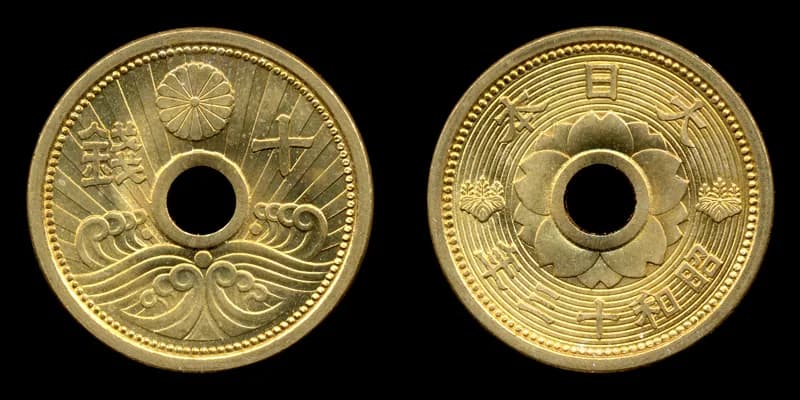
The judgment of coin authenticity is composed of four layers: visual inspection, dimensional measurement, specific gravity measurement, and grading company appraisal. This article organizes what to observe in each layer and how modern Japanese coin appraisals are standardized, based on field insights.
First Layer: Visual Inspection—The Task of Articulating 'Discomfort'
Speaking with experienced coin dealers, the first step in authenticity judgment always begins with 'visual inspection.' Specifically, five points are compared between the target coin and an authentic reference specimen (a genuine coin of the same type): script style, surface condition, edge, stamping precision, and coloration.
In verifying script style, aspects such as the thickness of the letters, the shape of the ends, and the angles of the strokes are compared in detail with genuine items. For instance, the '壹两' stamp on a [Keicho Koban (慶長小判)] coin is a primary clue alongside Shosaburo Goto's hereditary signature. Genuine stamps are deeply and sharply engraved, strong enough for the relief of the letters to be felt by touch. In contrast, modern machine-pressed counterfeits tend to have overly uniform outlines despite having depth.
Surface condition observation involves checking for casting marks, wear from prolonged use, and natural discoloration due to oxidation or sulfuration. Genuine Edo-period gold coins, composed of 84.3% gold and 15.7% silver, may have a thin black silver sulfide layer, recognized by appraisers as a 'natural patina.' Artificial chemical coloring often exhibits a distinctive unnaturalness upon inspection.
The edge treatment is known as a particularly challenging area for counterfeiters. Authentic Koban have continuous fine hammer marks from chiseling, a hallmark of skilled artisanship. Modern machining finds it extremely difficult to replicate this minute variability.
A certain appraiser interviewed by the editorial team remarked, 'The essence of visual inspection is articulating the discomfort. If something seems off, determine whether the discomfort stems from the script, surface, or edge. If undetermined, it goes for additional testing.' This forms a fundamental approach even in modern scientific appraisal processes.
Second Layer: Dimension and Specific Gravity—Quantified Appraisal Standards
Following visual inspection, the second layer involves measuring dimensions and specific gravity. Coins have regulated dimensions and weights based on the era and mint location, and any deviation often suggests counterfeiting.
Dimensional measurement uses calipers (accurate to about 0.05mm) to gauge diameter, thickness, and edge width. For instance, the Keicho Koban's dimensions are approximately 70mm long × 38mm wide, weighing 17.97g (4monme7bu6rin). The Kan'ei Tsuho (ancient Kan'ei currency) is regulated at a diameter of 24-25mm, weighing around 3.7g, whereas the new Kan'ei (four-mon coin) is 27-28mm, weighing about 4.5g. Specimens significantly deviating from these standards should be suspected of modern manufacturing or confusion with other types.
Specific gravity measurement plays a decisive role, especially for gold and silver coins. The specific gravity of gold is 19.3, silver is 10.5, and copper is 8.96. The theoretical specific gravity for a Keicho Koban (84.3% gold, 15.7% silver) is around 17.9, and any significantly lower reading suggests the gold content does not meet the standard, indicating a counterfeit or a reminted coin from a different era.
Using Archimedes' principle, specific gravity is calculated by measuring the weight in air and water and determining the volume from the difference. With an electronic balance and specific gravity measurement kit, this can be done at home, costing around 30,000 yen. Those beginning a serious collection should consider early adoption.
Note: Tungsten-based counterfeits covered in gold plating are difficult to distinguish by specific gravity, as tungsten's specific gravity, 19.25, is very close to gold. In such cases, composition analysis using X-ray fluorescence spectroscopy (XRF) by grading companies in the next layer is necessary.
Third Layer: Grading Companies—Standardized External Authentication
The most reliable method for modern coin appraisal is encapsulated authentication by third-party grading companies. The U.S.-based NGC (Numismatic Guaranty Corporation) and PCGS (Professional Coin Grading Service) are known as the world's two largest companies, and both offer appraisals for Japanese coins.
The basic grading process comprises three steps: first, authenticity judgment; second, condition grading; and third, encapsulation in a transparent case called a slab. The slab bears the appraisal number, coin name, grade (e.g., MS65), year, and the variety name for rare stamps (VAM or FS number), making forgery difficult.
The Sheldon Scale (out of 70 points) is globally adopted for grade notation. Mint State 70 (MS70), representing perfect uncirculated condition, to Poor 1 (PO1), indicating extreme wear, categorizes evaluation in 70 steps. For Japanese coins, circulated Edo-period ones typically range from AU50 to AU58, while modern gold coins often fall between MS62 and MS65. High grades above MS65 are extremely rare, with even a single-grade difference sometimes doubling or tripling market value.
Another function of grading companies is composition testing using XRF. This technology measures metal composition non-destructively, analyzing surface metal blends in ppm units. Deviations from the specified composition for a Keicho Koban (84.3% gold, 15.7% silver) are clearly identifiable as fakes. Tungsten-core gold-plated forgeries can also be detected by identifying compositional differences between the surface and core.
As of 2026, grading appraisal costs several tens of thousands of yen per coin and takes several months. However, coins with certificates significantly enhance market valuation, especially crucial when listing in Western markets. Collectors should consider their entire grading strategy early on.
Current State and Practical Responses to Counterfeits—Major Patterns Circulating in the Market
Knowledge of authenticity judgment is insufficient on its own; understanding major counterfeit patterns circulating in the market is key to practical defense. Based on market research, the editorial team has compiled prevalent counterfeit patterns.
The most frequent issues arise with Edo-period gold coins as 'modern reproductions' and 'post-Meiji imitations.' Modern reproductions, produced by machine press, exhibit unique patterns in edge treatment and script uniformity. Notably, significant quantities of Keicho Koban forgeries were made between the Showa and Taisho periods, still found in antique shops and online auctions. Meiji-period imitations often involve handmade processes, requiring detailed comparison with genuine Edo-period counterparts.
In the copper coin (holed coin) sector, Kochosen forgeries pose the greatest risk. Due to their rarity and high value, forgeries were already being made in the Edo to Meiji periods, with modern reports of precise 3D printed forgeries. This area requires cross-checking with specialized literature and multiple expert confirmations.
For Meiji to Taisho period old gold coins, low-purity alloy fakes failing the standard (Meiji 13 old 20 yen gold coin is 90% gold) appear occasionally. Initial screening by specific gravity measurement is particularly effective; items deviating from the theoretical specific gravity of 17.0±0.5 should proceed to XRF analysis.
Such counterfeit information is continually updated in the Fake Alert Database. To check the latest counterfeit information on specific categories or types, please refer to this resource. For dubious items, seeking opinions from multiple specialists through the network of appraisers and coin dealers is the most reliable approach. The principle of 'not buying if doubts are not cleared' is widely shared in the industry to protect long-term collector interests.
Conclusion
Authenticity judgment is not solely reliant on 'experience and intuition,' but is structured into a standardized process encompassing four layers: visual inspection, dimensions, specific gravity, and third-party appraisal. Each layer holds independent criteria, and authenticity is confirmed only when deemed 'genuine' across multiple layers. Those starting collections should first purchase trusted items from reliable coin dealers and learn the 'feel' of genuine coins. Once embodied, any discomfort with counterfeits develops naturally.
Related Editorials
Series
Coin Grading Explained
Part 3 of 3 in this series
- 1CoinpediaFundamentals of Grading
- 2ColumnPCGS/NGC Graded Japanese Coins: How International Grading Impacts Value and Market Price
- 3EditorialApproach to Authenticity Judgment - Compilation of Modern Japanese Coin Appraisal Standards by the Editorial Department
Dealers
Dealers Handling This Category
A reference when considering a sale or appraisal. All are dealers and auction houses with a proven track record.
Ginza Coins
Ginza, Chuo-ku, Tokyo
One of Japan's most established numismatic dealers. The scale and variety of their regular auctions is among the largest in the country. Their catalogs are considered a benchmark for market pricing.
Japan Coin Auction (JCA)
Tokyo
Holds regular auctions with reliable hammer price data, making it a useful resource for tracking market values. Caters to a wide range of collectors from beginners to advanced buyers.
Taisei Coins
Tokyo
A dealer with an international network. Offers advanced services such as consignment to overseas auctions and NGC/PCGS grading submission. Recommended for high-value or internationally recognized coins.